
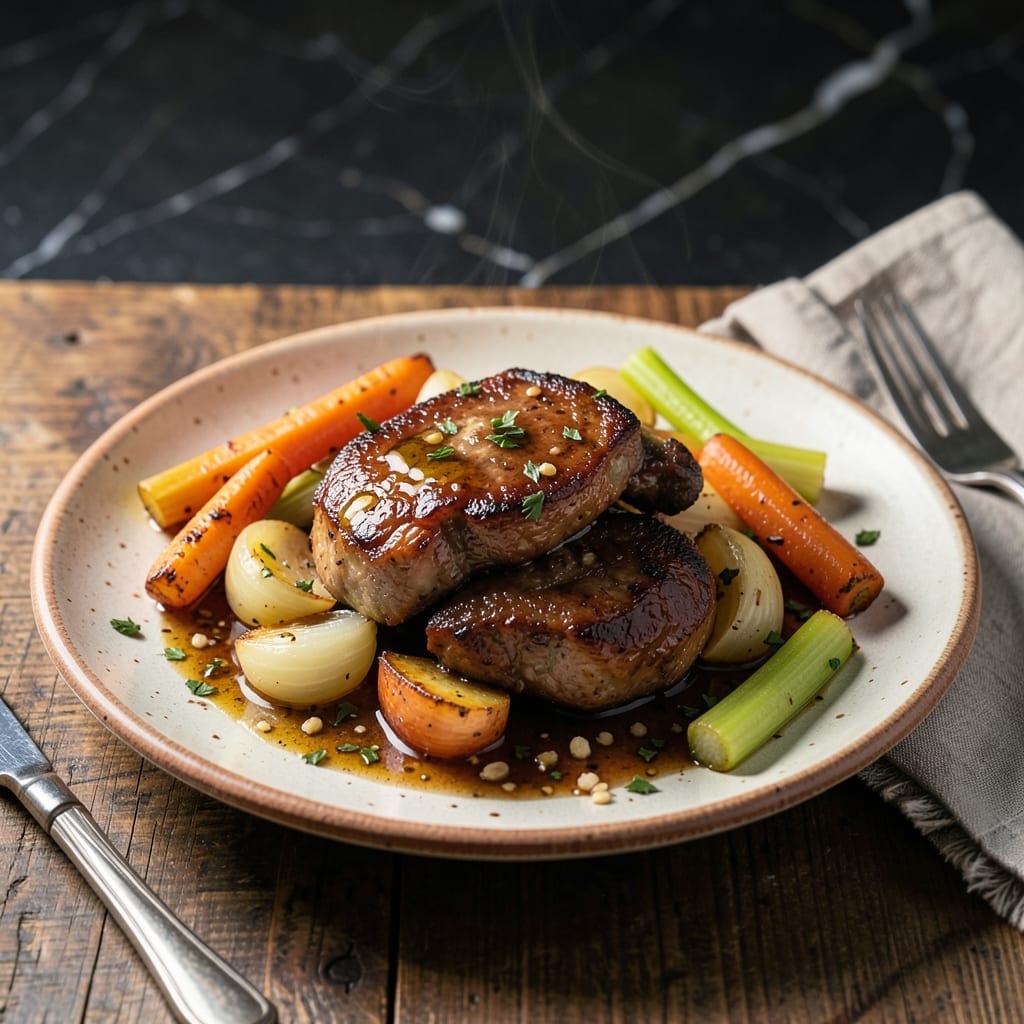
I first discovered pork cheeks at a Portland butcher shop, where the butcher swore they’d change my braising game forever. This recipe delivers on that promise with melting tenderness that rivals any fine dining experience.
The secret lies in slow cooking. By braising these flavorful cuts for hours in a rich broth, you transform them into fork-tender morsels that absorb every bit of the aromatic sauce. It’s a technique that turns humble ingredients into something extraordinary.
What emerges is a dish with layers of depth—savory pork, caramelized vegetables, and a sauce so rich you’ll want to soak it up with crusty bread. The meat practically falls apart at the touch of a fork, making every bite a revelation.
Perfect for a special dinner, this recipe proves that patience in the kitchen always pays off. The results speak for themselves.
Ingredients for Pork Cheeks Recipe Saturday Kitchen
These rich ingredients build a braise that turns humble pork cheeks into something extraordinary.
| Ingredient | Amount | Notes |
|---|---|---|
| Pork Cheeks 🐷 | 2 lb | Trimmed of excess fat |
| Olive Oil 🫒 | 2 tbsp | Divided for searing and braising |
| Yellow Onion 🧅 | 1 whole | Large, diced |
| Carrots 🥕 | 2 whole | Peeled and chopped |
| Celery Stalks 🌿 | 2 whole | Diced for aromatic base |
| Garlic Cloves 🧄 | 6 cloves | Minced for depth |
| Tomato Paste 🍅 | 2 tbsp | For umami richness |
| Red Wine 🍷 | 1 cup | Dry variety preferred |
| Chicken Stock 🥣 | 2 cups | Low-sodium recommended |
| Fresh Thyme Sprigs 🌿 | 4 whole | Tied with kitchen twine |
| Bay Leaf 🍃 | 2 whole | Dried or fresh |
| Dijon Mustard 🟡 | 1 tbsp | For tangy finish |
| Kosher Salt 🧂 | 1 ½ tsp | Diamond Crystal preferred |
| Black Pepper 🌶️ | 1 tsp | Freshly cracked |
The pork cheeks are key here. Ask your butcher—most will order them if not in stock. Look for rosy, moist cuts with some fat marbling. I source mine from Whole Foods or specialty shops like D’Artagnan. Avoid pre-packaged versions if possible; freshness makes all the difference in the final texture.
No red wine? Substitute beef stock with 1 tbsp balsamic vinegar. If you’re out of fresh thyme, dried thyme at one-third the amount works. For the stock, Better Than Bouillon makes a great low-sodium base. The Dijon can be swapped for whole-grain mustard (just strain the seeds if you prefer a smooth sauce).
Pork cheeks freeze beautifully raw for up to 6 months. Once cooked, store in the fridge for 4-5 days or freeze for 3 months. The flavors deepen overnight—this is one dish that’s even better the next day.
Why You’ll Love This Recipe
- One Pan Wonder: I just toss the pork cheeks, onions, carrots, and celery in with olive oil and let the oven do the work.
- Sunday Roast Vibes: Here’s what sold me—it feels fancy enough for a special dinner but unfussy enough for a cozy weekend meal.
- Budget Stretcher: Pork cheeks are cheaper than most cuts, and this recipe makes them taste like a million bucks.
Step-by-Step Instructions for Slow-Braised Pork Cheeks
This method guarantees fall-apart tenderness with rich, developed flavors every time.
Step 1: Sear the Pork Cheeks for Depth
Pat the 2 lb Pork Cheeks completely dry with paper towels—this ensures a proper sear. Season both sides with the 1.5 tsp Kosher Salt and 1 tsp Black Pepper. Heat 1 tbsp Olive Oil in a heavy Dutch oven over medium-high heat until shimmering.
Working in batches to avoid crowding, sear the pork cheeks for 4-5 minutes per side until they develop a deep golden-brown crust. The meat should release easily from the pan when ready. Transfer to a plate and set aside.
Step 2: Build the Aromatic Base
Add the remaining 1 tbsp Olive Oil to the pot, then stir in the diced 1 whole Yellow Onion, 2 whole Carrots, and 2 whole Celery Stalks. Cook over medium heat for 8-10 minutes, stirring occasionally, until the vegetables soften and begin to caramelize at the edges.
Add the minced 6 cloves Garlic Cloves and 2 tbsp Tomato Paste, cooking for 1-2 minutes until the tomato paste darkens slightly and becomes fragrant. This builds the flavor foundation for the braising liquid.
Step 3: Deglaze and Braise to Perfection
Pour in the 1 cup Red Wine, scraping up all the browned bits from the bottom of the pot with a wooden spoon. Let it simmer for 3-4 minutes until reduced by half. Add the 2 cups Chicken Stock, 4 whole Fresh Thyme Sprigs, and 2 whole Bay Leaf.
Return the pork cheeks and any accumulated juices to the pot. The liquid should come about halfway up the meat—add a splash of stock if needed. Bring to a simmer, then reduce heat to low, cover, and cook for 2.5 to 3 hours, turning the cheeks occasionally, until they’re fork-tender.
Step 4: Finish with Dijon and Serve
Remove the pork cheeks to a serving dish and tent with foil. Skim excess fat from the braising liquid, then stir in the 1 tbsp Dijon Mustard. Simmer the sauce for 5-7 minutes until it thickens enough to coat the back of a spoon.
Pour the sauce over the pork cheeks and let them rest for 10 minutes before serving. This allows the flavors to meld and the sauce to cling beautifully to the meat. The result should be unctuous, tender pork that melts at the touch of a fork.
Pro Tips For Making Pork Cheeks Recipe Saturday Kitchen
- Brown the Cheeks Well: Sear the pork cheeks in olive oil over medium-high heat until deeply browned—about 4-5 minutes per side. I learned this the hard way: under-browning means a weaker base flavor for the braise.
- Uniform Veggie Dice: Cut the onion, carrots, and celery into even, 1/2-inch pieces so they cook at the same rate and melt into the sauce. Sounds fussy, but it actually changes the outcome.
- Skip the Rush: Don’t crank the heat to speed up the braise—keep it at a gentle simmer, or the cheeks will toughen before they get tender. After burning three batches, I finally figured out patience is non-negotiable here.
- Use a Heavy Pot: A Dutch oven or heavy casserole dish distributes heat evenly and prevents scorching during the long cook. My grandmother swore by this, and she was right.
Essential Equipment for Perfect Results
Dutch Oven Essentials
For braising pork cheeks, a heavy Dutch oven is non-negotiable. I swear by my Le Creuset 5.5-quart—it retains heat evenly and transitions beautifully from stovetop to oven. The enameled cast iron won’t react with acidic ingredients like wine or tomatoes. 🔥
Precision Thermometer
A ThermoWorks Dot or similar instant-read thermometer ensures perfect doneness. While pork cheeks are forgiving, checking internal temperature (195-205°F) confirms they’ve broken down completely. I keep mine magnetically attached to the fridge for easy access.
Wooden Spoon Workhorse
Don’t underestimate a good wooden spoon for deglazing. It scrapes up all those flavorful browned bits without scratching your cookware. Mine has a slight curve that fits perfectly into the corners of my Dutch oven.
Sharp Chef’s Knife
Since you’ll be dicing a mirepoix of onion, carrots, and celery, a sharp 8-inch chef’s knife makes prep efficient. I use a Wüsthof Classic—it’s been my kitchen partner for over a decade. A dull knife is more dangerous than a sharp one.
Tongs for Turning
Long stainless steel tongs (at least 12 inches) are essential for turning the cheeks during searing and braising. They give you control without crowding the pan. I prefer the OXO Good Grips version for comfort.
Fine Mesh Strainer
For the silkiest sauce, strain the braising liquid through a fine mesh strainer before reducing. This removes any stray herb stems or vegetable bits. A 5-inch strainer fits perfectly over my saucepan. The extra step makes a noticeable difference in texture. ✨
Nutrition Facts
Frequently Asked Questions
How long should I braise the pork cheeks?
Plan for 2.5 to 3 hours of slow cooking at low heat. This extended time breaks down the connective tissue, transforming the meat into fork-tender perfection. Don’t rush it—patience yields the best texture.
What if my sauce is too thin?
Simmer it uncovered for 5-7 minutes after removing the meat. This reduces the liquid and thickens it naturally. If it’s still thin, a quick reduction on medium-high heat will help.
Can I make this ahead of time?
The flavors deepen overnight. Store in the fridge for up to 4-5 days or freeze for 3 months. Reheat gently on the stovetop with a splash of stock.

- Potato Chip Cookie Recipe With Pecans: Buttery Crunch Meets Nutty Richness - October 30, 2026
- Potato Patty Recipe No Egg: Crispy Edges Without the Binder - October 30, 2026
- Paula Deen’s Potato Chip Cookies Recipe: Salty-Sweet Crunch in Every Bite - October 30, 2026