
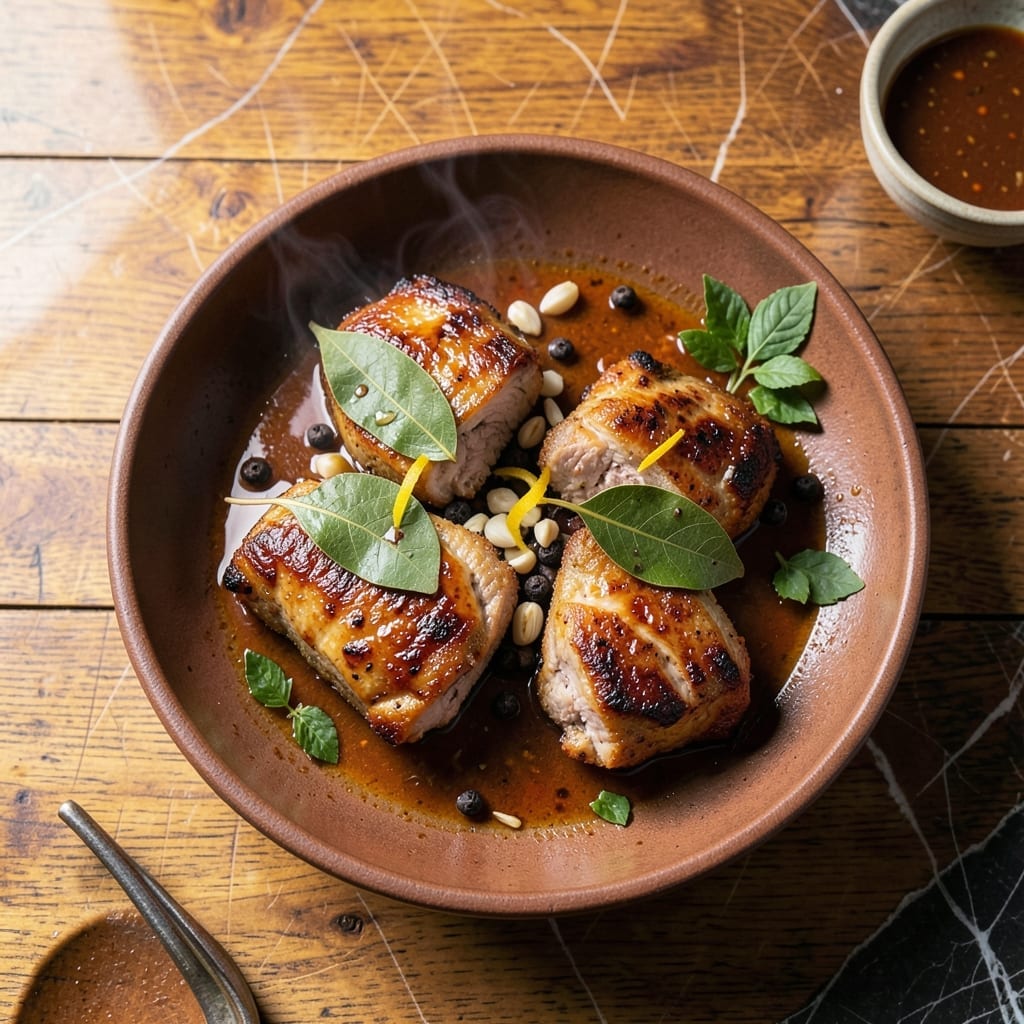
This Filipino-style pork chop delivers tender, juicy meat with a bold adobo-inspired marinade that’s deeply savory and slightly tangy. I’ve refined this method over years to achieve the perfect balance of garlic, soy, and vinegar.
The key is marinating the chops for at least 2 hours, allowing the flavors to penetrate deeply. A quick sear locks in the juices while creating a caramelized crust that’s irresistibly rich.
What results is a dish that’s both comforting and complex, with each bite offering layers of umami and a hint of acidity. It’s a staple in my kitchen for its simplicity and restaurant-quality taste.
Serve with steamed rice to soak up every drop of the flavorful pan sauce. This recipe brings authentic Filipino flavors to your table with ease.
Ingredients for Pork Chop Recipe Filipino Style
Nothing exotic here—just pork chops and a bold marinade for authentic Filipino flavor.
| Ingredient | Amount | Notes |
|---|---|---|
| Bone-In Pork Chops 🥩 | 4 whole | 1-inch thick, center-cut preferred |
| Soy Sauce 🫒 | ½ cup | Low-sodium preferred for balance |
| White Vinegar 💧 | ¼ cup | Or apple cider vinegar |
| Garlic Cloves 🧄 | 8 cloves | Minced for marinade |
| Bay Leaves 🍃 | 2 whole | Dried, for marinade |
| Black Peppercorns 🌶️ | 1 tsp | Lightly crushed |
| Brown Sugar 🍚 | 2 tbsp | Balances acidity |
| Olive Oil 🫒 | 2 tbsp | For searing pork chops |
| Steamed Rice 🍚 | 2 cups | Uncooked, for serving |
| Green Onions 🧅 | ¼ cup | Sliced, for garnish |
| Salt 🧂 | 1 tsp | Kosher or sea salt |
The pork chops are the star. Bone-in, center-cut gives you the juiciest results—Costco or your local butcher should have them. Thickness matters: aim for 1-inch so they don’t dry out. For the soy sauce, Silver Swan or Datu Puti (Filipino brands) make a difference if you can find them at an Asian market. The vinegar? Basic white vinegar works, but apple cider adds a nice depth.
No white vinegar? Cane vinegar is traditional and widely available in Asian stores. Out of bay leaves? Skip them—the garlic and soy carry the flavor. For a sweeter profile, swap brown sugar for coconut sugar. The pork can be boneless too (just reduce cooking time by a few minutes). Trader Joe’s has great pre-marinated options if you’re short on time.
Marinate the chops for up to 24 hours—the longer, the better. Leftovers keep 4-5 days in the fridge or freeze for 3 months. Reheat gently to keep the meat tender (microwave is fine, but add a splash of water).
Why You’ll Love This Recipe
- One Pan Meal: I sear the pork chops, then simmer them in soy sauce, vinegar, and garlic—all in the same pan. No mountain of dishes after.
- Umami Bomb: The soy and vinegar combo with garlic hits that sweet-savory-tangy spot. Honestly, it’s the flavor I crave when I need comfort food.
- Feeds the Fam: I make a big batch and it’s gone in minutes—kids love it, adults ask for seconds. Between us, it’s my reliable weeknight hero.
- Stretches Far: Leftovers taste even better the next day, and the ingredients are pantry staples. I’ll be real: it’s kind on the wallet too.
Step-by-Step Instructions for Pork Chop Recipe Filipino Style
Here’s my no-fail method for tender, flavor-packed adobo-style chops that’ll have everyone asking for seconds.
Step 1: Create the Adobo Marinade
In a large bowl, combine the 0.5 cup Soy Sauce, 0.25 cup White Vinegar, minced 8 cloves Garlic Cloves, 2 whole Bay Leaves, 1 tsp Black Peppercorns, and 2 tbsp Brown Sugar.
Whisk until the brown sugar completely dissolves—the mixture should look glossy and slightly syrupy. I always taste the marinade at this point (yes, raw garlic and all) to check the balance of salty, sweet, and tangy flavors. If it needs adjustment, now’s the time.
This marinade is the soul of the dish, so don’t rush. The vinegar tenderizes the bone-in pork chops while the soy sauce infuses that deep umami flavor Filipino adobo is famous for.
Step 2: Marinate the Pork Chops Thoroughly
Add the 4 whole Bone-In Pork Chops to the marinade, making sure they’re completely submerged. I use a zip-top bag for this—it saves space in the fridge and ensures every inch of the meat gets coated. Squeeze out excess air before sealing.
Refrigerate for at least 2 hours, but I recommend overnight for maximum flavor penetration. The longer they marinate, the more tender and flavorful they’ll be. Halfway through, give the bag a gentle massage to redistribute the marinade.
Don’t skip this step—it’s what transforms simple pork chops into that authentic Filipino adobo taste. The garlic and bay leaves will infuse the meat with aromatic depth that quick marinating just can’t achieve.
Step 3: Sear to Perfection
Remove the pork chops from the marinade (reserve the marinade) and pat them dry with paper towels. This step is crucial—wet meat won’t sear properly. Heat the 2 tbsp Olive Oil in a large skillet over medium-high heat until it shimmers but doesn’t smoke.
Add the pork chops and sear for 4-5 minutes per side until they develop a deep golden-brown crust. You’ll know they’re ready to flip when they release easily from the pan. Don’t be tempted to move them around—let that crust form.
While they sear, sprinkle with the 1 tsp Salt. This enhances the crust formation and balances the flavors. The chops should be cooked through when the internal temperature reaches 145°F.
Step 4: Reduce the Marinade into Sauce
Pour the reserved marinade into the same skillet and bring to a boil over medium heat. Let it bubble vigorously for 5-7 minutes until it reduces by half and becomes slightly syrupy. This step is non-negotiable—it kills any bacteria from the raw meat and intensifies the flavors.
Return the pork chops to the skillet and coat them in the reduced sauce. Let them simmer in the sauce for 2-3 minutes to absorb all that concentrated flavor. The sauce should cling to the chops with a glossy sheen.
Taste and adjust seasoning if needed—the sauce should be bold and balanced, with the sweetness of the brown sugar complementing the salty-sour base.
Step 5: Rest and Serve
Transfer the pork chops to a serving platter and let them rest for 5 minutes. This allows the juices to redistribute, ensuring every bite is moist and flavorful. Spoon the reduced sauce over the top.
Serve hot over the 2 cups Steamed Rice, with the 0.25 cup Green Onions sprinkled on top for freshness and color. The rice soaks up that incredible adobo sauce beautifully.
I always make extra sauce to drizzle over the rice—it’s the best part. The combination of tender pork, tangy-sweet sauce, and fluffy rice is pure comfort food at its finest.
Pro Tips For Making Pork Chop Recipe Filipino Style
- Sear First, Simmer Later: I learned this the hard way—browning the pork chops in a screaming hot pan for 2-3 minutes per side before adding the soy-vinegar sauce builds a crust that soaks up the flavor later.
- Smash the Garlic: After burning three batches, I finally figured out that lightly crushing the garlic cloves (instead of mincing) releases their aroma without turning bitter in the vinegar-soy mix.
- Skip the Overcrowding: Resist the urge to cram all the chops in at once—cook in batches if needed, or they’ll steam instead of sear, and you’ll end up with pale, sad pork.
- Rest with Sauce: Sounds weird, but it works: let the chops sit in the warm soy-vinegar sauce for 5 minutes off the heat before serving—this keeps them juicy and packs in extra flavor.
Dietary Considerations for This Dish
Gluten-Free Friendly
This recipe is naturally gluten-free as long as you use certified gluten-free soy sauce. I recommend San-J Tamari or Coconut Aminos as excellent alternatives. Always check labels, as some soy sauces contain wheat.
Low-Carb Option
Skip the steamed rice and serve with cauliflower rice instead. You can also add sautéed green beans or steamed broccoli for a complete low-carb meal. The bold flavors still shine without the rice.
Dairy-Free Naturally
This dish contains no dairy, making it perfect for those with lactose intolerance. The bone-in pork chops and adobo marinade are completely dairy-free. Just ensure your soy sauce doesn’t have any hidden dairy additives.
Lower Sodium Version
Use low-sodium soy sauce and reduce the total amount by 2 tbsp. Boost flavor with extra garlic and vinegar instead. I often add 1 tsp fish sauce (check for gluten) for depth without extra salt. 💪
Pescatarian Adaptation
Swap bone-in pork chops for firm white fish like cod or halibut. Reduce marinating time to 30 minutes and cooking time to 3-4 minutes per side. The adobo marinade works beautifully with fish.
Vegetarian Alternative
Use extra-firm tofu or portobello mushrooms instead of pork. Press tofu for 20 minutes before marinating, and grill or pan-fry for 4-5 minutes per side. The flavors absorb just as well. 🌱
Nutrition Facts
Frequently Asked Questions
What can I substitute for vinegar in the marinade?
Cane vinegar is traditional, but lemon juice works in a pinch. Avoid balsamic as its strong flavor overpowers the adobo taste.
How do I prevent the pork chops from drying out?
Don’t overcook! Use a meat thermometer and remove at 145°F. Let them rest for 5 minutes before serving to retain juices.
Can I use boneless pork chops?
Yes, but reduce searing time to 3-4 minutes per side. Bone-in stays juicier, but boneless works if that’s what you have.
How long can I store leftovers?
Keep in an airtight container in the fridge for 4-5 days. Reheat gently with a splash of water to maintain moisture.

- Potato Patty Recipe No Egg: Crispy Edges Without the Binder - October 30, 2026
- Paula Deen’s Potato Chip Cookies Recipe: Salty-Sweet Crunch in Every Bite - October 30, 2026
- Potato Gnocchi Recipe Ideas: Pillowy Soft Dumplings With Rustic Charm - October 30, 2026