
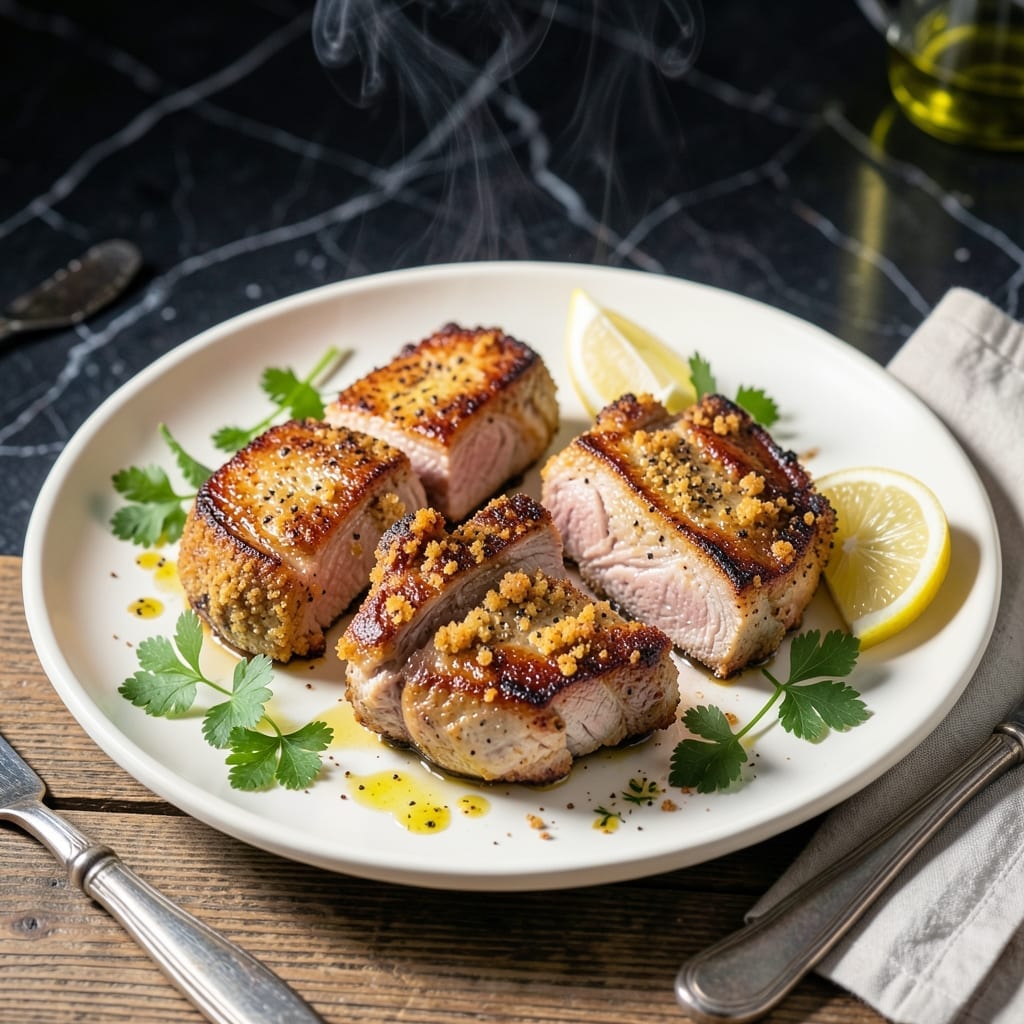
Crispy panko-breaded pork chops redefine weeknight dinners with their shatteringly crisp texture and juicy centers. This method transforms simple chops into restaurant-quality cutlets with minimal effort and maximum impact.
The secret lies in a three-step breading process using panko for superior crunch. I learned this technique while perfecting my tonkatsu recipe—panko’s coarse texture creates air pockets that crisp beautifully without turning greasy.
Each bite delivers a perfect contrast: the exterior stays golden and crisp while the interior remains tender and moist. The breading adheres flawlessly, ensuring every forkful includes that satisfying crunch.
Serve with steamed rice and a crisp salad for a complete meal that impresses every time. Here’s how to achieve this level of perfection at home.
Ingredients for Pork Chop Recipe with Panko Crumbs
Restaurant-quality cutlets start with center-cut pork and Japanese panko for that signature crunch and juicy interior.
| Ingredient | Amount | Notes |
|---|---|---|
| Bone-In Pork Chops 🍖 | 4 whole | 1-inch thick, center-cut preferred |
| Panko Breadcrumbs 🍞 | 2 cups | Japanese-style for maximum crunch |
| All-Purpose Flour 🌾 | ½ cup | For initial dredging step |
| Large Eggs 🥚 | 2 whole | Beaten for egg wash adhesion |
| Kosher Salt 🧂 | 1 ½ tsp | Diamond Crystal preferred for seasoning |
| Freshly Ground Black Pepper 🌶️ | 1 tsp | For seasoning pork and breading |
| Garlic Powder 🧄 | 1 tsp | Enhances flavor in breading mixture |
| Onion Powder 🧅 | 1 tsp | Adds depth to breading seasoning |
| Neutral Oil 🛢️ | 1 ½ cups | For frying, canola or vegetable oil |
| Paprika 🌶️ | 1 tsp | Sweet or smoked for color and flavor |
| Dijon Mustard 🟡 | 2 tbsp | Optional for extra flavor in egg wash |
| Lemon Wedges 🍋 | 4 pieces | For serving, brightness contrast |
The pork chops must be thick-cut (aim for 1 to 1.5 inches)—thin chops dry out during frying. Bone-in stays juicier than boneless. For panko, Kikkoman is the gold standard (find it in the Asian aisle at most supermarkets). Avoid Italian-style breadcrumbs—they’re too fine. The flour creates the base layer for the breading to adhere, so don’t skip it even if it seems redundant.
No panko? Crush cornflakes or melba toast in a food processor for a similar texture. Substitute Dijon with whole-grain mustard if needed. For extra flavor, add 1 tsp of grated Parmesan to the panko mixture (not traditional but delicious). The oil temperature is critical—use a thermometer to maintain 350°F to 375°F. Canola or vegetable oil have the high smoke points you need.
Fry in batches to avoid crowding the pan—this keeps the temperature steady and ensures even browning. Drain on a wire rack (not paper towels) to maintain crispiness. Leftovers keep for 2-3 days but are best eaten fresh. Reheat in a 400°F oven for 10 minutes to revive the crunch.
Why You’ll Love This Recipe
- Dinner in 20: That’s all the time it takes—dredge, coat, bake, and you’re sitting down to eat.
- Crispy outside, juicy inside: The panko gives this incredible crunch while the bone-in chops stay tender and flavorful.
- Feeds the gang: I make a double batch for Sunday supper and have leftovers for lunches all week.
- Wallet friendly: Pork chops and panko are budget staples, so I can make this for my family without breaking the bank.
Step-by-Step Instructions for Panko-Crusted Pork Chops
Here’s the method for achieving that restaurant-quality crunch with every bite.
Step 1: Season and Dredge the Pork Chops
Pat the 4 whole Bone-In Pork Chops dry with paper towels—this is non-negotiable for maximum crispiness. Season both sides aggressively with 1.5 tsp Kosher Salt, 1 tsp Freshly Ground Black Pepper, and 1 tsp Paprika, pressing the spices into the meat so they adhere.
Set up your breading station: place the 0.5 cup All-Purpose Flour in a shallow dish. Dredge each seasoned pork chop in the flour, shaking off any excess. This initial layer creates a sticky surface for the egg wash to cling to, ensuring the breading stays put during frying.
Step 2: Create the Egg Wash with Flavor Enhancers
In a separate shallow dish, whisk the 2 whole Large Eggs until fully combined. For an extra layer of flavor, stir in the 2 tbsp Dijon Mustard—this adds a subtle tang that complements the richness of the pork.
Dip each floured pork chop into the egg wash, turning to coat completely. Allow any excess to drip off for a moment. The egg wash acts as the glue that binds the breading to the meat, so don’t rush this step. You want an even, thin coating that will crisp up beautifully in the oil.
Step 3: Apply the Panko Breading Mixture
In a third shallow dish, combine the 2 cups Panko Breadcrumbs with 1 tsp Garlic Powder and 1 tsp Onion Powder. These seasonings infuse the breading with savory depth, balancing the crunch.
Press each egg-washed pork chop firmly into the panko mixture, ensuring the crumbs adhere to all surfaces. I like to press down gently with my palm to compact the breading, then flip and repeat. Place the breaded chops on a wire rack set over a baking sheet to rest for 10 minutes—this helps the coating set and prevents it from falling off during frying.
Step 4: Pan-Fry to Golden, Crispy Perfection
Heat the 1.5 cups Neutral Oil in a large, heavy-bottomed skillet over medium-high heat until it reaches 350-375°F. To test the temperature, drop a pinch of panko into the oil—if it sizzles and floats immediately, it’s ready.
Carefully place two pork chops in the skillet (don’t overcrowd) and fry for 4-5 minutes per side until the breading is deep golden brown and the internal temperature reaches 145°F. Use tongs to flip the chops only once to avoid disturbing the breading. Transfer to a paper towel-lined plate to drain excess oil.
Step 5: Rest and Serve with Brightness
Let the pork chops rest for 5 minutes before serving—this allows the juices to redistribute and the breading to crisp up further. The internal temperature will rise to 150-155°F during resting, ensuring perfect doneness.
Serve immediately with the 4 pieces Lemon Wedges on the side. The acidity from the lemon cuts through the richness of the pork and complements the crispy panko crust. Each bite should deliver a satisfying crunch followed by tender, juicy meat.
Pro Tips For Making Pork Chop Recipe With Panko Crumbs
- Dry the Chops: Pat the pork chops completely dry with paper towels before dredging—I learned this the hard way after my panko crust kept sliding off.
- Double Dredge: Dip the chops in flour, egg, then panko, but repeat the egg and panko once more for a thicker, crunchier crust that actually stays put.
- Hot Oil Only: Test the oil with a pinch of panko first—if it sizzles immediately, it’s ready; if not, wait. Lukewarm oil makes soggy breading, and nobody wants that.
- Rest Before Serving: Give the chops 5 minutes on a rack after frying so the crust stays crisp instead of turning into a sad, steamy mess.
Troubleshooting Perfect Results
Breading Falls Off
If your panko isn’t sticking, the issue is likely in your breading station setup. Pat the Bone-In Pork Chops completely dry first—any moisture creates a barrier. I learned this the hard way with my first tonkatsu attempt. Also, let the breaded chops rest for 10 minutes before frying. 💡
Soggy Breading
Soggy crust usually means oil temperature is too low. Invest in a kitchen thermometer—I use ThermoWorks—and maintain 350-375°F. If your oil isn’t hot enough, the breading absorbs oil instead of crisping. Also, drain on a wire rack, not paper towels.
Uneven Browning
This happens when you overcrowd the pan. Fry only 2 pork chops at a time in your skillet. Too many chops lower the oil temperature and create steam, which softens the breading. Use tongs to flip only once—constant turning disturbs the panko layer.
Dry Pork Chops
Overcooking is the culprit here. Pull the chops when they reach 145°F internal temperature—they’ll rise to 150-155°F while resting. Thick-cut (1-inch) bone-in chops stay juicier than thin ones. I always use a meat thermometer for precision.
Greasy Finish
If your chops are greasy, your oil temperature is too low or you’re not draining properly. The ideal temp is 375°F—any cooler and the breading absorbs oil. After frying, place chops on a wire rack to allow air circulation on all sides. 🔥
Panko Not Crispy
For maximum crunch, press the panko firmly into the egg-washed chops. I use my palm to compact the crumbs. Also, don’t skip the 10-minute rest after breading—this helps the coating set. Fresh panko (I prefer Kikkoman) makes a noticeable difference over stale breadcrumbs.
Nutrition Facts
Frequently Asked Questions
Can I use regular breadcrumbs instead?
Panko creates superior crunch due to its coarse texture, but regular breadcrumbs can work in a pinch. Toast them lightly in the oven first to improve crispiness, and expect a slightly denser coating.
How do I keep the breading from falling off?
Pat the chops completely dry before breading and let them rest for 10 minutes after coating. Press the panko firmly into the meat to ensure adhesion. This step is non-negotiable for perfect results.
What oil works best for frying?
Use a neutral oil with a high smoke point like canola or vegetable oil. Maintain 350-375°F for crispy results. Avoid olive oil—it can impart a bitter taste at high temperatures.
Can I bake these instead of frying?
Yes! Bake at 400°F for 20-25 minutes, flipping halfway. For extra crispiness, spray the breaded chops lightly with oil before baking. The texture won’t be identical but will still be delicious.

- Potato Chip Cookie Recipe With Pecans: Buttery Crunch Meets Nutty Richness - October 30, 2026
- Potato Patty Recipe No Egg: Crispy Edges Without the Binder - October 30, 2026
- Paula Deen’s Potato Chip Cookies Recipe: Salty-Sweet Crunch in Every Bite - October 30, 2026