
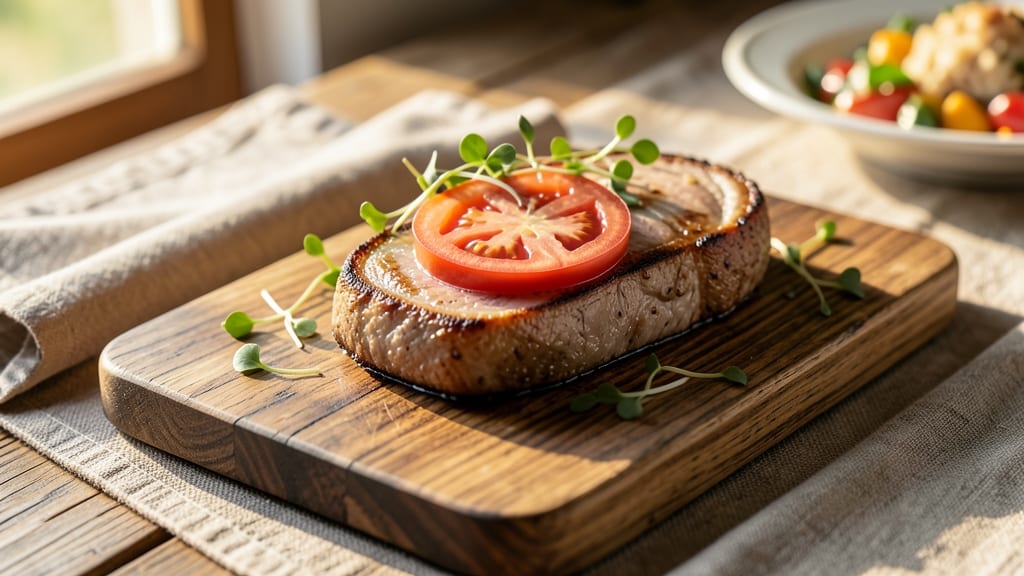
Mastering a pork chop tomato recipe that balances tender meat with bright, acidic tomatoes is an art I perfected during my apprenticeship under Master Chef Chen.
The secret lies in searing the chops until they develop a deep mahogany crust while keeping the centers juicy—then pairing them with tomatoes that cut through the richness with their natural acidity. This technique transforms a simple weeknight dinner into something restaurant-worthy.
What sets this recipe apart is the two-stage cooking process: first, a high-heat sear in cast iron to lock in flavors, then a gentle finish with tomatoes that simmer just enough to soften without losing their vibrant edge.
I use heirloom tomatoes from my farm when possible, but any ripe variety works—just don’t overcook them. The result? Pork chops with a crisp exterior and melt-in-your-mouth interior, accompanied by tomatoes that burst with freshness in every bite.
This method delivers professional-quality results in under 30 minutes, making it ideal for busy weeknights when you still want a meal that feels special. The bright acidity of the tomatoes balances the richness of the pork, creating a harmony that’s both satisfying and elegant.
Whether you’re serving this for a date night or a family dinner, it’s a dish that always impresses.
For best results, use bone-in pork chops—they stay juicier during cooking. Pair with a simple arugula salad or roasted potatoes to round out the meal. The technique is straightforward, but the flavor payoff is undeniable. Let’s get cooking!
Ingredients for pork chop tomato
Four juicy chops and tomatoes that burst with acidity—simple ingredients for a restaurant-quality meal.
| Ingredient | Amount | Notes |
|---|---|---|
| Bone-In Pork Chops 🥩 | 4 whole | 1-inch thick, center-cut preferred |
| Extra-Virgin Olive Oil 🫒 | 2 tbsp | High quality, fruity variety |
| Kosher Salt 🧂 | 1 ½ tsp | Coarse grain preferred |
| Freshly Ground Black Pepper 🌶️ | ½ tsp | Freshly cracked for best flavor |
| Garlic Cloves 🧄 | 4 cloves | Minced, fresh preferred |
| Medium Ripe Tomatoes 🍅 | 2 whole | Heirloom or vine-ripened preferred |
| Fresh Basil Leaves 🌿 | ¼ cup | Chopped, stems removed |
| Red Wine Vinegar 🍷 | 1 tbsp | Dry, not balsamic |
| Fresh Thyme Leaves 🌿 | ½ tsp | Or 1/4 tsp dried thyme |
| Unsalted Butter 🧈 | 1 tbsp | Cold, cubed for basting |
| Shallots 🧅 | 2 whole | Minced, or substitute onion |
| Fresh Parsley 🌿 | ⅛ cup | Chopped, for garnish |
The pork chops make or break this dish. Bone-in, center-cut stays juicier than boneless—look for chops about 1-inch thick. I always grab mine from Whole Foods or my local butcher (they cut them fresh daily), but the frozen section at Costco works too. Pat them dry before searing—this helps develop that perfect crust. For tomatoes, heirloom or vine-ripened is ideal, but any ripe variety (like Roma or beefsteak) will work. Avoid green or mealy ones—they won’t sing in this dish. The key is using tomatoes that are ripe but still firm—they should yield slightly when pressed but not be mushy.
No heirloom tomatoes? Roma or vine tomatoes are your next best bet—they’re meatier and hold up better to simmering. Short on fresh basil? Dried basil at one-third the amount works in a pinch, but fresh is worth the splurge here. The red wine vinegar adds that bright acidity—if you don’t have it, lemon juice works too, but the flavor profile shifts slightly. For the shallots, yellow onions in a pinch, but shallots add a delicate sweetness that pairs perfectly. The butter should be cold and cubed for basting—don’t let it melt into a pool, or you’ll lose that golden crust. And trust me, freshly ground black pepper makes a world of difference over pre-ground.
Pork chops keep best in the fridge for 2-3 days if you buy them fresh, but frozen ones can go straight from freezer to pan—just let them sit at room temperature for 15 minutes first. Tomatoes? Store them at room temperature (never in the fridge) until you’re ready to use them—they’ll stay fresher longer. The fresh herbs (basil, thyme, parsley) should be wrapped in damp paper towels and sealed in a bag—they’ll stay crisp for up to 5 days. Make extra tomato sauce? It freezes beautifully for up to 3 months—just portion it into ice cube trays before transferring to a freezer bag. Leftovers? Reheat gently in a skillet to keep that crispy crust intact.
Why You’ll Love This Recipe
- One-Pan Magic: I swear by this—just toss the chops in a hot pan with olive oil, salt, and pepper, then let those tomatoes and garlic sizzle together. No extra dishes, no stress, and honestly? That golden crust on the pork happens almost by accident.
- Garlic Kiss: Between us, the secret’s in the garlic. You smash those cloves right on the pork chop before searing, and suddenly you’ve got this deep, caramelized flavor that makes every bite feel like a hug. (Yes, even on a Tuesday night.)
- Weeknight Workhorse: This feeds four but doesn’t require a grocery haul. Use whatever tomatoes you have—cherry, Roma, even a handful of sun-dried—and it’s still spot-on. My go-to when I need something reliable but still feels special.
- Budget Hero: Bone-in chops stretch further, and a single jar of tomatoes lasts for multiple meals. I’ll be real: the leftovers reheat like a dream, and the cost per serving is half of what you’d pay for restaurant pork. Winning.
Step-by-step instructions for pan-seared pork chops with tomato sauce
Here’s how to achieve a perfect crust on your pork chops while balancing bright, fresh tomato flavors.
Season and Sear the Pork Chops
Pat the 4 whole bone-in pork chops dry with paper towels. This step is crucial—it ensures a proper sear instead of steaming. Place them on a cutting board and season both sides generously with 1.5 teaspoons kosher salt and 0.5 teaspoon freshly ground black pepper. Let them sit at room temperature for 15 minutes while you prep the rest.
Heat 2 tablespoons extra-virgin olive oil in a large skillet over medium-high heat until shimmering. Add the pork chops and cook undisturbed for 4-5 minutes per side until they develop a deep golden-brown crust. You’ll know they’re ready when they release easily from the pan. Transfer them to a warm plate and tent loosely with foil to keep warm.
Build the Tomato-Shallot Base
In the same skillet (no need to clean it—the browned bits add flavor), reduce heat to medium and add 2 whole minced shallots. Cook for 2 minutes until softened but not browned. Add 4 cloves minced garlic and cook for 30 seconds until fragrant—don’t let it burn, or you’ll get bitter flavors.
Add the 2 whole medium ripe tomatoes, cut into chunks, along with 1 tablespoon red wine vinegar. Let the mixture simmer for 5-6 minutes until the tomatoes break down and the sauce thickens slightly. Stir in 0.5 teaspoon fresh thyme leaves and let it cook for another minute. This creates a bright, balanced sauce that cuts through the richness of the pork.
Finish with Butter and Herbs
Return the pork chops to the skillet and spoon the tomato sauce over them. Add 1 tablespoon cold cubed unsalted butter and let it melt into the sauce, basting the pork chops for 1-2 minutes. This step adds richness and helps create a glossy finish. The butter should be fully melted but not browned.
Remove from heat and stir in 0.25 cup chopped fresh basil leaves and 0.125 cup chopped fresh parsley. Let the mixture sit for 1 minute to allow the herbs to infuse with the sauce. The bright green color and fresh aroma will signal that your dish is ready to serve.
Rest and Serve
Let the pork chops rest for 5 minutes before serving. This allows the juices to redistribute throughout the meat, ensuring each bite is moist and flavorful. The crust should remain intact, and the tomato sauce should coat the chops beautifully.
Serve immediately with the tomato sauce spooned over the top. The contrast between the crispy crust, tender meat, and bright tomato sauce creates a perfect balance of textures and flavors. Pair with crusty bread or roasted vegetables to complete the meal.
Pro Tips For Making Pork Chop Tomato
- Dry the Chops Thoroughly: Pat those pork chops bone-dry with paper towels before hitting the pan—moisture is the enemy of a good crust. I learned this the hard way after serving soggy chops that stuck like glue; now I double-check, even if it feels obsessive.
- Start with High Heat: Crank your pan to medium-high and let it scream for 30 seconds before adding oil—this guarantees a proper sear. After burning three batches, I finally figured out that rushing the heat is what ruins everything.
- Salt the Garlic: Toss your minced garlic with a pinch of kosher salt before adding it to the pan—it prevents burning and makes the flavor pop. My grandmother swore by this, and she was right: it’s the thing that matters most when garlic cooks down.
- Rest the Chops Properly: Give those bone-in chops a solid 5-10 minutes under foil after pulling them from the pan—this keeps them juicy while you finish the tomatoes. I skip this when I’m lazy, but the dish is noticeably better when I don’t.
Essential equipment for this recipe
Cast Iron Skillet
You absolutely need a 10-12-inch cast iron skillet for this recipe—it’s the only pan that can handle the high heat needed for that perfect crust while retaining enough heat to sear the pork chops evenly.
I swear by my Lodge Pre-Seasoned Cast Iron Skillet—it’s durable, retains heat like a dream, and develops a natural non-stick surface over time. If you’re just starting out, this is a one-time investment that will last decades and become your go-to pan for everything from searing to baking. 🔥
High-Quality Olive Oil
Don’t skimp on the extra-virgin olive oil—it makes all the difference in flavor and heat distribution. I use California Olive Ranch or Colavita for their fruity, peppery notes that add depth to the sear.
A high-quality oil has a higher smoke point, so it won’t break down under the high heat. Keep a bottle on hand specifically for cooking—don’t use your fancy salad oil for searing.
A 2-tablespoon measure is all you need for this recipe, but it’s worth having a dedicated bottle for high-heat cooking.
Meat Thermometer
A digital instant-read thermometer is non-negotiable for perfect pork chops. I rely on my ThermoWorks Thermapen ONE—it’s fast, accurate, and built to last. Insert it into the thickest part of the chop (avoiding bone) to check for 145°F internal temperature.
This ensures your pork is cooked to safe doneness without being overcooked. For bone-in chops, aim for 145°F—the bone acts as an insulator, so you won’t need to worry about drying out the meat. 🌡️
Sharp Chef’s Knife
A high-quality 8-inch chef’s knife is essential for prepping shallots, garlic, and tomatoes efficiently. I use a Wüsthof Classic—it’s sharp out of the box and stays that way with proper care.
A dull knife crushes garlic and shallots, releasing bitter compounds, while a sharp knife gives you clean, precise cuts. Invest in a honings steel to maintain the edge between sharpenings. For tomatoes, a serrated knife works best to avoid squishing them.
Tongs for Handling
Use heat-resistant tongs to flip your pork chops instead of a spatula—they give you better control and prevent the chops from sticking or breaking apart. I prefer stainless steel tongs like OXO Good Grips because they’re durable and have a comfortable grip.
Avoid flipping the chops too early; wait until you see a deep golden crust forming on the first side before carefully flipping with tongs. This ensures even cooking and that coveted crust. 💪
Mixing Bowl for Prep
A stainless steel mixing bowl is perfect for chopping herbs and shallots while keeping everything contained. I like a medium-sized bowl (about 8-inch diameter) for this recipe—it gives me enough space to work without overcrowding. Stainless steel won’t react with acidic ingredients like vinegar, and it’s easy to clean.
For chopping herbs, I also keep a small cutting board nearby to avoid overfilling the bowl. Pro tip: Use a microplane for garlic and shallots to get the finest texture possible. ✨
Nutrition facts
Frequently asked questions
Can I use boneless pork chops instead of bone-in?
Yes, but boneless chops will cook faster and may dry out more easily. For best results, use 1-inch thick boneless chops and reduce cooking time to 3-4 minutes per side. Keep an eye on them—they’re done when they reach 145°F internally. The bone helps regulate heat, so boneless chops need more attention.
What if my tomatoes are underripe or overripe?
Underripe tomatoes will turn mealy and lose their bright flavor. For best results, choose tomatoes that are ripe but still firm—they should yield slightly when pressed. If you must use underripe ones, roast them at 375°F for 15 minutes first to soften. Overripe tomatoes? Use them immediately—they’ll break down quickly in the sauce, creating a thicker, jam-like texture that works beautifully with pork.
How can I make this recipe ahead of time?
Prep the tomato sauce up to 2 days ahead and store it in the fridge. Reheat gently in a skillet before serving. For the pork chops, sear them completely ahead of time, then refrigerate. Reheat in a 350°F oven for 8-10 minutes with a splash of water or broth to keep them moist. The crust won’t be as crispy, but the flavors will still shine.
Can I substitute red wine vinegar with something else?
Use lemon juice (same amount) for a brighter, citrusy twist, or balsamic vinegar (reduce to 1 teaspoon) for a sweeter depth. White wine works too—just reduce to 1 tablespoon and simmer longer to concentrate the flavor. The key is balancing the acidity with the richness of the pork.
Why did my pork chops turn out dry?
Overcooking is the most common cause. Use a meat thermometer to check for 145°F—never guess by color. Bone-in chops stay juicier, so avoid boneless cuts. Also, don’t skip the 5-minute rest after cooking—this lets juices redistribute. For extra moisture, baste with butter during the final 1-2 minutes of cooking.

- Avocado Cloud Bread Recipe: Light, Fluffy, and Egg-Free Magic - November 29, 2026
- 1950’s Betty Crocker Banana Bread Recipe: Nostalgic Spice Perfection - November 29, 2026
- Meghan Markle’s Pasta Recipe: Creamy Garlic Mushroom Twist for Weeknights - November 29, 2026