
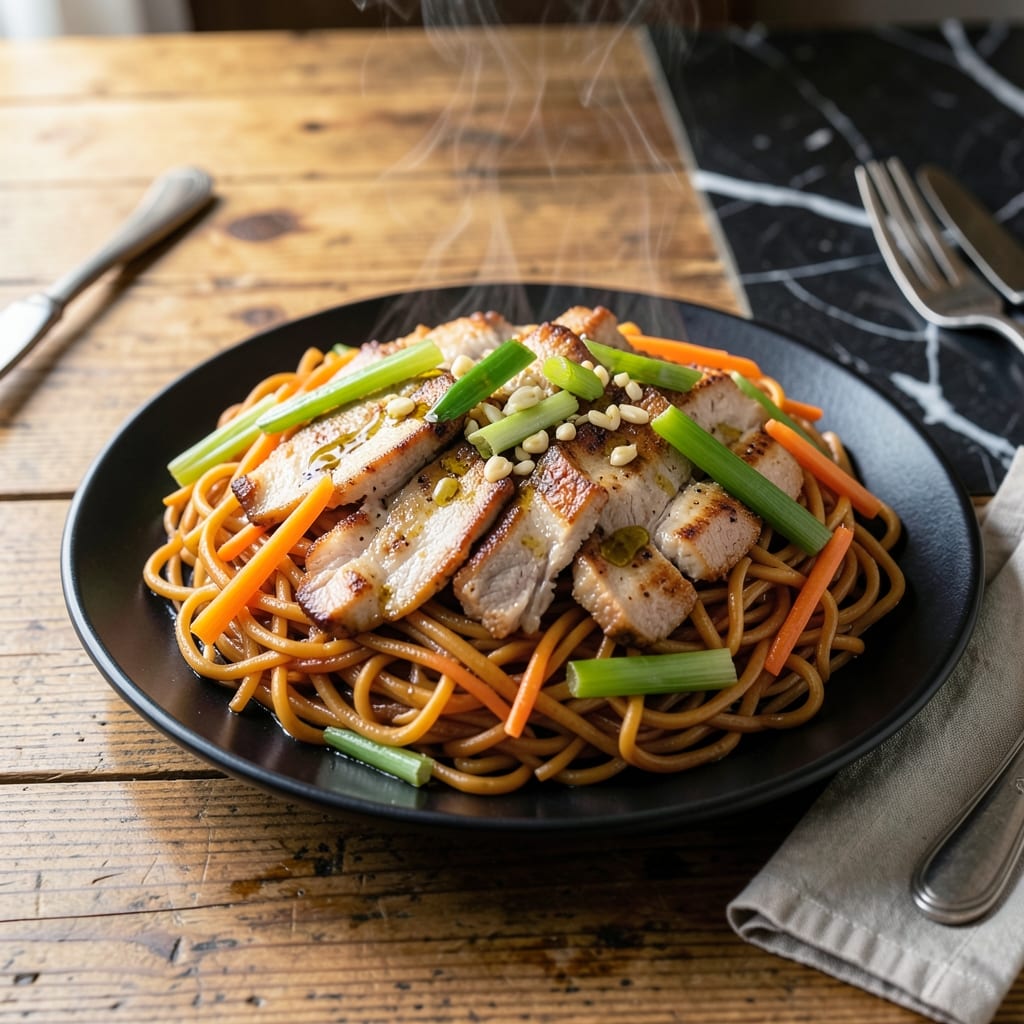
This pork chow mein delivers restaurant-quality flavor with crisp celery and tender noodles in every bite. I developed this recipe after testing multiple versions in my small Boston kitchen, perfecting the balance of textures and savory sauce.
The key is cooking the pork first to develop deep flavor, then stir-frying vegetables until just tender. Celery adds a satisfying crunch that contrasts beautifully with the soft noodles and juicy meat.
What you get is a dish with perfectly coated noodles, savory sauce clinging to every strand, and vegetables that retain their freshness. It comes together quickly once you start cooking.
Serve hot for the best texture and flavor. This version stays true to the classic takeout favorite while being simple to make at home.
Ingredients for Pork Chow Mein Recipe Celery
Fresh pork, crisp celery, and tender noodles come together for takeout-style flavor at home.
| Ingredient | Amount | Notes |
|---|---|---|
| Pork Shoulder 🐖 | 1 lb | Thinly sliced for quick cooking |
| Dried Chow Mein Noodles 🍜 | 8 oz | Or fresh egg noodles |
| Celery Stalks 🥬 | 4 whole | Thinly sliced on diagonal |
| Carrots 🥕 | 2 whole | Julienned for texture |
| Green Onions 🧅 | 3 whole | Sliced, white and green parts separated |
| Garlic Cloves 🧄 | 3 cloves | Minced for maximum flavor |
| Fresh Ginger 🌿 | 1 tbsp | Grated or finely minced |
| Soy Sauce 🫒 | ⅓ cup | Low-sodium preferred for control |
| Oyster Sauce 💧 | 2 tbsp | Or vegetarian oyster sauce |
| Sesame Oil 🫒 | 1 tbsp | Toasted for depth |
| Vegetable Oil 🫒 | 3 tbsp | High smoke point for stir-frying |
| Cornstarch 🌾 | 1 tbsp | For thickening sauce |
| Chicken Broth 🥣 | ½ cup | Low-sodium or homemade |
| Sugar 🍚 | 1 tsp | Balances savory flavors |
| Salt 🧂 | ½ tsp | Adjust to taste |
The pork is everything here. Pork shoulder (or pork butt) gives you the juiciest, most flavorful result—avoid lean cuts like tenderloin which dry out fast. My local Market Basket in Boston has great pre-sliced options, but I usually ask the butcher to thinly slice a pound so it cooks in minutes. Look for good marbling—it renders out beautifully during stir-frying (worth the extra minute).
No oyster sauce? Hoisin plus a dash of soy gets you 80% there. Short on celery? Bok choy or napa cabbage adds a nice crunch too. For the noodles, fresh egg noodles from the Asian market are ideal, but dried spaghetti works in a pinch (just parboil first). The ginger can be from a jar, but fresh tastes brighter—grab a knob and keep it in the freezer for next time.
Stir-fry leftovers keep 3-4 days in the fridge, but the noodles soak up sauce over time. Reheat in a skillet with a splash of water to loosen. Sauce components can be mixed ahead—store separately for 1 week. Freezing? Not ideal, but possible for 1 month (texture changes slightly).
Why You’ll Love This Recipe
- One Pan Wonder: I toss everything—pork, celery, noodles—into a single pan and let the magic happen. No mountain of dishes afterward.
- Umami Bomb: The pork shoulder soaks up the sauce while the celery adds this fresh crunch that cuts through the richness. It’s ridicously good.
- Feeds Everyone: I make a huge batch on Sunday and portion it out for quick lunches all week. Even better the next day.
- Budget Hero: Pork shoulder is cheap, celery is always in my fridge, and those dried noodles last forever. I save a ton compared to takeout.
Step-by-Step Instructions for Pork Chow Mein With Celery
This method ensures tender pork and crisp vegetables coated in a rich, savory sauce.
Step 1: Prep the Pork and Vegetables
Slice the 1 lb Pork Shoulder into thin strips, about ¼-inch thick. This ensures quick, even cooking without toughness. Toss the pork with the 1 tbsp Cornstarch and 0.5 tsp Salt—this helps tenderize the meat and creates a light coating for better sauce adhesion.
Thinly slice the 4 whole Celery Stalks on the diagonal and julienne the 2 whole Carrots into matchstick pieces. Separate the white and green parts of the 3 whole Green Onions and slice them. Mince the 3 cloves Garlic Cloves and grate the 1 tbsp Fresh Ginger. Having everything ready before cooking is key for stir-frying.
Step 2: Cook the Noodles and Pork
Cook the 8 oz Dried Chow Mein Noodles according to package instructions until al dente. Drain, rinse under cold water to stop cooking, and toss with the 1 tbsp Sesame Oil to prevent sticking. Set aside.
Heat 2 tbsp Vegetable Oil in a wok or large skillet over high heat until shimmering. Add the pork in a single layer and cook for 3-4 minutes, stirring occasionally, until browned and cooked through. Remove the pork and set aside, leaving the oil in the pan.
Step 3: Stir-Fry the Vegetables
Add the remaining 1 tbsp Vegetable Oil to the same pan. Stir-fry the carrots and celery for 2-3 minutes until they begin to soften but retain their crunch. Add the garlic, ginger, and the white parts of the green onions, cooking for 30 seconds until fragrant. Be careful not to burn the aromatics—keep them moving.
Return the pork to the pan along with the cooked noodles. Stir everything together to combine and heat through for 1-2 minutes. The vegetables should stay vibrant and crisp, not mushy.
Step 4: Build and Thicken the Sauce
In a small bowl, whisk together the 0.33 cup Soy Sauce, 2 tbsp Oyster Sauce, 0.5 cup Chicken Broth, and 1 tsp Sugar. Pour this mixture over the noodles and pork in the pan.
Stir-fry for another 2-3 minutes until the sauce coats everything evenly and begins to thicken. The sauce should cling to the noodles and glaze the vegetables. Taste and adjust seasoning if needed, though the soy and oyster sauces provide plenty of saltiness.
Step 5: Finish and Serve
Remove from heat and stir in the green parts of the green onions. The residual heat will slightly wilt them while keeping their fresh, oniony bite. Serve immediately while hot, with the noodles glistening and the vegetables still crisp.
Each bite should deliver tender pork, crunchy celery, and chewy noodles all coated in that rich, umami-packed sauce. The dish should look vibrant, with the bright green onions adding a pop of color and freshness.
Pro Tips For Making Pork Chow Mein Recipe Celery
- Parboil the Noodles: Soak dried chow mein noodles in hot water for 5-7 minutes until pliable, then drain—this prevents them from turning mushy when stir-fried. I learned this the hard way after serving a gummy mess the first time.
- Velvet the Pork: Toss pork shoulder slices with 1 tsp baking soda and 1 tbsp cornstarch before marinating. Sounds weird, but it works: the meat stays tender and absorbs the sauce better.
- Slice Celery Thin: Cut celery stalks on a sharp diagonal into 1/8-inch pieces—any thicker and they’ll stay crunchy and undercooked. After biting into raw celery in my first attempt, I never skip this step.
- Fry in Batches: Cook pork in two batches to avoid steaming the pan. Resist the urge to overcrowd—your wok will thank you with properly seared meat instead of a soggy pile.
Storing and Reheating pork chow mein recipe celery
Refrigerator Storage
Let your chow mein cool completely before storing—I usually spread it on a baking sheet first to speed this up. Transfer to airtight containers and refrigerate at 40°F or below for up to 3-4 days. The celery stays crisp if stored properly. ❄️
Freezer Storage
For longer storage, freeze in single layers on a tray first, then transfer to freezer bags. This prevents noodles from sticking together. It’ll keep for up to 1 month, though I notice the celery loses some crunch after thawing.
Stovetop Reheating
My favorite method: heat a skillet over medium heat, add the chow mein with 2 tbsp water or broth. Cover and steam for 3-4 minutes, stirring occasionally. This revives the noodles beautifully.
Microwave Reheating
Place portions in a microwave-safe dish with 1 tbsp water. Cover with a damp paper towel and heat on 70% power for 2-3 minutes, stirring halfway through. The celery stays crisper this way.
Sauce Revival
If the sauce thickens too much in storage, add 1-2 tbsp water or broth when reheating. Stir well to redistribute the flavors. I always taste and adjust with a splash of soy sauce if needed. 💡
Nutrition Facts
Frequently Asked Questions
Why use pork shoulder instead of tenderloin?
Pork shoulder has more fat marbling, which keeps the meat juicy during stir-frying. Tenderloin dries out quickly and lacks the rich flavor that shoulder provides. It’s worth the extra minute to slice it thinly for even cooking.
How do I keep celery crisp in chow mein?
Add celery during the last 2-3 minutes of stir-frying to maintain its crunch. Slice it thinly on the diagonal for even cooking and better texture. Overcooking turns it mushy, so keep it moving in the pan.
Can I make this without oyster sauce?
Yes! Substitute with 1 tbsp hoisin sauce plus 1 tbsp soy sauce for similar depth. Vegetarian oyster sauce also works perfectly. The dish will still taste rich and savory.
What if my noodles turn out mushy?
Undercook the noodles by 1 minute during the initial boil. Rinse with cold water immediately after draining to stop the cooking process. This prevents them from turning to mush when stir-fried.

- Potato Chip Cookie Recipe With Pecans: Buttery Crunch Meets Nutty Richness - October 30, 2026
- Potato Patty Recipe No Egg: Crispy Edges Without the Binder - October 30, 2026
- Paula Deen’s Potato Chip Cookies Recipe: Salty-Sweet Crunch in Every Bite - October 30, 2026