
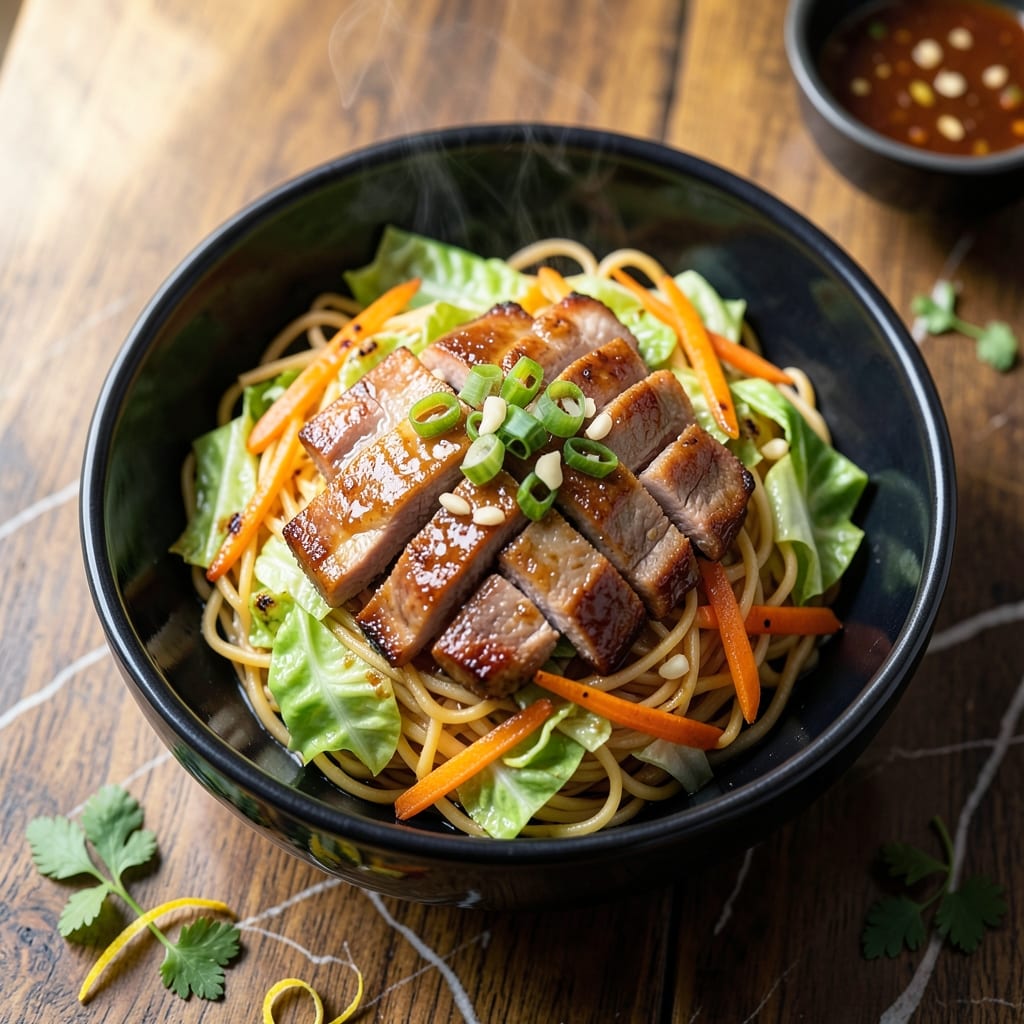
This pork chow mein delivers the wok-tossed flavors of your favorite takeout right to your kitchen. I developed this recipe after one too many greasy delivery containers piled up, determined to create something better at home.
The secret lies in high heat and quick cooking—tender pork, crisp cabbage, and chewy noodles all come together in minutes. I use simple ingredients from any grocery store, proving you don’t need specialty items for authentic taste.
What you’ll get is a dish with perfectly charred edges, a savory sauce that clings to every noodle, and that unmistakable smoky aroma. The cabbage stays slightly crunchy, adding texture against the soft pork and noodles.
Ready in 20 minutes, this beats takeout every time. Here’s how to make it.
Ingredients for Pork Chow Mein Recipe with Cabbage
Simple grocery list for restaurant-quality chow mein at home. No exotic items needed.
| Ingredient | Amount | Notes |
|---|---|---|
| Pork Shoulder 🥩 | 1 lb | Thinly sliced for quick cooking |
| Fresh Egg Noodles 🍜 | 8 oz | Or dried chow mein noodles |
| Green Cabbage 🥬 | 4 cups | Thinly shredded for crunch |
| Carrots 🥕 | 2 whole | Julienned or matchstick cut |
| Green Onions 🧅 | 3 whole | Sliced, whites and greens separated |
| Garlic Cloves 🧄 | 3 cloves | Minced for sauce |
| Fresh Ginger 🌿 | 1 tbsp | Grated or minced |
| Soy Sauce 🫒 | 3 tbsp | Low-sodium if preferred |
| Oyster Sauce 🫒 | 2 tbsp | Vegetarian oyster sauce option |
| Sesame Oil 🫒 | 1 tbsp | Toasted for best flavor |
| Vegetable Oil 🫒 | 2 tbsp | For high-heat stir-frying |
| Rice Vinegar 🍯 | 1 tbsp | Or apple cider vinegar |
| Granulated Sugar 🧂 | 1 tsp | Balances the sauce |
| Cornstarch 🌾 | 1 tbsp | For velvety sauce |
| Salt 🧂 | ½ tsp | Adjust to taste |
The pork makes this dish. Pork shoulder (or pork butt) has the right fat-to-meat ratio for tender, juicy bites—avoid lean cuts like tenderloin. Most supermarkets sell it pre-cut for stir-fry, or grab a whole roast and slice it thin yourself (freeze for 20 minutes first for easier slicing). For the noodles, fresh egg noodles from the refrigerated section are ideal, but dried works too (just soak in hot water for 5 minutes to soften).
No oyster sauce? Hoisin sauce plus a dash of soy gets you close. Fresh ginger is worth it, but ground ginger at half the amount works in a pinch. The cabbage can be subbed with Napa cabbage or coleslaw mix—just keep the shreds thin. For extra veggies, toss in bell peppers or snap peas. The sesame oil is key for that nutty aroma, but don’t overdo it (it’s strong stuff).
Leftovers keep 3-4 days in the fridge, but the noodles soak up sauce over time. Reheat in a skillet with a splash of water to loosen. This dish doesn’t freeze well—the noodles turn mushy. Best eaten fresh, straight from the wok.
Why You’ll Love This Recipe
- One Pan Wonder: I can stir-fry everything in a single wok—pork, cabbage, noodles—minimal cleanup, maximum flavor.
- Umami Bomb: The pork shoulder soaks up the soy-garlic sauce, and that cabbage adds a sweet crunch I didn’t know I needed.
- Meal Prep Hero: Makes enough for three lunches, and honestly, it tastes even better the next day.
- Budget Stretcher: Pork shoulder is cheap, cabbage lasts forever, and this feeds my family of four without breaking the bank.
Step-by-Step Instructions for Pork Chow Mein With Cabbage
Here’s the method. Straightforward, tested, works every time.
Step 1: Velvet the Pork Shoulder
Start by slicing the 1 lb Pork Shoulder into thin strips, about ¼-inch thick. I find this thickness cooks quickly while staying tender. Place the sliced pork in a bowl and add 1 tbsp Cornstarch, 1 tbsp Soy Sauce, and 1 tsp Granulated Sugar.
Mix well until every piece is coated evenly. This “velveting” step is crucial—it keeps the pork moist and gives it that silky texture. Let it marinate for 15 minutes while you prep the rest, but don’t exceed 30 minutes or the cornstarch will make the meat gummy.
Step 2: Stir-Fry the Vegetables
Heat 2 tbsp Vegetable Oil in a wok or large skillet over high heat until it shimmers. Add the 2 whole Carrots (julienned) and stir-fry for 2 minutes until they start to soften but still have a bite. The goal is crisp-tender, not mushy.
Add the 4 cups Green Cabbage (thinly shredded) and the white parts of the 3 whole Green Onions. Stir-fry for another 2-3 minutes until the cabbage wilts slightly but retains some crunch. Push the vegetables to one side of the wok and add the velveted pork in a single layer.
Step 3: Cook the Pork and Combine
Let the pork sear undisturbed for 1 minute to develop a light crust. Then, stir everything together and cook for another 2-3 minutes until the pork is no longer pink and the vegetables are tender-crisp. You’ll see the pork turn opaque and the edges start to brown—that’s your visual cue.
Add the 3 cloves Garlic Cloves (minced) and 1 tbsp Fresh Ginger (grated) to the center of the wok. Stir for 30 seconds until fragrant, then mix everything together so the aromatics coat every ingredient evenly.
Step 4: Add Noodles and Sauce
Add the 8 oz Fresh Egg Noodles to the wok, breaking up any clumps with your hands. Pour in the remaining 2 tbsp Soy Sauce, 2 tbsp Oyster Sauce, 1 tbsp Rice Vinegar, and 0.5 tsp Salt. Toss everything together with tongs for 2-3 minutes until the noodles are heated through and coated in the sauce.
The noodles should be tender but still slightly chewy, soaking up the rich, savory sauce. If the mixture looks dry, add a splash of water and toss again. The sauce should cling lightly to the noodles and vegetables without pooling at the bottom of the wok.
Step 5: Finish and Serve
Drizzle the 1 tbsp Sesame Oil over the chow mein and toss one final time to distribute the nutty aroma. Turn off the heat and garnish with the green parts of the 3 whole Green Onions, sliced thinly on a diagonal for a pop of color.
Serve immediately while hot, with the noodles glistening and the vegetables still vibrant. Each bite should have a balance of tender pork, chewy noodles, and crisp cabbage, all tied together with the deep, umami-rich sauce.
Pro Tips For Making Pork Chow Mein Recipe With Cabbage
- Parboil the Pork: I learned this the hard way—simmer the pork shoulder in water for 10 minutes first to remove impurities, or your chow mein will taste bitter no matter what else you do right.
- Fry Noodles Separately: Fresh egg noodles soak up sauce like a sponge, so pan-fry them alone until crispy edges form before adding the rest—this keeps them from turning mushy.
- Salt the Cabbage: After slicing the green cabbage, toss it with 1 teaspoon of salt and let it sit for 5 minutes, then squeeze out the excess water to avoid a soggy stir-fry.
- Slice Against the Grain: Cut the pork shoulder into thin strips against the grain for tender bites that melt in your mouth, even with quick stir-frying.
Essential Equipment for Perfect Results
Wok Essentials
A carbon steel wok is my top pick—I use a 14-inch Joyce Chen from my local Boston market. It heats evenly and develops a natural non-stick patina over time. Avoid non-stick coatings for high-heat stir-frying. 🔥
High Heat Source
Your stove needs to get ripping hot. I cook on a gas range with 15,000 BTU burners—electric stoves struggle with wok cooking. If using electric, a wok ring helps concentrate heat.
Tongs for Tossing
Invest in 12-inch stainless steel tongs with a scalloped edge for gripping slippery noodles. I prefer OXO Good Grips for comfort. Avoid wooden utensils—they’ll burn at these temperatures.
Prep Tools
A mandoline slicer makes quick work of the cabbage and carrots. I use a Benriner from the Japanese market in Porter Square. For ginger, a microplane grates it finely without fibers.
Sauce Bowl
Mix your sauces in a small bowl before cooking—I use a 4-cup Pyrex measuring cup. Having it ready prevents frantic measuring while the wok smokes. Measure 3 tbsp soy sauce and 2 tbsp oyster sauce precisely.
Ventilation Matters
Stir-frying creates smoke. Turn on your range hood to high or open windows. In my triple-decker, I learned this the hard way after setting off the fire alarm twice. 💡
Nutrition Facts
Frequently Asked Questions
Can I use a different cut of pork?
Yes, but choose fatty cuts like pork belly or ground pork for best results. Lean cuts like tenderloin dry out quickly.
Why velvet the pork?
Velveting keeps the meat tender and prevents it from turning chewy during high-heat cooking. The cornstarch coating also helps the sauce cling better.
Can I make this without a wok?
Use a large skillet or stir-fry pan instead. Just ensure it’s hot before adding ingredients and cook in batches if needed.
How do I prevent soggy noodles?
Cook noodles separately until just tender, then add to the wok at the end. Overcooking or soaking them in sauce too long makes them mushy.

- Potato Chip Cookie Recipe With Pecans: Buttery Crunch Meets Nutty Richness - October 30, 2026
- Potato Patty Recipe No Egg: Crispy Edges Without the Binder - October 30, 2026
- Paula Deen’s Potato Chip Cookies Recipe: Salty-Sweet Crunch in Every Bite - October 30, 2026