
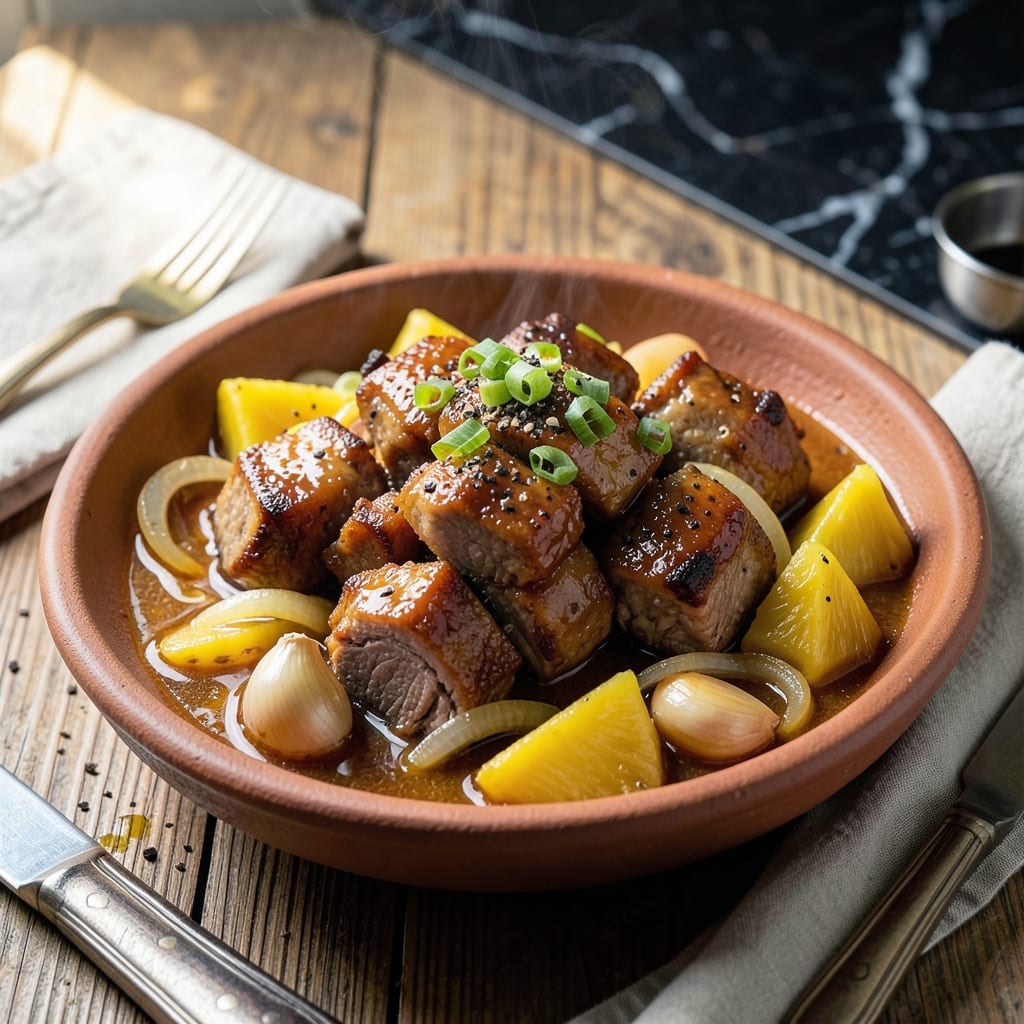
This Filipino pork estofado delivers a perfect balance of sweet and tangy flavors that defines the dish. The pineapple juice adds natural sweetness that complements the savory pork beautifully.
I developed this recipe after testing multiple versions to achieve the ideal texture and flavor profile. The pork becomes fork-tender while soaking up the rich, slightly tangy sauce that makes this stew so special.
The secret lies in the slow simmering process that allows the flavors to meld together. The result is a comforting, deeply flavorful dish that’s perfect for family dinners or special occasions.
Serve with steamed rice to soak up every drop of the delicious sauce. This recipe brings authentic Filipino flavors to your table with simple, accessible ingredients.
Ingredients for Pork Estofado Recipe with Pineapple Juice
Fifteen ingredients build this rich, tangy Filipino stew with perfectly balanced flavors.
| Ingredient | Amount | Notes |
|---|---|---|
| Pork Shoulder 🥩 | 2 lb | Cut into 2-inch cubes, bone-in preferred |
| Pineapple Juice 🍍 | 1 ½ cups | Unsweetened, canned or fresh |
| White Vinegar 💧 | ½ cup | Distilled or cane vinegar |
| Soy Sauce 🫒 | ¼ cup | Regular or light variety |
| Garlic Cloves 🧄 | 6 cloves | Minced for depth of flavor |
| Yellow Onion 🧅 | 1 whole | Large, thinly sliced |
| Bay Leaves 🌿 | 2 pieces | Dried, for aromatic base |
| Black Peppercorns 🌶️ | 1 tsp | Whole, crushed lightly |
| Brown Sugar 🍚 | 2 tbsp | Light or dark variety |
| Potatoes 🥔 | 2 whole | Medium, peeled and quartered |
| Carrots 🥕 | 2 whole | Large, cut into chunks |
| Green Bell Pepper 🌶️ | 1 whole | Seeds removed, sliced |
| Vegetable Oil 🫒 | 2 tbsp | For browning pork |
| Water 💧 | 1 cup | As needed for simmering |
| Salt 🧂 | 1 tsp | Adjust to taste |
The pork shoulder is non-negotiable for that melt-in-your-mouth texture—bone-in pieces add depth. Asian markets often have pre-cut cubes, but any butcher can prep it for you. Look for good marbling; lean cuts won’t hold up to the long simmer. Pineapple juice should be unsweetened—canned works, but fresh is brighter if you’re juicing your own.
No pineapple juice? Orange juice plus a splash of lime mimics the sweet-tangy balance. Swap soy sauce for tamari if gluten-free is needed. Brown sugar can be coconut sugar for a deeper caramel note. Potatoes not on hand? Sweet potatoes work well, though they’ll soften faster. Skip the bell pepper if you must, but it adds a nice fresh crunch.
Leftovers taste even better after a night in the fridge—4-5 days max. Freeze for up to 3 months in airtight containers. The sauce thickens as it cools, so thin with a little water when reheating. Always serve with steamed rice to soak up every last drop.
Why You’ll Love This Recipe
- I’ll be real: it tastes even better the next day, and the flavors just keep getting deeper in the fridge.
- One Pot Wonder: I love that I just dump everything in one pot and let the pork shoulder soak up all the pineapple juice and soy sauce goodness.
- Sweet-Tangy Magic: The mix of pineapple juice and white vinegar gives this estofado that perfect balance of sweet and sour I crave.
- Feeds My Crowd: Honestly, it’s my go-to for family dinners – everyone loves the tender pork and that rich, garlicky sauce.
Step-by-Step Instructions for Pork Estofado With Pineapple Juice
Master this traditional technique for a rich stew with balanced sweet and tangy flavors.
Step 1: Brown the Pork Shoulder
Heat the 2 tbsp vegetable oil in a large pot over medium-high heat. Add the 2 lb pork shoulder cubes in a single layer, working in batches if needed to avoid crowding. Brown the pork on all sides for 5-7 minutes until deep golden brown.
This step builds the flavor foundation—don’t rush it. You want a deep sear on each piece. The pork should release easily from the pot when it’s ready to turn. Remove the browned pork and set aside.
Step 2: Sauté Aromatics and Toast Spices
In the same pot, add the minced 6 cloves garlic cloves and thinly sliced 1 whole yellow onion. Cook for 2-3 minutes until fragrant and translucent. Stir in the 1 tsp black peppercorns (lightly crushed) and 2 pieces bay leaves, toasting for 30 seconds.
Add the 2 tbsp brown sugar and cook for another 1 minute, stirring constantly, until it begins to caramelize slightly. This creates a deep, rich base for the sauce.
Step 3: Deglaze and Simmer the Stew
Pour in the 1.5 cups pineapple juice, 0.5 cup white vinegar, and 0.25 cup soy sauce. Use a wooden spoon to scrape up any browned bits from the bottom of the pot. These bits pack serious flavor.
Return the pork to the pot along with the 2 whole potatoes (peeled and quartered), 2 whole carrots (cut into chunks), and 1 whole green bell pepper (sliced). Add the 1 cup water and 1 tsp salt. Bring to a boil, then reduce heat to low.
Step 4: Simmer to Tender Perfection
Cover the pot and let the stew simmer gently for 45-50 minutes. Check occasionally and stir to prevent sticking. The pork should become fork-tender and the vegetables soft.
If the sauce reduces too much, add a splash of water to maintain the desired consistency. The stew should be thick enough to coat the back of a spoon but still have a saucy quality.
Step 5: Adjust and Serve
Taste and adjust the seasoning if needed. The flavors should be a perfect balance of sweet from the pineapple and brown sugar, tangy from the vinegar, and savory from the soy sauce. Remove the bay leaves before serving.
Let the estofado rest for 10 minutes off the heat to allow the flavors to meld. Serve hot over steamed rice, ensuring each serving has a generous amount of the rich, flavorful sauce.
Pro Tips For Making Pork Estofado Recipe With Pineapple Juice
- Sear the Pork First: Brown the pork shoulder cubes in batches over medium-high heat until deeply caramelized—this builds a flavor base that pineapple juice alone can’t match. I learned this the hard way when my first few attempts tasted flat.
- Balance the Pineapple: Use fresh pineapple juice if possible, and taste before adding extra vinegar—some brands are more acidic than others. Sounds weird, but it works: a splash of brown sugar can round out the tang if needed.
- Skip the Overcrowding: Don’t dump all the pork in the pot at once. Steer clear of this, or you’ll end up steaming instead of searing. About 2 tablespoons of oil per batch keeps things crispy where it counts.
- Simmer Low and Slow: Once the liquid is in, keep it at a gentle simmer—bubbling too hard turns the pork tough. My grandmother swore by this, and she was right: 45-60 minutes is the sweet spot for fall-apart tender meat.
Make-Ahead Tips for This Recipe
Overnight Flavor Boost
This stew actually tastes better the next day. I always make it 1 day ahead when serving guests. Let it cool completely, then refrigerate in an airtight container for up to 24 hours before reheating. The flavors meld overnight. 💡
Freezer Prep
For longer storage, cool the estofado completely and portion into freezer-safe containers. It freezes beautifully for up to 3 months. I use quart-sized mason jars from my Portland farmers market hauls.
Leave 1-inch headspace to prevent expansion cracks. Label with the date so you
Reheating Methods
For stovetop reheating, warm over medium-low heat for 10-15 minutes, stirring occasionally. Add a splash of water if it’s too thick. The microwave works too—cover and heat in 2-minute intervals, stirring between.
Partial Prep Ahead
Short on time? Brown the pork and prep all vegetables the night before. Store them separately in the fridge. In the morning, just combine everything and simmer as directed. This cuts active cooking time nearly in half. ⏰
Nutrition Facts
Frequently Asked Questions
Can I use a different cut of pork?
Pork shoulder works best for its marbling and tenderness. For leaner options, try pork butt. Avoid very lean cuts like tenderloin, as they can dry out during the 45-50 minutes simmer.
Why does the recipe call for both vinegar and pineapple juice?
The vinegar adds the traditional tang, while pineapple juice provides natural sweetness. Together, they create the signature sweet-tangy balance that defines this Filipino stew.
What if my sauce becomes too thick?
Simply add a splash of water or extra pineapple juice to reach your desired consistency. The sauce should coat the back of a spoon but still be pourable.
Can I make this in a slow cooker?
Yes! Brown the pork first, then transfer everything to your slow cooker. Cook on low for 6-8 hours or high for 4 hours, adding vegetables in the last 1-2 hours.

- Potato Candy Recipe 1933: Vintage Peanut Butter Roll Delight - October 30, 2026
- Potato Chip Cookie Recipe With Pecans: Buttery Crunch Meets Nutty Richness - October 30, 2026
- Potato Patty Recipe No Egg: Crispy Edges Without the Binder - October 30, 2026