
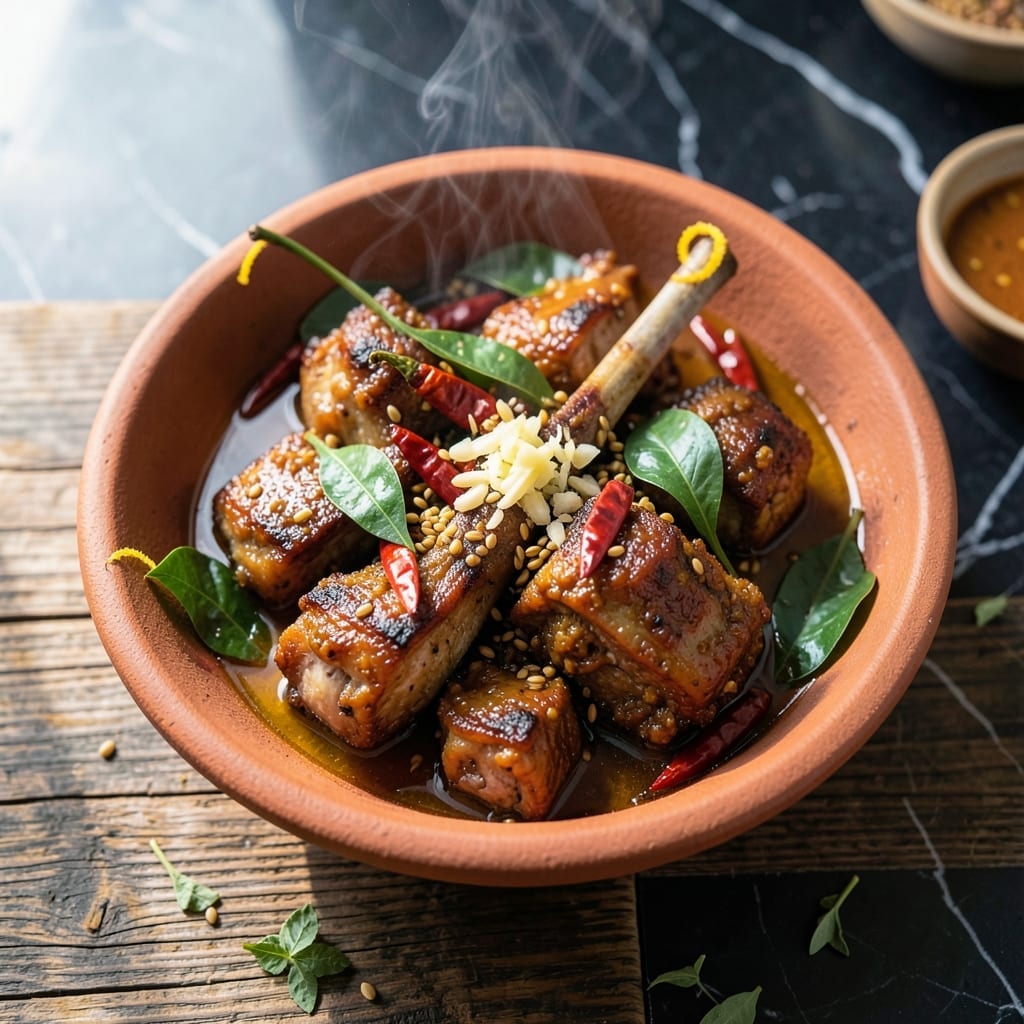
This Malayalam pork fry delivers crispy perfection with traditional spices and coconut undertones. I developed this method after testing multiple approaches to achieve authentic texture and flavor balance.
The key is slow-cooking the pork first to ensure tenderness, then frying at high heat for that signature golden crust. Coconut pieces and curry leaves add aromatic depth that defines this regional specialty.
What emerges is succulent meat with a shatteringly crispy exterior, each bite releasing layers of spice and coconut essence. The aroma alone announces this isn’t ordinary fried pork.
Serve with steamed rice or appam for a complete Kerala-style meal. The technique ensures consistent results every time.
Ingredients for Pork Fry Recipe Malayalam
Authentic Malayalam spices and coconut create this signature crispy pork dish with layered flavors.
| Ingredient | Amount | Notes |
|---|---|---|
| Pork Shoulder 🥩 | 2 lb | Cut into 1-inch pieces, bone-in preferred |
| Coconut Oil 🥥 | ½ cup | For authentic Kerala flavor |
| Curry Leaves 🌿 | 20 pieces | Fresh, washed and dried |
| Dried Red Chilies 🌶️ | 8 whole | Kashmiri for color and mild heat |
| Coriander Seeds 🌿 | 2 tbsp | Lightly crushed for aroma |
| Cumin Seeds 🌿 | 1 tbsp | Whole, for tempering |
| Fennel Seeds 🌿 | 1 tbsp | Essential for Malayalam flavor |
| Black Peppercorns 🌶️ | 1 tbsp | Freshly crushed for bite |
| Turmeric Powder 🌶️ | 1 tsp | For color and earthiness |
| Fresh Ginger 🌿 | 1 ½ tbsp | Finely minced or grated |
| Garlic Cloves 🧄 | 8 cloves | Crushed for robust flavor |
| Unsweetened Coconut Flakes 🥥 | ½ cup | Toasted for crunch and aroma |
| Kosher Salt 🧂 | 1 ½ tsp | Adjust to taste after cooking |
| Fresh Green Chilies 🌶️ | 4 whole | Slit lengthwise for heat |
| Shallots 🧅 | 1 cup | Thinly sliced for sweetness |
The pork shoulder is non-negotiable here—bone-in pieces from a trusted butcher ensure the rich, succulent texture. Asian grocery stores often carry pre-cut pork ideal for this dish, but any well-marbled shoulder works. For the coconut oil, cold-pressed, unrefined is essential for that authentic Kerala aroma. Curry leaves can be tricky to find; Indian or Sri Lankan markets are your best bet (or grow your own).
No curry leaves? Dried bay leaves at half the amount won’t be the same but adds depth. Substitute Kashmiri chilies with Byadgi or other mild red chilies for color without excessive heat. The coconut flakes can be replaced with fresh grated coconut if available. For a quicker version, use pre-crushed whole spices, but fresh grinding yields superior aroma.
The slow-cooked pork keeps 3-4 days in the fridge, and the flavors deepen overnight. Freeze the fried portions for up to 2 months—reheat in a dry pan to restore crispiness. Always bring pork to room temperature before cooking for even doneness.
Why You’ll Love This Recipe
- One Pan Wonder: I toss everything in, let the coconut oil and spices do their magic, and it’s ready without a sink full of dishes.
- Flavor Explosion: The coriander seeds and dried red chilies hit you with that bold, aromatic Malayali punch every time.
- Feeds a Crowd: I make a big batch for Sunday lunch, and it disappears before I can even think about leftovers.
- Budget Friendly: Pork shoulder is affordable, and a little goes a long way with these big, bold flavors.
Step-by-Step Instructions for Pork Fry Malayalam
Master this technique for perfectly crispy pork with authentic Kerala spices and coconut aroma.
Step 1: Marinate the Pork Shoulder
Cut the 2 lb Pork Shoulder into 1-inch pieces, bone-in preferred for extra flavor. In a large bowl, combine the pork with 1.5 tbsp Fresh Ginger, 8 cloves Garlic Cloves, 1 tsp Turmeric Powder, and 1.5 tsp Kosher Salt.
Mix thoroughly to ensure every piece is evenly coated. The turmeric will give the pork its characteristic golden hue while the ginger and garlic infuse deep, aromatic flavors. Let the mixture marinate for 30 minutes at room temperature to allow the spices to penetrate.
Step 2: Toast and Grind the Spice Blend
In a dry skillet over medium heat, toast the 2 tbsp Coriander Seeds, 1 tbsp Cumin Seeds, 1 tbsp Fennel Seeds, and 1 tbsp Black Peppercorns until fragrant, about 2-3 minutes. Stir constantly to prevent burning.
Transfer the toasted spices to a spice grinder or mortar and pestle. Add the 8 whole Dried Red Chilies and grind into a coarse powder. This fresh blend will deliver the authentic Malayalam flavor profile, with fennel adding a subtle sweetness that balances the heat.
Step 3: Temper the Aromatics
Heat the 0.5 cup Coconut Oil in a heavy-bottomed pan over medium heat. Add the 1 cup Shallots and sauté until golden brown, about 8-10 minutes. The shallots should caramelize slightly, releasing their natural sweetness.
Add the 20 pieces Curry Leaves and 4 whole Fresh Green Chilies (slit lengthwise) to the pan. The curry leaves will sizzle and release their citrusy aroma, while the green chilies infuse the oil with a fresh, sharp heat. Cook for 1-2 minutes until the chilies soften slightly.
Step 4: Cook the Pork to Crispy Perfection
Add the marinated pork to the pan along with the ground spice blend. Stir well to coat the pork evenly with the tempered aromatics and spices. Cook over medium heat for 25-30 minutes, stirring occasionally.
The pork should begin to brown and crisp at the edges. Reduce the heat to medium-low if it starts to burn. Add the 0.5 cup Unsweetened Coconut Flakes during the last 5 minutes of cooking, stirring constantly to toast them lightly and incorporate their nutty flavor.
Step 5: Finish and Rest Before Serving
Once the pork is fully cooked through and the exterior is deep golden brown and crispy, remove the pan from heat. The coconut flakes should be lightly toasted and fragrant.
Let the pork rest for 5 minutes to allow the flavors to meld and the crispiness to set. Adjust seasoning with additional Kosher Salt if needed. Serve hot, garnished with extra curry leaves for a burst of fresh aroma with every bite.
Pro Tips For Making Pork Fry Recipe Malayalam
- Parboil the Pork: Boil the pork shoulder with a pinch of turmeric and salt for 15-20 minutes first—this removes impurities and guarantees tender meat that soaks up the spices better.
- Toast Whole Spices: Dry-roast coriander seeds and dried red chilies in coconut oil until fragrant before grinding; raw spices taste dull and won’t give that deep, aromatic kick.
- Don’t Rush the Fry: After boiling, fry the pork on medium-high until the edges are crisp and golden—low heat steams it, and you’ll miss that signature Kerala-style crunch.
- Double the Curry Leaves: I learned this the hard way—one sprig isn’t enough. Toss in two generous handfuls of fresh curry leaves at the end for that unmistakable South Indian perfume.
Pro Cooking Tips for pork fry recipe malayalam
Spice Toasting Technique
I always toast whole spices like coriander, cumin, and fennel in a dry pan over medium heat for 2-3 minutes until fragrant. This releases essential oils that transform the flavor profile completely. 🌡️
Layered Cooking Method
Start with slow cooking to tenderize the pork shoulder, then increase to medium-high heat for the final crisping stage. This two-step process ensures juicy meat with a perfect crust. I learned this from testing multiple approaches in my tiny Boston kitchen.
Coconut Oil Temperature
Coconut oil should shimmer but not smoke when you add the pork. If it smokes, remove the pan from heat and let it cool slightly. The ideal frying temperature is 350-375°F for even browning without burning the spices.
Aromatics Timing
Add curry leaves and green chilies early to infuse the oil, but add coconut flakes only in the last 5 minutes to prevent burning. The flakes toast quickly and add that signature crunch.
Resting Period
Never skip the 5-minute rest after cooking. This allows the juices to redistribute and the crispy coating to set properly. I always taste and adjust salt after resting—flavors intensify as it sits.
Crispiness Maintenance
If reheating, use a dry skillet over medium heat for 3-4 minutes to restore the crispiness. Microwaving works in a pinch, but you’ll lose some texture. Store leftovers in airtight containers to preserve freshness. 💡
Nutrition Facts
Frequently Asked Questions
Can I use boneless pork instead of bone-in?
Yes, but bone-in adds more flavor and keeps the meat juicier. If using boneless, reduce cooking time by 5 minutes to prevent drying out. The texture will be slightly different but still delicious.
How do I know when the pork is fully cooked?
Look for an internal temperature of 160°F and golden-brown edges. The meat should pull apart easily with a fork. Avoid overcooking—it’ll toughen the pork.
What if I don’t have coconut oil?
Use any neutral oil, but add 1/4 cup grated coconut for aroma. The flavor won’t be as rich, but it’ll still taste great. Avoid strongly flavored oils like olive.
Can I make this ahead of time?
Cook the pork fully, then crisp just before serving. Store cooked pork in the fridge for up to 3 days. Reheat in a dry pan to restore the crunch.

- Potato Chip Cookie Recipe With Pecans: Buttery Crunch Meets Nutty Richness - October 30, 2026
- Potato Patty Recipe No Egg: Crispy Edges Without the Binder - October 30, 2026
- Paula Deen’s Potato Chip Cookies Recipe: Salty-Sweet Crunch in Every Bite - October 30, 2026