
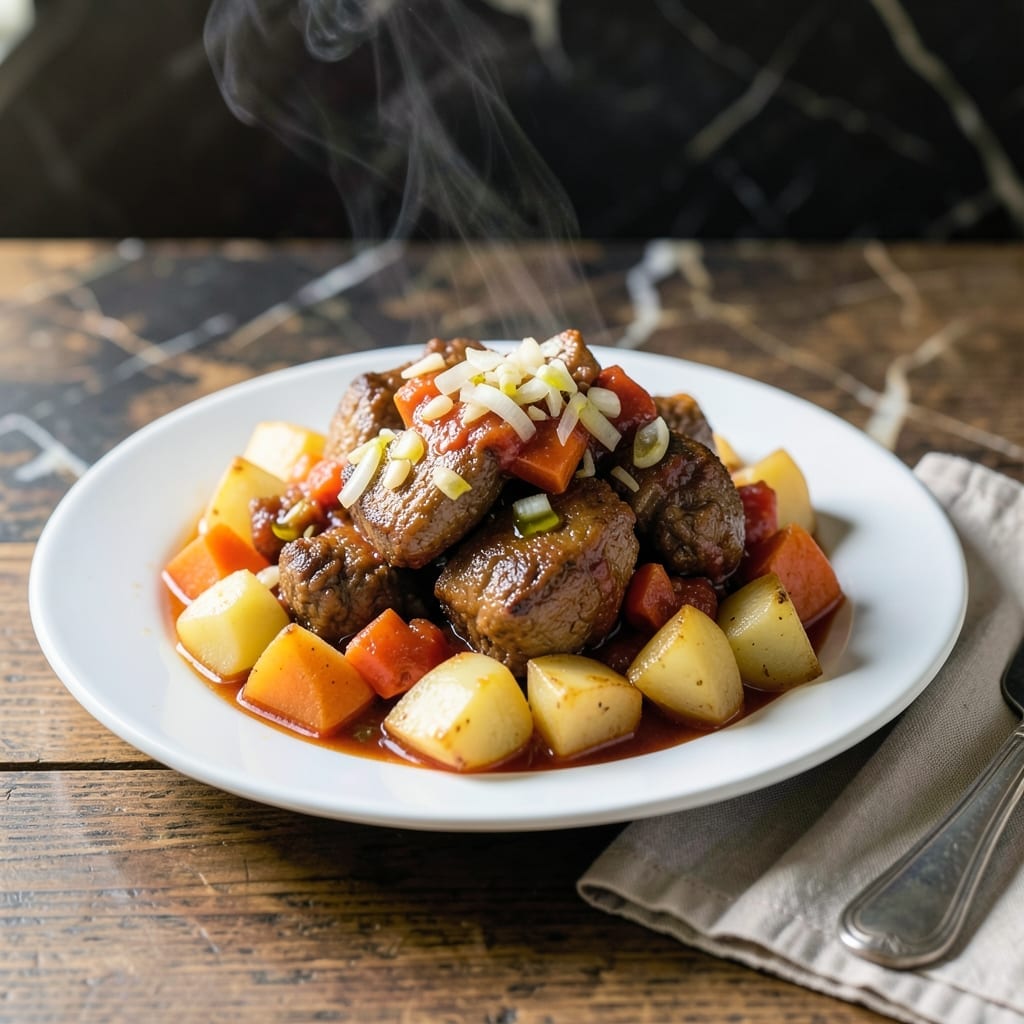
This Filipino-style ground pork dish brings comfort and authenticity to your home kitchen. I developed this recipe after discovering how simple ingredients can create complex, vibrant flavors with minimal effort.
The secret lies in the balance of savory, tangy, and slightly sweet notes that define traditional giniling. Ground pork cooks quickly while absorbing the rich tomato sauce, garlic, and spices that make this dish irresistibly satisfying.
What you get is a hearty, flavorful meal that’s perfect for weeknight dinners or special gatherings. The sauce clings to the pork, creating a dish that’s both rustic and deeply comforting.
Serve with steamed rice to soak up every drop of the savory sauce. Here’s how to make it.
Ingredients for Pork Giniling Recipe Tagalog
Simple ingredients create this vibrant Filipino-style ground pork dish with rich flavors.
| Ingredient | Amount | Notes |
|---|---|---|
| Ground Pork 🐷 | 1 ½ lb | 80/20 fat ratio preferred |
| Tomato Sauce 🍅 | 1 cup | Plain, no herbs added |
| White Onion 🧅 | 1 whole | Finely diced |
| Garlic Cloves 🧄 | 6 cloves | Minced for maximum flavor |
| Potatoes 🥔 | 2 whole | Peeled and diced |
| Carrots 🥕 | 2 whole | Peeled and diced |
| Green Peas 🌱 | ½ cup | Fresh or frozen |
| Raisins 🍇 | ¼ cup | Optional for sweetness |
| Soy Sauce 🫙 | 2 tbsp | Regular or light variety |
| Vinegar 🍶 | 1 tbsp | White or cane vinegar |
| Brown Sugar 🧈 | 1 tbsp | Packed tightly |
| Bay Leaf 🍃 | 1 whole | Dried or fresh |
| Salt 🧂 | 1 tsp | Adjust to taste |
| Black Pepper 🌶️ | ½ tsp | Freshly ground preferred |
| Olive Oil 🫒 | 2 tbsp | For sautéing vegetables |
The ground pork is key here—80/20 fat ratio gives the best flavor and texture. Look for fresh pork at Asian markets or your regular grocery store. I prefer ground pork with some fat for that authentic taste, but lean works in a pinch (just add a bit of oil). Tomato sauce should be plain, no added herbs—you want to control the seasoning yourself.
No tomato sauce? Crushed tomatoes blended smooth will do. Out of soy sauce? Fish sauce at half the amount adds the same umami depth. For a little sweetness, the raisins are traditional but a pinch of extra sugar works if you’re not a fan. The vinegar can be white or cane—whatever you’ve got in the pantry. Potatoes and carrots can be swapped for sweet potatoes or butternut squash.
Leftovers keep beautifully—store in the fridge for 3-4 days or freeze for up to 3 months. The flavors actually deepen overnight. Reheat gently on the stove with a splash of water (or just microwave, no judgment).
Why You’ll Love This Recipe
- One Pan Wonder: I just brown the ground pork, toss in the onions, garlic, and potatoes, then let the tomato sauce work its magic.
- Garlicky Comfort: The smell of sizzling garlic and onions with the pork is pure Filipino home cooking.
- Feeds the Crowd: Honestly, I double the batch and it disappears at family gatherings.
- Stretches the Budget: Ground pork and potatoes make this hearty and filling without breaking the bank.
Step-by-Step Instructions for Savory Filipino-Style Ground Pork
Here’s how I make this dish with perfect texture and flavor every single time.
Step 1: Sauté Aromatics Until Fragrant
Heat the 2 tbsp Olive Oil in a large skillet over medium heat. Add the 1 whole White Onion and cook for 2-3 minutes until it becomes translucent and just starts to soften. The onion should release a sweet aroma as it cooks down.
Add the 6 cloves Garlic Cloves and cook for another 30-45 seconds until fragrant but not browned. This builds the flavor foundation for the dish. If the garlic starts to brown, lower the heat immediately to prevent burning.
Step 2: Brown the Ground Pork
Increase the heat to medium-high and add the 1.5 lb Ground Pork. Break it up with a wooden spoon and cook for 8-10 minutes, stirring occasionally, until the pork is fully browned and no longer pink. You want to see the meat develop a slightly crispy texture on some pieces.
Season with the 1 tsp Salt and 0.5 tsp Black Pepper as it cooks. This ensures the seasoning is evenly distributed throughout the pork. Don’t rush this step—proper browning adds depth of flavor to the final dish.
Step 3: Add Vegetables and Build the Sauce
Stir in the 2 whole Potatoes, 2 whole Carrots, 0.5 cup Green Peas, and 0.25 cup Raisins. Cook for 3-4 minutes until the vegetables begin to soften slightly. The potatoes and carrots should start to absorb some of the flavors from the pork and aromatics.
Pour in the 1 cup Tomato Sauce, 2 tbsp Soy Sauce, 1 tbsp Vinegar, and 1 tbsp Brown Sugar. Add the 1 whole Bay Leaf and stir to combine. Bring the mixture to a gentle simmer, then reduce the heat to low.
Step 4: Simmer to Perfection
Cover the skillet and let the mixture simmer for 15-20 minutes, stirring occasionally. The vegetables should become tender, and the sauce should thicken slightly. The potatoes are done when they can be easily pierced with a fork.
If the mixture appears too dry, add a splash of water and continue simmering. The sauce should coat the back of a spoon when it’s ready. Taste and adjust the seasoning if needed, though the combination of soy sauce, vinegar, and brown sugar should provide a balanced savory-sweet-tangy flavor.
Pro Tips For Making Pork Giniling Recipe Tagalog
- Brown the Pork First: Cook the ground pork until it’s fully browned and crispy at the edges before adding onions and garlic—I learned the hard way that skipping this leaves the dish greasy and under-flavored.
- Dice Potatoes Small: Cut the potatoes into ½-inch cubes so they soften quickly and absorb the sauce better; anything larger turns the dish into a wait-for-potatoes-to-cook marathon.
- Simmer the Sauce: After adding tomato sauce, let it bubble gently for at least 10 minutes to thicken and deepen the flavor—rushing this step gives you a watery, bland giniling.
- Use Day-Old Potatoes: Sounds weird, but it works: parboiling the potatoes the night before and refrigerating them speeds up cooking time and gives a creamier texture in the final dish.
Storing and Reheating pork giniling recipe tagalog
Refrigerator Storage
Let your giniling cool completely before transferring to airtight containers—I use glass Pyrex for easy reheating. Store in the fridge at 40°F or below for 3-4 days. The flavors meld beautifully overnight, making leftovers taste even better. ❄️
Freezer Storage
For longer storage, portion into freezer-safe bags or containers. I recommend quart-size freezer bags for space efficiency. Leave 1-inch headspace for expansion and freeze for up to 3 months. Label with the date to track freshness.
Stovetop Reheating
Gently reheat in a skillet over medium-low heat with 2-3 tbsp water to prevent drying out. Stir occasionally for 8-10 minutes until heated through. The sauce will thicken as it warms, so add more water if needed.
Microwave Reheating
For quick meals, microwave single portions covered with a damp paper towel. Heat on 70% power for 2-3 minutes, stir, then continue in 30-second intervals until reaching 165°F. This prevents hot spots.
Thawing Tips
Move frozen giniling to the fridge 24 hours before reheating for even thawing. For faster results, use the defrost setting on your microwave. Once thawed, reheat immediately and do not refreeze. 💡
Nutrition Facts
Frequently Asked Questions
Can I use ground beef instead of pork?
Yes, but expect a slightly different flavor profile. Use 80/20 ground beef for similar texture. The taste will be beefier, so consider adding an extra 1 tsp soy sauce to boost umami.
Why do we add vinegar to the dish?
The 1 tbsp vinegar brightens all the flavors and cuts through the richness. It’s a traditional Filipino touch that balances the sweetness and saltiness perfectly. Don’t skip it!
How do I prevent the sauce from becoming too watery?
Simmer uncovered for the last 5 minutes if needed. Also, ensure potatoes and carrots are diced uniformly (1/2-inch pieces) so they cook at the same rate.
What can I serve besides rice?
Try it with steamed bread rolls or cauliflower rice for a low-carb option. The sauce soaks in beautifully to any starchy side.

- Potato Candy Recipe 1933: Vintage Peanut Butter Roll Delight - October 30, 2026
- Potato Chip Cookie Recipe With Pecans: Buttery Crunch Meets Nutty Richness - October 30, 2026
- Potato Patty Recipe No Egg: Crispy Edges Without the Binder - October 30, 2026