
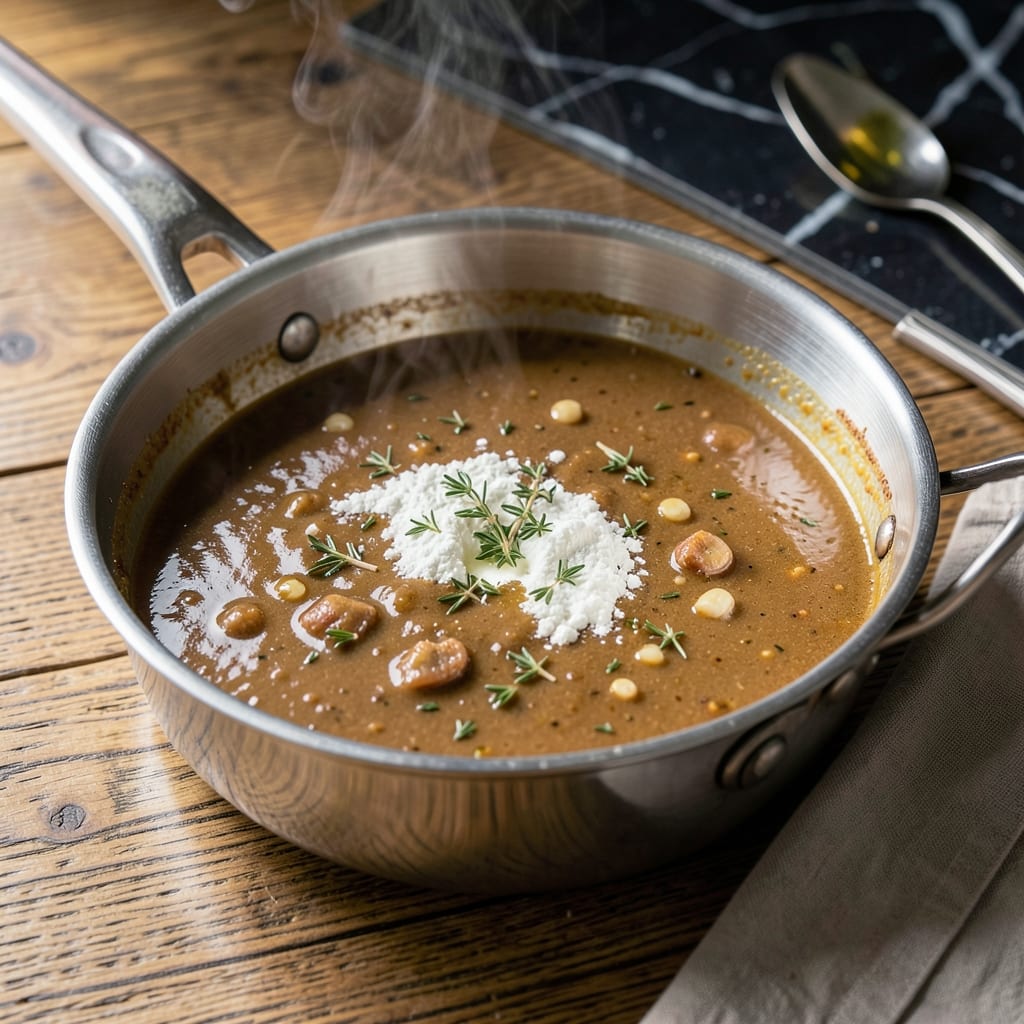
There’s no need to let those precious pork drippings go to waste when you can transform them into a rich, velvety gravy. This pan sauce captures every bit of flavor from your roast, creating a luxurious finish that elevates any meal.
I learned the art of gravy-making in my grandmother’s Atlanta diner, where wasting a drop of drippings was unthinkable. The process is simple: skim the fat, build a roux, and let the liquid reduce into a glossy, deeply savory sauce.
What you’ll get is a gravy with restaurant-quality depth—silky, aromatic, and packed with the essence of the roast. It’s the kind of touch that turns a good meal into an unforgettable one.
Perfect for smothering mashed potatoes, roasted vegetables, or the pork itself. Here’s how to make it right every time.
Ingredients for Pork Gravy Recipe with Drippings
Transform pork drippings into silky, restaurant-quality gravy with these simple staples.
| Ingredient | Amount | Notes |
|---|---|---|
| Pork Drippings 🍖 | 1 cup | From roasted pork, fat skimmed |
| All-Purpose Flour 🌾 | ¼ cup | For thickening roux |
| Unsalted Butter 🧈 | 2 tbsp | Optional for extra richness |
| Low-Sodium Chicken Stock 🍲 | 2 cups | Or substitute pork stock |
| Fresh Thyme Sprigs 🌿 | 4 whole | Stems removed, leaves only |
| Garlic Cloves 🧄 | 2 cloves | Minced for depth |
| Dijon Mustard 🟡 | 1 tsp | Adds tangy complexity |
| Worcestershire Sauce 🫒 | 1 tsp | For umami boost |
| Kosher Salt 🧂 | ½ tsp | Adjust to taste |
| Freshly Ground Black Pepper 🌶️ | ¼ tsp | For finishing touch |
The drippings are everything here. Save every last bit from your pork roast—fat and all. I learned in my grandmother’s diner that skimmed fat (the clear liquid on top when cooled) makes the smoothest gravy, but a little left in adds richness. For stock, Swanson or Better Than Bouillon work well, but homemade is unbeatable. Fresh thyme (from Whole Foods or your garden) gives that bright, aromatic note you can’t get from dried.
No pork drippings? Beef or chicken drippings work in a pinch. Out of thyme? Rosemary at half the amount adds a piney depth. If stock is too salty, dilute with water. The roux is forgiving—if it’s too thick, whisk in more stock. Diamond Crystal kosher salt is my go-to for seasoning, but any fine salt works. The mustard and Worcestershire are optional but add serious depth (don’t skip them).
Gravy thickens as it cools. Store in an airtight container for up to 4 days in the fridge, or freeze for 3 months (reheat gently with a splash of water). Pro tip: strain before serving for that silky texture (worth the extra minute).
Why You’ll Love This Recipe
- One Pot Magic: I just whisk the drippings with flour, then slowly add stock—no extra pans, no fuss.
- Rich and Savory: The pork drippings and fresh thyme give it a depth that store-bought gravy can’t touch.
- Pairs with Everything: I drizzle it over mashed potatoes, biscuits, or even roasted veggies for an instant upgrade.
- Pennywise Perfection: Honestly, using those leftover drippings means I’m stretching my grocery budget without sacrificing flavor.
Step-by-Step Instructions for Pork Gravy With Drippings
Transform those precious pork drippings into a velvety, restaurant-quality sauce with these simple steps.
Step 1: Create a Flavorful Roux Base
Place a medium saucepan over medium heat and add the 1 cup Pork Drippings. I always skim the fat first to ensure a clean, rich flavor without any burnt bits. Let it heat until it just begins to shimmer—this is your cue it’s ready.
Gradually whisk in the 0.25 cup All-Purpose Flour until completely smooth. This is your roux, and it should look like a thick, bubbling paste. Cook for 2-3 minutes until it turns a light golden color, stirring constantly to prevent burning. You’ll notice a nutty aroma developing—that’s how you know it’s working.
Step 2: Build Depth with Aromatics
Add the 2 tbsp Unsalted Butter and let it melt into the roux. Then stir in the 2 cloves Garlic Cloves (minced) and the leaves from the 4 whole Fresh Thyme Sprigs. Cook for 1 minute until the garlic becomes fragrant but not browned—burnt garlic will make your gravy bitter.
The butter adds richness while the garlic and thyme infuse the roux with layers of flavor. You want the mixture to look glossy and smell incredible at this stage. If it starts to darken too quickly, reduce the heat slightly.
Step 3: Deglaze and Simmer to Perfection
Slowly pour in the 2 cups Low-Sodium Chicken Stock, whisking constantly to prevent lumps. This step is crucial—adding the liquid gradually ensures a smooth gravy. Bring the mixture to a gentle simmer over medium heat.
Once simmering, stir in the 1 tsp Dijon Mustard, 1 tsp Worcestershire Sauce, 0.5 tsp Kosher Salt, and 0.25 tsp Freshly Ground Black Pepper. Reduce the heat to low and let it simmer for 8-10 minutes, stirring occasionally, until it thickens enough to coat the back of a spoon.
Step 4: Adjust and Serve
Taste and adjust the seasoning if needed. The gravy should have a rich, savory depth with a hint of tang from the mustard and Worcestershire. If it’s too thick, whisk in a splash more stock to reach your desired consistency. If it’s too thin, let it simmer a few minutes longer.
Strain out the thyme leaves if you prefer a smoother texture, though I often leave them in for a rustic touch. Serve immediately while hot—the flavors will deepen as it sits, but nothing beats fresh, steaming gravy over roasted pork or mashed potatoes.
Pro Tips For Making Pork Gravy Recipe With Drippings
- Skim the Fat First: Use a spoon or fat separator to remove excess fat from the pork drippings before making the roux—I learned this the hard way after ending up with greasy gravy more times than I care to admit.
- Whisk Constantly: When adding flour to the drippings, keep the whisk moving nonstop over medium heat for 2-3 minutes to cook out the raw flour taste and prevent lumps.
- Warm the Stock: Heat your low-sodium chicken stock before adding it to the roux; cold stock makes the gravy seize up and turn lumpy, and nobody wants that.
- Strain for Smoothness: After simmering with thyme, strain the gravy through a fine-mesh sieve to remove any bits of flour or herbs—sounds like an extra step, but it’s worth it for that silky texture.
Common Mistakes When Making pork gravy recipe with drippings
Overcooking the Roux
Cooking your roux past a light golden color is a common mistake. Dark roux can make your gravy taste bitter. I always pull mine off the heat at the first sign of golden color, usually after 2-3 minutes on medium heat. David can always tell when I’ve rushed this step. 💡
Skipping the Fat Skimming
Using all the drippings without skimming the fat can make your gravy greasy. I let the drippings settle for 5 minutes, then skim off the clear fat with a spoon. This simple step ensures a silky texture every time.
Adding Liquid Too Fast
Pouring in all the stock at once creates lumps in your gravy. I add my 2 cups Low-Sodium Chicken Stock in ½ cup increments, whisking constantly. This gradual approach guarantees a smooth, lump-free sauce.
Over-Seasoning Early
Adding all your salt at the beginning can lead to an overly salty gravy as it reduces. I season lightly at first, then adjust with 0.5 tsp Kosher Salt at the end. The flavors concentrate as it simmers, so less is more initially.
Not Simmering Long Enough
Rushing the simmering process results in thin gravy. I let mine simmer for the full 8-10 minutes on low heat until it coats the back of a spoon. This is when all the flavors meld together beautifully.
Forgetting to Strain
Leaving in thyme stems or burnt bits can affect texture. I always strain my gravy through a fine-mesh sieve before serving. It’s a small step that makes a big difference in presentation and mouthfeel.
Nutrition Facts
Frequently Asked Questions
What can I use if I don’t have pork drippings?
Beef or chicken drippings work well as substitutes. For a vegetarian option, use 2 tbsp olive oil with 1 tbsp soy sauce to mimic the depth. The key is using something with rich, savory notes.
How do I fix lumps in my gravy?
Whisk vigorously to break up small lumps, or strain through a fine-mesh sieve. For stubborn lumps, blend briefly with an immersion blender. Prevention is best: add stock slowly while whisking.
Can I make this gravy ahead of time?
Yes! Store in an airtight container in the fridge for up to 4 days. Reheat gently on low heat, adding a splash of stock if it thickens too much. Avoid boiling to prevent separation.
Why is my gravy too thin?
It likely needs more simmering time. Let it reduce on low heat for 5-10 minutes. If still thin, mix 1 tbsp cornstarch with 1 tbsp cold water, then whisk into the gravy.

- Potato Candy Recipe 1933: Vintage Peanut Butter Roll Delight - October 30, 2026
- Potato Chip Cookie Recipe With Pecans: Buttery Crunch Meets Nutty Richness - October 30, 2026
- Potato Patty Recipe No Egg: Crispy Edges Without the Binder - October 30, 2026