
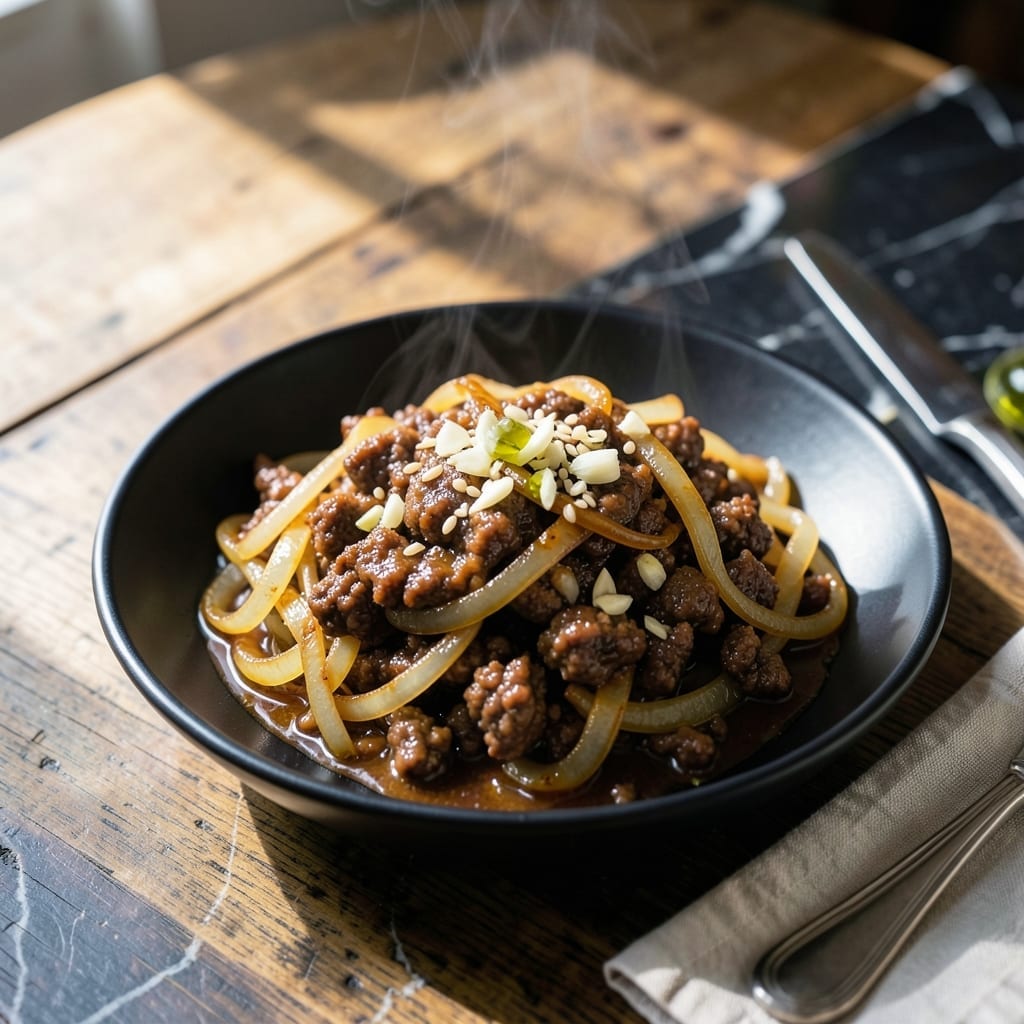
This Filipino-inspired pork bowl brings comfort food to a new level with tender meat and a savory-sweet sauce. I’ve adapted the classic beef gyudon, using ground pork for a richer, more accessible twist.
The dish comes together quickly with simple ingredients like soy sauce, onions, and a touch of sugar for balance. It’s a one-pan meal that’s perfect for busy weeknights when you crave something hearty.
What you’ll love is how the pork soaks up the umami-packed sauce, creating a dish that’s both satisfying and deeply flavorful. Serve it over steamed rice for a meal that feels like a hug in a bowl.
Ready in under 30 minutes, this is a dish that delivers on taste without the fuss.
Ingredients for Pork Gyudon Recipe Panlasang Pinoy
Ground pork, soy sauce, and a few pantry staples create this comforting bowl.
| Ingredient | Amount | Notes |
|---|---|---|
| Ground Pork 🐖 | 1 lb | 80-85% lean for best texture |
| Yellow Onion 🧅 | 1 whole | Thinly sliced for sweetness |
| Soy Sauce 🫒 | ½ cup | Use low-sodium for balance |
| Brown Sugar 🍚 | 2 tbsp | Light or dark works fine |
| Garlic Cloves 🧄 | 4 cloves | Minced for maximum flavor |
| Fresh Ginger 🌿 | 1 tbsp | Grated for zing |
| Dashi Stock 🍲 | 1 cup | Or substitute chicken broth |
| Mirin 🍶 | 2 tbsp | Sweet rice wine essential |
| Cooking Sake 🍶 | 2 tbsp | Dry white wine substitute |
| Steamed White Rice 🍚 | 4 cups | Cooked for serving |
| Green Onions 🧅 | 3 whole | Thinly sliced for garnish |
| Neutral Oil 🫒 | 1 tbsp | For sautéing onions |
| Sesame Seeds 🌰 | 1 tsp | Toasted for garnish |
| Red Pepper Flakes 🌶️ | ¼ tsp | Optional for heat |
The pork is key here—ground pork with 80-85% lean gives the right balance of fat for flavor. I grab mine from Whole Foods or Costco for quality. For the dashi stock, look for it in the Asian aisle or at H Mart. If you can’t find it, chicken broth works in a pinch (just add a tiny bit of soy for depth). The ginger and garlic? Fresh is non-negotiable.
No mirin or sake on hand? Dry sherry plus a pinch of sugar mimics mirin, and dry white wine stands in for sake. Brown sugar can be swapped with coconut sugar or maple syrup (use slightly less). If you skip the sesame seeds, crushed peanuts add a nice crunch. The rice should be short-grain if you want authenticity, but any white rice works.
This keeps well—store in the fridge for up to 4 days. The flavors actually deepen overnight. Freeze without the rice for up to 3 months. Reheat gently on the stove with a splash of water to loosen the sauce.
Why You’ll Love This Recipe
- One Pan Wonder: I love that I can brown the ground pork, sauté the onions and garlic, and simmer everything in soy sauce and brown sugar all in the same pan.
- Sweet-Savory Magic: The brown sugar caramelizes with the soy sauce, while the garlic and onions add depth—it’s ridiculously good over rice.
- Weeknight Lifesaver: Between us, this is my go-to for busy evenings when I need something hearty and fast.
- Budget Stretcher: Ground pork is affordable, and this dish feeds my family for two meals without breaking the bank.
Step-by-Step Instructions for Pork Gyudon
This method delivers tender pork and a rich, savory sauce that soaks perfectly into the rice.
Step 1: Sauté Aromatics Until Fragrant
Heat the 1 tbsp neutral oil in a large skillet over medium-high heat until it shimmers. Add the 1 whole yellow onion, thinly sliced, and cook for 4-5 minutes until it softens and turns translucent around the edges.
Add the 4 cloves garlic cloves, minced, and 1 tbsp fresh ginger, grated. Stir constantly for 30-45 seconds until the aroma becomes intense and the garlic just begins to turn light golden brown. Be careful not to let it burn—garlic turns bitter quickly.
Step 2: Brown the Ground Pork
Add the 1 lb ground pork to the skillet, breaking it up with a wooden spoon into small, even pieces. Cook for 5-6 minutes, stirring occasionally, until the pork is no longer pink and starts to develop a light brown crust on some pieces.
This step builds the base flavor for the dish. The pork should be fully cooked through with no raw spots remaining. If there’s excess fat in the pan, tilt it slightly and spoon out just enough to leave about 1 tablespoon for flavor.
Step 3: Build and Simmer the Sauce
Pour in the 0.5 cup soy sauce, 2 tbsp brown sugar, 2 tbsp mirin, 2 tbsp cooking sake, and 1 cup dashi stock. Stir well to combine and scrape up any browned bits from the bottom of the pan.
Bring the mixture to a gentle boil, then reduce heat to medium-low. Let it simmer uncovered for 8-10 minutes until the liquid reduces slightly and thickens to a syrupy consistency that coats the back of a spoon. The sauce should be rich and glossy.
Step 4: Finish and Serve Over Rice
Taste the sauce and adjust seasoning if needed—add a pinch of sugar if it needs balancing or a splash of dashi if it’s too salty. Remove from heat and let it sit for 2 minutes to allow the flavors to meld.
Divide the 4 cups steamed white rice among bowls. Spoon the pork and sauce evenly over the rice. Garnish with the 3 whole green onions, thinly sliced, 1 tsp sesame seeds, and 0.25 tsp red pepper flakes for a touch of heat. Serve immediately while hot.
Pro Tips For Making Pork Gyudon Recipe Panlasang Pinoy
- Brown the Pork First: Cook the ground pork over medium-high heat until fully browned before adding anything else—this builds flavor and prevents a watery sauce.
- Slice Onions Thinly: Cut the yellow onion into paper-thin slices so they melt into the dish rather than staying crunchy.
- Balance the Sweetness: Taste as you go and add the brown sugar gradually—some soy sauces are saltier than others, and you might need less.
- Simmer Uncovered: Let the sauce reduce uncovered for the last 5 minutes to thicken it just right—I learned this the hard way after serving gyudon soup once.
Dietary Considerations for These Flavors
Gluten-Free Option
Swap the regular soy sauce for tamari—it’s naturally gluten-free and has a richer, more complex flavor that works beautifully in this dish. I pick up San-J Tamari at New Seasons Market for consistent quality. Always double-check labels for hidden wheat. 💡
Lower Sodium Version
Use low-sodium soy sauce and reduce the amount to ⅓ cup, then boost umami with 1 tsp fish sauce or 1 tbsp coconut aminos. This keeps the depth of flavor without the salt overload. I also cut the brown sugar to 1 tbsp for balance.
Dairy-Free Friendly
This recipe is naturally dairy-free, so no adjustments are needed. Just ensure your dashi stock doesn’t contain any dairy additives—I make mine from scratch with kombu and bonito flakes for a clean, traditional base.
Pork-Free Adaptation
For a vegetarian twist, swap the ground pork for crumbled tempeh or mushrooms. Sauté 8 oz mushrooms until deeply browned before adding the sauce. The mushrooms soak up the flavors just like meat. My daughter Lily loves this version!
Allergen Note
If you’re avoiding soy, use coconut aminos in place of soy sauce and mirin. It’s a 1:1 swap, though the flavor will be slightly sweeter. Check that your dashi stock is soy-free, too—I find kombu-only dashi works well. 🌱
Sugar Alternatives
Replace brown sugar with coconut sugar or maple syrup for a lower glycemic index. Use 1½ tbsp of either, as they’re sweeter. Honestly, I often use local honey from the Portland farmers market—it adds a lovely floral note.
Nutrition Facts
Frequently Asked Questions
Can I use regular soy sauce instead of low-sodium?
Yes, but reduce it to ⅓ cup and taste before adding more. Regular soy sauce is saltier, so start with less to avoid overpowering the dish.
How do I know when the sauce is ready?
It should coat the back of a spoon and thicken slightly after 8-10 minutes of simmering. If it’s too thin, cook a few minutes longer.
Can I make this ahead of time?
Store in the fridge for up to 4 days. The flavors deepen overnight. Reheat gently with a splash of water to loosen the sauce.
What if I don’t have dashi stock?
Chicken broth works in a pinch. Add 1 tsp soy sauce to mimic the umami depth of dashi.

- Potato Patty Recipe No Egg: Crispy Edges Without the Binder - October 30, 2026
- Paula Deen’s Potato Chip Cookies Recipe: Salty-Sweet Crunch in Every Bite - October 30, 2026
- Potato Gnocchi Recipe Ideas: Pillowy Soft Dumplings With Rustic Charm - October 30, 2026