
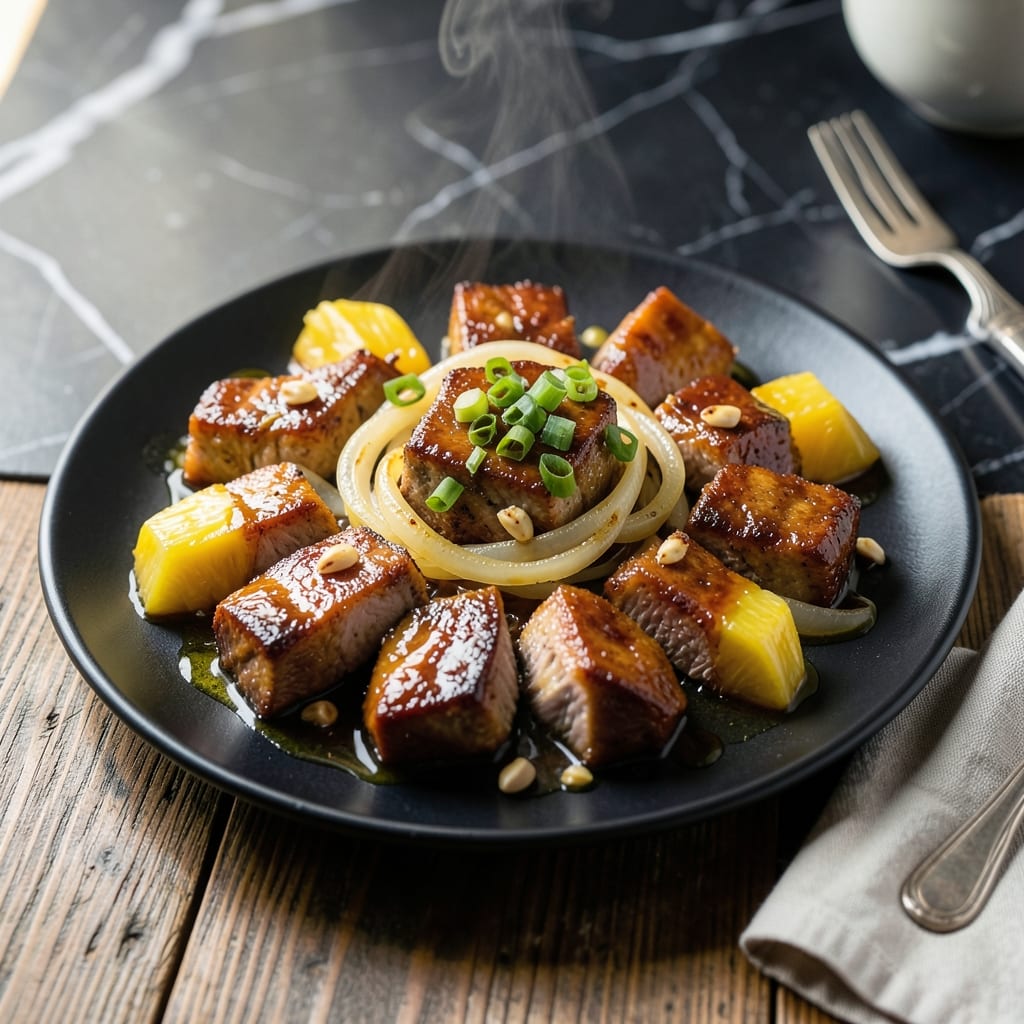
This Filipino braised pork dish combines sweet and savory flavors with a technique I perfected through repeated testing. The pineapple infusion creates a balanced sauce that complements the tender meat beautifully.
I developed this method using simple ingredients found in any regular grocery store. The braising process ensures the pork becomes fork-tender while absorbing the rich, caramelized sauce.
The result is a dish with layers of flavor—sweet from the pineapple, savory from the soy sauce, and a hint of tanginess that makes it irresistible. Each bite delivers the perfect harmony of textures and tastes.
This recipe transforms everyday pork into something extraordinary with minimal effort. The slow cooking process allows the flavors to meld together perfectly.
Ingredients for Pork Hamonado Recipe Filipino Style
Simple grocery list transforms pork into this pineapple-kissed Filipino braise with deep caramelized flavor.
| Ingredient | Amount | Notes |
|---|---|---|
| Pork Shoulder 🐖 | 2 lb | Cut into 2-inch cubes, bone-in preferred |
| Pineapple Juice 🍍 | 2 cups | 100% pure, no added sugar |
| Soy Sauce 🫒 | ½ cup | Regular or light variety |
| Brown Sugar 🍚 | ½ cup | Packed, light or dark |
| White Vinegar 💧 | ¼ cup | Distilled or white wine |
| Garlic Cloves 🧄 | 6 cloves | Minced finely for even distribution |
| Yellow Onion 🧅 | 1 whole | Medium, thinly sliced |
| Bay Leaves 🍃 | 2 whole | Dried, for aromatic depth |
| Black Peppercorns 🌶️ | 1 tsp | Whole, lightly crushed |
| Salt 🧂 | 1 tsp | Kosher or sea salt preferred |
| Canola Oil 🫒 | 2 tbsp | For searing pork cubes |
| Pineapple Chunks 🍍 | 1 cup | Fresh or canned in juice |
| Star Anise Pods ⭐ | 2 whole | Optional for authentic flavor |
| Laurel Leaves 🌿 | 2 whole | Alternative to bay leaves |
The pork shoulder is non-negotiable here—its fat content renders beautifully during the long braise, creating that signature fork-tender texture. Costco or Sam’s Club offer excellent quality at bulk prices, but any supermarket with a butcher counter will have it. Look for pieces with good marbling (the white streaks of fat) for optimal results. If buying pre-cut, ask for 2-inch cubes to ensure even cooking.
No pineapple juice? Blend fresh pineapple chunks with a splash of water—works in a pinch. Brown sugar can be swapped for coconut sugar (one-to-one ratio), though the flavor profile shifts slightly. Star anise is traditional but a cinnamon stick adds a similar warmth if you’re missing it. The soy sauce should be regular, not low-sodium, to balance the sweetness properly.
This tastes even better the next day as the flavors meld. Store in an airtight container in the fridge for up to 5 days or freeze for 3 months. Reheat gently on the stove with a splash of water to restore the sauce’s consistency.
Why You’ll Love This Recipe
- One Pot Wonder: I just dump everything in a pot and let the brown sugar and pineapple juice do the work.
- Sweet-Savory Magic: That mix of soy sauce, pineapple, and vinegar gives it this ridiculous sweet-tangy balance I can’t get enough of.
- Feeds a Crowd: I make a big batch on Sunday and we eat it for days—tastes even better reheated.
- Pantry Staples: Honestly, I usually have all these ingredients already, so it’s a lifesaver when I’m too tired to shop.
Step-by-Step Instructions for Pork Hamonado Filipino Style
Master this traditional braising technique for tender pork with a balanced sweet-savory pineapple sauce.
Step 1: Sear and Brown the Pork Shoulder
Heat the 2 tbsp canola oil in a large, heavy-bottomed pot over medium-high heat. When the oil shimmers, add the 2 lb pork shoulder cubes in a single layer, working in batches if necessary to avoid crowding the pan.
Sear the pork for 4-5 minutes per side until all surfaces develop a deep golden brown crust. This step builds a flavor foundation and prevents the meat from stewing in its own juices later. Remove the pork and set aside.
Step 2: Build the Aromatic Base
In the same pot, add the thinly sliced yellow onion and sauté for 3 minutes until softened and lightly caramelized. Add the 6 cloves minced garlic cloves and cook for 30 seconds until fragrant but not browned.
Stir in the 0.5 cup brown sugar and cook for 1-2 minutes until it begins to melt and darken slightly. This creates a rich caramel base that will deepen the sauce’s complexity as it braises.
Step 3: Deglaze and Add Braising Liquid
Pour in the 0.25 cup white vinegar to deglaze the pot, scraping up all the browned bits from the bottom. Add the 2 cups pineapple juice, 0.5 cup soy sauce, 1 tsp salt, 1 tsp crushed black peppercorns, 2 whole bay leaves, 2 whole star anise pods, and 2 whole laurel leaves.
Return the seared pork to the pot along with any accumulated juices. Add the 1 cup pineapple chunks. The liquid should just cover the pork—if not, add a splash of water. Bring to a gentle boil.
Step 4: Braise to Tender Perfection
Reduce heat to low, cover, and let the pork braise for 1.5 to 2 hours. Check occasionally and stir gently to prevent sticking. The pork is done when it’s fork-tender and the sauce has thickened slightly.
During the last 30 minutes, remove the lid to allow the sauce to reduce and concentrate. You want it to coat the back of a spoon with a glossy sheen, indicating it has reached the ideal consistency.
Step 5: Adjust Seasoning and Serve
Remove the bay leaves, star anise pods, and laurel leaves from the sauce. Taste and adjust seasoning if needed, though the balance of sweet, sour, and savory should be perfect from the braising process.
Serve hot over steamed rice, ensuring each portion includes plenty of the rich pineapple-infused sauce. The pork should be fall-apart tender with a glossy, caramelized exterior that soaks up every bit of flavor.
Pro Tips For Making Pork Hamonado Recipe Filipino Style
- Simmer Low and Slow: I learned this the hard way—boiling the pork aggressively in pineapple juice and soy sauce makes it tough. Keep it at a gentle simmer for 1.5-2 hours so the shoulder stays tender and soaks up the sweet-savory sauce.
- Score the Fat: Before browning, cut shallow slits into the pork shoulder’s fat cap. Sounds weird, but it works: the sugar in the sauce caramelizes into those grooves, giving you crispy edges and deeper flavor in every bite.
- Balance the Tang: Resist the urge to dump all the vinegar in at once. Start with half, taste as it reduces, then add more if needed—too much early on can curdle the sauce or overpower the brown sugar’s caramel notes.
- Use Fresh Pineapple Juice: My grandmother swore by this, and she was right: canned juice works, but fresh pineapple juice (strained) adds a brighter, more complex sweetness that cuts through the soy’s saltiness.
Make-Ahead Tips for Leftovers
Overnight Marinating
For even deeper flavor, I recommend marinating the pork in the pineapple juice, soy sauce, and brown sugar mixture overnight. Combine these in a bowl with the pork, cover, and refrigerate for 8-12 hours. This extra step makes the meat more tender and infuses it with those signature sweet-savory notes. 💡
Prep Ahead Ingredients
Chop all your aromatics the night before—1 onion and 6 garlic cloves—and store them in a sealed container in the fridge. Measure out your ½ cup brown sugar and ¼ cup vinegar so they’re ready to go. This cuts your active cooking time in half the next day.
Partial Cooking Method
If you want to split the work, sear the pork and build the aromatic base in advance. Store the browned pork and onion-garlic-sugar mixture separately in the fridge for up to 24 hours. The next day, just add the liquids and finish the braising process.
Freezing Uncooked
For long-term prep, combine all ingredients except the pineapple chunks in a freezer bag. Freeze for up to 3 months. Thaw overnight in the fridge before cooking, then add the pineapple chunks and proceed with the braising. This works great for batch cooking. ❄️
Sauce Prep Tip
Make a double batch of the braising liquid and freeze half for next time. When ready to cook, just thaw the sauce, add fresh pork, and braise as usual. I’ve tested this method repeatedly—it saves time without sacrificing flavor.
Nutrition Facts
Frequently Asked Questions
Can I use a different cut of pork?
Pork shoulder works best, but pork butt is a great alternative. Avoid lean cuts like tenderloin as they dry out during the 1.5-2 hour braise.
How can I make the sauce thicker?
Uncover and simmer for an extra 10-15 minutes at the end. For faster results, mix 1 tbsp cornstarch with 2 tbsp water and stir in during the last 5 minutes.
Why did my sauce turn out too sweet?
Balance it with extra vinegar or soy sauce. Start with 1 tbsp of either, taste, and adjust. The vinegar adds tang while soy sauce brings savory depth.
Can I make this in a slow cooker?
Yes! Sear the pork first, then transfer everything to a slow cooker. Cook on low for 6-8 hours or high for 4 hours.

- Potato Candy Recipe 1933: Vintage Peanut Butter Roll Delight - October 30, 2026
- Potato Chip Cookie Recipe With Pecans: Buttery Crunch Meets Nutty Richness - October 30, 2026
- Potato Patty Recipe No Egg: Crispy Edges Without the Binder - October 30, 2026