
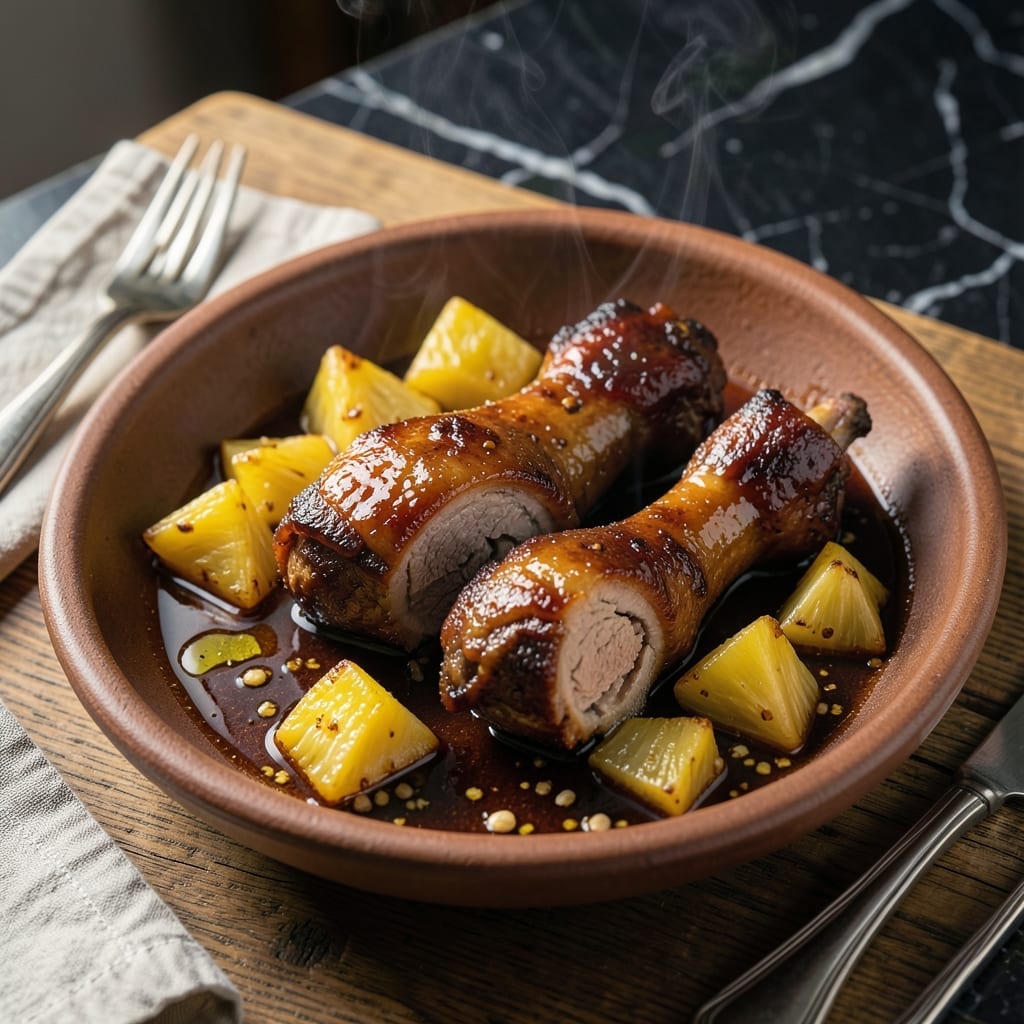
This Filipino pork hocks recipe transforms tough cuts into fall-off-the-bone tenderness through slow braising. The addition of pineapple introduces a bright tang that balances the rich meat perfectly.
I developed this method after testing multiple approaches to achieve that signature meltingly tender texture. The key is patience—allowing the collagen to break down while the flavors meld.
What emerges is a dish with deep, savory layers from soy and garlic, lifted by pineapple’s natural sweetness. The sauce reduces to a glossy coating that clings to every piece.
Serve with steamed rice to soak up every bit of that flavorful sauce. The result is worth the wait.
Ingredients for Pork Hocks Recipe Filipino
Transform tough cuts with these carefully selected ingredients for authentic Filipino richness.
| Ingredient | Amount | Notes |
|---|---|---|
| Pork Hocks 🐖 | 2 ½ lb | Skin-on, bone-in preferred |
| Pineapple Chunks 🍍 | 2 cups | Fresh or canned in juice |
| Soy Sauce 🥫 | ¾ cup | Low-sodium recommended |
| Garlic Cloves 🧄 | 8 cloves | Minced for depth of flavor |
| Brown Sugar 🍚 | ¼ cup | Light or dark variety |
| White Vinegar 💧 | ¼ cup | Balances richness perfectly |
| Bay Leaves 🌿 | 3 pieces | Dried, for aromatic depth |
| Black Peppercorns 🌶️ | 1 tbsp | Whole, lightly crushed |
| Onion 🧅 | 1 whole | Yellow or white, sliced |
| Water 💧 | 4 cups | For braising liquid |
| Vegetable Oil 🫒 | 2 tbsp | For searing pork hocks |
| Green Onions 🌱 | 4 whole | Thinly sliced for garnish |
| Star Anise Pods ⭐ | 2 pieces | Optional for authentic flavor |
| Salt 🧂 | 1 tsp | Adjust to taste |
The pork hocks are non-negotiable for this dish. Look for skin-on, bone-in cuts at your butcher or specialty meat market—they yield the most gelatinous, rich results. Asian grocery stores often carry pre-cut hocks perfect for braising. Fresh pineapple adds brightness, but canned in juice (not syrup) works in a pinch. The soy sauce should be a quality brand—Silver Swan or Datu Puti for authentic Filipino flavor.
No pork hocks? Pork shank or country-style ribs can substitute, though the texture will differ slightly. Fresh pineapple unavailable? Frozen works well (thaw first). For a quicker version, pressure cooker cuts time dramatically—25 minutes at high pressure versus 2-3 hours braising. The vinegar is essential for balance; don’t substitute with rice vinegar, as its milder acidity won’t cut through the richness as effectively.
This dish actually improves overnight as the flavors deepen. Store in the fridge for up to 4 days, or freeze for 3 months. Reheat gently to preserve the tender texture. The rendered fat can be skimmed and saved for cooking—it’s liquid gold for flavor.
Why You’ll Love This Recipe
- One Pot Wonder: I just toss the pork hocks, pineapple, and garlic in a pot with soy sauce and sugar—minimal cleanup, maximum flavor.
- Sweet-Savory Magic: The brown sugar caramelizes with the soy sauce while the pineapple adds this bright, tangy contrast that I can’t get enough of.
- Feeds a Hungry Table: Between us, this is my go-to for family gatherings—hearty enough for seconds and thirds, and the leftovers taste even better the next day.
- Budget Stretcher: Pork hocks are so affordable, and with the pineapple chunks bulking it up, I get a rich, satisfying dish without breaking the bank.
Step-by-Step Instructions for Pork Hocks Filipino Style
This method delivers tender meat with a rich, tangy-sweet sauce that defines the dish.
Step 1: Sear the Pork Hocks for Depth of Flavor
Heat the 2 tbsp vegetable oil in a large, heavy pot over medium-high heat. When the oil shimmers, add the 2.5 lb pork hocks and sear undisturbed for 4-5 minutes per side until deeply browned. You want a dark, caramelized crust on all sides—this builds the foundation of flavor for the braise.
Work in batches if necessary to avoid crowding the pot, which would steam the meat instead of searing it. Transfer the seared pork hocks to a plate and set aside temporarily. The browned bits left in the pot (fond) will dissolve into the sauce later, adding complexity.
Step 2: Build the Aromatic Base
In the same pot, add the sliced 1 whole onion and cook for 3 minutes until translucent and just beginning to caramelize. Add the minced 8 cloves garlic cloves and cook for 1 minute until fragrant but not browned. Garlic burns easily, so keep the heat at medium and stir constantly.
Stir in the 0.25 cup brown sugar and cook for 2 minutes until it melts and begins to bubble. This creates a glossy, caramelized base that balances the savory and tangy elements. The sugar should darken slightly but not burn—lower the heat if needed.
Step 3: Add Liquids and Simmer Until Tender
Return the pork hocks to the pot. Pour in the 0.75 cup soy sauce, 0.25 cup white vinegar, 4 cups water, and add the 3 pieces bay leaves, 1 tbsp black peppercorns, 2 pieces star anise pods, and 1 tsp salt. Stir to combine and bring to a gentle boil.
Reduce the heat to low, cover the pot, and let it simmer for 2 to 2.5 hours, turning the pork hocks occasionally, until the meat is fork-tender and nearly falling off the bone. The liquid should maintain a gentle simmer—adjust the heat as needed to prevent boiling, which can toughen the meat.
Add the 2 cups pineapple chunks during the last 30 minutes of cooking. This allows the pineapple to soften and absorb the rich flavors of the braising liquid without turning to mush. The natural sugars in the pineapple will caramelize slightly, adding a subtle sweetness to the sauce.
Step 4: Reduce the Sauce and Finish
Once the pork hocks are tender, remove the lid and increase the heat to medium. Simmer uncovered for 10-15 minutes to reduce the sauce to your desired consistency. The sauce should coat the back of a spoon and have a glossy, slightly syrupy texture.
Taste and adjust the seasoning with additional salt if needed, though the soy sauce likely provides enough saltiness. Remove the bay leaves, star anise pods, and any loose peppercorns before serving. These whole spices have infused their flavors and should not be consumed.
Transfer the pork hocks to a serving platter, spoon the sauce over the top, and garnish with the thinly sliced 4 whole green onions. The green onions add a fresh, oniony bite that cuts through the richness of the dish.
Pro Tips For Making Pork Hocks Recipe Filipino
- Parboil First: I learned this the hard way—always parboil the pork hocks for 10-15 minutes first to remove impurities and get rid of that gamey smell before braising.
- Brown the Sugar: After adding the brown sugar, let it caramelize slightly in the pan before deglazing with soy sauce for that deep, sticky glaze pork hocks are known for.
- Skip Canned Pineapple: Sounds weird, but it works: use fresh pineapple chunks instead of canned—it keeps its texture and adds a brighter flavor to balance the rich pork.
- Low and Slow: Resist the urge to rush this; pork hocks need at least 1.5-2 hours of gentle simmering to become fork-tender without drying out.
Common Mistakes When Making This Recipe
Overcrowding the Pot
Always sear the 2.5 lb pork hocks in batches to avoid crowding. Crowding steams instead of browns, which means you’ll miss out on that deep, caramelized flavor foundation. I learned this the hard way in my tiny Boston kitchen—patience is key. 💡
Skipping the Sear
Don’t rush straight to braising. The 4-5 minutes per side searing step develops the Maillard reaction, creating complex flavors that define the dish. Those browned bits stuck to the pot will dissolve into your sauce later.
Boiling Instead of Simmering
Keep the heat at low for a gentle simmer. Vigorous boiling can toughen the meat and break apart the pineapple chunks. The goal is slow, steady cooking that transforms collagen into gelatin over 2-2.5 hours.
Adding Pineapple Too Soon
Wait until the last 30 minutes to add the 2 cups pineapple chunks. Adding it earlier causes the fruit to disintegrate completely. You want it to maintain some texture while still absorbing the rich braising liquid flavors.
Neglecting the Sauce
After the pork is tender, reduce the sauce uncovered for 10-15 minutes at medium heat. This concentrates flavors and creates that signature glossy coating. Don’t skip this step—it’s what makes the dish special.
Forgetting to Skim
Before serving, skim excess fat from the sauce surface. This prevents the dish from feeling greasy. I use a simple ladle for this. The flavors remain rich, but the texture becomes more refined.
Nutrition Facts
Frequently Asked Questions
What’s the best way to clean pork hocks before cooking?
Rinse them thoroughly under cold water and pat dry with paper towels. Use a sharp knife to remove any remaining hairs or singe them off with a flame for a cleaner result before searing.
Can I substitute another vinegar for the white vinegar?
Stick with white vinegar for the authentic tangy balance. Apple cider vinegar works in a pinch but may add unwanted sweetness. Avoid rice vinegar—it’s too mild to cut through the richness effectively.
How do I know when the pork hocks are done?
The meat should pull away from the bone easily with a fork. After 2-2.5 hours of simmering, test a piece—if it slides off cleanly, it’s ready.
Can I make this dish ahead of time?
The flavors deepen overnight in the fridge for up to 4 days. Reheat gently on the stove to preserve the tender texture.

- Potato Candy Recipe 1933: Vintage Peanut Butter Roll Delight - October 30, 2026
- Potato Chip Cookie Recipe With Pecans: Buttery Crunch Meets Nutty Richness - October 30, 2026
- Potato Patty Recipe No Egg: Crispy Edges Without the Binder - October 30, 2026