
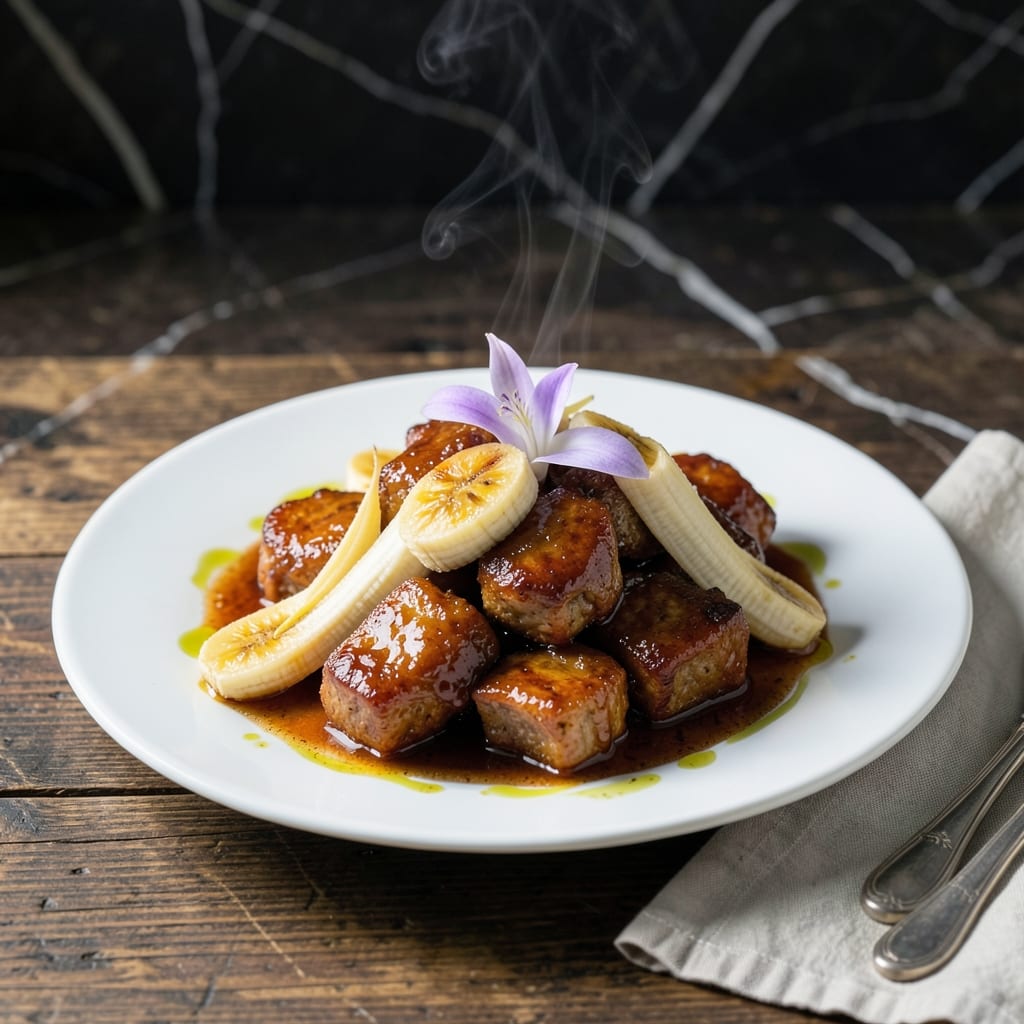
This Filipino braised pork dish delivers restaurant-quality results with a perfect balance of savory and sweet. I’ve tested it multiple times to ensure the method works in any home kitchen, not just professional setups.
The key is slow cooking the pork until it becomes fall-apart tender, allowing the flavors of soy sauce, vinegar, and caramelized bananas to meld together. Traditional techniques create the deep, complex taste that defines this classic.
What you get is a rich, aromatic sauce coating each piece of pork, with the bananas adding a natural sweetness that complements the tangy vinegar. The dish is hearty enough for a family dinner but impressive enough for guests.
Serve with steamed rice to soak up every bit of the sauce. The process is straightforward, with clear steps for achieving the best results.
Ingredients for Pork Humba Recipe with Banana
Restaurant-quality results start with these traditional Filipino ingredients for a rich, savory-sweet braise.
| Ingredient | Amount | Notes |
|---|---|---|
| Pork Belly 🥩 | 2 lb | Cut into 2-inch chunks |
| Banana Blossom 🍌 | 2 whole | Or use saba bananas |
| Saba Bananas 🍌 | 4 whole | Ripe but firm |
| Soy Sauce 🫒 | ½ cup | Use Filipino brand if available |
| White Vinegar 🧂 | ½ cup | Cane vinegar preferred |
| Brown Sugar 🍚 | ½ cup | Packed, for caramelization |
| Garlic Cloves 🧄 | 8 cloves | Minced for depth |
| Yellow Onion 🧅 | 1 whole | Sliced thinly |
| Bay Leaves 🌿 | 3 pieces | Dried or fresh |
| Black Peppercorns 🌶️ | 1 tsp | Crushed lightly |
| Water 💧 | 2 cups | For braising liquid |
| Salt 🧂 | 1 tsp | Adjust to taste |
The pork belly is non-negotiable here—fat content is what makes the sauce luscious. Look for skin-on cuts at Asian markets or specialty butchers, as they often carry the right texture. Saba bananas (the short, stubby ones) are traditional, but plantains work in a pinch if you can’t find them. Filipino soy sauce brands like Silver Swan or Datu Puti add authentic depth you won’t get from standard supermarket versions.
No pork belly? Pork shoulder at a 1:1 ratio works, though the texture won’t be as unctuous. Out of saba bananas? Overripe regular bananas add sweetness but lack the firm texture. For vinegar, apple cider vinegar at the same amount substitutes well. The bay leaves can be swapped for dried at one-third the quantity. Don’t skip the browning step—it’s what builds the complex base flavor.
Store the pork belly wrapped tightly in the coldest part of your fridge for up to 3 days before cooking. The finished dish keeps 4-5 days refrigerated and actually improves overnight. Freeze portions for up to 3 months—just thaw in the fridge before reheating gently to preserve texture.
Why You’ll Love This Recipe
- One Pot Wonder: I toss everything in, let it simmer, and the pork belly soaks up that soy-vinegar magic with zero fuss.
- Sweet-Savory Balance: The saba bananas caramelize in the sauce while the banana blossom adds this subtle earthy depth—honestly, it’s ridicously good.
- Feeds a Crowd: I make a big batch for Sunday lunch, and it tastes even better the next day with rice or even in a sandwich.
- Budget Stretch: Pork belly and saba bananas are cheap here, and this fills up my family of five with leftovers to spare.
Step-by-Step Instructions for Pork Humba With Banana
This traditional method delivers tender pork with a rich, sweet-savory sauce every time.
Step 1: Sear the Pork Belly for Depth
Cut the 2 lb Pork Belly into 2-inch chunks as specified in the ingredients. Heat a heavy pot over medium-high heat and add the pork pieces in a single layer. Sear undisturbed for 5-7 minutes until the fat renders and the meat develops a deep golden-brown crust.
This initial browning creates the foundation of flavor. Don’t rush—you want each piece to develop that caramelized exterior. Flip and sear the other side for another 3-4 minutes. Remove the pork and set aside, leaving the rendered fat in the pot.
Real talk: if the pork sticks initially, let it cook longer—it will release when ready. Forcing it too soon tears the meat and prevents proper browning.
Step 2: Build the Aromatic Base
In the same pot with the rendered fat, add the minced 8 cloves Garlic Cloves, thinly sliced 1 whole Yellow Onion, 3 pieces Bay Leaves, and 1 tsp Black Peppercorns (lightly crushed). Sauté for 3-4 minutes until the onion softens and the garlic turns light golden.
Add the 0.5 cup Brown Sugar and cook for 1-2 minutes, stirring constantly, until it melts and begins to caramelize. This creates a sticky, fragrant base that will deepen the sauce’s complexity. Watch carefully—sugar burns easily.
Step 3: Braise with Tangy Liquids
Return the seared pork to the pot. Pour in the 0.5 cup Soy Sauce, 0.5 cup White Vinegar, and 2 cups Water. Stir to combine, scraping up any browned bits from the bottom. Add the 1 tsp Salt and bring to a gentle boil.
Once boiling, reduce heat to low, cover, and simmer for 1 hour. This slow cooking process allows the pork to become fork-tender while absorbing the bold flavors of the braising liquid. Resist the urge to stir too often—let the pork develop its rich, sticky glaze.
Step 4: Add Banana and Finish Cooking
After the initial hour, add the 2 whole Banana Blossom and 4 whole Saba Bananas to the pot. Gently submerge them in the liquid. Cover and continue simmering for another 30-45 minutes until the pork is fall-apart tender and the bananas have softened.
The banana blossom and saba bananas will absorb the savory-sweet sauce, adding a unique texture and natural sweetness. You’ll notice the sauce thickens slightly as the bananas release their starches. Taste and adjust seasoning if needed.
Here’s the thing—if the sauce reduces too much before the pork is tender, add a splash of water. The goal is a thick but pourable consistency that clings to the meat.
Pro Tips For Making Pork Humba Recipe With Banana
- Sear the Belly First: I learned this the hard way—browning the pork belly in batches over medium-high heat for 3-4 minutes per side locks in juices and adds depth before the long simmer.
- Soak Banana Blossom: Rinse and soak the banana blossom in cold water with a splash of vinegar for 10 minutes to remove bitterness and any lingering sap.
- Skip the Over-Salting: Resist the urge to add extra salt early; soy sauce already packs a punch and the flavors concentrate as the humba reduces.
- Add Bananas Late: Drop in the saba bananas only in the last 15 minutes of cooking so they soften without turning to mush—I was skeptical until I tried it.
Dietary Considerations for pork humba recipe with banana
Gluten-Free Friendly
This dish is naturally gluten-free as long as you use certified gluten-free soy sauce. I recommend San-J Tamari or Kikkoman Gluten-Free—both are widely available at regular grocery stores. Always check labels, as some soy sauces contain wheat.
Low-Carb Adaptation
To reduce carbs, cut the brown sugar by half and replace with 1-2 tbsp erythritol or monk fruit sweetener. The bananas still add natural sweetness, but you’ll save about 50g net carbs per serving. Honestly, it still tastes amazing.
You can also reduce the saba bananas to 2 instead of 4 to further lower the carb count without sacrificing flavor.
Dairy-Free by Default
No dairy is used in traditional humba, making this dish safe for those avoiding milk products. The richness comes entirely from the pork belly and caramelized bananas. I’ve served this to lactose-intolerant friends without any issues.
Nut Allergy Safe
This recipe contains no nuts or nut-derived ingredients. Just double-check your soy sauce and vinegar labels, as some brands process in facilities that handle nuts. Stick to major brands like Datu Puti for peace of mind.
Sodium Considerations
To lower sodium, use low-sodium soy sauce and reduce the added salt by half. The dish will still be flavorful thanks to the vinegar, sugar, and pork. Taste as you go—you can always add more, but you can’t take it out. 💡
Nutrition Facts
Frequently Asked Questions
Can I use regular bananas instead of saba?
Yes, but use slightly underripe ones to prevent mushiness. Saba bananas hold their shape better, but regular bananas still add sweetness. Reduce cooking time by 5-10 minutes to keep them intact.
Why does the pork need searing first?
Searing caramelizes the pork’s surface, creating a flavor foundation for the sauce. This step adds depth and prevents a bland finish. Skip it, and your dish may taste flat.
How do I know when it’s done?
The pork is ready when it shreds easily with a fork. The bananas should be soft but not falling apart. Total cooking time is typically 1.5-2 hours.
Can I make this in a slow cooker?
Sear the pork first, then transfer everything to the slow cooker. Cook on low for 6-7 hours or high for 4 hours. Add bananas during the last 30 minutes.

- Potato Candy Recipe 1933: Vintage Peanut Butter Roll Delight - October 30, 2026
- Potato Chip Cookie Recipe With Pecans: Buttery Crunch Meets Nutty Richness - October 30, 2026
- Potato Patty Recipe No Egg: Crispy Edges Without the Binder - October 30, 2026