
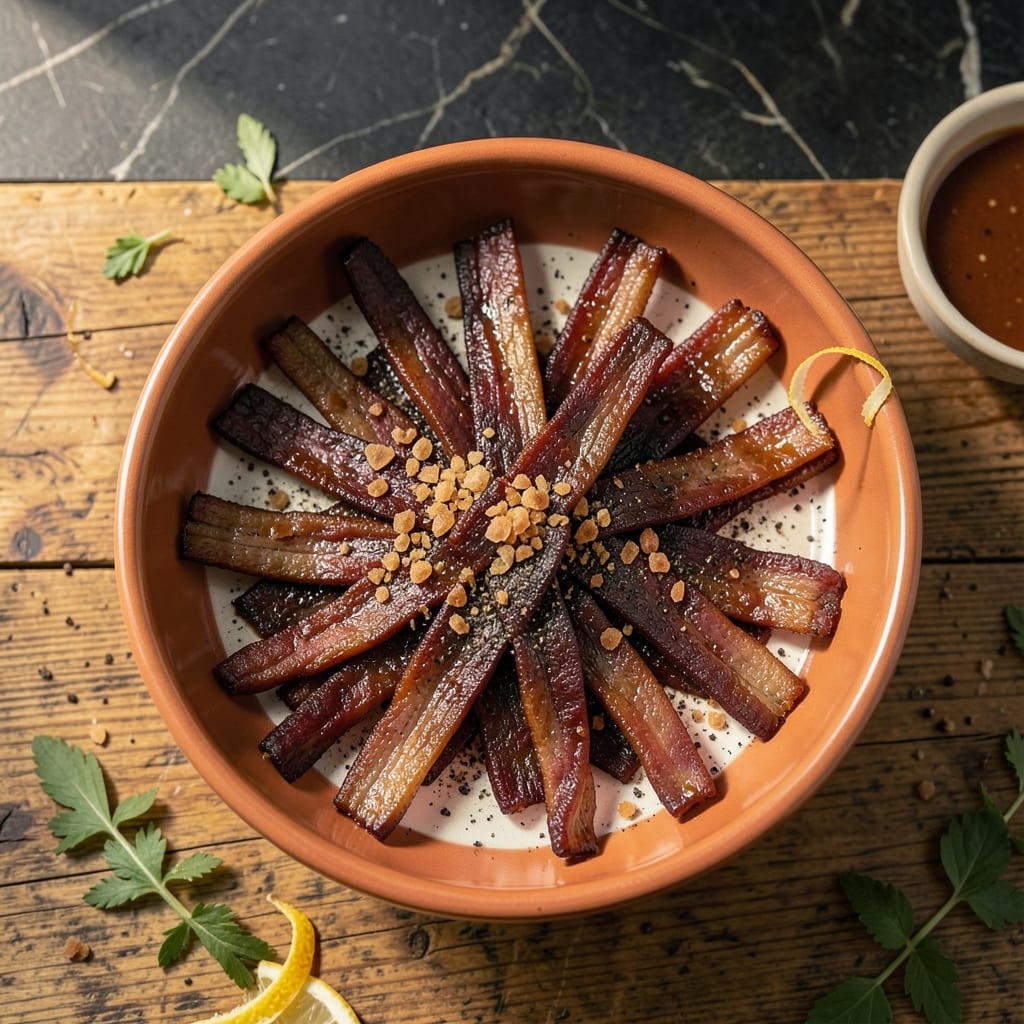
Making homemade jerky in a dehydrator delivers chewy, savory results you can’t buy in stores. I’ve tested countless marinades and slicing methods to perfect this technique at home.
The process starts with selecting the right cut of pork and slicing it against the grain for maximum tenderness. A well-balanced marinade infuses flavor while tenderizing the meat before dehydration.
With precise temperature control and timing, your dehydrator transforms marinated pork strips into perfectly preserved jerky. The result is a protein-packed snack with ideal texture and concentrated flavor.
This method ensures consistent quality and allows you to customize flavors to your preference. The dehydrator’s even airflow creates uniform results every time.
Ingredients for Pork Jerky Recipe Dehydrator
Lean pork plus bold marinade ingredients. That’s all you need for this snack.
| Ingredient | Amount | Notes |
|---|---|---|
| Pork Loin 🥩 | 2 lb | Lean, sliced against the grain |
| Soy Sauce 🫒 | ¾ cup | Low-sodium recommended for control |
| Worcestershire Sauce 🫒 | ¼ cup | Adds umami depth to marinade |
| Brown Sugar 🍚 | ½ cup | Packed, for sweetness balance |
| Black Pepper 🌶️ | 2 tbsp | Freshly cracked for best flavor |
| Garlic Powder 🧄 | 1 tbsp | Uniform distribution in marinade |
| Onion Powder 🧅 | 1 tbsp | Complements the garlic perfectly |
| Smoked Paprika 🌶️ | 1 tbsp | For authentic jerky smokiness |
| Liquid Smoke 💨 | 2 tsp | Optional for deeper smoke flavor |
| Apple Cider Vinegar 🍏 | 2 tbsp | Tenderizes the meat slightly |
| Red Pepper Flakes 🌶️ | 1 tsp | Adjust to preferred heat level |
| Salt 🧂 | 1 tbsp | Kosher or sea salt preferred |
The pork cut is everything here. Pork loin gives you the right fat-to-meat ratio—too much marbling and it won’t dry properly. Ask your butcher for a center-cut piece (they’ll know what you mean). Costco has great pre-packaged loin too, just trim any visible fat before slicing. Look for vibrant pink color with no graying. If you’re making a big batch, buy in bulk and freeze what you won’t use immediately.
No Worcestershire? Coconut aminos plus a dash of fish sauce (if you have it) gets you close. Brown sugar can be swapped for honey or maple syrup at one-to-one ratio. Want more heat? Double the red pepper flakes or add a pinch of cayenne. The liquid smoke is optional but adds that classic jerky flavor—Wright’s is the most common brand. If you’re avoiding additives, skip it and rely on the smoked paprika for that depth.
Marinated pork keeps in the fridge for 3-4 days before dehydrating. Once dried, store jerky in airtight containers with a paper towel to absorb moisture. Lasts 2 months at room temperature, or freeze for 6 months. Vacuum sealing extends shelf life even longer.
Why You’ll Love This Recipe
- Set It & Forget: I slice the pork loin, toss it in the soy-worcester-brown sugar mix, and the dehydrator does the rest—no babysitting required.
- Sweet-Savory Addiction: The brown sugar caramelizes with the soy and worcestershire, giving every bite that perfect sticky-salty-sweet balance.
- Trail or Tailgate: Honestly, I pack it for hikes, picnics, or just snacking at my desk—it’s the ultimate grab-and-go protein.
- Stretches the Budget: A single pork loin turns into pounds of jerky that last for weeks, and it’s way cheaper than store-bought.
Step-by-Step Instructions for Pork Jerky Dehydrator
Here’s how I make perfectly chewy jerky with a dehydrator every time.
Step 1: Slice and Prepare the Pork Loin
Start by partially freezing the 2 lb Pork Loin for 30-45 minutes to make slicing easier. I slice against the grain into ¼-inch thick strips—this thickness ensures the jerky dries evenly without becoming brittle.
Trim off any visible fat, as it won’t dry properly and can cause spoilage. Lay the strips on a clean surface and pat them dry with paper towels to help the marinade adhere better. This step prevents the meat from steaming in the dehydrator, which would ruin the texture.
Step 2: Mix and Apply the Marinade
In a large bowl, whisk together the 0.75 cup Soy Sauce, 0.25 cup Worcestershire Sauce, 0.5 cup Brown Sugar, 2 tbsp Apple Cider Vinegar, and 2 tsp Liquid Smoke until the sugar fully dissolves. Then add the 1 tbsp Salt, 2 tbsp Black Pepper, 1 tbsp Garlic Powder, 1 tbsp Onion Powder, 1 tbsp Smoked Paprika, and 1 tsp Red Pepper Flakes.
Place the pork strips in a resealable plastic bag and pour the marinade over them. Massage the bag to ensure every piece is coated, then refrigerate for 8-12 hours or overnight. The longer it marinates, the deeper the flavor penetrates.
Step 3: Arrange on Dehydrator Trays
Remove the pork from the marinade and pat the strips dry once more with paper towels. This step is crucial—excess moisture slows down the drying process and can lead to uneven texture.
Arrange the strips on dehydrator trays in a single layer, ensuring they don’t touch or overlap. Leave a little space between each piece to allow for proper airflow. This setup guarantees even drying and prevents the jerky from sticking together.
Step 4: Dehydrate to Perfection
Set your dehydrator to 160°F and run it for 4-6 hours. Check the jerky after 4 hours—it’s done when the strips are dry to the touch but still pliable. They should bend without snapping, with no moist spots remaining.
If any pieces finish early, remove them to prevent over-drying. Rotate the trays halfway through if your dehydrator has uneven heat distribution. The jerky will continue to dry slightly as it cools, so pull it out just before it reaches your ideal texture.
Let the jerky cool completely before storing it in an airtight container. It’ll keep for 1-2 weeks at room temperature or up to 3 months in the freezer.
Pro Tips For Making Pork Jerky Recipe Dehydrator
- Freeze First: Partially freeze the pork loin for 30-60 minutes before slicing—it makes thin, even cuts way easier and safer. I learned this the hard way after mangling my first batch with uneven slices.
- Pat It Dry: Blot the marinated pork strips thoroughly with paper towels before dehydrating. Sounds tedious, but it prevents steam from slowing the drying process and gives you chewier jerky.
- Watch the Temp: Set your dehydrator to 160°F and don’t rush it—pork needs 4-6 hours at this temp to fully dry without cooking too fast. After burning a batch at 175°F, I finally figured out patience is non-negotiable here.
- Trim the Fat: Remove every visible bit of fat from the loin before slicing, as it doesn’t dry well and can spoil faster. My grandmother swore by this, and she was right: lean meat equals longer-lasting jerky.
Serving Suggestions for This Recipe
Game Day Spread
Serve your jerky on a charcuterie board with aged cheddar and water crackers for the ultimate game-day snack. David always requests this setup when friends come over to watch football. Add pickled jalapeños for a spicy kick that cuts through the richness. 💪
Trail Mix Upgrade
Chop your jerky into bite-sized pieces and mix with salted almonds, dried cranberries, and dark chocolate chips. This trail mix is my go-to for hiking trips in Austin’s Greenbelt. The sweet and savory combo keeps energy levels high.
Bloody Mary Garnish
Thread a strip of jerky onto a skewer with cherry tomatoes and dill pickles for a hearty Bloody Mary garnish. This trick started at Nana Mae’s diner and became a customer favorite. The jerky adds a smoky depth that pairs perfectly with the spicy drink.
Lunchbox Addition
Pack a few pieces in Emma and Jack’s lunchboxes with whole-grain crackers and sliced apples. The protein keeps them full during long school days. I use small silicone bags to keep the jerky fresh until lunchtime.
Salad Topper
Slice the jerky thinly and sprinkle over a spinach salad with cherry tomatoes, red onions, and blue cheese crumbles. Toss with a balsamic vinaigrette for a meal that’s ready in 10 minutes. This is my quick fix for busy weeknights.
Nutrition Facts
Frequently Asked Questions
What’s the best pork cut for homemade jerky?
Lean pork loin is ideal because it has minimal fat. Fat doesn’t dry well and can spoil your batch. Ask your butcher for center-cut pieces for the most consistent results.
How do I know when the jerky is done?
It should be dry to the touch but still bend without snapping. Test a piece after 4 hours at 160°F. If it’s still moist inside, keep dehydrating and check every 30 minutes.
Can I make jerky without a dehydrator?
Yes! Use your oven on its lowest setting (170°F or less). Prop the door open slightly for airflow and rotate trays every 1-2 hours. Expect it to take 6-8 hours total.
Why did my jerky turn out too tough?
Over-drying is the usual culprit. Pull strips out when they’re still slightly pliable. Also, slicing against the grain helps prevent chewy texture. Slices thicker than ¼-inch may need more time.

- Potato Candy Recipe 1933: Vintage Peanut Butter Roll Delight - October 30, 2026
- Potato Chip Cookie Recipe With Pecans: Buttery Crunch Meets Nutty Richness - October 30, 2026
- Potato Patty Recipe No Egg: Crispy Edges Without the Binder - October 30, 2026