
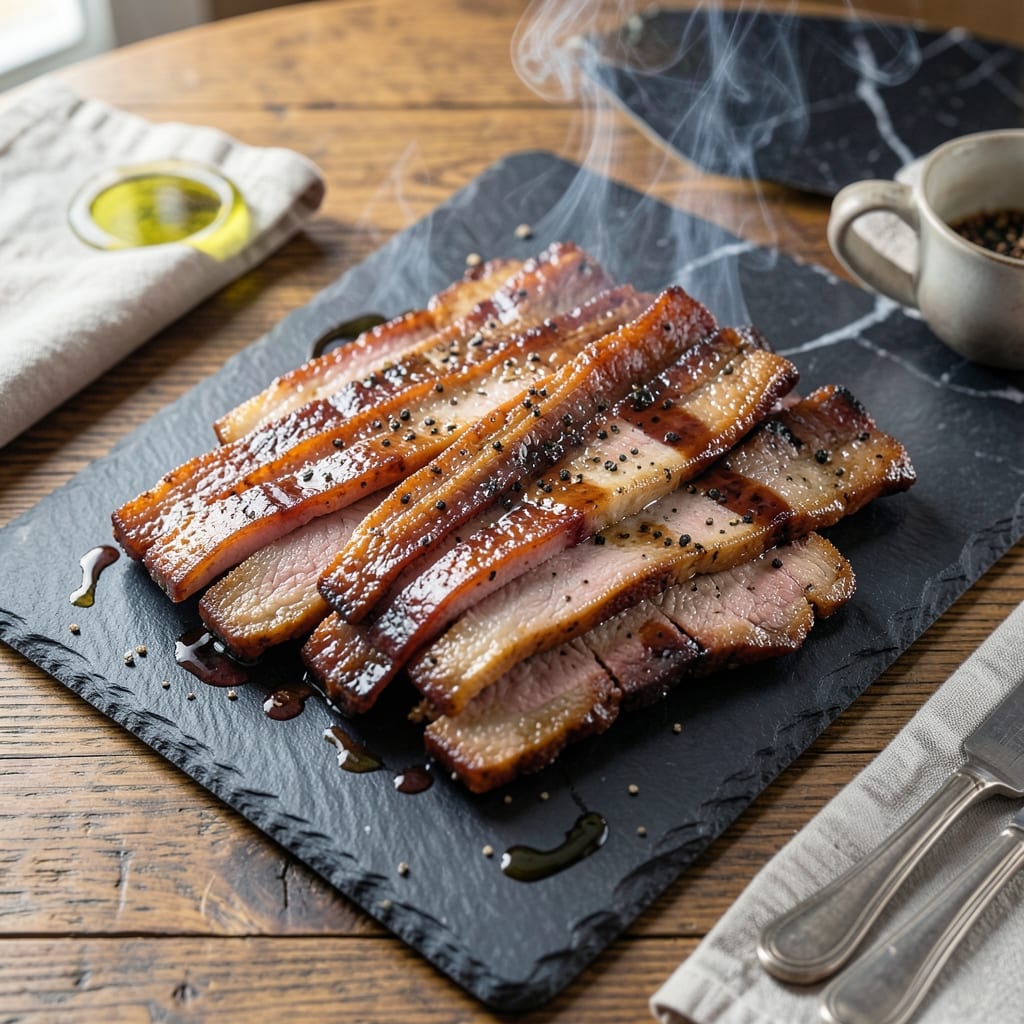
Growing up in Georgia, I learned that great jerky requires patience and the right smoke. This method delivers chewy strips with deep smoky flavor every time.
The key is slicing the pork against the grain for maximum tenderness, then marinating it overnight. The pellet smoker maintains consistent low heat, ensuring even drying without overcooking.
What emerges is jerky with the perfect balance of smoky intensity and meaty chew. The flavor develops slowly, creating complex notes that store-bought versions can’t match.
This technique works with any pork cut, though I prefer shoulder for its marbling. The results speak for themselves.
Ingredients for Pork Jerky Recipe Pellet Smoker
Lean pork, bold marinade, and wood smoke create these chewy, flavor-packed bites.
| Ingredient | Amount | Notes |
|---|---|---|
| Pork Shoulder 🐖 | 2 lb | Lean, trimmed of fat, sliced thin |
| Soy Sauce 🫒 | ¾ cup | Low-sodium preferred for balance |
| Brown Sugar 🍚 | ½ cup | Light or dark variety works |
| Liquid Smoke 🔥 | 2 tbsp | Hickory or mesquite flavor |
| Worcestershire Sauce 🫒 | 2 tbsp | Anchovy-free if preferred |
| Black Pepper 🌶️ | 1 tbsp | Freshly ground for bold flavor |
| Garlic Powder 🧄 | 1 tbsp | Not garlic salt |
| Onion Powder 🧅 | 1 tbsp | Fine granulated texture |
| Paprika 🌶️ | 1 tsp | Smoked paprika for extra depth |
| Cayenne Pepper 🔥 | ½ tsp | Adjust to heat preference |
| Salt 🧂 | 1 tsp | Kosher or sea salt variety |
| Apple Cider Vinegar 🍏 | 2 tbsp | For tang and preservation |
The pork is everything here. Pork shoulder (also called Boston butt) has the right fat-to-meat ratio for jerky—lean but not dry. Costco sells big pork shoulders at a good price, but any butcher can give you a clean, trimmed piece. Ask them to slice it thin against the grain (about 1/4-inch thick) if you don’t want to do it yourself. Look for vibrant pink color with some marbling—avoid anything gray or slimy.
No liquid smoke? Skip it and rely on the pellet smoker—just extend the smoke time by an hour or two. Swap brown sugar for honey or maple syrup if you prefer a different sweetness. Worried about sodium? Coconut aminos instead of soy sauce works, though the flavor profile shifts slightly. The vinegar can be white or rice vinegar in a pinch, but apple cider has the best tang for pork.
Marinated meat keeps 2-3 days in the fridge before smoking. Once smoked and cooled, the jerky stays fresh 2 weeks at room temperature in an airtight container (or 3 months frozen). For best texture, let it sit 24 hours after smoking before eating—this lets the flavors meld and the pellicle set fully.
Why You’ll Love This Recipe
- Set and Forget: The pellet smoker does all the work—just slice the pork shoulder, toss it in the soy-brown sugar mix, and walk away.
- Sweet-Savory Addiction: That sticky brown sugar caramelizes with the soy and Worcestershire, making every bite dangerously good.
- Trail or Tailgate: I pack these strips for hiking trips or serve them at backyard BBQs—equally at home in a ziplock or on a platter.
- Budget Stretch: One pork shoulder makes pounds of jerky, and honestly, it costs less than half the store-bought stuff.
Step-by-Step Instructions for Pork Jerky Pellet Smoker
Master the technique for perfectly chewy, deeply flavored jerky on your pellet smoker.
Step 1: Prepare and Marinate the Pork Shoulder
Begin by partially freezing the 2 lb Pork Shoulder for 30-45 minutes to firm up the meat, making it easier to slice. Using a sharp knife, cut against the grain into ¼-inch thick strips. This thickness ensures even drying without becoming brittle.
In a large bowl, combine the 0.75 cup Soy Sauce, 0.5 cup Brown Sugar, 2 tbsp Liquid Smoke, 2 tbsp Worcestershire Sauce, 1 tbsp Black Pepper, 1 tbsp Garlic Powder, 1 tbsp Onion Powder, 1 tsp Paprika, 0.5 tsp Cayenne Pepper, 1 tsp Salt, and 2 tbsp Apple Cider Vinegar. Whisk until the brown sugar fully dissolves.
Add the pork strips to the marinade, ensuring each piece is fully coated. Cover and refrigerate for 12-24 hours—this extended marinating time allows the flavors to penetrate deeply and tenderize the meat.
Step 2: Preheat and Prepare the Pellet Smoker
Preheat your pellet smoker to 160°F using a mild wood pellet like apple or cherry. These woods complement the pork without overpowering it. Line the smoker racks with parchment paper or use a mesh drying screen to prevent the jerky from falling through.
While the smoker preheats, remove the pork strips from the marinade and pat them dry with paper towels. This step is critical—excess moisture on the surface will extend the drying time and prevent proper dehydration. Arrange the strips on the prepared racks, leaving ½ inch of space between each piece to allow for proper airflow.
Step 3: Smoke the Jerky to Perfection
Place the racks in the smoker and smoke the jerky at 160°F for 4-5 hours. After the first 2 hours, check the jerky and rotate the racks if necessary to ensure even drying. The jerky is ready when it bends slightly but snaps when cooled—this indicates the ideal chewy texture.
If your smoker runs hot or the jerky begins to dry too quickly, reduce the temperature to 145°F. Avoid the temptation to increase the heat to speed up the process; high heat will cook the jerky rather than dehydrate it, resulting in a tough, overdone product.
Step 4: Test for Doneness and Cool
Remove a piece of jerky from the smoker and let it cool for 5 minutes. It should be leathery to the touch but not brittle. When bent, it should crack slightly on the surface but not break completely. If it’s still too moist, return it to the smoker for another 30-60 minutes.
Once done, transfer the jerky to a wire rack and let it cool completely at room temperature for 1-2 hours. This cooling period allows the jerky to finish dehydrating and develop its final texture. Properly cooled jerky will have a slightly sticky surface but remain dry to the touch.
Pro Tips For Making Pork Jerky Recipe Pellet Smoker
- Slice Against the Grain: Cut the pork shoulder into 1/4-inch strips against the grain for tender jerky that doesn’t turn chewy—I learned this the hard way after a few tough batches.
- Dry the Meat First: Pat the pork strips completely dry before marinating so the soy sauce and brown sugar stick better and don’t slide right off.
- Skip the Liquid Smoke Overkill: Use just 1/2 teaspoon of liquid smoke per pound of pork—any more and your jerky will taste like a campfire instead of smoky goodness.
- Smoke Low and Slow: Keep your pellet smoker at 165°F and give it 4-6 hours; higher temps cook it too fast and you’ll lose that perfect jerky texture.
Make-Ahead Tips for Leftovers
Marinade Prep Ahead
I always mix my marinade 24 hours before using. This gives the brown sugar time to fully dissolve and the flavors to meld. Store it in a glass jar in the fridge—it keeps perfectly for up to 3 days. 💡
Pork Prep Shortcut
Ask your butcher to slice the pork shoulder against the grain into ¼-inch strips. This saves time and ensures consistent thickness. I use my local Charleston market—they always get it right.
Partial Freezing Trick
If slicing yourself, partially freeze the pork for 30-45 minutes first. This firms up the meat, making it much easier to cut thin, even strips. Just don’t freeze it solid—you want it firm but still sliceable.
Batch Processing
Double the recipe and marinate 4 lb of pork at once. The flavor develops just as well in larger batches. I often do this when smoking for the Southeast BBQ circuit—it’s a crowd favorite. 🔥
After marinating, divide into 1 lb portions and freeze in vacuum-sealed bags for up to 2 months. Thaw overnight in the fridge before smoking.
Smoker Prep Time
While the pork marinates, clean your pellet smoker and check the pellets. I prefer apple or cherry wood for pork jerky. Load up the hopper the night before so you’re ready to go first thing in the morning.
Nutrition Facts
Frequently Asked Questions
What’s the ideal thickness for jerky slices?
¼-inch thick strips work best. Slice against the grain for maximum tenderness. Thinner slices dry too quickly, while thicker ones won’t dehydrate properly.
Can I use a different type of wood pellet?
Mild woods like apple or cherry are ideal, but hickory or pecan can add stronger flavor. Avoid mesquite—it can overpower the pork.
How do I know when the jerky is done?
It should bend slightly but snap when cooled. Test by removing a piece after 4 hours at 160°F and letting it cool for 5 minutes.
What’s the best way to store leftover jerky?
Keep in an airtight container at room temperature for up to 2 weeks. For longer storage, freeze for up to 3 months.

- Potato Candy Recipe 1933: Vintage Peanut Butter Roll Delight - October 30, 2026
- Potato Chip Cookie Recipe With Pecans: Buttery Crunch Meets Nutty Richness - October 30, 2026
- Potato Patty Recipe No Egg: Crispy Edges Without the Binder - October 30, 2026