
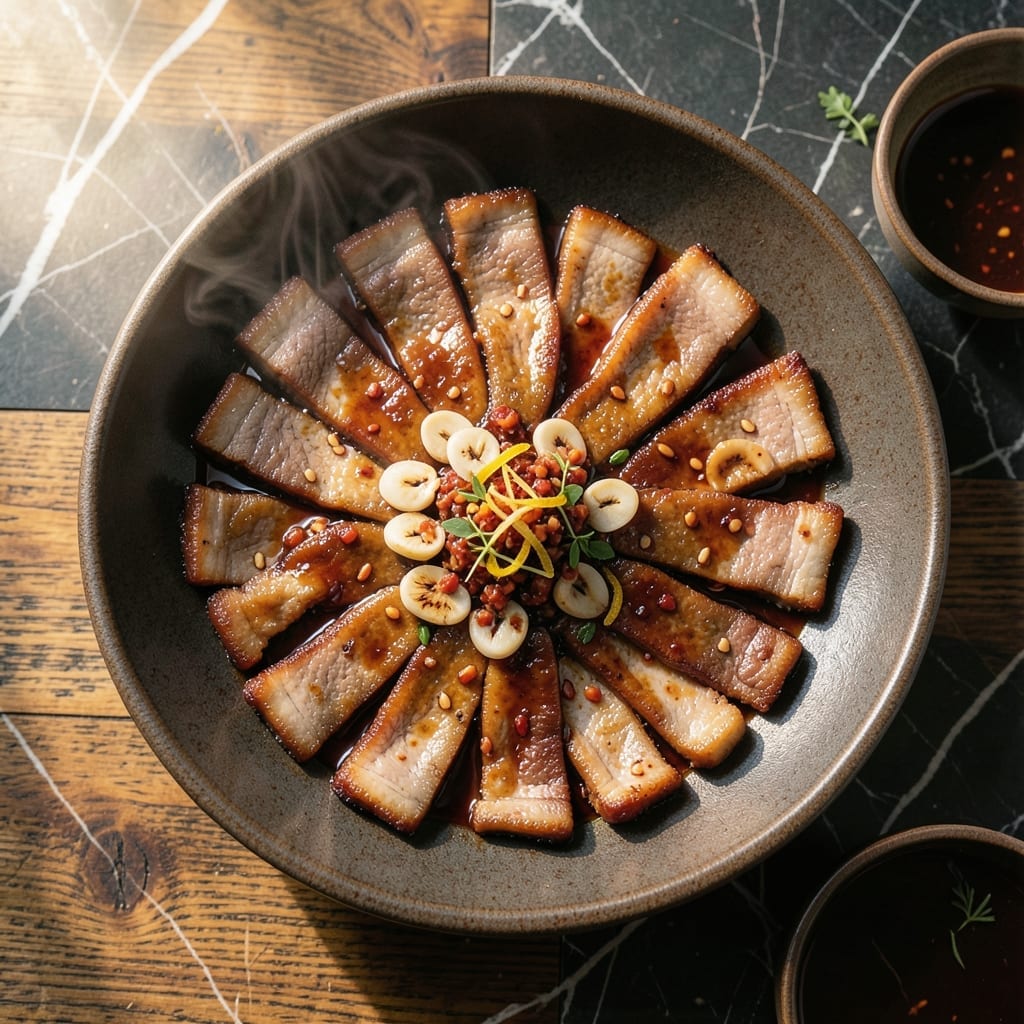
This Korean pork jowl recipe transforms a humble cut into a crispy, chewy masterpiece that captures the essence of street food perfection. The secret lies in the marinade, where soy, garlic, and sugar work together to create layers of flavor.
Traditional Korean techniques ensure the pork develops a golden, crackling exterior while staying tender inside. The marinating process, typically overnight, allows the flavors to penetrate deeply, making every bite burst with savory satisfaction.
When cooked at high heat, the pork jowl achieves that coveted crispy texture that contrasts beautifully with its chewy interior. This dish is a celebration of texture and taste, bringing the vibrant spirit of Korean street food to your kitchen.
Serve it hot, straight from the pan, for the ultimate experience. This method guarantees professional results every time.
Ingredients for Pork Jowl Recipe Korean
Transform humble pork jowl into crispy chewy perfection with these authentic ingredients.
| Ingredient | Amount | Notes |
|---|---|---|
| Pork Jowl 🥩 | 2 lb | Skin-on, cut into 1-inch strips |
| Soy Sauce 💧 | ½ cup | Regular or all-purpose variety |
| Brown Sugar 🍚 | ¼ cup | Light or dark, packed |
| Garlic Cloves 🧄 | 8 cloves | Minced finely for marinade |
| Fresh Ginger 🌿 | 1 tbsp | Peeled and grated |
| Sesame Oil 🫒 | 2 tbsp | Toasted for best flavor |
| Rice Wine 🍶 | 2 tbsp | Mirin or dry sherry substitute |
| Gochujang 🌶️ | 1 tbsp | Korean red pepper paste |
| Black Pepper 🌶️ | 1 tsp | Freshly ground preferred |
| Green Onions 🧅 | 4 whole | Thinly sliced for garnish |
| Sesame Seeds 🌾 | 1 tbsp | Toasted for topping |
| Neutral Cooking Oil 🫒 | ½ cup | For frying, high smoke point |
| Korean Pear 🍐 | ½ whole | Grated, for tenderizing |
| Toasted Sesame Seeds 🌾 | 1 tsp | Additional for serving |
The pork jowl is non-negotiable here—look for skin-on cuts at Korean grocers or specialty butchers. Asian markets like H Mart or Nam Dae Mun consistently stock quality pork jowl with good marbling. The soy sauce should be Korean brands like Sempio or Jin for authentic flavor. Avoid low-sodium varieties as the salt is essential for the marinade’s balance.
No gochujang? Substitute with 1 tbsp sriracha plus ½ tsp sugar, though the depth won’t be identical. The Korean pear tenderizes and sweetens—Bosc pear works as a backup. For rice wine, dry sherry or sake are acceptable alternatives. The sesame oil must be toasted (not raw) for that nutty aroma that defines Korean dishes.
Marinated pork keeps 2-3 days in the fridge, but cook within 24 hours for peak flavor. Cooked pork jowl is best eaten immediately but reheats well in an air fryer for 2-3 minutes to restore crispiness. Store sesame oil in a cool, dark place for up to 6 months.
Why You’ll Love This Recipe
- One Pan Magic: I toss everything in one pan—pork jowl, soy sauce, brown sugar—and let the oven do the work.
- Sticky Sweet Heat: The caramelized brown sugar and soy sauce create this incredible glossy glaze that clings to every bite.
- Weeknight Hero: Between us, this is my go-to for busy evenings—ready faster than takeout and way more satisfying.
- Budget Stretcher: Pork jowl is cheaper than bacon but just as rich, and leftovers taste even better the next day.
Step-by-Step Instructions for Korean Pork Jowl
Achieve perfect crispy-chewy texture with this authentic Korean street food technique.
Step 1: Marinate the Pork Jowl for Maximum Flavor
In a large bowl, combine the 2 lb Pork Jowl strips with 0.5 cup Soy Sauce, 0.25 cup Brown Sugar, 8 cloves Garlic Cloves, 1 tbsp Fresh Ginger, 2 tbsp Sesame Oil, 2 tbsp Rice Wine, 1 tbsp Gochujang, and 1 tsp Black Pepper.
Add the 0.5 whole Korean Pear grated into the mixture—its natural enzymes tenderize the meat beautifully. Massage the marinade into the pork jowl strips thoroughly, ensuring every piece is fully coated. Cover and refrigerate for at least 4 hours, preferably overnight for optimal flavor penetration.
Step 2: Prepare the Pork Jowl for Frying
Remove the pork jowl from the refrigerator and let it sit at room temperature for 30 minutes before cooking. This ensures even cooking throughout the strips. Drain the pork from the marinade, reserving the liquid for potential basting or sauce creation later.
Pat the pork jowl strips dry with paper towels—this step is crucial for achieving that coveted crispy texture. The drier the surface, the better the sear when it hits the hot oil. Arrange the strips on a plate and let them rest while you prepare the cooking oil.
Step 3: Fry the Pork Jowl to Crispy Perfection
Heat the 0.5 cup Neutral Cooking Oil in a deep skillet or heavy-bottomed pan over medium-high heat until it reaches 350°F. To test the oil, drop in a small piece of pork—it should sizzle immediately and rise to the surface.
Working in batches to avoid crowding the pan, carefully add the pork jowl strips. Fry for 3-4 minutes per side until they develop a deep golden brown color and become crispy. The pork should be cooked through with a slightly chewy interior. Transfer the cooked strips to a wire rack or paper towel-lined plate to drain excess oil.
Step 4: Garnish and Serve Immediately
While the pork jowl is still hot, sprinkle it with 1 tbsp Sesame Seeds and 1 tsp Toasted Sesame Seeds. The residual heat will help these toppings adhere to the crispy exterior. Thinly slice the 4 whole Green Onions and scatter them over the top for a fresh, oniony contrast.
Serve the pork jowl immediately while it’s at its crispiest. The ideal texture combines a satisfying crunch on the outside with a tender, flavorful bite within. This dish is best enjoyed fresh from the pan, paired with your favorite dipping sauces or as part of a larger Korean spread.
Pro Tips For Making Pork Jowl Recipe Korean
- Score the Fat: Cut shallow crosshatches into the pork jowl fat cap before marinating—this lets the soy sauce and brown sugar penetrate deeper and crisp up better when cooking.
- Bloom the Aromatics: Cook the minced garlic and ginger in a little oil for 30 seconds until fragrant before adding the pork jowl; it mellows their bite and builds a richer base flavor.
- Skip the Overcrowding: I learned this the hard way—if pan-frying or braising, leave space between pieces so the jowl browns instead of steams in its own juices.
- Rest Before Slicing: After cooking, let the pork jowl rest for 5-10 minutes under foil—it keeps the juices from running out when you slice it, especially after a brown sugar glaze.
Common Mistakes When Making pork jowl recipe korean
Overcrowding the Pan
Frying too many strips at once drops the oil temperature dramatically. I always cook in small batches with at least 1 inch between each piece. This ensures even browning and that perfect crispy texture we all love. 🔥
Skipping the Dry Step
Wet pork jowl steams instead of frying, resulting in rubbery meat. I pat each strip completely dry with paper towels before frying. This small step makes all the difference in achieving that golden, crackling exterior.
Insufficient Marinating Time
The flavors need time to penetrate the meat deeply. I never rush the marinating process—at least 4 hours is essential, but overnight in the fridge produces the most flavorful results. Anything less and you’ll miss out on that signature Korean depth.
Using Low Heat
Medium-high heat is crucial for that perfect sear and crispiness. I maintain my oil at 350°F throughout cooking. If the oil isn’t hot enough, the pork will absorb oil instead of developing that beautiful crispy crust.
Forgetting to Rest
Let the marinated pork sit at room temperature for 30 minutes before cooking. This ensures even cooking throughout each strip. Cold pork straight from the fridge cooks unevenly, with burnt exteriors and undercooked centers.
Ignoring Oil Freshness
Old or previously used oil imparts off-flavors to your dish. I always start with fresh neutral oil for each batch of pork jowl. The clean, pure oil lets the authentic Korean flavors shine through without any interference. ✨
Nutrition Facts
Frequently Asked Questions
Can I use pork belly instead?
Pork belly works but won’t have the same chewy texture. Pork jowl has more connective tissue that creates that signature bite when cooked. Stick with jowl for authentic results
How do I know when it’s done?
Look for a deep golden-brown color and crispy exterior after 3-4 minutes per side. The internal temperature should reach 165°F for safe consumption.
Why does my pork jowl turn out tough?
Toughness usually means insufficient marinating time or overcooking. Marinate for at least 4 hours and fry at 350°F to maintain tenderness.
What dipping sauces pair well?
Traditional options include spicy gochujang sauce or a soy-vinegar-garlic mix. For variety, try sweet chili or sesame-ginger dipping sauce.

- BBQ Sausage Recipe Oven: Smoky Depth Without the Grill - September 28, 2026
- BBQ Chicken Bowl Recipe Rice: Smoky Sweetness Over Fluffy Grains - September 28, 2026
- Beef Cutlet Recipe Ideas: Crispy Breaded Patties With Bold Seasonings - September 28, 2026