
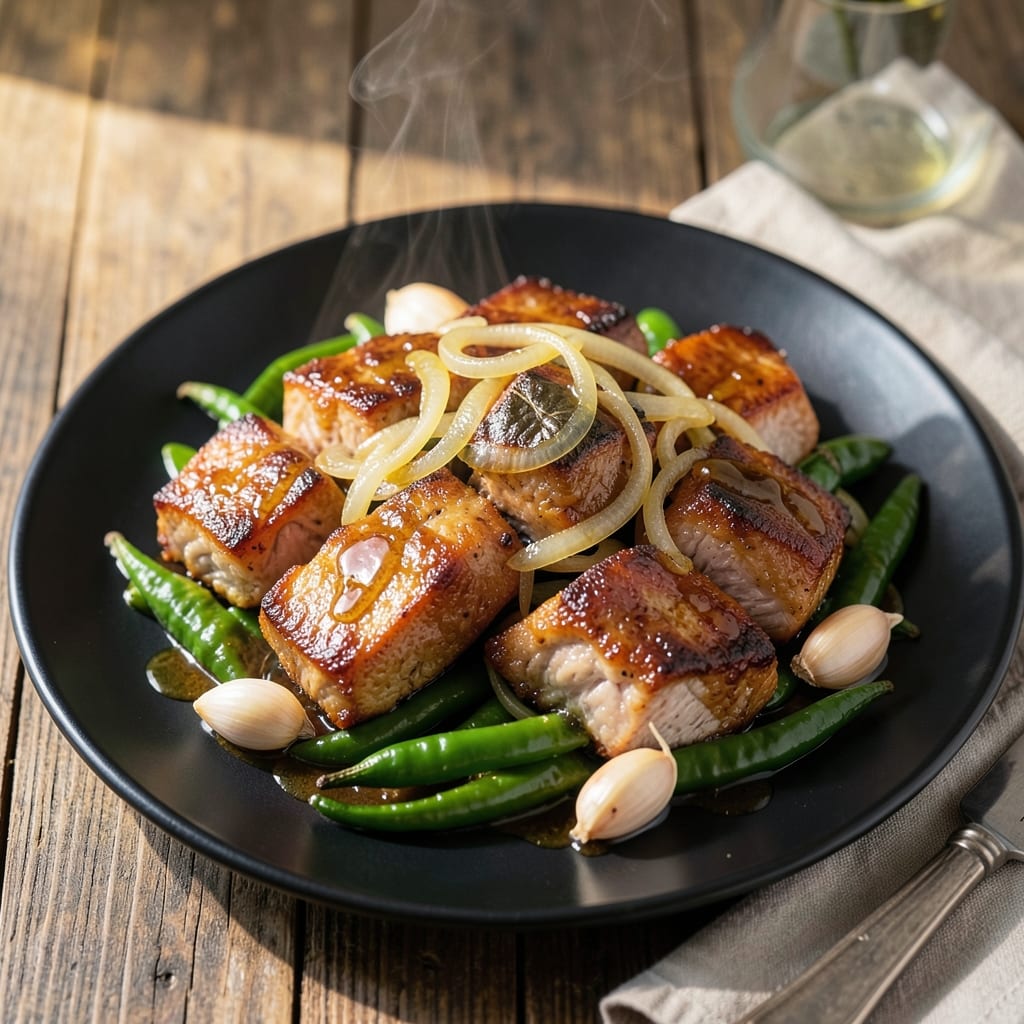
This Ilonggo classic transforms humble pork into something extraordinary through a simple vinegar braise. The tangy depth comes from a careful balance of sour, savory, and just a touch of sweetness.
I first tasted this dish at a Portland potluck hosted by Filipino friends. Their version used local pork shoulder and apple cider vinegar, proving how adaptable this traditional method can be.
The pork becomes incredibly tender while the vinegar mellows into a rich, complex sauce. Each bite delivers layers of flavor that make this dish unforgettable.
Serve it with steamed rice to soak up every drop of that tangy, savory sauce. The preparation is straightforward but requires attention to detail.
Ingredients for Pork Kilawin Recipe Ilonggo
Transform pork shoulder into this tangy, savory Ilonggo braise with common ingredients.
| Ingredient | Amount | Notes |
|---|---|---|
| Pork Shoulder 🐖 | 2 lb | Cut into 1-inch cubes, bone-in preferred |
| Apple Cider Vinegar 🍏 | 1 ½ cups | Raw, unfiltered preferred |
| White Vinegar 💧 | ½ cup | For additional tang |
| Garlic Cloves 🧄 | 8 cloves | Peeled and crushed |
| Yellow Onion 🧅 | 1 whole | Medium-sized, sliced thin |
| Bay Leaves 🌿 | 3 pieces | Dried, whole |
| Black Peppercorns 🌶️ | 1 tsp | Whole, lightly crushed |
| Brown Sugar 🍚 | 2 tbsp | Light or dark, for balance |
| Soy Sauce 🫙 | ¼ cup | Low-sodium recommended |
| Water 💧 | 1 cup | For braising liquid |
| Salt 🧂 | 1 tsp | Kosher or sea salt |
| Green Onions 🧅 | ½ cup | Chopped, for garnish |
| Vegetable Oil 🫒 | 2 tbsp | For searing pork |
The pork shoulder is key—bone-in pieces add depth to the sauce. Ask your butcher to cube it for you, or buy pre-cut at Whole Foods or Asian markets. Apple cider vinegar from Bragg or Trader Joe’s offers the best balance of tang and fruitiness. For authentic Ilonggo flavor, don’t skip the whole black peppercorns; their aroma is irreplaceable.
No pork shoulder? Pork belly works but gets richer—reduce braising time by 20 minutes. Out of apple cider vinegar? Use all white vinegar plus 1 tbsp sugar to mimic the fruitiness. Dried bay leaves are standard, but fresh ones (at Latin markets) add a brighter note. The soy sauce can be tamari for gluten-free needs.
Store leftovers in the fridge for up to 5 days—the flavors deepen overnight. Freezes well for 3 months; portion into airtight containers. Reheat gently on the stove to keep the pork tender. Always serve with steamed rice to soak up that incredible sauce.
Why You’ll Love This Recipe
- One Pan Wonder: I just toss the pork shoulder, vinegars, garlic, and onion together—no fancy techniques, just bold Ilonggo flavors simmering in one pot.
- Tangy Perfection: The mix of apple cider and white vinegar gives that signature sour kick, while garlic and onion mellow it into something ridiculously good.
- Feeds a Hungry Crowd: Between us, I double the batch every time—it’s my go-to for potlucks or lazy Sundays when everyone’s craving comfort food.
- Budget Stretcher: Pork shoulder stays affordable, and a little goes a long way. Honestly, it’s the kind of dish that tastes expensive but costs pennies per serving.
Step-by-Step Instructions for Pork Kilawin
Here is the method. Precise, tested, delivers authentic flavor every time.
Step 1: Sear the Pork Shoulder
Heat 2 tbsp vegetable oil in a large pot over medium-high heat. Add 2 lb pork shoulder cubes in batches, ensuring not to overcrowd the pot. Sear each piece until golden brown on all sides, about 5-7 minutes per batch.
This step builds a rich, caramelized crust that deepens the flavor of the dish. Remove the seared pork and set aside. The fond left in the pot will dissolve into the braising liquid, adding complexity to the final sauce.
Step 2: Sauté Aromatics and Build the Base
In the same pot, add 1 whole yellow onion (sliced thin) and 8 cloves garlic cloves (peeled and crushed). Sauté over medium heat for 3-4 minutes until the onions soften and the garlic becomes fragrant.
Stir in 2 tbsp brown sugar and cook for 1 minute until it begins to caramelize. Add 1.5 cups apple cider vinegar, 0.5 cup white vinegar, 0.25 cup soy sauce, 1 cup water, 3 pieces bay leaves, 1 tsp black peppercorns, and 1 tsp salt. Bring to a gentle simmer.
Step 3: Braise the Pork
Return the seared pork to the pot, ensuring it is mostly submerged in the liquid. Reduce the heat to low, cover, and let it braise for 1.5 to 2 hours, stirring occasionally.
The pork is done when it is fork-tender and easily pulls apart. The liquid should reduce slightly, creating a tangy, savory sauce. If the liquid evaporates too quickly, add a splash of water to maintain the braise.
Step 4: Adjust and Garnish
Once the pork is tender, taste the sauce and adjust the seasoning if needed. The balance should be tangy from the vinegar, slightly sweet from the brown sugar, and savory from the soy sauce.
Discard the bay leaves and black peppercorns. Transfer the pork and sauce to a serving dish. Garnish with 0.5 cup green onions (chopped) for a fresh, vibrant finish. Serve hot with steamed rice to soak up the flavorful sauce.
Pro Tips For Making Pork Kilawin Recipe Ilonggo
- Boil pork first: Parboil the pork shoulder for 10-15 minutes to remove impurities and guarantee a cleaner, more flavorful base for your kilawin.
- Balance the vinegars: Use a 1:1 ratio of apple cider vinegar to white vinegar—this keeps the sourness sharp but well-rounded, just like Ilonggo kilawin should be.
- Don’t overcook garlic: Add the minced garlic only after the onions turn translucent; burnt garlic turns bitter and ruins the dish’s fresh, tangy profile.
- Chill before serving: Let the kilawin sit in the fridge for at least 30 minutes before serving—this lets the flavors meld and the pork absorb all that garlicky, vinegary goodness.
Regional Styles of This Dish
Ilonggo Tradition
In Iloilo, the original kilawin uses native vinegar from coconut or nipa palm, giving a sharper tang than apple cider. I’ve found Datu Puti brand at Asian markets works beautifully as a substitute. The Ilonggo version often includes pork liver for extra richness. 🌟
Negros Variation
In Negros Occidental, they add pineapple chunks for sweetness, balancing the vinegar’s acidity. The pork is sometimes marinated in vinegar and garlic overnight before braising. This creates an even deeper flavor profile.
Manila Adaptation
Manila cooks often use cane vinegar and add bell peppers for color and crunch. The dish becomes slightly sweeter and more vibrant. I’ve seen this version at Filipino fiestras in Portland.
Cebuano Touch
Cebu’s version incorporates chili peppers for heat, making it spicier than the Ilonggo original. They also use pork belly instead of shoulder, which renders more fat into the sauce. The result is richer and more complex.
Pampanga Style
Kapampangans add tomato sauce to their kilawin, creating a sweeter, thicker gravy. This adaptation reflects the region’s love for rich, saucy dishes. The vinegar still provides the signature tang. 💫
Nutrition Facts
Frequently Asked Questions
Can I use a different cut of pork?
Yes, but pork shoulder is ideal for its fat content and tenderness. Pork belly works but needs 20 minutes less braising. Avoid lean cuts like tenderloin—they dry out.
Why does the recipe use two types of vinegar?
Apple cider vinegar adds fruity depth while white vinegar sharpens the tang. This combo mimics traditional Ilonggo native vinegars like coconut or nipa palm.
How do I fix if the sauce is too sour?
Balance it by adding 1-2 tbsp brown sugar or 1 tsp salt. Simmer for 5 minutes to meld flavors. Never add water—it dilutes the taste.
Can I make this in a slow cooker?
Sear pork first, then transfer everything to a slow cooker. Cook on low for 6-7 hours or high for 3-4 hours.

- Potato Chip Cookie Recipe With Pecans: Buttery Crunch Meets Nutty Richness - October 30, 2026
- Potato Patty Recipe No Egg: Crispy Edges Without the Binder - October 30, 2026
- Paula Deen’s Potato Chip Cookies Recipe: Salty-Sweet Crunch in Every Bite - October 30, 2026