
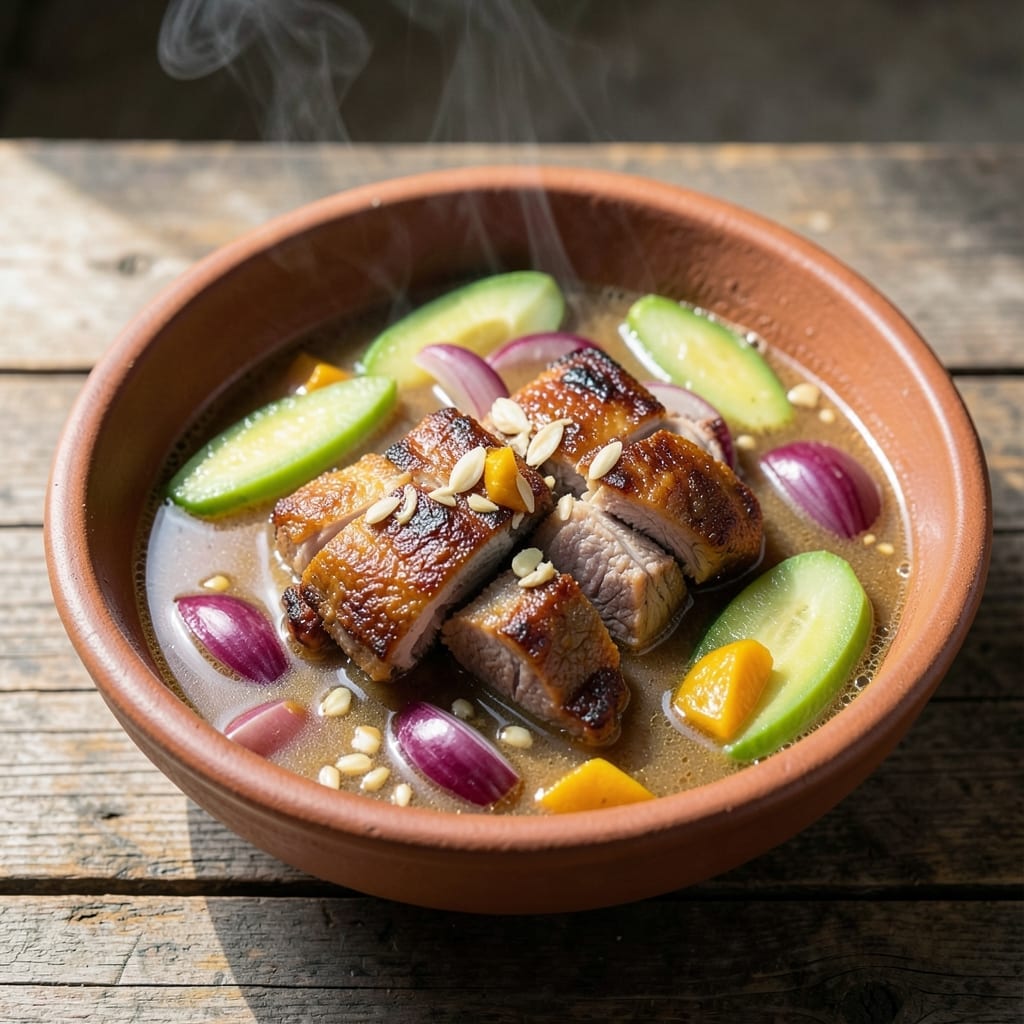
This Ilocano stew brings the authentic flavors of Northern Philippines to your kitchen with its signature tangy broth and tender pork. I discovered this dish while researching traditional Filipino cooking techniques for my food blog.
The secret lies in the balance of souring agents like green papaya or batuan, combined with slow cooking to achieve melt-in-your-mouth meat. Each ingredient plays a crucial role in creating that distinct Ilocano taste profile.
What emerges is a hearty, comforting dish with layers of flavor that develop as it simmers. The pork becomes incredibly soft while absorbing the tangy, savory broth that defines this regional specialty.
Perfect for family gatherings or when you want to explore authentic Filipino cuisine. This recipe stays true to its traditional roots while being accessible for home cooks.
Ingredients for Pork Lauya Recipe Ilocano
Traditional Ilocano ingredients for a tangy, comforting pork stew with tender meat.
| Ingredient | Amount | Notes |
|---|---|---|
| Pork Shoulder 🍖 | 2 lb | Cut into 2-inch chunks, fat trimmed |
| Green Papaya 🍈 | 1 whole | Peeled, seeded, cut into wedges |
| Batuan Fruit 🍋 | 2 whole | Or substitute tamarind paste |
| Red Onion 🧅 | 1 whole | Thinly sliced |
| Garlic Cloves 🧄 | 6 cloves | Minced finely |
| Ginger Root 🌿 | 1 whole | Peeled, sliced into strips |
| Fish Sauce 🐟 | 3 tbsp | Filipino patis preferred |
| Salt 🧂 | 1 tsp | Adjust to taste |
| Black Peppercorns 🌶️ | 1 tsp | Freshly cracked |
| Water 💧 | 6 cups | For simmering broth |
| Long Green Chilies 🌶️ | 2 pieces | Optional for heat |
| Bay Leaves 🍃 | 2 pieces | Dried or fresh |
The pork shoulder is non-negotiable here—it’s the cut that turns buttery after hours of simmering. Asian markets or Costco often have it pre-cut into stewing chunks. If you can’t find green papaya, underripe regular papaya works in a pinch. Batuan is traditional, but tamarind paste (sold at Whole Foods or international aisles) delivers that signature sour punch.
No batuan? Tamarind paste at a 1:1 ratio works perfectly. Green papaya can be swapped for daikon radish—it won’t be as tender but holds the sour broth well. Fish sauce is key for umami depth; Red Boat brand is a solid choice. For a vegetarian twist (though not traditional), mushroom soy sauce mimics the funk. The chilies are optional, but add one for a subtle kick.
This stew tastes even better the next day. Store in the fridge for up to 3 days or freeze for 3 months. Reheat gently on the stove—microwaving can make the pork tough. Leftovers make incredible pork lauya tacos if you’re feeling creative.
Why You’ll Love This Recipe
- One Pot Wonder: I just toss the pork shoulder, green papaya, and batuan fruit in a pot with garlic and onions—minimal prep, maximum flavor.
- Tangy Comfort: The batuan fruit gives this Ilocano dish its signature sour kick that balances the rich pork perfectly.
- Feeds the Family: Honestly, it’s my go-to for big gatherings since it stretches easily with extra papaya or pork.
- Budget Stretcher: Pork shoulder is affordable, and the ingredients simmer together into something way more impressive than the cost suggests.
Step-by-Step Instructions for Pork Lauya Ilocano
Here’s my tested method for achieving melt-in-your-mouth pork in a vibrant, tangy broth.
Step 1: Sear and Render the Pork Shoulder
Heat a large, heavy pot over medium-high heat. Add the 2 lb Pork Shoulder chunks and sear without crowding, working in batches if needed. You want to achieve deep golden brown color on all sides—this builds the flavor foundation.
As the pork renders fat, use that to continue browning the remaining pieces. I press down gently with a wooden spoon to ensure even contact with the pot. Remove the pork once browned but reserve all the rendered fat in the pot.
Step 2: Build the Aromatic Base
In the same pot with the rendered pork fat, add the red onion, 6 cloves Garlic Cloves, and ginger root. Sauté over medium heat for 3-4 minutes until the onions soften and become translucent.
The aroma should be fragrant and inviting—this is when you know the flavors are starting to develop. Add the 2 pieces Bay Leaves and 1 tsp Black Peppercorns at this stage to bloom their essential oils in the hot fat.
Step 3: Develop the Tangy Broth
Return the seared pork to the pot. Add the 1 whole Green Papaya wedges, 2 whole Batuan Fruit, and 2 pieces Long Green Chilies. Pour in the 6 cups Water and bring to a boil.
Once boiling, reduce to a gentle simmer. Skim off any foam that rises to the surface during the first 10 minutes. This keeps your broth clean and clear. The batuan fruit will start to soften and release its signature sour notes into the liquid.
Step 4: Simmer to Tender Perfection
Cover the pot and let it simmer on low heat for 1.5 to 2 hours. Check occasionally and add a splash of water if the liquid reduces too much. The pork is done when it shreds easily with a fork.
The green papaya should be tender but still hold its shape. At this point, season with the 3 tbsp Fish Sauce and 1 tsp Salt. I always taste first—the batuan fruit’s natural acidity might mean you need less salt than expected.
Step 5: Adjust and Serve
Remove the bay leaves and batuan fruit before serving. The batuan has already imparted its sour flavor, and its fibrous texture isn’t pleasant to eat. Taste the broth and adjust seasoning if needed.
Serve hot in deep bowls with plenty of broth. The pork should be fall-apart tender, the papaya perfectly soft, and the broth should have that characteristic Ilocano tang that makes this dish special. This stew actually tastes even better the next day as the flavors meld further.
Pro Tips For Making Pork Lauya Recipe Ilocano
- Brown the Pork First: Sear the pork shoulder pieces in batches until deeply browned—this builds a rich base flavor that simmering alone can’t achieve. I learned this the hard way after making bland lauya with pale meat.
- Soak the Batuan: Rinse and soak the batuan fruit in warm water for 10 minutes to soften it and remove excess bitterness. My grandmother swore by this, and it makes the souring agent more balanced in the broth.
- Peel Papaya Last: Wait to peel and chop the green papaya until right before adding it to the pot—it oxidizes quickly and can turn bitter if left exposed too long.
- Simmer Low and Slow: Keep the heat at a gentle simmer, not a rolling boil, for at least 45 minutes. After burning three batches early on, I finally figured out that patience is what makes the pork tender and the flavors meld.
Serving Suggestions for This Recipe
Family Style Service
I love serving this stew in a large ceramic bowl at the center of the table, letting everyone ladle portions into their own dishes. The communal style feels authentic to Filipino dining culture, where meals are shared and enjoyed together. 🥗
Rice Pairing
Steamed jasmine rice is the classic accompaniment, soaking up that tangy broth beautifully. I cook mine in my Zojirushi rice cooker—about 1 cup rice per person works perfectly. The contrast between the tender pork and fluffy rice is pure comfort.
Fresh Garnishes
Set out small bowls of fish sauce and calamansi for guests to adjust sourness to taste. Fresh silantro leaves or green onions add a bright finish. These simple additions let everyone customize their bowl.
Side Dish Ideas
A crisp cucumber and tomato salad with vinegar dressing cuts through the richness. I toss 2 cups diced cucumber with 1 cup cherry tomatoes and 2 tbsp rice vinegar. The cool crunch balances the stew’s hearty warmth. ✨
Beverage Pairings
Serve with iced tea or San Miguel beer—the bitterness complements the sour broth. For non-alcoholic options, calamansi juice or sago’t gulaman (a tapioca pearl drink) are traditional choices that cleanse the palate.
Nutrition Facts
Frequently Asked Questions
What can I use if I can’t find batuan?
Tamarind paste works perfectly as a substitute in a 1:1 ratio. You can also use 2 tbsp vinegar plus 1 tbsp brown sugar for a similar tangy-sweet balance.
How do I know when the pork is done?
The pork is ready when it shreds easily with a fork after 1.5-2 hours of simmering. The meat should be fall-apart tender but still hold its shape in the broth.
Can I make this in a slow cooker?
Yes! Brown the pork first, then transfer everything to the slow cooker. Cook on low for 6-8 hours or high for 4 hours. The flavors will develop beautifully.
How long does lauya keep in the fridge?
Store in an airtight container for up to 3 days. The flavors actually improve overnight. For longer storage, freeze for up to 3 months.

- Potato Chip Cookie Recipe With Pecans: Buttery Crunch Meets Nutty Richness - October 30, 2026
- Potato Patty Recipe No Egg: Crispy Edges Without the Binder - October 30, 2026
- Paula Deen’s Potato Chip Cookies Recipe: Salty-Sweet Crunch in Every Bite - October 30, 2026