
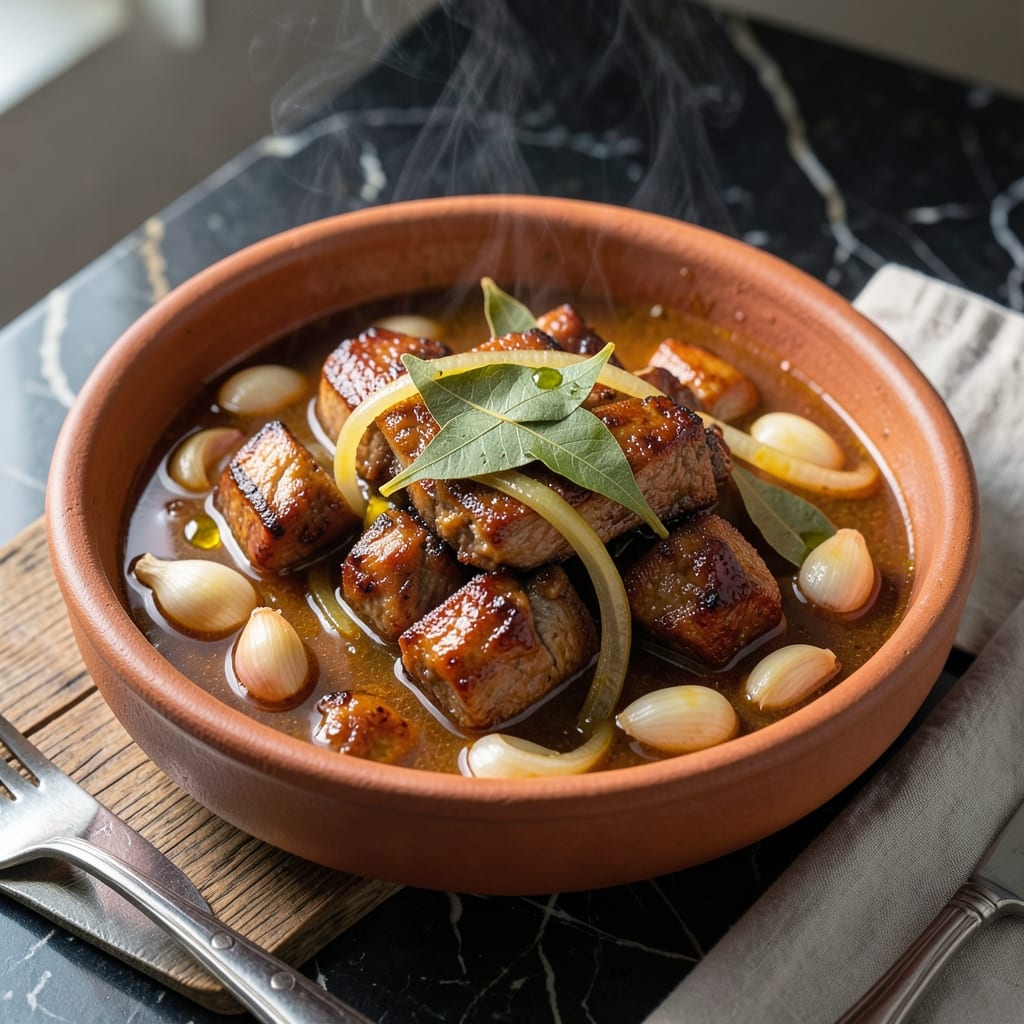
My grandmother’s handwritten cards never specified amounts, yet her pork lauya always came out perfectly balanced. This Ilonggo vinegar-braised dish captures that same intuitive magic, transforming simple ingredients into something deeply comforting.
The secret lies in the slow braising process, where pork absorbs the tangy vinegar, soy sauce, and garlic. Each bite delivers a harmonious blend of savory, tangy, and slightly sweet flavors that define this regional specialty.
What emerges is tender pork in a rich, aromatic broth that’s both light and deeply satisfying. The vinegar cuts through the richness, creating a dish that’s as refreshing as it is hearty.
Serve piping hot with steamed rice to soak up every drop of the flavorful sauce. This is home cooking at its most authentic.
Ingredients for Pork Lauya Recipe Ilonggo
Tender pork, tangy vinegar, and rich soy create this comforting Ilonggo classic with bold, balanced flavors.
| Ingredient | Amount | Notes |
|---|---|---|
| Pork Belly 🥩 | 2 lb | Cut into 2-inch chunks, skin-on |
| White Vinegar 💧 | 1 cup | Cane vinegar preferred for authenticity |
| Soy Sauce 🥣 | ½ cup | Regular or light, not dark |
| Garlic Cloves 🧄 | 10 cloves | Peeled and lightly crushed |
| Yellow Onion 🧅 | 2 whole | Quartered through root end |
| Bay Leaves 🍃 | 3 pieces | Dried, whole leaves |
| Whole Black Peppercorns 🌶️ | 1 tsp | Lightly crushed |
| Brown Sugar 🍚 | 2 tbsp | For balancing acidity |
| Water 💧 | 3 cups | Or enough to cover pork |
| Green Onions 🧅 | 4 whole | Cut into 2-inch lengths |
| Ground Black Pepper 🌶️ | ½ tsp | For finishing |
| Salt 🧂 | 1 tsp | Adjust to taste |
The pork is non-negotiable here. Pork belly with skin on delivers the authentic texture and richness—shoulder or ribs work but won’t be the same. Look for pieces with good fat marbling at Filipino markets or Asian grocery stores (they’ll know it as liempo). The vinegar matters too: cane vinegar has the right tang, but white vinegar gets you 90% there.
No cane vinegar? Apple cider vinegar works in a pinch (slightly fruitier). Out of pork belly? Pork shoulder stays tender but lacks the melt-in-your-mouth fat. The bay leaves should be dried Turkish or Indian—fresh ones can be bitter. For extra depth, some cooks add a splash of fish sauce (but skip it for strict vegetarian versions). The sugar balances the acid—coconut sugar adds a nice caramel note.
This tastes even better the next day when the flavors meld. Stores in the fridge for 4-5 days or freezes for 3 months. Reheat gently to keep the pork from drying out. Always serve with extra broth for that steamed rice soak (it’s mandatory).
Why You’ll Love This Recipe
- Minimal Chopping Required: I just slice the pork belly, onion, and garlic—no fancy prep here.
- Rich, Tangy Depth: The mix of soy sauce and vinegar gives that bold Ilonggo sour-savory kick I crave.
- Feeds a Crowd: I make a big batch for family gatherings, and it’s always the first dish gone.
- Stretches the Budget: Pork belly cooks down so flavorful that a little goes a long way for leftovers.
Step-by-Step Instructions for Pork Lauya
Master this Ilonggo classic with precise technique and authentic flavor development.
Step 1: Sear and Render the Pork Belly
Begin by searing the 2 lb Pork Belly chunks in a large pot over medium-high heat without any oil. The skin-on pieces will release their own fat as they brown—this is the foundation of your flavor base. I press down gently with a wooden spoon to ensure even contact with the pot surface.
Cook for 8-10 minutes, turning occasionally, until all sides develop a deep golden-brown crust and the fat begins to render. This step transforms the raw pork into flavorful, crisp-edged pieces while creating a rich fatty base for the braise. Don’t rush this process; proper browning ensures complex flavor development.
Step 2: Build the Aromatic Braising Liquid
Add the 10 cloves Garlic Cloves, 2 whole Yellow Onion quarters, 3 pieces Bay Leaves, and 1 tsp Whole Black Peppercorns to the pot. Sauté for 2-3 minutes until the garlic becomes fragrant and the onions begin to soften slightly. The garlic should turn light golden but not brown—burnt garlic will impart bitterness.
Pour in the 1 cup White Vinegar, 0.5 cup Soy Sauce, 2 tbsp Brown Sugar, and 3 cups Water. Stir to deglaze the pot, scraping up all the browned bits from the bottom. This creates a balanced liquid where the vinegar’s acidity cuts through the richness, the soy sauce adds depth, and the sugar tempers the sharpness.
Step 3: Simmer to Tender Perfection
Bring the mixture to a boil, then reduce heat to low. Cover the pot and let it simmer for 1 hour to 1 hour 15 minutes, stirring occasionally. The pork is done when it becomes fork-tender and the liquid has reduced slightly, coating the meat in a glossy, flavorful sauce.
During this time, the vinegar mellows while maintaining its tang, the soy sauce deepens in color, and the pork absorbs all these flavors. If the liquid reduces too quickly, add a splash of water to maintain the braising environment. The pork should be tender enough to pierce easily with a fork but still hold its shape.
Step 4: Finish with Fresh Aromatics and Seasoning
Once the pork is tender, add the 4 whole Green Onions and simmer for an additional 5 minutes to infuse their mild oniony sweetness into the dish. The green onions should retain some bite and bright color, providing a fresh contrast to the rich, deeply flavored pork.
Taste and adjust seasoning with 1 tsp Salt and 0.5 tsp Ground Black Pepper. The salt enhances all the flavors, while the ground black pepper adds a subtle heat that complements the dish’s complexity. Remove the bay leaves before serving, as they’ve already imparted their aromatic qualities.
Pro Tips For Making Pork Lauya Recipe Ilonggo
- Boil Pork First: Simmer the pork belly in water for 10-15 minutes before adding vinegar and soy sauce to remove impurities and keep the broth clean. I learned this the hard way—skipping it once left my lauya cloudy and bitter.
- Balance Vinegar Early: Add the white vinegar at the start but taste as you go—about 3-4 tablespoons for 500g pork. Sounds weird, but it works: the acidity mellows as it cooks, so don’t wait until the end to adjust.
- Don’t Overcrowd Pot: Use a pot just big enough to fit the pork belly in a single layer. After burning three batches, I finally figured out that crowding steams the meat instead of letting it brown and tenderize properly.
- Use Pork Belly Fat: Leave some fat on the pork belly—about 1/4 inch—because it renders into the broth, adding richness. My grandmother swore by this, and she was right: trimming it all off makes the dish taste flat.
Regional Styles of pork lauya recipe ilonggo
Classic Ilonggo Style
This is how my grandmother made it in her Iloilo kitchen—simple, honest, and deeply flavorful. The key is using pork belly with skin on for that authentic texture, simmered in a perfect balance of cane vinegar and soy. She always said the vinegar should be “just enough to make your lips pucker, but not your face.” 💛
Negros Variation
In Negros, they add a touch of sweetness with pineapple chunks or banana saba during the last 20 minutes of cooking. The fruit absorbs the tangy broth, adding a delightful contrast. I tried this once at a friend’s house—it was like discovering a whole new dish.
Manila Adaptation
City cooks often use pork shoulder instead of belly for a leaner version. They also tend to add more garlic—sometimes up to 15 cloves—and a splash of calamansi juice at the end. The result is lighter but still packed with that signature tangy-savory punch.
Bicolano Twist
Bicolano cooks can’t resist adding a bit of heat. They stir in 1-2 siling labuyo (bird’s eye chili) or 1 tbsp chili flakes along with the green onions. The spice cuts through the richness beautifully, but I’d recommend starting with half the amount if you’re heat-sensitive.
Vegetarian Version
For a meat-free take, replace pork with tofu cubes or mushrooms. Use dark soy sauce for color and add 1 tbsp miso paste for umami depth. The vinegar and garlic still create that characteristic tangy broth that defines the dish.
Nutrition Facts
Frequently Asked Questions
Can I use pork shoulder instead of belly?
Yes, but the texture will be leaner and less rich. Pork belly’s fat creates the authentic flavor and mouthfeel. If using shoulder, increase cooking time by 15-20 minutes to ensure tenderness.
Why is the vinegar amount so precise?
Too much vinegar makes the dish overly sour, while too little loses the signature tang. The recipe’s 1 cup balances acidity with the soy and sugar for that perfect Ilonggo flavor profile.
How do I fix a too-sour batch?
Add 1-2 tbsp brown sugar or a pinch of salt to mellow the acidity. Stir well and taste before adjusting further. The sugar neutralizes sharpness without dulling the dish’s character.
Can I make this in a slow cooker?
Brown the pork first, then transfer everything to the slow cooker. Cook on low for 6-7 hours or high for 3-4 hours for fall-apart tenderness.

- Potato Chip Cookie Recipe With Pecans: Buttery Crunch Meets Nutty Richness - October 30, 2026
- Potato Patty Recipe No Egg: Crispy Edges Without the Binder - October 30, 2026
- Paula Deen’s Potato Chip Cookies Recipe: Salty-Sweet Crunch in Every Bite - October 30, 2026