
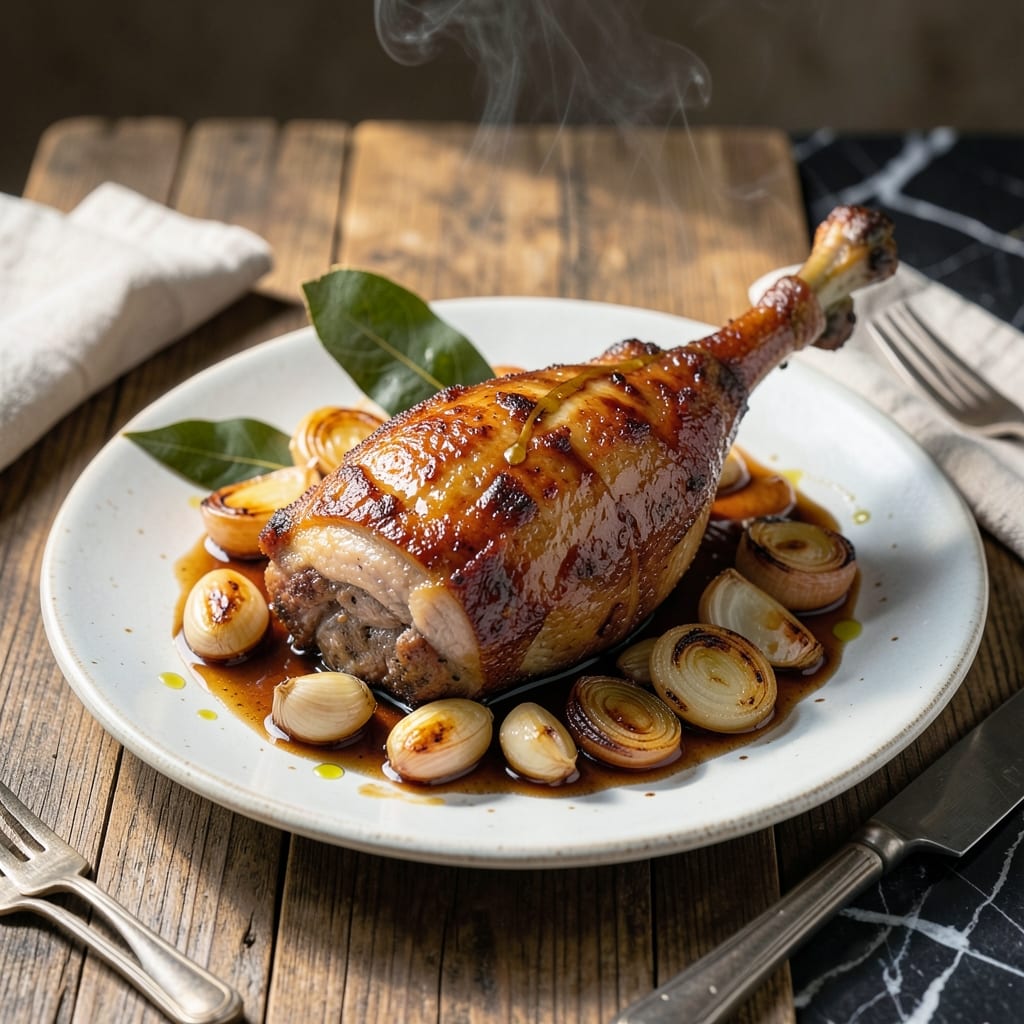
This Filipino pork leg dish captures the essence of my grandmother’s kitchen—slow-cooked until fall-off-the-bone tender, with a sauce so rich it demands extra rice. I’ve refined her intuitive method into precise steps that anyone can follow.
The key is patience. Low heat and time transform tough pork leg into melt-in-your-mouth perfection, while garlic and soy build layers of deep, savory flavor. No short cuts here—just the kind of cooking that fills the house with irresistible aromas.
What emerges is a dish that balances sweet, salty, and umami in every bite. The sauce reduces to a glossy consistency, coating each piece of pork in a rich, flavorful glaze.
Serve it with steamed rice and watch it disappear. This is Filipino comfort at its most satisfying.
Ingredients for Pork Leg Recipe Filipino
Rich, savory, and falling off the bone—these are the building blocks of comfort.
| Ingredient | Amount | Notes |
|---|---|---|
| Pork Leg 🐖 | 2 ½ lb | Bone-in, skin-on preferred |
| Garlic Cloves 🧄 | 10 cloves | Peeled, crushed for maximum flavor |
| Soy Sauce 🫗 | ¾ cup | Filipino brand like Silver Swan preferred |
| Brown Sugar 🍚 | ¼ cup | Light or dark, packed |
| White Vinegar 🍶 | ¼ cup | Balances the richness |
| Bay Leaves 🌿 | 3 whole | Dried, for aroma |
| Black Peppercorns 🌶️ | 1 tsp | Whole, lightly crushed |
| Water 💧 | 2 cups | Enough to braise the pork |
| Onion 🧅 | 1 whole | Large, quartered |
| Green Onions 🌱 | 4 whole | For garnish, thinly sliced |
| Vegetable Oil 🫒 | 2 tbsp | For searing pork |
| Salt 🧂 | 1 tsp | Adjust to taste |
| Pepper 🌶️ | ½ tsp | Freshly ground |
The pork leg is everything here. Bone-in, skin-on gives the best texture and flavor. I grab mine from Filipino markets if possible—they usually have pre-cut pieces perfect for braising. Look for pork with good marbling; it stays juicy through the long cook. The soy sauce matters too. Silver Swan or Datu Puti are the gold standard for authentic Filipino taste.
No Filipino soy sauce? Regular soy sauce plus a pinch of sugar gets you close. Out of brown sugar? Coconut sugar or white sugar works in a pinch. The vinegar can be apple cider or rice vinegar (just avoid balsamic—it’s too strong). If you’re short on time, pork shoulder is a decent substitute, though the texture won’t be quite the same.
This tastes even better the next day. Store in the fridge for up to 4 days or freeze for 3 months. The fat solidifies when cold—just reheat gently to melt it back into the sauce. Always serve with extra steamed rice to soak up that glorious glaze.
Why You’ll Love This Recipe
- I’ll be real: pork leg is cheaper than ribs or tenderloin, but with the same wow factor after marinating in that garlic-vinegar mix.
- Set and Forget: I just toss the pork leg with garlic, soy sauce, and brown sugar in the morning, then let it slow-cook all day—no babysitting required.
- Sweet-Savory Magic: That caramelized crust from the brown sugar and soy sauce? It’s sticky, salty, and just a little tangy from the vinegar.
- Feeds the Gang: Honestly, one pork leg stretches across three meals—tacos tonight, fried rice tomorrow, sandwiches the next day.
Step-by-Step Instructions for Slow-Braised Pork Leg
Here’s my go-to method for achieving fall-off-the-bone tenderness with rich, garlicky depth.
Step 1: Sear the Pork Leg for Maximum Flavor
Heat the 2 tbsp Vegetable Oil in a large, heavy pot over medium-high heat until it shimmers. Pat the 2.5 lb Pork Leg dry with paper towels—this ensures a good sear instead of steaming. Season all over with the 1 tsp Salt and 0.5 tsp Pepper, pressing it into the meat.
Sear the pork on all sides for 8-10 minutes total, turning occasionally, until deeply browned. Don’t rush this step; the caramelized crust adds incredible depth to the final dish. You’ll know it’s ready when it releases easily from the pot and has a rich, golden-brown crust.
Step 2: Build the Braising Liquid with Aromatics
Add the quartered 1 whole Onion and the 10 cloves Garlic Cloves to the pot, stirring for 1-2 minutes until fragrant. The garlic should turn just golden—don’t let it burn, or it’ll turn bitter.
Pour in the 0.75 cup Soy Sauce, 0.25 cup Brown Sugar, 0.25 cup White Vinegar, and 2 cups Water. Stir to dissolve the sugar, then add the 3 whole Bay Leaves and 1 tsp Black Peppercorns. The liquid should come about halfway up the pork; this ensures even cooking without submerging it completely.
Step 3: Braise Low and Slow Until Tender
Bring the liquid to a boil, then reduce the heat to low. Cover the pot and let it simmer gently for 2 to 2.5 hours. Check occasionally and turn the pork if needed for even cooking.
You’ll know it’s done when the meat pulls away from the bone easily and a fork slides in with no resistance. The braising liquid should reduce slightly, becoming rich and syrupy. If it gets too low, add a splash of water to prevent burning.
Step 4: Reduce the Sauce and Finish
Once the pork is tender, transfer it to a serving platter and cover loosely with foil. Skim any excess fat from the surface of the braising liquid, then increase the heat to medium-high. Simmer for 5-7 minutes until the sauce thickens slightly and coats the back of a spoon.
Taste and adjust seasoning if needed—though the soy sauce and braising process usually make this unnecessary. Pour the sauce over the pork, then garnish with the thinly sliced 4 whole Green Onions for a fresh, vibrant finish.
Pro Tips For Making Pork Leg Recipe Filipino
- Score the Skin: Cut 1-inch slits into the pork leg skin before cooking—this lets the soy-vinegar glaze seep deep and gives that crispy finish Filipinos love.
- Balance the Marinade: Mix 1 part vinegar to 2 parts soy sauce with brown sugar to avoid an overpowering sour taste; I learned this the hard way after ruining a batch with too much acid.
- Low and Slow First: Start the pork leg at 300°F for 2 hours to render fat, then crank to 400°F for the last 30 minutes for that perfect caramelized crust.
- Crush the Garlic: Smash the garlic cloves lightly before adding—it releases more flavor than mincing and prevents burning during the long cook time.
Flavor Customization for This Recipe
Sweet and Tangy
For a brighter flavor profile, increase the brown sugar to ½ cup and add 2 tbsp calamansi juice or lime juice. This adds a citrusy tang that cuts through the richness. I love how this version balances the deep soy flavors with a refreshing zing. 🌟
Extra Garlicky
Double the garlic cloves to 20 cloves for a more pronounced garlic flavor. Crush them well to release their oils, and add 1 tbsp minced ginger for an aromatic boost. This is my go-to when I want the dish to have a bold, punchy character.
Spicy Kick
Add 2-3 siling labuyo peppers (Filipino bird’s eye chili) or 1 tsp red pepper flakes to the braising liquid. The heat builds gradually, complementing the savory soy without overpowering it. Perfect for those who enjoy a little fire in their comfort food.
Coconut Milk Twist
Replace 1 cup of water with 1 cup coconut milk for a creamier, slightly tropical take. This adds a subtle sweetness and richness that pairs beautifully with the pork. I discovered this variation at a local Filipino market and it’s been a family favorite since.
Stir the coconut milk in at the beginning to prevent curdling. 💛
Herb-Infused
Toss in 5-6 sprigs of fresh thyme or 2 stalks lemongrass (bruised) along with the bay leaves. These herbs add a fragrant, earthy note that elevates the dish. Remove them before serving for a clean presentation.
Nutrition Facts
Frequently Asked Questions
Can I use pork shoulder instead of leg?
Yes, but expect a slightly different texture. Pork shoulder becomes tender faster (1.5-2 hours) and shreds more easily. Leg holds its shape better for slicing. Both work well with the same braising method.
Why sear the meat first?
Searing creates a flavorful crust that deepens the dish’s taste. It also helps render some fat, which enriches the braising liquid. Skip this step and you’ll miss out on a complex, caramelized base.
How do I know when it’s done?
The meat should pull away from the bone with no resistance. Test with a fork—if it slides in like butter, it’s ready. Undercooked pork will be tough, so don’t rush the 2-2.5 hour braise.
Can I make this in a slow cooker?
Brown the pork first, then transfer everything to a slow cooker. Cook on low for 6-8 hours or high for 4-5 hours. The result will be just as tender.

- Potato Candy Recipe 1933: Vintage Peanut Butter Roll Delight - October 30, 2026
- Potato Chip Cookie Recipe With Pecans: Buttery Crunch Meets Nutty Richness - October 30, 2026
- Potato Patty Recipe No Egg: Crispy Edges Without the Binder - October 30, 2026