
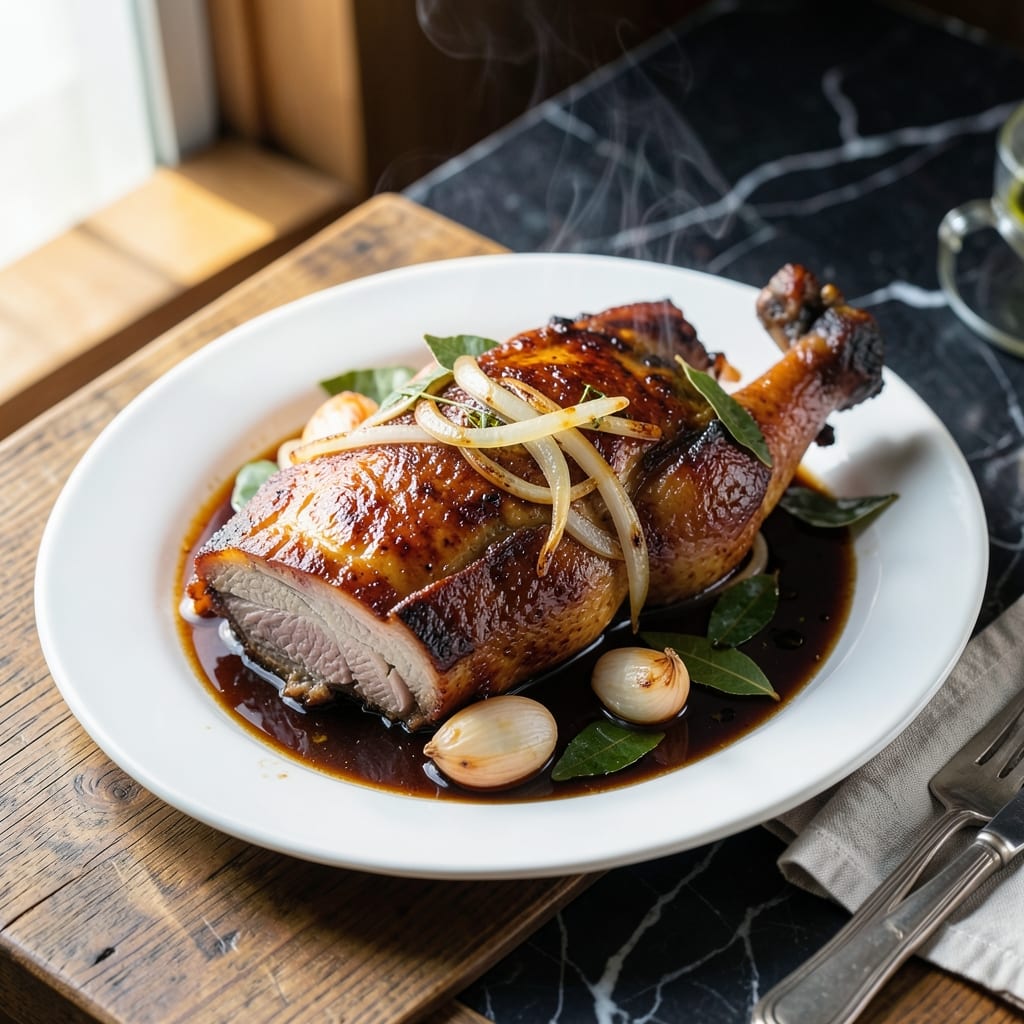
This slow-braised pork leg recipe captures the heart of Filipino home cooking with its rich, savory-sweet depth. I developed this method to honor the traditional Pinoy approach without requiring special equipment.
The secret lies in the patient cooking process, allowing tough cuts to transform into fall-off-the-bone tenderness. A balance of soy sauce, vinegar, and brown sugar creates that signature savory-sweet profile that defines this dish.
What emerges after hours of gentle simmering is meat so tender it nearly melts, surrounded by a thick, caramelized sauce. The aroma alone will transport you to a Manila kitchen.
Serve this with steamed rice to soak up every last drop of the incredible sauce. This is comfort food at its most authentic.
Ingredients for Pork Legs Recipe Pinoy Style
Pantry staples and a few hours transform pork leg into Pinoy comfort food perfection.
| Ingredient | Amount | Notes |
|---|---|---|
| Pork Leg 🐖 | 3 lb | Bone-in, skin-on preferred |
| Soy Sauce 🫕 | ¾ cup | Filipino brand preferred |
| White Vinegar 💧 | ½ cup | Cane or distilled |
| Brown Sugar 🍚 | ½ cup | Light or dark variety |
| Garlic Cloves 🧄 | 8 cloves | Peeled, crushed |
| Bay Leaves 🍃 | 3 pieces | Dried, whole |
| Black Peppercorns 🌶️ | 1 tbsp | Whole, lightly crushed |
| Onion 🧅 | 1 whole | Yellow or white, quartered |
| Water 💧 | 2 cups | Or pork stock for depth |
| Salt 🧂 | 1 tsp | Adjust to taste |
| Star Anise Pods ⭐ | 2 pieces | Optional, for depth |
| Vegetable Oil 🫒 | 2 tbsp | For searing pork |
The pork leg is the foundation—bone-in, skin-on cuts yield the richest results. Source from Asian markets for authentic cuts, or ask your butcher for picnic or shank sections. Filipino soy sauce brands like Silver Swan or Datu Puti deliver the correct umami depth. The vinegar must be white (cane or distilled) to balance the sweetness without overpowering the dish.
No Filipino soy sauce? Regular soy sauce plus a dash of fish sauce (if not strictly vegetarian) approximates the flavor. Brown sugar can be swapped for coconut sugar for a deeper caramel note. Fresh garlic is non-negotiable—pre-minced lacks the punch. Star anise is traditional but can be omitted; a cinnamon stick adds similar warmth if needed.
The braising liquid can be prepped 1 day ahead—flavors meld even better. Cooked pork keeps in the fridge for 4-5 days and freezes beautifully for 3 months. Reheat gently to preserve the sauce’s silky texture.
Why You’ll Love This Recipe
- I’ll be real: this is my go-to for big family gatherings. The meat stays juicy and everyone digs in.
- One Pan Wonder: I love how this comes together in a single pot—just brown the pork, toss in soy sauce, vinegar, brown sugar, and garlic, then let it simmer.
- Sweet-Savory Magic: That sticky glaze from brown sugar and soy sauce? Ridiculously good, especially with the tang of vinegar cutting through.
- Feeds a Crowd: I’ll be real: this is my go-to for big family gatherings. The meat stays juicy and everyone digs in.
Step-by-Step Instructions for Pork Legs Pinoy Style
This method delivers tender, fall-off-the-bone meat with a rich, caramelized sauce every time.
Step 1: Sear the Pork Leg for Depth of Flavor
Heat the 2 tbsp vegetable oil in a large pot over medium-high heat until shimmering. Pat the 3 lb pork leg dry with paper towels—this ensures a proper sear rather than steaming the meat.
Sear the pork on all sides for 8-10 minutes until the skin turns golden brown and crisp. The Maillard reaction here builds complex flavors that define this dish. Don’t rush this step; the fond (browned bits) left in the pot will dissolve into the braising liquid later.
Transfer the seared pork to a plate and set aside. The meat should have a deep, even color with no raw spots remaining.
Step 2: Build the Aromatic Braising Liquid
In the same pot, add the 1 whole onion (quartered), 8 cloves garlic cloves (crushed), 3 pieces bay leaves, and 1 tbsp black peppercorns. Sauté for 2-3 minutes until the aromatics soften and release their fragrance.
Pour in the 0.75 cup soy sauce, 0.5 cup white vinegar, and 0.5 cup brown sugar. Stir until the sugar dissolves completely. The vinegar’s tang will balance the sweetness of the sugar and the saltiness of the soy sauce.
Add the 2 pieces star anise pods and 2 cups water, then bring the mixture to a gentle boil. This liquid will transform into a glossy, deeply flavored sauce as it reduces.
Step 3: Braise the Pork Until Fork-Tender
Return the seared pork to the pot, ensuring it’s mostly submerged in the liquid. Add the 1 tsp salt, though taste first—the soy sauce may already provide enough saltiness. Cover the pot and reduce the heat to low.
Simmer for 2 to 2.5 hours, turning the pork occasionally to ensure even cooking. You’ll know it’s done when the meat pulls away from the bone easily and a fork slides in with no resistance. The liquid should reduce slightly, intensifying the flavors.
If the sauce reduces too quickly, add a splash of water to maintain the braising level. The pork’s collagen will break down during this time, yielding that signature melt-in-your-mouth texture.
Step 4: Reduce the Sauce and Serve
Once the pork is tender, remove it from the pot and set it aside. Increase the heat to medium-high and let the sauce simmer uncovered for 8-10 minutes until it thickens into a syrupy consistency.
Skimming excess fat from the surface at this stage will give you a cleaner, more refined sauce. Taste and adjust seasoning if needed—though the balance of sweet, salty, and tangy should already be spot-on.
Slice the pork or serve it whole, spooning the reduced sauce generously over the top. The sauce should cling to the meat, with each bite delivering layers of savory, sweet, and aromatic complexity.
Pro Tips For Making Pork Legs Recipe Pinoy Style
- Score the Skin: Cut 1/4-inch deep slits across the pork leg skin before marinating—this lets the soy-vinegar mix penetrate deeper and gives you that crispy crackling later.
- Boil First, Roast After: Parboil the pork leg for 20-30 minutes to remove impurities and tighten the skin before braising or roasting. I learned this the hard way after my first few batches turned out tough.
- Balance the Marinade: Use a 1:1:1 ratio of soy sauce, vinegar, and brown sugar for the marinade—any more vinegar and it’ll overpower the dish, any less and the sweetness won’t cut through the richness.
- Rest Before Slicing: Let the cooked pork leg rest for at least 15 minutes under foil. Sounds tedious, but it keeps all the juices inside instead of pooling on your cutting board.
Creative Variations of This Recipe
Adobo-Inspired Twist
Swap the soy-vinegar base for a classic Filipino adobo profile. Use 1 cup coconut vinegar and 1 cup soy sauce with 1 tbsp whole black peppercorns and 5 crushed garlic cloves. Add 3 bay leaves for that traditional adobo aroma. 🌟
Sweet & Sour Version
For a tangier variation, add ½ cup pineapple juice and ¼ cup calamansi juice to the braising liquid. Include 1 sliced bell pepper during the last 30 minutes of cooking. The result is a bright, zesty take on the classic.
The pineapple’s natural enzymes help tenderize the meat even further.
Coconut Milk Braise
Replace 1 cup water with 1 can coconut milk for a richer, creamier sauce. This version is popular in the Visayas region. Stir in 1 tbsp fish sauce for umami depth. The coconut balances the soy-vinegar tang beautifully.
Spiced with Banana Leaves
Line your pot with 2 banana leaves before adding the pork and liquid. This imparts a subtle earthy aroma. Secure with kitchen twine to prevent floating. Remove leaves before reducing the sauce. 💛
Crispy Skin Finish
After braising, transfer the pork to a baking sheet and broil on high heat for 5-7 minutes to crisp the skin. Baste with the reduced sauce every 2 minutes. This adds textural contrast to the tender meat.
Nutrition Facts
Frequently Asked Questions
Can I use a different cut of pork?
Yes, but bone-in, skin-on cuts like picnic or shank work best. Lean cuts may dry out during the 2-2.5 hour braising.
Why does the sauce need to reduce?
Reducing the sauce for 8-10 minutes intensifies the sweet-savory flavors and creates a glossy texture that clings to the meat.
Can I make this ahead?
The dish tastes even better the next day as flavors meld. Store in the fridge for up to 5 days or freeze for 3 months.
What if my sauce is too salty?
Balance it with a touch of brown sugar or dilute with a splash of water. Taste as you go to avoid overcorrecting.

- Potato Candy Recipe 1933: Vintage Peanut Butter Roll Delight - October 30, 2026
- Potato Chip Cookie Recipe With Pecans: Buttery Crunch Meets Nutty Richness - October 30, 2026
- Potato Patty Recipe No Egg: Crispy Edges Without the Binder - October 30, 2026