
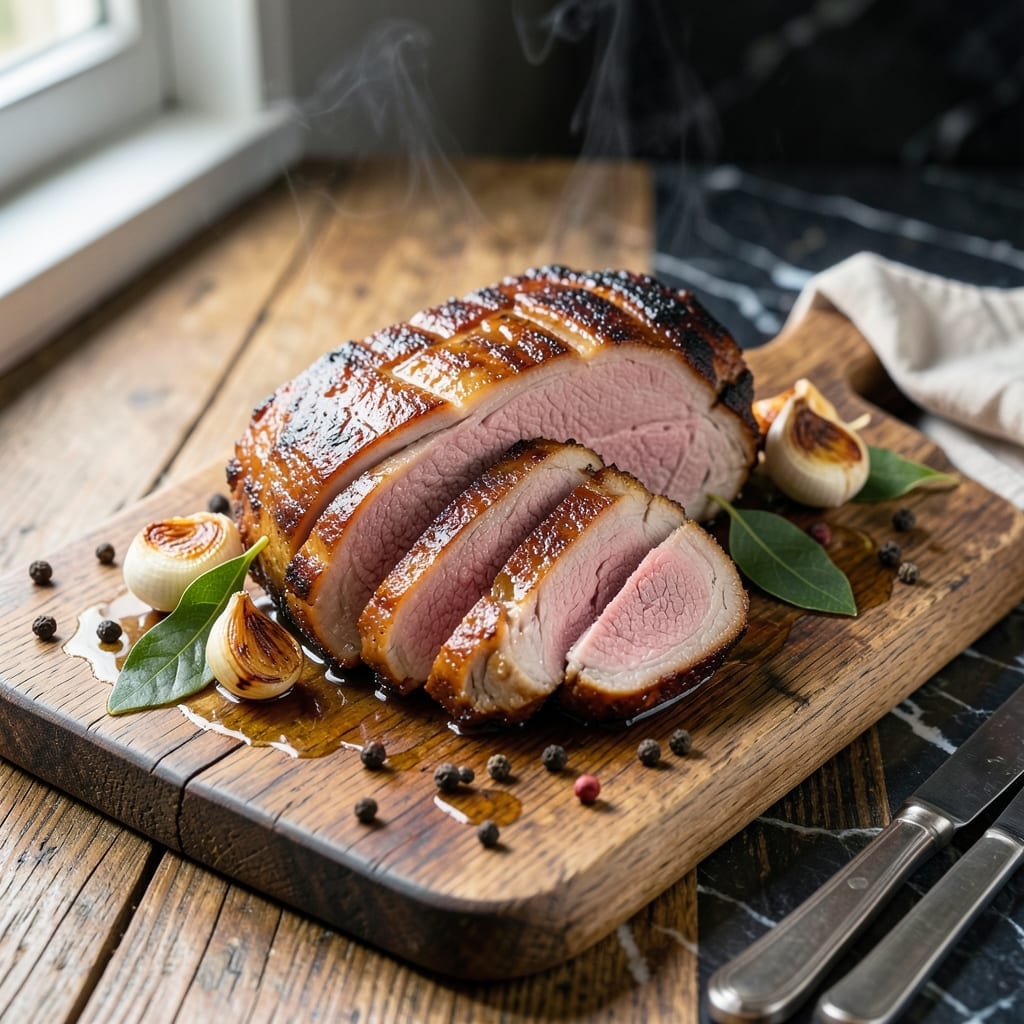
I learned the hard way that dry pork loin is a tragedy, which is why this brine recipe exists. My grandmother never measured her brines, but I’ve perfected the ratios for guaranteed tender results every time.
This simple solution of water, salt and sugar works on a molecular level to help the meat retain moisture during the long smoking process. The salt breaks down muscle fibers while the sugar adds subtle sweetness.
The result is pork loin that stays impossibly juicy, with every slice revealing perfectly seasoned, moist meat. No more guessing or hoping for the best.
Use this brine for any pork loin before smoking, and you’ll never serve dry pork again. The preparation takes just minutes for a transformation that lasts through cooking.
Ingredients for Pork Loin Brine Recipe for Smoking
Eight simple ingredients transform pork loin into juicy, tender perfection for smoking.
| Ingredient | Amount | Notes |
|---|---|---|
| Water 💧 | 4 cups | Cold, for brine base |
| Kosher Salt 🧂 | ½ cup | Diamond Crystal preferred |
| Brown Sugar 🍚 | ½ cup | Light or dark variety |
| Black Peppercorns 🌶️ | 1 tbsp | Whole, lightly crushed |
| Garlic Cloves 🧄 | 4 cloves | Smashed, peeled |
| Bay Leaves 🍃 | 2 pieces | Dried, whole |
| Apple Cider Vinegar 🍏 | ¼ cup | For acidity balance |
| Juniper Berries 🫐 | 1 tbsp | Optional, lightly crushed |
The salt is doing most of the heavy lifting here. Diamond Crystal kosher salt is my go-to—it dissolves cleanly and gives consistent results. I grab mine in bulk at Costco (cheaper and you’ll use a lot for brining). Brown sugar adds subtle sweetness that balances the salt—light or dark both work. Just make sure it’s fully dissolved before adding the pork.
No kosher salt? Table salt at half the amount works in a pinch (it’s denser). Swap brown sugar for white sugar or honey if that’s what you’ve got. The vinegar can be white vinegar or lemon juice—just keep the quantity the same. Juniper berries are optional but add a nice piney depth (find them at Whole Foods or specialty spice shops).
This brine keeps 1 week in the fridge, but I usually make it fresh for each use. Discard after brining—never reuse. Store dry ingredients (salt, sugar, spices) in airtight containers for 6-12 months.
Why You’ll Love This Recipe
- Five Minute Mix: I dump everything in a pot, heat it just until the sugar dissolves, then cool—no fuss, no fancy steps.
- Garlic-Kissed Depth: The brown sugar caramelizes while smoking, and those crushed garlic cloves infuse every bite with rich, savory sweetness.
- Smokes for Any Crowd: I’ve brined a loin for Sunday dinner with the in-laws and for a casual backyard hang—works every time.
- Stretches the Budget: One inexpensive pork loin feeds my family for two nights, and the leftover slices make killer sandwiches.
Step-by-Step Instructions for Pork Loin Brine for Smoking
Here’s the method I use for a foolproof brine that keeps pork loin juicy through hours of smoking.
Step 1: Bloom the Spices and Aromatics
In a medium saucepan, combine the 4 cups Water with the 0.5 cup Kosher Salt, 0.5 cup Brown Sugar, 1 tbsp Black Peppercorns, 4 cloves Garlic Cloves, 2 pieces Bay Leaves, and 1 tbsp Juniper Berries.
Bring this mixture to a gentle boil over medium-high heat, stirring just until the salt and sugar dissolve completely. This takes about 3-4 minutes. You’ll see the liquid turn slightly cloudy as the sugar incorporates, and the air will fill with the warm, earthy aroma of the spices. Remove from heat as soon as it boils to prevent over-concentrating the brine.
Step 2: Add Vinegar and Cool Completely
Stir in the 0.25 cup Apple Cider Vinegar immediately after removing from heat. The residual heat will mellow its sharpness slightly while preserving the tang that balances the sweetness of the brine.
Let the brine cool to room temperature—this takes about 30-45 minutes at room temperature, or 15-20 minutes in an ice bath if you’re in a hurry. It’s crucial that the brine is completely cool before using; hot brine will start cooking the pork and make the exterior mealy instead of tender. You can test it by dipping a clean finger in—it should feel cool to the touch.
Step 3: Submerge the Pork Loin and Brine
Place your pork loin in a large resealable bag or non-reactive container (glass or food-grade plastic). Pour the cooled brine over the loin, ensuring it’s completely submerged. If your loin floats, use a small plate or a heavy utensil to weigh it down.
Seal and refrigerate for at least 12 hours, but 18-24 hours is ideal for maximum flavor penetration and moisture retention. I like to flip the bag or rotate the container halfway through the brining time to ensure even exposure. The pork will plump slightly as it absorbs the brine, and the surface will take on a faint grayish tint—this is normal and a sign the brine is working.
Step 4: Rinse and Pat Dry Before Smoking
Remove the pork loin from the brine and discard the liquid. Give the loin a quick rinse under cold running water to remove excess surface salt—this prevents an overly salty crust during smoking. Pat it completely dry with paper towels; any moisture will interfere with smoke adhesion and bark formation.
Let the pork sit uncovered in the refrigerator for 1-2 hours to allow the surface to dry further. You’ll notice the meat firms up slightly as it air-dries. This step is crucial for achieving that perfect mahogany crust when smoked. Now your loin is ready for seasoning and the smoker—it’ll stay juicy and flavorful throughout the entire cooking process.
Pro Tips For Making Pork Loin Brine Recipe For Smoking
- Brine overnight: I learned this the hard way—anything less than 12 hours in the brine and the pork loin just doesn’t absorb enough flavor or moisture for smoking.
- Crush the peppercorns: Whole peppercorns won’t release their flavor in the brine, so give them a quick crush with a rolling pin or mortar and pestle before adding.
- Skip the iodized salt: Kosher salt is the only way to go here—iodized salt can give your brine a metallic taste and mess with the color of the pork.
- Boil and cool first: Dissolve the salt and sugar in boiling water first, then cool completely before adding the pork—hot brine will start cooking the meat.
Serving Suggestions for This Dish
Plating Ideas
Slice the brined pork loin against the grain into ½-inch thick pieces and fan them out on a wooden board for a rustic presentation. The brine’s salt and sugar create a beautiful mahogany crust that looks stunning against the pink smoke ring.
Side Dish Pairings
Serve with tangy coleslaw to cut through the richness—I use a simple mix of shredded cabbage, 2 tbsp apple cider vinegar, and 1 tbsp mayonnaise. Roasted sweet potatoes also complement the pork’s smoky depth. 🥗
Sauce Recommendations
A light drizzle of honey-mustard glaze (mix 3 tbsp honey with 1 tbsp Dijon mustard) enhances the brine’s subtle sweetness. For heat lovers, add a dash of hot sauce on the side.
Garnish Touches
Sprinkle with fresh parsley for color and brightness. I also love adding toasted breadcrumbs for texture—they stick to the brined surface beautifully. A few lemon wedges add a fresh contrast.
Serving Temperature
Let the pork rest for 10-15 minutes before slicing, then serve warm. The brine ensures it stays juicy even if it sits a bit. For leftovers, reheat gently in a 300°F oven with a splash of water. 💡
Beverage Pairings
A crisp hard cider or light lager beer balances the pork’s smoky-sweet profile. For non-alcoholic options, sparkling apple cider echoes the brine’s apple cider vinegar notes.
Nutrition Facts
Frequently Asked Questions
Can I use table salt instead of kosher?
Yes, but reduce the amount by half since table salt is denser. The brine will be just as effective for keeping your pork juicy during smoking.
How long can I leave the pork in the brine?
For best results, brine for 12-24 hours. Longer than 48 hours can make the meat too salty and change the texture.
Do I need to rinse the pork after brining?
A quick cold water rinse removes excess surface salt, preventing an overly salty crust when smoked. Always pat thoroughly dry afterward.
Can I reuse the brine?
Never reuse brine after raw meat has been in it. The used liquid may contain harmful bacteria that could contaminate other foods.

- Potato Chip Cookie Recipe With Pecans: Buttery Crunch Meets Nutty Richness - October 30, 2026
- Potato Patty Recipe No Egg: Crispy Edges Without the Binder - October 30, 2026
- Paula Deen’s Potato Chip Cookies Recipe: Salty-Sweet Crunch in Every Bite - October 30, 2026