
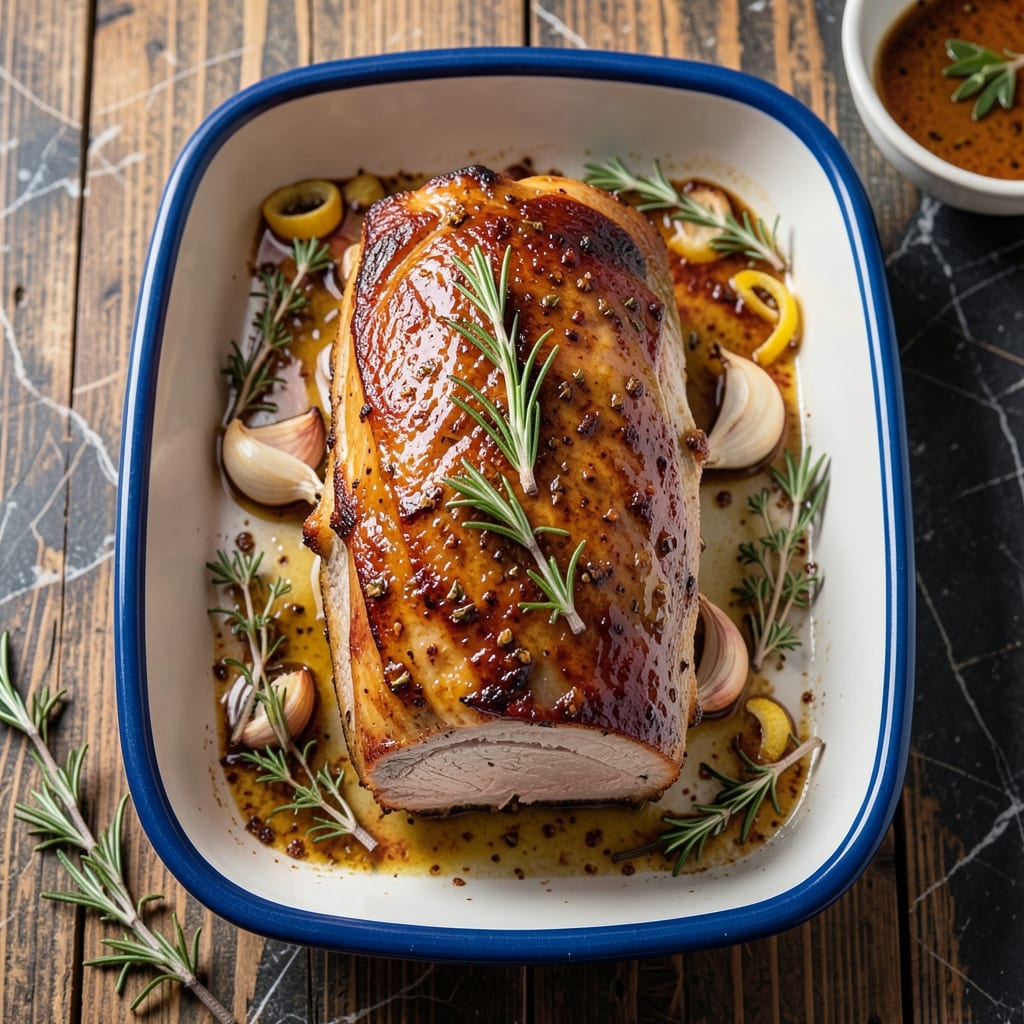
This oven-roasted pork loin delivers herb-crusted perfection with minimal effort. The center cut ensures tender, juicy meat every time, while a simple seasoning blend creates that coveted golden finish.
I’ve refined this method to guarantee even cooking and a flavorful crust without complicated steps. The key is a hot oven start, then a gentle finish to lock in moisture and create that ideal succulent texture.
You’ll love how the herbs form a fragrant crust that seals in natural juices. The result is a roast that’s impressive enough for company but easy enough for a weeknight.
Serve with roasted vegetables or mashed potatoes to complete the meal. This technique never fails.
Ingredients for Pork Loin Center Cut Roast Recipe Oven
Center-cut pork loin plus fresh herbs and garlic for that golden, herb-crusted finish.
| Ingredient | Amount | Notes |
|---|---|---|
| Pork Loin Center Cut 🥩 | 2 lb | Boneless, trimmed of excess fat |
| Fresh Rosemary 🌿 | 2 tbsp | Finely chopped, stems removed |
| Fresh Thyme 🍃 | 2 tbsp | Finely chopped, stems removed |
| Garlic Cloves 🧄 | 4 cloves | Minced for maximum flavor |
| Olive Oil 🫒 | 3 tbsp | Extra-virgin for richness |
| Dijon Mustard 🟡 | 2 tbsp | Smooth, not whole grain |
| Kosher Salt 🧂 | 1 ½ tsp | Diamond Crystal preferred |
| Black Pepper 🌶️ | 1 tsp | Freshly ground for best flavor |
| Dried Sage 🌿 | 1 tsp | Rubbed between fingers to release oils |
| Brown Sugar 🟤 | 1 tbsp | Light or dark, packed |
| Red Wine Vinegar 🍷 | 1 tbsp | For brightness in crust |
| Butter 🧈 | 2 tbsp | Unsalted, melted for basting |
The pork loin is the star here. Center-cut pieces stay juicier than end cuts—look for even thickness (about 3-4 inches wide) at Whole Foods or your butcher. I always ask for the bone removed but the fat cap left on for flavor. Costco has great pre-trimmed options if you’re in a hurry. Avoid anything labeled ‘pork tenderloin’—it’s a different cut entirely.
No fresh rosemary or thyme? Dried at one-third the amount works, but fresh really shines here. Out of Dijon? Whole-grain mustard adds nice texture, or a mix of yellow mustard and a pinch of turmeric. The brown sugar can be swapped for maple syrup (use 1.5 tbsp), but it won’t caramelize quite the same. Butter can be olive oil if avoiding dairy.
Roast leftovers keep beautifully—slice and store in the fridge for up to 4 days. The herb crust softens but the flavor deepens. Freezes well too for 3 months. Reheat slices gently in a skillet with a splash of water to keep them moist.
Why You’ll Love This Recipe
- Hands-Off Cooking: I just rub the pork with olive oil, herbs, and garlic, pop it in the oven, and let it do the work.
- Herb-Infused Perfection: The rosemary and thyme crust gives every bite that earthy, aromatic punch.
- Sunday Dinner Hero: It’s my go-to for feeding a crowd—fancy enough for guests, simple enough for family.
- Leftovers for Days: One roast means sandwiches, tacos, or fried rice for the next three meals.
Step-by-Step Instructions for Pork Loin Center Cut Roast
Here’s how I get that perfect herb crust and juicy interior every single time.
Step 1: Prepare the Herb Marinade
In a bowl, whisk together the 3 tbsp olive oil, 2 tbsp Dijon mustard, 1 tbsp red wine vinegar, and 1 tbsp brown sugar until smooth. I like to use a small whisk to fully emulsify the ingredients—this ensures the marinade clings properly to the pork.
Finely chop the 2 tbsp fresh rosemary and 2 tbsp fresh thyme, then mince the 4 cloves garlic cloves. Add these to the bowl along with the 1.5 tsp kosher salt, 1 tsp black pepper, and 1 tsp dried sage. Stir to combine. The herbs should release their aroma immediately, signaling they’re ready to infuse the meat.
Step 2: Coat and Marinate the Pork
Pat the 2 lb pork loin center cut completely dry with paper towels. This step is crucial—the drier the surface, the better the crust will form. Place the pork on a wire rack set over a plate to catch any drips.
Rub the herb marinade all over the pork, pressing it into every crevice. I use my hands for this—you’ll feel the texture of the herbs against the meat, ensuring full coverage. Let it marinate at room temperature for 30 minutes, or refrigerate for up to 4 hours for deeper flavor penetration.
Step 3: Sear for a Golden Crust
Preheat your oven to 375°F. Heat a large oven-safe skillet over medium-high heat. Add the pork and sear undisturbed for 3-4 minutes per side until deeply browned. You’ll know it’s ready to flip when it releases easily from the pan.
For extra richness, pour the 2 tbsp butter over the pork during the last minute of searing. Baste the pork with the melted butter using a spoon, coating it evenly. This step adds a glossy finish and layers in that unmistakable buttery flavor.
Step 4: Roast to Perfection
Transfer the skillet to the preheated oven. Roast the pork for 25-35 minutes, or until the internal temperature reaches 145°F. Use a meat thermometer for accuracy—the pork should be slightly pink in the center but not raw.
If the herbs on top start to darken too quickly, loosely tent the skillet with foil. The crust should be a deep golden brown, not burnt. The aroma filling your kitchen will be irresistible—herbaceous, buttery, and rich.
Step 5: Rest and Serve
Remove the pork from the oven and transfer it to a cutting board. Tent it loosely with foil and let it rest for 10 minutes. This allows the juices to redistribute, ensuring every slice is moist and flavorful.
Slice against the grain into ½-inch thick pieces. The pork should be tender with a crust that crackles slightly when cut. Serve immediately, spooning any pan juices over the top for an extra burst of flavor.
Pro Tips For Making Pork Loin Center Cut Roast Recipe Oven
- Sear First Always: I learned this the hard way—skip searing and your roast loses that golden crust. Two minutes per side in a screaming-hot pan with olive oil before it hits the oven.
- Herb Slits Work: Cut small slits in the pork and tuck in slivers of garlic, rosemary, and thyme. Sounds fussy, but it actually changes the outcome by getting flavor deep into the meat.
- Pull at 145°: Resist the urge to wait for 160°—pork loin keeps cooking as it rests. Pull it at 145°F, tent with foil for 10 minutes, and it’ll be juicy every time.
- Dry the Surface: Pat the pork dry with paper towels before seasoning—this isn’t the prettiest step, but it guarantees a better crust. I skip this when I’m lazy, and I always regret it.
Essential Equipment for This Recipe
Oven-Safe Skillet
An oven-safe skillet is non-negotiable for this recipe. I swear by my 12-inch Lodge cast iron—it retains heat beautifully and goes from stovetop to oven seamlessly. Avoid nonstick pans unless labeled oven-safe to 400°F or higher. 🔥
Meat Thermometer
A reliable instant-read thermometer is your best friend for perfect doneness. I use the ThermoWorks ThermoPop—it gives accurate readings in 3-4 seconds. Check the thickest part of the roast, avoiding bone or fat.
Mixing Bowls
For the herb marinade, a medium mixing bowl (about 2-3 cups) works perfectly. I prefer glass or stainless steel for easy cleaning. A small whisk helps emulsify the olive oil and Dijon mustard completely.
Wire Rack
A wire rack set over a plate keeps the pork elevated during marinating. This allows air circulation for even coating and prevents soggy spots. I use a simple stainless steel cooling rack that fits over most plates.
Basting Spoon
Use a heat-resistant basting spoon to coat the pork with melted butter during searing. A long handle keeps your hands safe from the heat. I prefer silicone heads—they won’t scratch your skillet.
Cutting Board
A large, stable cutting board is essential for resting and slicing. I recommend bamboo or plastic for easy cleaning. The pork needs space to rest without crowding, so aim for at least 12×18 inches. 💡
Nutrition Facts
Frequently Asked Questions
What internal temperature should I aim for?
Remove from oven when it reaches 145°F internally. The temperature will rise to 150-155°F during resting, giving you perfectly juicy meat. Always check the thickest part.
Can I use a different cooking vessel?
A roasting pan works if you don’t have an oven-safe skillet. Just sear in a regular pan first, then transfer to the roasting pan for the oven portion.
How do I prevent dry meat?
Don’t overcook—pull it at 145°F and let it rest for 10 minutes before slicing. Basting with butter during searing adds moisture and flavor.
Can I make this ahead?
Marinate the pork overnight for deeper flavor. Cook just before serving, as the crust is best fresh from the oven. Leftovers keep well for 4 days.

- Potato Chip Cookie Recipe With Pecans: Buttery Crunch Meets Nutty Richness - October 30, 2026
- Potato Patty Recipe No Egg: Crispy Edges Without the Binder - October 30, 2026
- Paula Deen’s Potato Chip Cookies Recipe: Salty-Sweet Crunch in Every Bite - October 30, 2026