
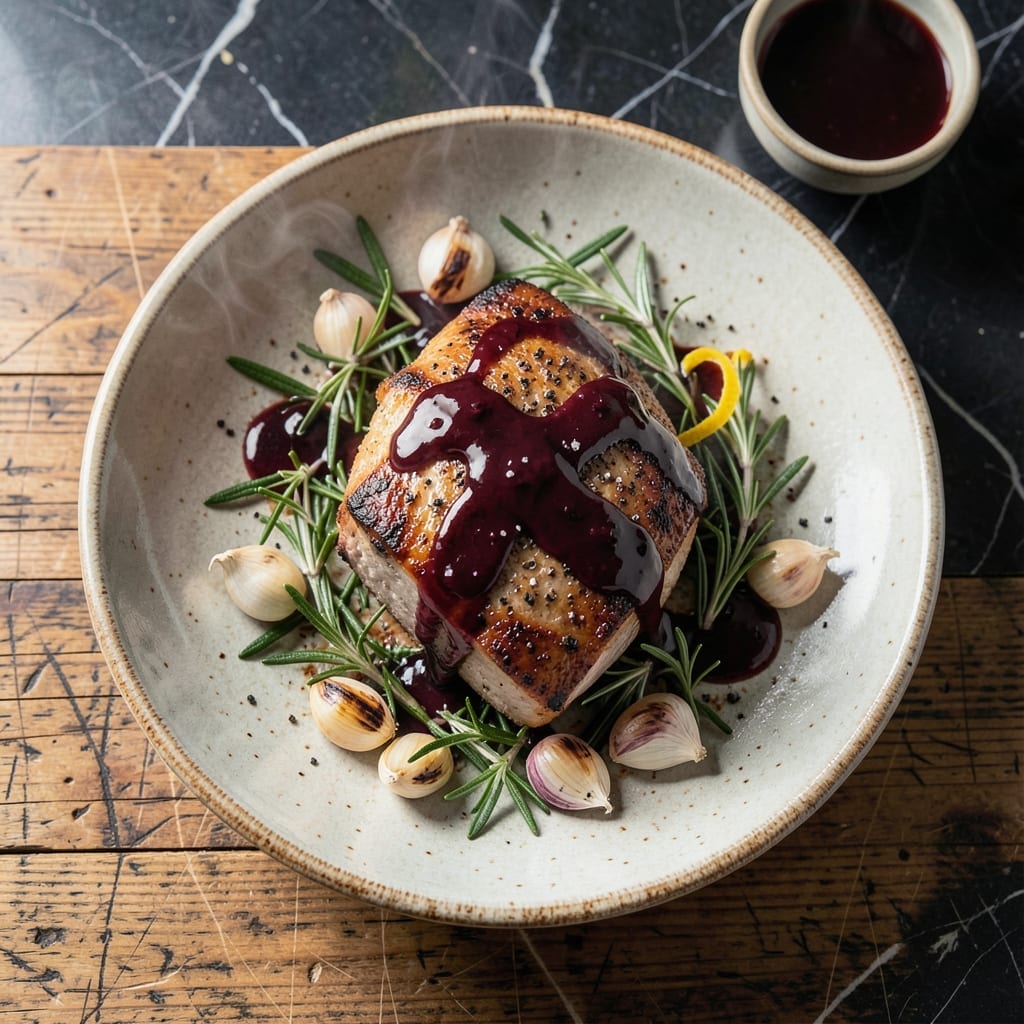
This balsamic-glazed pork loin transforms a simple cut into a stunning centerpiece with minimal effort. My grandmother would approve of the straightforward technique—just a few ingredients and smart timing.
The herb crust creates a fragrant seal that locks in juices while the balsamic reduction adds a tangy, glossy finish. It’s a proven method that delivers restaurant-quality results in your home kitchen.
You’ll achieve tender, flavorful meat with a caramelized exterior that impresses without complicated steps. The glaze balances sweet and acid perfectly, complementing the pork’s natural richness.
Ideal for Sunday suppers or special occasions, this dish proves that elegant meals don’t require heroic effort. The process is as satisfying as the final result.
Ingredients for Pork Loin Recipe Balsamic
Center-cut pork loin plus a handful of pantry staples create this elegant, herb-crusted centerpiece with minimal effort.
| Ingredient | Amount | Notes |
|---|---|---|
| Pork Loin 🥩 | 2 lb | Boneless, center-cut preferred |
| Balsamic Vinegar 🍷 | ½ cup | Aged, high-quality for reduction |
| Fresh Rosemary 🌿 | 2 tbsp | Finely chopped, stems removed |
| Fresh Thyme 🍃 | 2 tbsp | Finely chopped, stems removed |
| Garlic Cloves 🧄 | 4 cloves | Minced for herb crust |
| Dijon Mustard 🟡 | 2 tbsp | Smooth, not whole grain |
| Olive Oil 🫒 | 2 tbsp | Extra-virgin for searing |
| Kosher Salt 🧂 | 1 ½ tsp | Diamond Crystal preferred |
| Black Pepper 🌶️ | 1 tsp | Freshly ground for crust |
| Brown Sugar 🟤 | 2 tbsp | Light or dark for glaze |
| Chicken Stock 🥣 | ¼ cup | Low-sodium preferred for reduction |
| Unsalted Butter 🧈 | 1 tbsp | For finishing glaze |
The pork loin is the foundation—opt for a center-cut piece with even thickness for consistent cooking. Whole Foods or a trusted butcher will have the best selection. Look for a roast with a thin fat cap (about 1/4 inch) for optimal flavor without excess grease. The balsamic vinegar quality matters: aged varieties (12+ years) reduce to a syrupy consistency with deeper flavor than standard grocery-store options.
No fresh herbs? Dried at one-third the amount, but fresh delivers superior aroma. Short on balsamic? Red wine vinegar plus 1 tsp honey approximates the sweet-tart balance. For the glaze, ensure your chicken stock is low-sodium—reduced liquids intensify saltiness. The Dijon mustard can be swapped for whole grain, but the texture will be slightly less smooth.
Pork loin keeps 3-4 days in the fridge or 6 months frozen. The herb crust can be prepped a day ahead—store covered in the fridge. The balsamic reduction thickens as it cools; reheat gently with a splash of water to restore consistency.
Why You’ll Love This Recipe
- One Pan Meal: I love that everything goes on a single sheet pan—pork loin, herbs, and balsamic glaze roasting together.
- Rich and Tangy: The balsamic vinegar caramelizes into this glossy, slightly sweet crust that pairs perfectly with the rosemary and thyme.
- Feeds a Crowd: This pork loin serves six easily, making it my go-to for Sunday dinners or when friends drop by unexpectedly.
- Leftovers for Days: Honestly, the sliced pork tastes even better the next day in sandwiches or tossed into salads.
Step-by-Step Instructions for Balsamic Glazed Pork Loin
Master this technique for a restaurant-worthy centerpiece with minimal effort.
Step 1: Prepare the Herb Crust
In a small bowl, combine the 2 tbsp Fresh Rosemary, 2 tbsp Fresh Thyme, 4 cloves Garlic Cloves, 2 tbsp Dijon Mustard, 2 tbsp Olive Oil, 1.5 tsp Kosher Salt, and 1 tsp Black Pepper. The mixture should resemble a thick paste with visible herb flecks.
This aromatic blend creates a flavorful crust that locks in moisture while forming a golden-brown exterior. I find that finely chopped herbs distribute more evenly and adhere better to the pork loin than coarsely chopped.
Step 2: Sear the Pork Loin
Pat the 2 lb Pork Loin dry with paper towels, then rub the herb mixture all over its surface, pressing gently to ensure full coverage. Heat a large oven-safe skillet over medium-high heat and add the pork loin.
Sear on all sides for about 2-3 minutes per side until deep golden brown. The sear should create a visible crust that doesn’t stick to the pan when properly developed. This step builds the foundation for both flavor and visual appeal.
Step 3: Roast and Glaze
Transfer the skillet with the seared pork loin to a preheated 375°F oven. Roast for 25-30 minutes or until the internal temperature reaches 145°F in the thickest part.
While the pork loin roasts, make the glaze: in a small saucepan, combine the 0.5 cup Balsamic Vinegar, 2 tbsp Brown Sugar, and 0.25 cup Chicken Stock. Simmer over medium heat for 8-10 minutes until reduced by half and syrupy. Finish by whisking in the 1 tbsp Unsalted Butter for a glossy texture.
Step 4: Rest and Serve
Remove the pork loin from the oven and immediately brush generously with the balsamic glaze. Tent loosely with foil and let rest for 10-15 minutes—this allows the juices to redistribute for optimal tenderness.
The internal temperature will rise to 150-155°F during resting. Slice against the grain into ½-inch thick pieces and drizzle with remaining glaze before serving. The center should be faintly pink and juicy, not dry or overcooked.
Pro Tips For Making Pork Loin Recipe Balsamic
- Sear First, Roast Later: I learned this the hard way—sear the pork loin in a screaming hot pan for 3-4 minutes per side before transferring to the oven to guarantee a caramelized crust and lock in juices.
- Reduce the Balsamic: Simmer the balsamic vinegar with the rosemary and thyme for 5-7 minutes until it thickens slightly—this prevents a watery glaze and intensifies the flavor.
- Avoid Overcooking: Pull the pork loin at 145°F internal temp; it’ll rise to 150-155°F while resting, keeping it juicy instead of dry and tough.
- Smash the Garlic: Lightly crush the garlic cloves with the flat of your knife before adding them—this releases the aroma without the risk of burning, and you can remove the cloves before serving if you prefer.
Common Mistakes When Making This Dish
Overcooking the Meat
Pork loin cooks quickly, so pulling it at 145°F internal temperature is crucial. I’ve ruined many roasts by leaving them in the oven too long, thinking they needed more time. Remember, the temperature will rise to 150-155°F during resting. 🌡️
Skipping the Sear
Don’t rush the searing step—2-3 minutes per side over medium-high heat builds a flavorful crust. Skipping this creates a pale, less flavorful exterior. A well-seared loin also holds the herb crust better throughout cooking.
Using Low-Quality Balsamic
Cheap balsamic vinegar won’t reduce to the same syrupy consistency or depth of flavor. I learned this the hard way when my glaze tasted thin and harsh. Invest in aged balsamic (12+ years) for the best results.
Neglecting the Rest
Let the pork loin rest for 10-15 minutes after roasting. Slicing too soon causes juices to spill out, leaving the meat dry. I tent mine with foil to keep it warm while the juices redistribute.
Inconsistent Thickness
Always choose a center-cut pork loin with even thickness. Uneven pieces cook irregularly, leading to dry edges and undercooked centers. Your butcher can trim it for you if needed.
This ensures the herb crust cooks evenly and the glaze coats uniformly. 💡
Nutrition Facts
Frequently Asked Questions
What temperature should the pork loin reach?
Remove it from the oven at 145°F internal temperature. The temperature will rise to 150-155°F during resting, ensuring perfect doneness.
Can I use a different vinegar for the glaze?
Red wine vinegar plus 1 tsp honey can substitute, but aged balsamic delivers the best flavor. Cheaper vinegars may taste harsh or thin when reduced.
How long should the pork loin rest?
Let it rest for 10-15 minutes after roasting. This allows juices to redistribute, keeping the meat tender and juicy.
Why does my glaze turn out watery?
Simmer the glaze for the full 8-10 minutes until syrupy. Using low-quality vinegar or not reducing it enough causes a thin consistency.

- Potato Chip Cookie Recipe With Pecans: Buttery Crunch Meets Nutty Richness - October 30, 2026
- Potato Patty Recipe No Egg: Crispy Edges Without the Binder - October 30, 2026
- Paula Deen’s Potato Chip Cookies Recipe: Salty-Sweet Crunch in Every Bite - October 30, 2026