
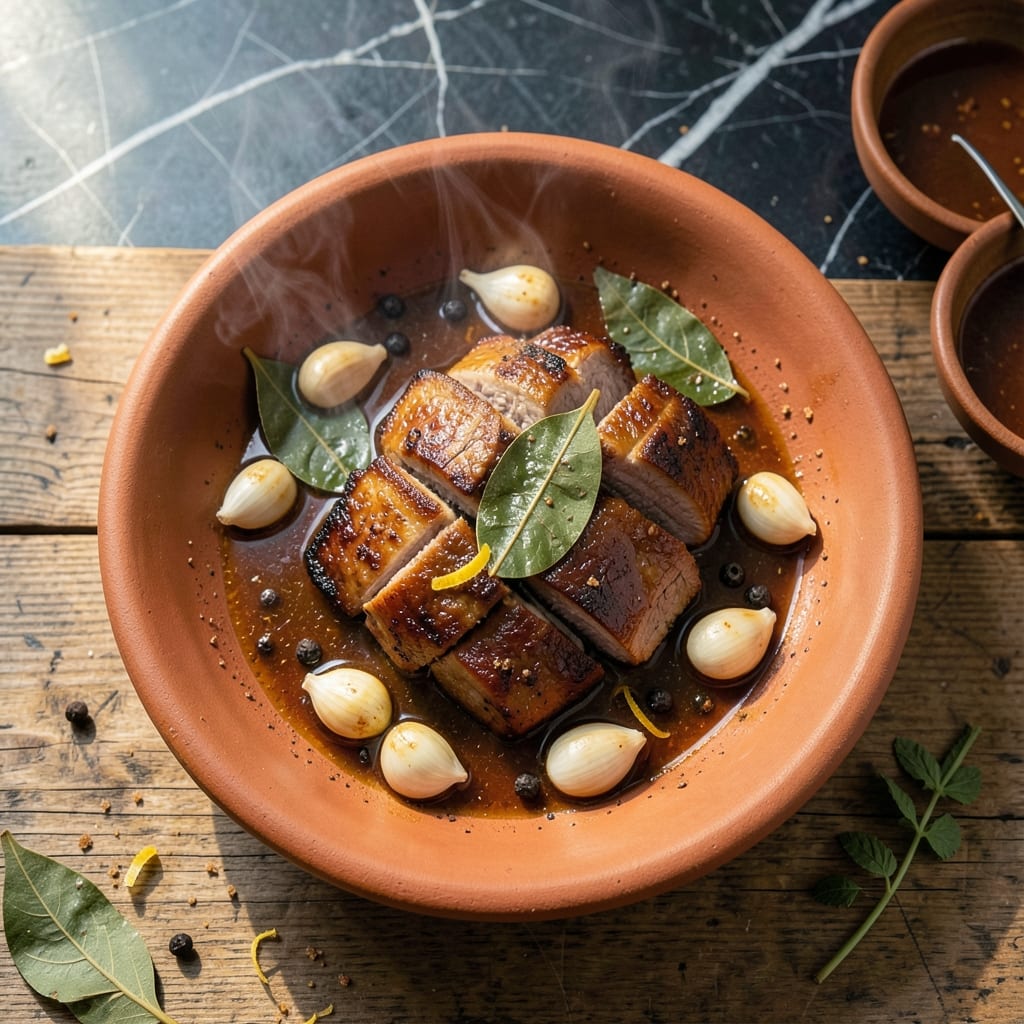
This recipe transforms humble pork loin into a Filipino masterpiece through a simple adobo marinade. The vinegar, soy sauce, and garlic combination creates a perfect balance of tangy, savory, and aromatic flavors that penetrate deep into the meat.
I tested this method multiple times to ensure the pork stays tender and juicy while developing a rich, caramelized exterior. The key is marinating for at least 4 hours, though overnight yields the most flavorful results.
The cooking process is straightforward—sear the pork first, then finish it in the oven at 375°F. This ensures even cooking and a beautiful golden crust that locks in all those delicious adobo flavors.
Serve with steamed rice to soak up every last bit of the flavorful sauce. The result is a dish that’s both comforting and deeply satisfying.
Ingredients for Pork Loin Recipe Filipino Style
Pork loin, vinegar, soy sauce, and garlic combine for authentic Filipino adobo flavor in every bite.
| Ingredient | Amount | Notes |
|---|---|---|
| Pork Loin 🥩 | 2 lb | Boneless, trimmed of excess fat |
| White Vinegar 💧 | ¾ cup | Cane or white vinegar preferred |
| Soy Sauce 🫒 | ½ cup | Regular or low-sodium variety |
| Garlic Cloves 🧄 | 10 cloves | Peeled and smashed |
| Bay Leaves 🍃 | 3 pieces | Dried, whole leaves |
| Black Peppercorns 🌶️ | 1 tbsp | Whole or freshly cracked |
| Brown Sugar 🍚 | 2 tbsp | Light or dark variety |
| Olive Oil 🫒 | 2 tbsp | For searing pork |
| Water 💧 | ½ cup | For marinade consistency |
| Salt 🧂 | 1 tsp | Kosher or sea salt |
| Steamed Rice 🍚 | 4 cups | Cooked, for serving |
| Green Onions 🧅 | 4 whole | Thinly sliced, for garnish |
The pork loin quality matters. Look for well-marbled, boneless cuts at your butcher or the meat section of Whole Foods. Avoid pre-seasoned varieties—they’ll compete with the adobo marinade. For the vinegar, cane vinegar (available at Asian markets) gives the most authentic tang, but white vinegar works in a pinch. Fresh garlic is non-negotiable—pre-minced lacks the punch needed.
No cane vinegar? Rice vinegar with a splash of apple cider vinegar mimics the flavor. Soy sauce can be tamari for gluten-free or coconut aminos for a lighter touch. The brown sugar balances the acidity—honey or coconut sugar can substitute. If you’re missing bay leaves, a pinch of dried thyme adds depth. The marinade can be halved for smaller batches.
Marinated pork keeps in the fridge for up to 3 days before cooking. Leftovers stay fresh for 4-5 days and freeze well for 3 months. The sauce thickens as it cools—reheat gently with a splash of water to restore its consistency.
Why You’ll Love This Recipe
- One Pot Wonder: I toss the pork loin with vinegar, soy sauce, and crushed garlic, then let the oven do the work. No babysitting required.
- Tangy Garlic Bite: The vinegar and soy sauce marinade soaks deep into the pork, while the garlic cloves infuse every bite with that bold Filipino flavor I crave.
- Feeds a Hungry Crowd: I’ve served this at potlucks and weeknight dinners alike—it’s hearty enough for 6, and the leftovers taste even better the next day.
- Budget Stretcher: Pork loin is affordable, and the pantry staples like vinegar and soy sauce mean I’m not buying extra ingredients. Honestly, it’s my go-to when I need to keep costs low.
Step-by-Step Instructions for Pork Loin Filipino Style
Master the technique behind this iconic preparation with precise timing and sensory cues.
Step 1: Create the Adobo Marinade Base
In a large bowl, combine the 0.75 cup white vinegar, 0.5 cup soy sauce, 10 cloves garlic cloves, 3 pieces bay leaves, 1 tbsp black peppercorns, 2 tbsp brown sugar, 0.5 cup water, and 1 tsp salt. The vinegar and soy sauce ratio is critical—this balance defines authentic adobo flavor.
Whisk vigorously until the brown sugar dissolves completely and the mixture appears uniform. I press the garlic cloves lightly with the back of a spoon to release their oils while keeping them intact. Let this marinade rest for 10 minutes to allow the flavors to meld before adding the meat.
Step 2: Marinate the Pork Loin Thoroughly
Submerge the 2 lb pork loin in the marinade, ensuring all surfaces are coated. I use my hands to massage the liquid into the meat, paying special attention to any crevices. The pork should be completely covered—add a splash of water if needed to achieve full submersion.
Cover the bowl and refrigerate for a minimum of 4 hours, though overnight marination yields the most tender results. The acid in the white vinegar will begin breaking down the proteins, while the soy sauce infuses the meat with its characteristic umami depth. Flip the pork halfway through marination for even flavor distribution.
Step 3: Sear and Braise the Pork
Remove the pork from the marinade, reserving the liquid. Pat the pork dry with paper towels—this ensures a proper sear. Heat the 2 tbsp olive oil in a heavy pot over medium-high heat until shimmering. Sear the pork on all sides for 3-4 minutes per side until deep golden brown.
Pour in the reserved marinade and bring to a gentle simmer. Reduce heat to medium-low, cover, and braise for 45-50 minutes, turning the pork occasionally. The liquid should maintain a slow bubble—vigorous boiling will toughen the meat. The pork is done when an instant-read thermometer registers 145°F internally.
Step 4: Rest and Slice for Service
Transfer the pork to a cutting board and let it rest for 10-15 minutes. This allows the juices to redistribute, ensuring moisture throughout each slice. Tent loosely with foil to keep warm. The braising liquid will have reduced slightly—this becomes your serving sauce.
Slice the pork against the grain into ½-inch thick pieces. Arrange over the 4 cups steamed rice and spoon the reduced adobo sauce generously over the top. Garnish with the 4 whole green onions, thinly sliced just before serving to preserve their crisp texture and bright color.
Pro Tips For Making Pork Loin Recipe Filipino Style
- Sear First, Simmer Later: Brown the pork loin well in a hot pan before adding the vinegar and soy sauce—I learned this the hard way after serving bland, pale meat once too often.
- Crush the Garlic: Smash the garlic cloves with the side of your knife before mincing; it releases more flavor and actually changes the outcome in this tangy marinade.
- Skip the Overcooking: Pork loin dries out fast, so pull it at 145°F and let it rest 5-10 minutes under foil—your future self will thank you.
- Balance the Vinegar: If the sauce tastes too sharp, add a pinch of sugar; sounds weird, but it works to mellow the vinegar without losing that Filipino adobo tang.
Best Sauces and Condiments for pork loin recipe filipino style
Classic Adobo Sauce
Reduce the leftover braising liquid by half over medium heat for a thicker, more intense sauce. I like to add 1 tbsp cornstarch mixed with 2 tbsp water for a glossy finish. This creates the perfect drizzle consistency. 💛
Spiced Vinegar Dip
Combine ¼ cup white vinegar with 1 tsp crushed red pepper and 1 minced garlic clove. This tangy dip cuts through the richness of the pork. I make this in my tiny Boston kitchen using leftover vinegar from the marinade.
Garlic Fried Rice
Use leftover steamed rice and fry it with 3 minced garlic cloves and 2 tbsp soy sauce. The garlic flavor complements the adobo perfectly. This was my Nonna’s trick for using every last bit of flavor.
Sweet Chili Glaze
Mix 3 tbsp sweet chili sauce with 1 tsp lime juice for a sweet-spicy contrast. I find Mae Ploy brand works best for this. Drizzle lightly over the pork before serving.
Pickled Vegetables
Quick-pickle ½ cup sliced cucumbers and ¼ cup red onions in ½ cup white vinegar with 1 tbsp sugar. The acidity balances the dish beautifully. These stay fresh in the fridge for up to 1 week.
Sambal Oelek
Offer Huy Fong sambal oelek on the side for heat lovers. Just ½ tsp adds noticeable spice without overpowering. I always keep a jar in my pantry for dishes like this. ⚡
Nutrition Facts
Frequently Asked Questions
Can I use a different cut of pork for this dish?
Yes, but stick to lean cuts like pork shoulder or tenderloin. Avoid fatty cuts like ribs, as they won’t absorb the adobo flavors as well. Adjust cooking time for smaller or larger pieces.
Why does the marinade need to rest before adding pork?
Letting the marinade sit for 10 minutes allows the flavors to meld, especially the brown sugar and garlic. This ensures a more balanced and potent adobo taste in every bite.
How do I know when the pork is fully cooked?
Use an instant-read thermometer—it’s done at 145°F internally. The meat should feel firm but still slightly springy to the touch. Overcooking will make it dry.
Can I make this in a slow cooker instead?
Sear the pork first, then transfer to a slow cooker with the marinade. Cook on low for 6-7 hours or high for 3-4 hours for tender results.

- Potato Chip Cookie Recipe With Pecans: Buttery Crunch Meets Nutty Richness - October 30, 2026
- Potato Patty Recipe No Egg: Crispy Edges Without the Binder - October 30, 2026
- Paula Deen’s Potato Chip Cookies Recipe: Salty-Sweet Crunch in Every Bite - October 30, 2026