
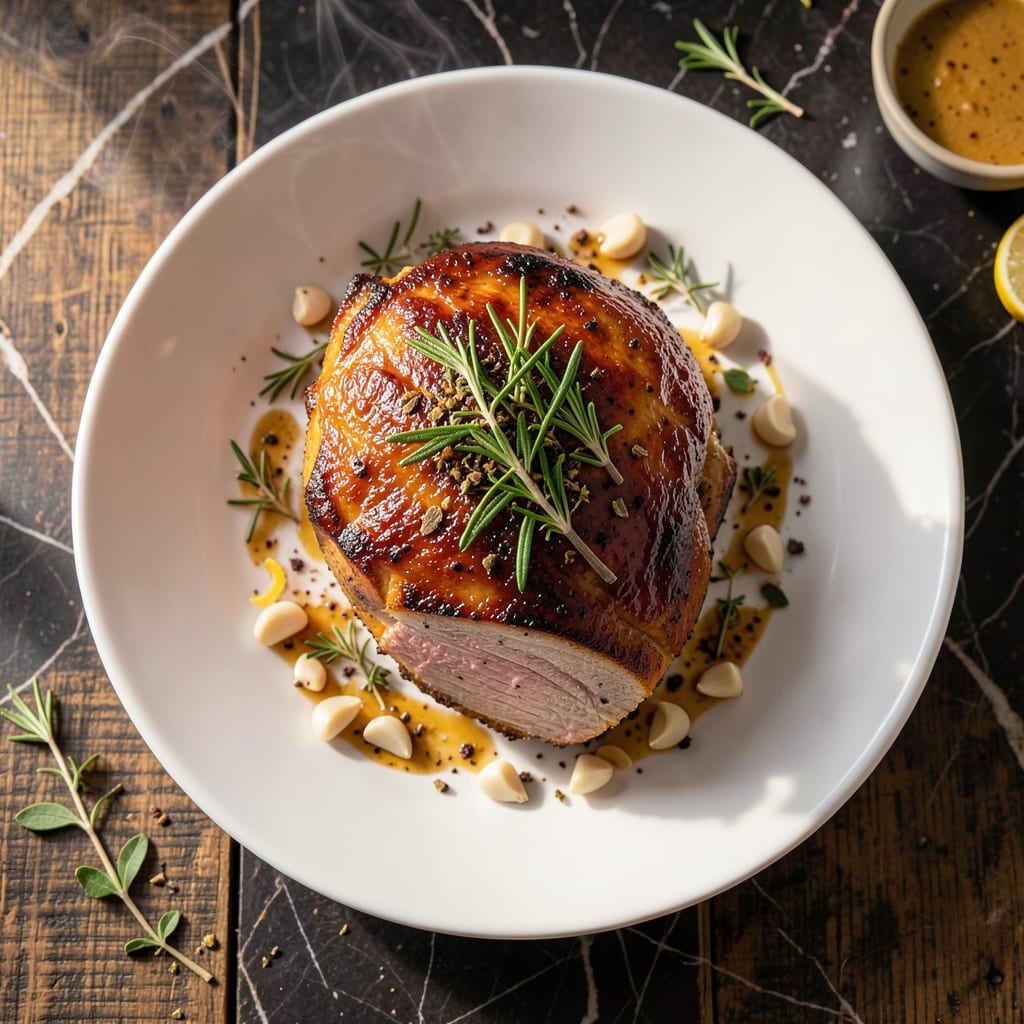
This oven-roasted pork loin delivers herb-crusted juiciness with a golden skin that cracks with every slice. I developed this method after years of trial and error in my home kitchen, learning what truly works.
The secret lies in a simple dry brine and herb rub, applied hours before cooking. This ensures deep seasoning and a perfectly crisp exterior. The oven does most of the work, leaving you free to prepare sides.
At 375°F, the pork cooks evenly, emerging tender and flavorful. The herb crust forms a fragrant, textured layer that complements the natural sweetness of the meat.
Serve with roasted vegetables or mashed potatoes for a complete meal. This approach guarantees impressive results with minimal active effort.
Ingredients for Pork Loin Recipe Ideas Oven
A few fresh herbs and pantry staples transform this cut into a showstopper dinner.
| Ingredient | Amount | Notes |
|---|---|---|
| Pork Loin 🥩 | 3 lb | Boneless, center-cut preferred |
| Kosher Salt 🧂 | 2 tbsp | Diamond Crystal for dry brine |
| Fresh Rosemary 🌿 | 2 tbsp | Finely chopped, stems discarded |
| Fresh Thyme 🍃 | 2 tbsp | Leaves stripped from stems |
| Garlic Cloves 🧄 | 6 cloves | Minced for herb rub |
| Dijon Mustard 🟡 | 3 tbsp | For crust adhesion |
| Black Pepper 🌶️ | 1 ½ tsp | Freshly ground, coarse |
| Olive Oil 🫒 | 2 tbsp | Extra-virgin for rub |
| Brown Sugar 🟤 | 1 tbsp | Light or dark, for caramelization |
| Dried Sage 🌿 | 1 tsp | Rubbed between palms |
| Smoked Paprika 🌶️ | 1 tsp | For depth of flavor |
| Apple Cider Vinegar 🍏 | 1 tbsp | For brightness in crust |
The pork loin is the star here. Center-cut boneless gives you even cooking and that perfect golden crust—avoid the pre-seasoned versions. Whole Foods or Costco have great options (look for ~3 lbs for 4 servings). I always ask the butcher to leave the fat cap on for extra flavor. For the herbs, fresh rosemary and thyme are non-negotiable—they give that aromatic backbone to the crust.
No fresh herbs? Dried at one-third the amount, but rehydrate them in a splash of warm water first. Short on time? Pre-minced garlic from a jar works (though fresh is brighter). If you don’t have Dijon, whole-grain mustard adds great texture. The brown sugar can be swapped for maple syrup, but reduce by half since it’s more potent. Trader Joe’s has great smoked paprika if your spice cabinet needs restocking.
The dry brine can sit overnight for maximum flavor penetration. Leftovers? They keep beautifully for 4-5 days in the fridge—great for sandwiches. The herb rub paste freezes well too, so make extra. Just thaw before using (it’ll separate a bit, but a quick stir brings it back).
Why You’ll Love This Recipe
- One Pan Magic: Honestly, I just toss the pork loin with salt, rosemary, thyme, and garlic on a sheet pan and let the oven do the work.
- Herb-Crusted Bliss: The rosemary and thyme form this insane crust with the garlic that makes every bite ridiculously good.
- Feeds a Crowd: I can stretch one pork loin to feed six with sides, and it’s still the star of the table.
- Leftover Winner: Between us, the sandwiches I make with the leftovers are sometimes better than the first meal.
Step-by-Step Instructions for Herb-Crusted Pork Loin
Here’s how to achieve perfectly juicy meat with a crispy, aromatic crust every time.
Step 1: Create the Herb Rub
In a small bowl, combine the 2 tbsp fresh rosemary, 2 tbsp fresh thyme, 6 cloves minced garlic, 2 tbsp kosher salt, 1.5 tsp black pepper, 1 tsp dried sage, and 1 tsp smoked paprika. I rub the dried sage between my palms first to release its oils before mixing.
Drizzle in the 2 tbsp olive oil and 1 tbsp apple cider vinegar, then stir until it forms a thick, fragrant paste. This isn’t just seasoning—it’s the foundation of that golden crust that’ll make your kitchen smell incredible as it roasts.
Step 2: Prep and Coat the Pork Loin
Pat the 3 lb pork loin completely dry with paper towels. This step is non-negotiable—moisture prevents the crust from forming properly. Trim any excess fat, leaving a thin layer for flavor.
Brush the entire surface of the pork with the 3 tbsp Dijon mustard. The mustard acts as a glue for the herb rub and adds a subtle tang. Then, press the herb mixture onto all sides of the pork, creating an even, thick coating. Let it sit at room temperature for 20-30 minutes to allow the flavors to penetrate.
Step 3: Sear for a Golden Crust
Preheat your oven to 400°F. Heat a large oven-safe skillet or Dutch oven over medium-high heat. Add the pork loin and sear for 2-3 minutes per side until the crust turns deep golden brown and begins to caramelize.
This sear locks in juices and jumpstarts the Maillard reaction, giving you that irresistible crispy exterior. Don’t rush it—you want a good color on all sides before it goes into the oven.
Step 4: Roast to Juicy Perfection
Transfer the skillet to the preheated oven and roast for 45-55 minutes, or until the internal temperature reaches 145°F in the thickest part. For extra caramelization, sprinkle the 1 tbsp brown sugar over the pork during the last 10 minutes of roasting.
Baste the pork with the pan juices every 15 minutes to keep the crust moist and flavorful. The sugar will create a beautiful, glossy finish that’s as delicious as it looks.
Step 5: Rest and Slice
Remove the pork from the oven and transfer it to a cutting board. Tent loosely with foil and let it rest for 10-15 minutes. This resting period allows the juices to redistribute, ensuring every slice is moist and tender.
Slice the pork into ½-inch thick pieces and serve immediately. The crust should be crispy and deeply fragrant, while the meat inside stays succulent and juicy. Pour any pan juices over the slices for an extra burst of flavor.
Pro Tips For Making Pork Loin Recipe Ideas Oven
- Sear First: I learned this the hard way—start with a ripping hot pan to sear the pork loin on all sides before moving it to the oven. This locks in the juices and gives you that deep golden crust.
- Score the Fat: Use a sharp knife to score the fat cap in a crosshatch pattern, about 1/4-inch deep. This helps the rosemary and thyme penetrate deeper and renders the fat more evenly.
- Don’t Overcook: Pull the pork loin from the oven when it hits 145°F internal temperature. It’ll carry over to 150°F while resting, and anything higher turns it dry—no one wants that.
- Smash the Garlic: Instead of mincing, just smash the garlic cloves and toss them in whole. They’ll roast mellow and sweet in the oven, and you can squeeze the paste out later for serving.
Troubleshooting This Recipe
Dry Pork Loin
If your roast turns out dry, you likely overcooked it. Pork loin is lean, so it can go from perfect to dry in 5-10 minutes. Always use a meat thermometer and pull it at 145°F. I learned this the hard way with my first few attempts. 🌡️
Uneven Cooking
Uneven cooking often happens with a thick-cut loin. To fix this, butterfly the pork to an even 2-inch thickness before cooking. This ensures the center and edges cook at the same rate. My grandmother always pounded hers with a rolling pin for even thickness.
Pale Crust
If your crust isn’t golden, your oven may be running cool. Try increasing the temperature to 425°F for the sear phase. Also, make sure the pork is completely dry before applying the herb rub—moisture steams instead of searing.
Herb Rub Falls Off
The mustard base is crucial for adhesion. If your rub isn’t sticking, brush on an extra 1 tbsp Dijon mustard before applying. Press the herb mixture firmly into the meat. I sometimes let it sit for 10 minutes before searing to help it set.
Tough Texture
Toughness usually means it needs more resting time. Let it rest for the full 15 minutes before slicing. Also, slice against the grain in ½-inch thick pieces for maximum tenderness. This makes a noticeable difference in the final texture.
I’ve found that even 5 minutes of extra resting can transform a good roast into a great one. 💪
Nutrition Facts
Frequently Asked Questions
What’s the best internal temperature for oven-roasted pork loin?
Pull it from the oven at exactly 145°F in the thickest part. The temperature will rise another 5°F during resting. This ensures perfect juiciness without overcooking.
Can I use dried herbs instead of fresh?
Yes, use one-third the amount of dried herbs, but rehydrate them in 1 tbsp warm water first. This prevents a gritty texture and restores some of the fresh flavor.
How long should I let it rest before slicing?
Let it rest for 10-15 minutes under foil. This allows juices to redistribute, so every slice stays moist. Cutting too soon results in dry meat.
What if my herb crust isn’t crispy enough?
Pat the pork completely dry before applying the rub. Increase oven temp to 425°F for the final 10 minutes to boost browning.

- Potato Chip Cookie Recipe With Pecans: Buttery Crunch Meets Nutty Richness - October 30, 2026
- Potato Patty Recipe No Egg: Crispy Edges Without the Binder - October 30, 2026
- Paula Deen’s Potato Chip Cookies Recipe: Salty-Sweet Crunch in Every Bite - October 30, 2026