
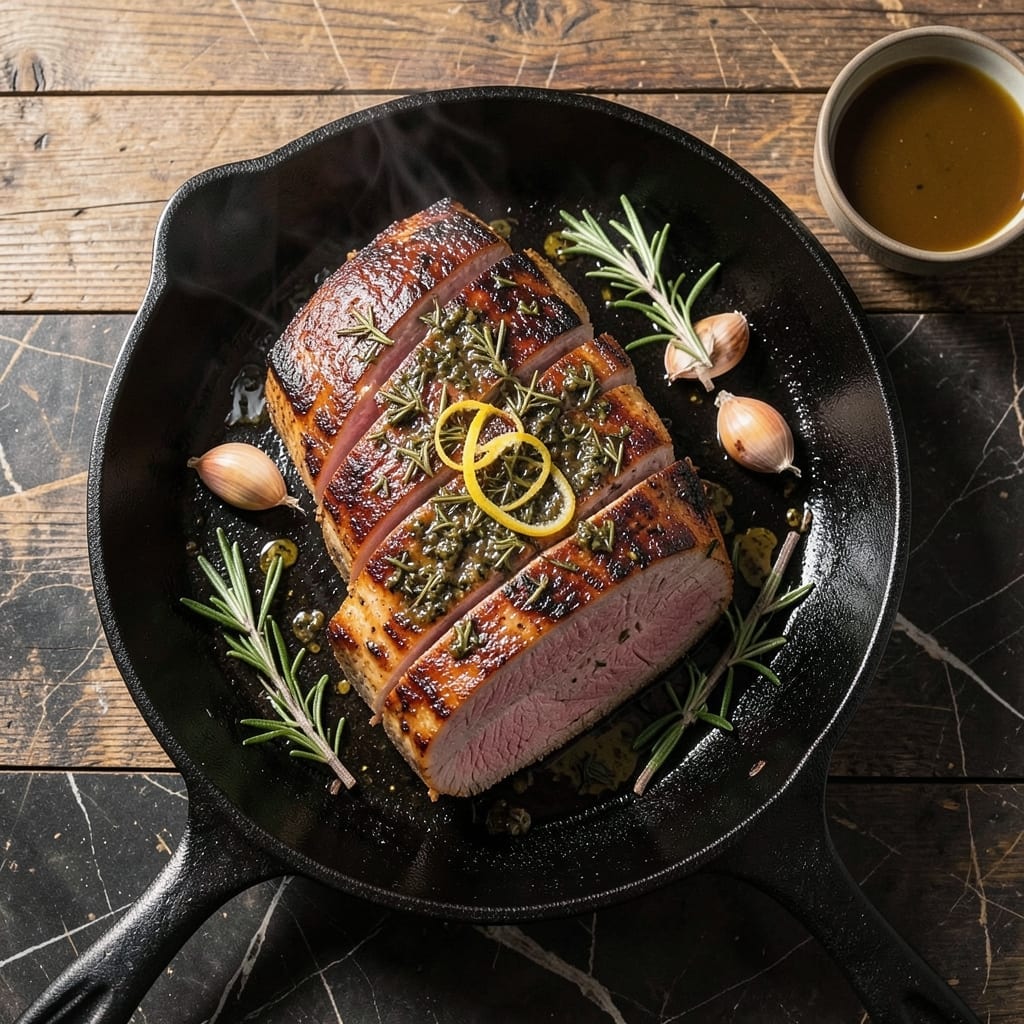
This pan-seared pork loin delivers juicy results with minimal effort and maximum flavor. The herb crust forms a fragrant, golden layer that seals in moisture while adding depth to every bite.
The technique is simple: sear the loin in a hot pan to develop a rich crust, then finish it in the oven. This two-step process ensures even cooking and a perfect medium temperature throughout the meat.
What you get is a tender, flavorful roast with a crispy herb exterior that pairs beautifully with any side. The pan juices create a natural base for a quick sauce or gravy.
Serve with roasted vegetables or mashed potatoes for a complete, impressive meal. This method works reliably for any occasion.
Ingredients for Pork Loin Recipe Pan
Simple ingredients for a showstopping roast with herb-crusted perfection every time.
| Ingredient | Amount | Notes |
|---|---|---|
| Pork Loin 🥩 | 2 lb | Boneless, trimmed of excess fat |
| Olive Oil 🫒 | 2 tbsp | Divided for searing and crust |
| Kosher Salt 🧂 | 1 ½ tsp | Plus more to taste |
| Black Pepper 🌶️ | 1 tsp | Freshly ground preferred |
| Fresh Rosemary 🌿 | 2 tbsp | Finely chopped, stems removed |
| Fresh Thyme 🍃 | 2 tbsp | Finely chopped, stems removed |
| Garlic Cloves 🧄 | 4 cloves | Minced for herb crust |
| Dijon Mustard 🟡 | 1 tbsp | For crust binding |
| Dry White Wine 🍷 | ½ cup | For deglazing pan |
| Chicken Broth 🥣 | 1 cup | Low-sodium preferred |
| Unsalted Butter 🧈 | 2 tbsp | For finishing sauce |
| All-Purpose Flour 🌾 | 1 tsp | For thickening pan sauce |
The pork loin is the star—look for boneless, center-cut pieces at your butcher or the meat counter at Whole Foods. Aim for even thickness so it cooks uniformly. The herbs matter here: fresh rosemary and thyme (not dried) give that fragrant crust. Trader Joe’s has great quality at a reasonable price if you’re not growing your own. Always pat the loin dry before seasoning—this ensures a proper sear.
No white wine? Substitute chicken broth with a splash of apple cider vinegar for acidity. Dried herbs work in a pinch—use one-third the amount and rehydrate with a bit of oil. For the mustard, whole-grain Dijon adds texture, but regular works too. If you’re avoiding alcohol entirely, extra broth plus a squeeze of lemon brightens the pan sauce just as well.
Leftovers keep beautifully in the fridge for 4-5 days or freeze for up to 3 months. Slice before storing for easier reheating. The herb crust softens when chilled but crisps back up in a hot oven or air fryer. Always bring pork to room temperature before cooking for even results.
Why You’ll Love This Recipe
- One Pan Wonder: I love that I only need a single pan, olive oil, and a few seasonings to get this started.
- Herb-Infused Crust: The rosemary and black pepper create this incredible crust that’s crispy outside, juicy inside.
- Weeknight Hero: Honestly, it’s my go-to for busy evenings—ready in under an hour with minimal effort.
- Leftovers Magic: Between us, the pork loin tastes even better the next day in sandwiches or salads.
Step-by-Step Instructions for Juicy Pork Loin With Herb Crust
This method ensures a perfectly tender roast with a flavorful, crispy herb exterior.
Step 1: Prepare the Herb Crust and Season the Pork
In a small bowl, combine the 2 tbsp fresh rosemary, 2 tbsp fresh thyme, 4 cloves garlic cloves, 1 tbsp Dijon mustard, 1.5 tsp kosher salt, and 1 tsp black pepper. Mix until it forms a thick paste that will cling to the meat.
Pat the 2 lb pork loin dry with paper towels. Rub 1 tbsp olive oil over the entire surface, then spread the herb mixture evenly across the top and sides. Press gently so it adheres. Let it sit at room temperature while you preheat the oven to 400°F.
Step 2: Sear the Pork Loin for a Golden Crust
Heat the remaining 1 tbsp olive oil in a large oven-safe skillet over medium-high heat. When the oil shimmers, add the pork loin herb-side down. Sear undisturbed for 4-5 minutes until the crust is deep golden brown and crisp.
Carefully flip the pork loin and sear the other side for 2-3 minutes until lightly browned. The herb crust should be fragrant and just beginning to crisp. This step locks in juices and adds depth of flavor to your creation.
Step 3: Roast Until Perfectly Tender
Transfer the skillet with the pork loin to the preheated 400°F oven. Roast for 25-30 minutes, or until the internal temperature reaches 145°F in the thickest part. The juices should run clear when pierced with a knife.
If the herb crust begins to darken too quickly, loosely tent the pan with foil. This prevents burning while allowing the pork to cook through evenly. The meat should feel slightly firm but still yield to gentle pressure when done.
Step 4: Make the Pan Sauce and Rest
Remove the pork loin from the skillet and transfer it to a cutting board. Tent with foil and let it rest for 10 minutes—this ensures the juices redistribute for maximum tenderness.
Place the skillet on the stovetop over medium heat. Add the 0.5 cup dry white wine and scrape up any browned bits with a wooden spoon. Stir in the 1 cup chicken broth and bring to a simmer. Whisk in the 1 tsp all-purpose flour and cook for 2-3 minutes until slightly thickened. Finish by swirling in the 2 tbsp unsalted butter until melted and smooth.
Step 5: Slice and Serve with Pan Sauce
Slice the pork loin into ½-inch thick medallions and arrange on a serving platter. Spoon the warm pan sauce over the top or serve it on the side for dipping. Each slice should be juicy with a crisp, aromatic herb crust.
The sauce should coat the back of a spoon with a glossy finish. Serve immediately while the pork is still warm for the best texture and flavor. This dish pairs beautifully with roasted vegetables or mashed potatoes.
Pro Tips For Making Pork Loin Recipe Pan
- Sear High, Finish Low: Start with a screaming hot pan to get that deep golden crust on the pork loin, then drop the heat to medium-low to cook it through without drying it out. I learned this the hard way after serving too many dry, overcooked loin dinners.
- Score the Fat Cap: Make shallow cuts in the fat cap every inch or so before cooking—about 1/4 inch deep. This keeps the pork from curling in the pan and lets the salt and rosemary really penetrate.
- Skip the Cold Pork: Pull the loin out of the fridge 30-45 minutes before cooking. Cold meat seizes up in the pan and cooks unevenly, and nobody wants a tough center with a burnt exterior.
- Rest Under Foil: Once it’s done, tent it loosely with foil and let it rest for 10 minutes. Sounds like a small thing, but all the juices stay inside where they belong instead of running out on the cutting board.
Storing and Reheating pork loin recipe pan
Refrigerator Storage
Let your pork loin cool to room temperature within 2 hours of cooking. Slice into ½-inch medallions and store in airtight containers with a paper towel to absorb moisture. It keeps beautifully in the fridge for 4-5 days. ❄️
Freezer Storage
For longer storage, wrap individual slices tightly in plastic wrap, then place in a freezer-safe bag. Squeeze out excess air to prevent freezer burn. Your pork will stay flavorful for up to 3 months at 0°F or below.
Oven Reheating
Preheat your oven to 325°F and place slices on a baking sheet. Cover with foil and reheat for 10-15 minutes, or until the internal temperature reaches 145°F. This method restores the herb crust’s crispness beautifully. 🔥
Microwave Reheating
For a quick meal, arrange slices on a microwave-safe plate and cover with a damp paper towel. Heat on medium power for 1-2 minutes, checking and flipping halfway. Add a splash of pan sauce to maintain moisture.
Let rest for 1 minute after microwaving to allow heat to distribute evenly.
Nutrition Facts
Frequently Asked Questions
What pan works best for searing?
Use a heavy oven-safe skillet like cast iron or stainless steel. These retain heat well for a perfect sear and can go from stovetop to oven safely. Avoid nonstick for high-heat searing.
How do I know when it’s done?
Use a meat thermometer—the internal temp should reach 145°F. The juices will run clear, and the meat should feel slightly firm but still yield to gentle pressure.
Can I use dried herbs instead of fresh?
Yes, but use one-third the amount and mix with oil to form a paste. Fresh herbs provide better flavor, but dried work in a pinch. Rehydrate them slightly for best results.
What should I serve with this?
Pair with roasted vegetables or mashed potatoes to soak up the pan sauce. A simple green salad adds a refreshing contrast to the rich, savory flavors.

- Potato Chip Cookie Recipe With Pecans: Buttery Crunch Meets Nutty Richness - October 30, 2026
- Potato Patty Recipe No Egg: Crispy Edges Without the Binder - October 30, 2026
- Paula Deen’s Potato Chip Cookies Recipe: Salty-Sweet Crunch in Every Bite - October 30, 2026