
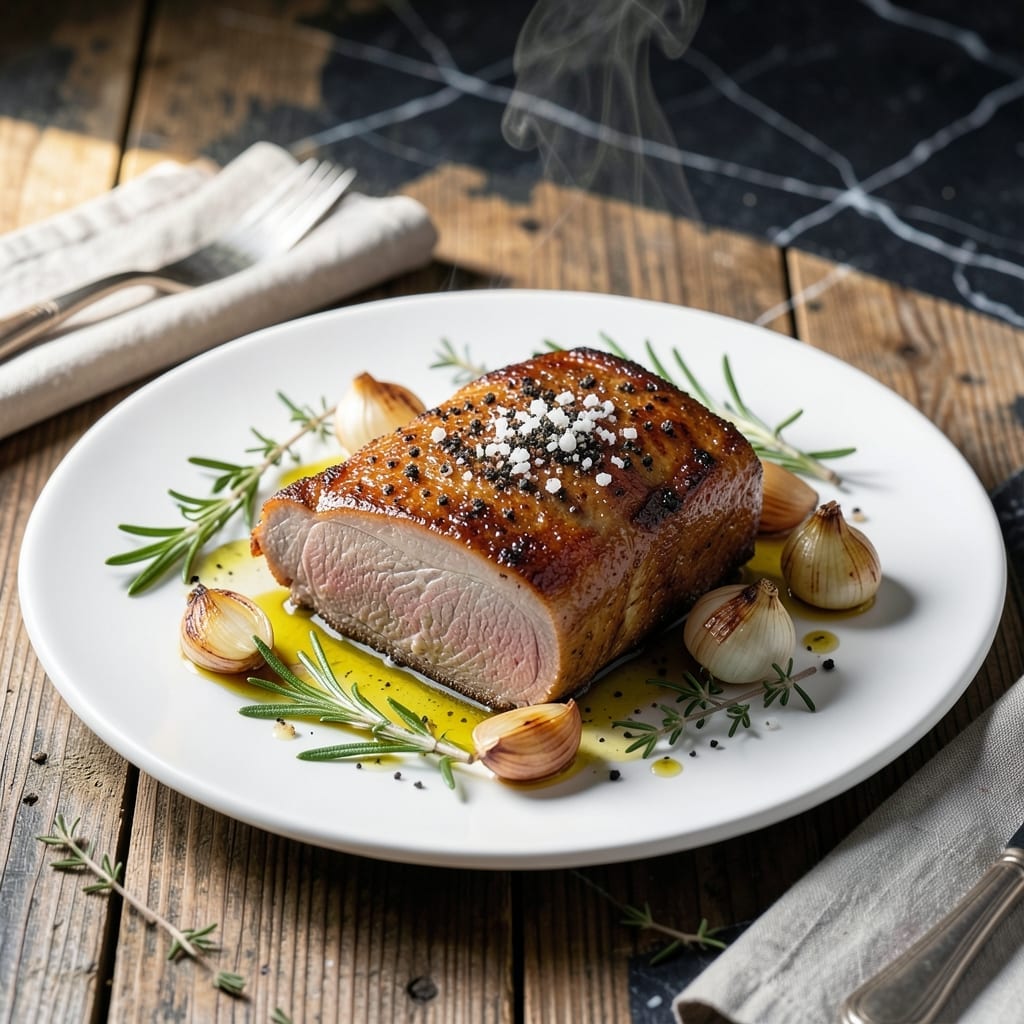
Cooking pork loin to the perfect temperature ensures juicy, tender results every time. After years of testing in my small Boston kitchen, I’ve refined this method to eliminate guesswork and dry, overcooked meat.
This approach focuses on precision, using a meat thermometer to hit the ideal internal temperature. The key is pulling the loin from the oven just before it reaches doneness, as it continues cooking while resting.
You’ll achieve a perfectly cooked center that’s moist and flavorful, with a lightly crisp exterior. No more tough or dry pork—just consistent, restaurant-quality results at home.
Whether roasting for Sunday dinner or a weeknight meal, this technique guarantees success. Let’s get started with the details.
Ingredients for Pork Loin Recipe Temperature
A few quality ingredients and a thermometer are all you need for this dish.
| Ingredient | Amount | Notes |
|---|---|---|
| Pork Loin 🥩 | 2 lb | Boneless, trimmed of excess fat |
| Kosher Salt 🧂 | 1 ½ tsp | Diamond Crystal preferred for even seasoning |
| Black Pepper 🌶️ | 1 tsp | Freshly cracked for best flavor |
| Garlic Cloves 🧄 | 4 cloves | Minced finely for even distribution |
| Fresh Rosemary 🌿 | 2 tbsp | Chopped, stems discarded |
| Fresh Thyme 🍃 | 2 tbsp | Leaves stripped from stems |
| Olive Oil 🫒 | 2 tbsp | Extra-virgin for richness and depth |
| Dijon Mustard 🟡 | 1 tbsp | Smooth variety for even coating |
| Apple Cider Vinegar 🍏 | 1 tbsp | For brightness and balance |
| Honey 🍯 | 1 tbsp | Optional for glaze, skip for savory finish |
| Chicken Stock 🥣 | ½ cup | Low-sodium preferred for control |
The pork loin is the star here. Look for center-cut pieces (even thickness, no taper) at your butcher or the meat counter at Whole Foods—they’ll trim and tie it for you (just ask). I avoid pre-packaged ones from the grocery shelf; they’re often uneven or have that weird vacuum-sealed sheen. Aim for 1.5-2 lbs for a standard roast that feeds four with leftovers for sandwiches.
No fresh herbs? Dried work in a pinch—use one-third the amount and rub them into the meat. Out of Dijon? Whole grain mustard adds texture, or yellow mustard for tang. Chicken stock can be subbed with vegetable broth or even water (though the flavor won’t be as deep). For a sweeter glaze, swap honey for maple syrup—same quantity, different vibe.
Leftovers keep beautifully. Slice and store in airtight containers for up to 4 days, or freeze for 3 months. Reheat gently in a skillet with a splash of stock to keep it moist. The aromatics (rosemary, thyme) can be prepped a day ahead—store wrapped in damp paper towels.
Why You’ll Love This Recipe
- Set It & Forget: I just season, pop it in the oven, and let the pork loin do its thing—no babysitting required.
- Garlic-Rosemary Magic: Honestly, the combo of crushed garlic and fresh rosemary makes every bite taste like a restaurant dish.
- Weeknight Hero: Between us, this is my go-to for busy Tuesdays and lazy Sundays alike.
- Leftovers for Days: One roast feeds us for two nights, and the slices reheat beautifully for sandwiches.
Step-by-Step Instructions for Pork Loin
This method ensures a juicy, flavorful roast with a perfect crust every time.
Step 1: Season and Sear the Pork Loin
Pat the 2 lb Pork Loin dry with paper towels—this is crucial for a good sear. Season all sides generously with the 1.5 tsp Kosher Salt and 1 tsp Black Pepper. I press the seasoning in slightly to help it adhere.
Heat the 2 tbsp Olive Oil in a large oven-safe skillet over medium-high heat. When the oil shimmers, add the pork loin and sear for 3-4 minutes per side until deep golden brown. This builds a flavorful crust that locks in juices.
Step 2: Create the Herb and Garlic Rub
While the pork sears, combine the 4 cloves Garlic Cloves (minced), 2 tbsp Fresh Rosemary, 2 tbsp Fresh Thyme, 1 tbsp Dijon Mustard, 1 tbsp Apple Cider Vinegar, and 1 tbsp Honey in a small bowl. Stir until it forms a thick paste.
This aromatic blend adds layers of flavor that penetrate the meat during roasting. The acidity from the vinegar balances the richness, while the herbs provide earthy depth.
Step 3: Deglaze and Coat the Pork
After searing, transfer the pork to a plate temporarily. Pour the 0.5 cup Chicken Stock into the hot skillet and scrape up all the browned bits from the bottom—this is pure flavor waiting to be incorporated.
Return the pork to the skillet and brush the herb-garlic paste evenly over all sides. These browned bits and the paste will create a delicious pan sauce as the pork roasts.
Step 4: Roast to Perfect Temperature
Transfer the skillet to a preheated 375°F oven. Roast uncovered for 25-30 minutes, or until an instant-read thermometer inserted into the thickest part reads 145°F.
I start checking at 20 minutes because ovens vary. The pork is done when the juices run clear and the internal temperature hits that magic number. The herb coating will have caramelized slightly, creating a beautiful, flavorful crust.
Step 5: Rest and Serve
Remove the pork from the oven and transfer it to a cutting board. Tent loosely with foil and let it rest for 10-15 minutes. This allows the juices to redistribute throughout the meat.
Slice against the grain into ½-inch thick pieces. Serve with the pan juices spooned over the top. Each bite should be moist, tender, and bursting with the flavors of the herbs and garlic.
Pro Tips For Making Pork Loin Recipe Temperature
- Use a Thermometer: Pull the pork loin at 145°F—any higher and it turns dry. I learned this the hard way after overcooking a beautiful cut to 160°F and ruining dinner.
- Salt Overnight: Dry-brine the pork loin with kosher salt 12-24 hours ahead. Sounds weird, but it works: the meat stays juicy and seasons all the way through.
- Rest Before Slicing: Give it a solid 10 minutes under foil after roasting. Skip this and all the juices will end up on your cutting board, not in the meat.
- Crush the Garlic: Smash the garlic cloves with the flat of your knife before chopping—it releases more flavor into the rosemary rub. I was skeptical until I tried it.
Best Sauces and Condiments for These Flavors
Classic Apple Sauce
I love pairing this dish with a quick homemade apple sauce that complements the pork’s savory notes. Simmer 2 peeled apples with ¼ cup apple cider vinegar and 1 tbsp honey until soft, then blend until smooth. It adds a bright, fruity contrast. 🍏
Herb-Infused Pan Jus
The pan juices from roasting are liquid gold. After resting the pork, place the skillet on the stovetop over medium heat. Add ¼ cup chicken stock and scrape up browned bits. Strain and drizzle over slices for extra depth.
Dijon Mustard Cream
Whisk 2 tbsp Dijon mustard with ½ cup sour cream and 1 tsp fresh thyme leaves. This creamy condiment adds a tangy kick that cuts through the richness. I use Hellmann’s sour cream for its thick texture.
Rosemary Garlic Butter
Mix 4 tbsp softened butter with 1 minced garlic clove and 1 tbsp chopped rosemary. Spread a dollop on each slice before serving. It melts beautifully into the warm pork, infusing every bite with aromatic flavor.
Balsamic Reduction
Simmer ½ cup balsamic vinegar with 1 tbsp honey until syrupy (about 5-7 minutes). Drizzle sparingly over the pork for a sweet-tart finish. This works especially well with the caramelized herb crust. ✨
Spicy Honey Glaze
Combine ¼ cup honey with 1 tsp cayenne pepper and a pinch of salt. Brush onto the pork during the last 5 minutes of roasting for a sticky, spicy-sweet glaze that adds a little heat to each bite.
Nutrition Facts
Frequently Asked Questions
What’s the safe internal temperature for pork loin?
The USDA recommends cooking pork loin to 145°F internal temperature. This ensures it’s safe to eat while staying juicy. Always use a meat thermometer for accuracy.
Should I cover the pork loin while roasting?
No, leave it uncovered to allow the exterior to brown and develop a flavorful crust. Covering can steam the meat, preventing that perfect caramelization.
How long should I rest the pork loin before slicing?
Let it rest for 10-15 minutes after removing from the oven. This allows juices to redistribute, keeping the meat moist when sliced.
Can I use a bone-in pork loin for this recipe?
Yes, but adjust cooking time as bone-in cuts may take slightly longer. The internal temp should still reach 145°F.

- Potato Chip Cookie Recipe With Pecans: Buttery Crunch Meets Nutty Richness - October 30, 2026
- Potato Patty Recipe No Egg: Crispy Edges Without the Binder - October 30, 2026
- Paula Deen’s Potato Chip Cookies Recipe: Salty-Sweet Crunch in Every Bite - October 30, 2026