
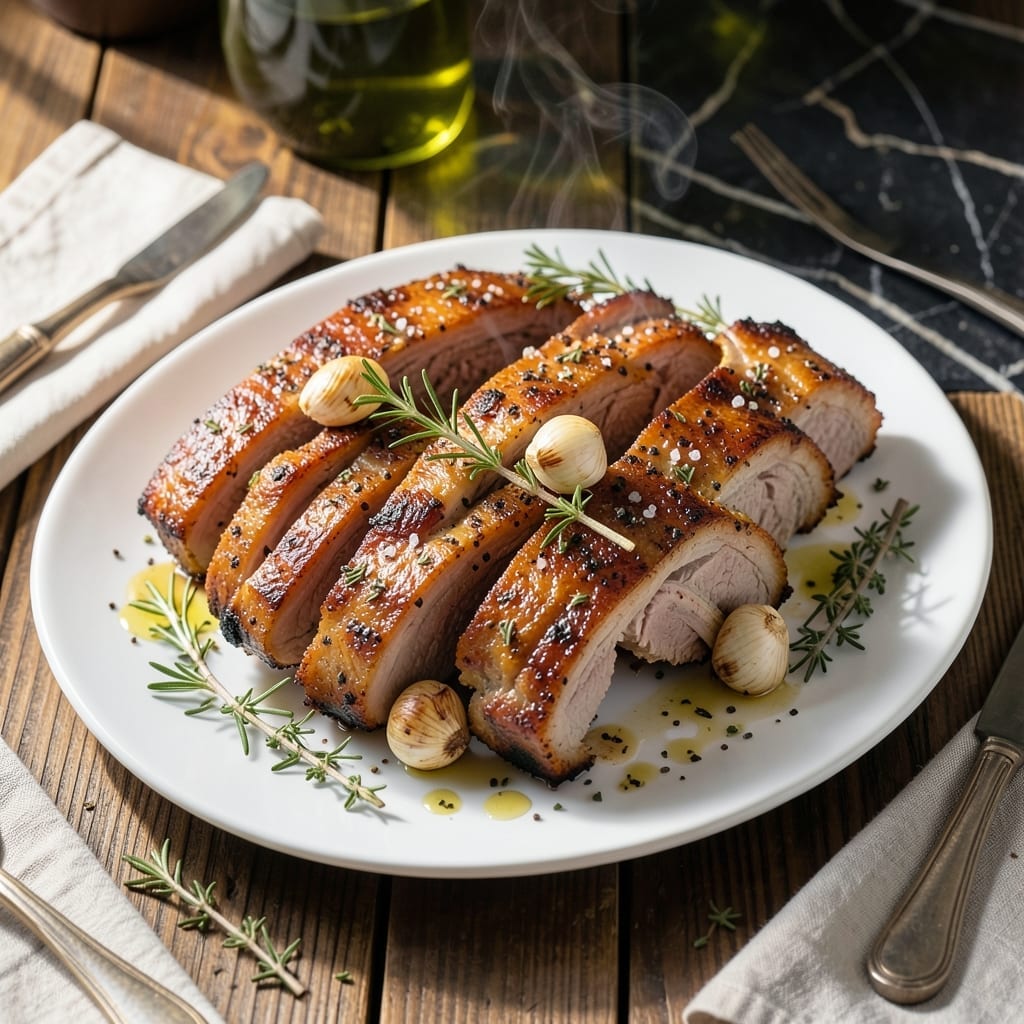
There’s a simple way to achieve juicy pork loin ribs every time, and it starts with a dry brine. This method, passed down through my grandmother’s handwritten notes, ensures tender meat with a perfectly seasoned crust.
The oven does most of the work here—just sear the ribs first for a golden finish, then roast at a steady temperature. A blend of fresh herbs and garlic creates an aromatic crust that locks in moisture.
What you get is fall-off-the-bone tender pork with a flavorful exterior, ready in under 2 hours. The result is restaurant-worthy but made in your own kitchen.
Serve with roasted vegetables or mashed potatoes for a complete meal. This is comfort food at its best.
Ingredients for Pork Loin Rib Recipe Oven
Pantry staples and fresh herbs create this herb-crusted pork loin rib masterpiece.
| Ingredient | Amount | Notes |
|---|---|---|
| Pork Loin Ribs 🥩 | 2 ½ lb | Bone-in, excess fat trimmed |
| Kosher Salt 🧂 | 2 tbsp | Diamond Crystal preferred for dry brine |
| Freshly Ground Black Pepper 🌶️ | 1 tbsp | Coarse grind for crust |
| Garlic Cloves 🧄 | 6 cloves | Minced for herb paste |
| Fresh Rosemary 🌿 | 2 tbsp | Finely chopped, stems discarded |
| Fresh Thyme 🍃 | 2 tbsp | Leaves stripped from stems |
| Olive Oil 🫒 | ¼ cup | Extra-virgin for herb paste |
| Dijon Mustard 🟡 | 2 tbsp | For binding herb crust |
| Dry White Wine 🍷 | ½ cup | For deglazing pan |
| Chicken Stock 🥫 | ½ cup | Low-sodium preferred |
| Unsalted Butter 🧈 | 2 tbsp | For searing ribs |
| All-Purpose Flour 🌾 | 2 tbsp | For thickening pan sauce |
The ribs are everything here. Bone-in pork loin ribs stay juicier than boneless—look for even marbling and a vibrant pink color at the butcher counter. I get mine from Whole Foods (their heritage breed options are fantastic), but any good grocery store will do. Ask them to trim the excess fat if you’re not comfortable doing it yourself. The dry brine (that salt rub) is non-negotiable for moisture retention.
No fresh rosemary or thyme? Dried herbs at one-third the amount work, but fresh really shines here. Out of white wine? Apple cider vinegar with a splash of water mimics the acidity. For the Dijon, whole-grain mustard adds texture. The chicken stock can be swapped for vegetable stock—just don’t use water, or you’ll lose depth. The butter for searing? Avocado oil is a great dairy-free alternative.
Leftovers keep beautifully. Store in an airtight container for up to 4 days in the fridge, or freeze for 3 months. Reheat gently in the oven to avoid drying out. The herb crust actually intensifies overnight, so this might taste even better as leftovers (the good stuff, not the pre-shredded kind).
Why You’ll Love This Recipe
- I’ll be real: pork loin ribs are affordable, and this recipe makes them taste like a fancy roast.
- One Pan Wonder: Honestly, I just toss the ribs with salt, pepper, garlic, and rosemary, then let the oven do the work.
- Herb-Crusted Bliss: The rosemary and garlic form this incredible crust that’s crispy outside, juicy inside—I could eat it straight off the pan.
- Feeds the Whole Crew: Between us, this is my go-to for Sunday dinner or meal prep—it stretches easily and tastes even better the next day.
Step-by-Step Instructions for Herb-Crusted Pork Loin Ribs
This method guarantees a juicy roast with a fragrant herb crust and rich pan sauce.
Step 1: Dry Brine and Prepare the Herb Paste
Pat the 2.5 lb Pork Loin Ribs completely dry with paper towels. Season generously with the 2 tbsp Kosher Salt and 1 tbsp Freshly Ground Black Pepper, ensuring all surfaces are coated. Let the ribs sit uncovered on a wire rack in the refrigerator for 1 hour to dry brine—this step ensures maximum juiciness.
Meanwhile, create the herb paste by combining the 6 cloves Garlic Cloves (minced), 2 tbsp Fresh Rosemary (finely chopped), 2 tbsp Fresh Thyme (leaves stripped), 0.25 cup Olive Oil, and 2 tbsp Dijon Mustard in a small bowl. Stir until the mixture forms a thick, aromatic paste.
Step 2: Apply Herb Crust and Sear the Ribs
Preheat your oven to 375°F. Remove the ribs from the refrigerator and let them sit at room temperature for 20 minutes. Rub the herb paste all over the ribs, pressing it into the meat so it adheres well. This creates a flavorful crust that locks in moisture.
Heat a large oven-safe skillet or roasting pan over medium-high heat. Add the 2 tbsp Unsalted Butter and let it melt and foam. Sear the ribs for 2-3 minutes per side until the herb crust is golden brown and the meat develops a deep, caramelized exterior. Watch for the crust to sizzle and release easily from the pan—this is your cue to flip.
Step 3: Roast to Perfection
Transfer the seared ribs to the preheated oven and roast uncovered for 30-40 minutes. You’re aiming for an internal temperature of 145°F in the thickest part of the meat. Use a meat thermometer to check—this ensures the ribs stay tender and juicy without overcooking.
Halfway through roasting, baste the ribs with the pan juices to keep the herb crust moist and enhance the flavor. The ribs are done when the crust is deeply browned, and the meat feels slightly firm but still yields to gentle pressure.
Step 4: Make the Pan Sauce
Remove the ribs from the pan and transfer them to a cutting board to rest for 10 minutes. Place the skillet over medium heat and add the 0.5 cup Dry White Wine, scraping up all the browned bits from the bottom with a wooden spoon. Let the wine reduce by half, about 3-4 minutes.
Stir in the 0.5 cup Chicken Stock and bring to a simmer. Sprinkle in the 2 tbsp All-Purpose Flour and whisk until the sauce thickens slightly, about 2-3 minutes. Taste and adjust seasoning if needed—this rich, savory sauce ties the whole dish together.
Step 5: Slice and Serve
Slice the ribs between the bones into individual chops. Arrange them on a platter and pour the pan sauce over the top. The sauce should cling to the ribs, adding a glossy finish. Serve immediately while the meat is still warm.
Each bite will deliver tender, juicy pork with a burst of herbal flavor from the crust. The pan sauce adds a final touch of richness that complements the dish perfectly.
Pro Tips For Making Pork Loin Rib Recipe Oven
- Preheat the Oven: Crank it to 425°F for the first 20 minutes to get a golden crust on the ribs, then drop to 350°F to finish cooking through—this two-step method guarantees tender meat without burning the garlic and rosemary.
- Score the Fat: I learned this the hard way—cutting shallow slits in the fat cap every inch or so lets the salt, pepper, and rosemary penetrate deeper, and it actually changes the outcome.
- Don’t Skip the Rest: After pulling the ribs from the oven, tent them with foil and let them sit for 10 minutes; skipping this step means all the juices will end up on the cutting board, not in your meat.
- Smash the Garlic: Sounds weird, but it works: crush the garlic cloves with the side of your knife before mincing—it releases more flavor into the rosemary and salt rub for the ribs.
Common Mistakes When Making This Recipe
Skipping the Dry Brine
I learned the hard way that skipping the dry brine step results in lackluster flavor and dry meat. That 1 hour of salting draws moisture to the surface, which then reabsorbs with the seasoning. Without it, your crust won’t develop that perfect seasoned depth. 💡
Rushing the Sear
Don’t rush the searing process over medium-high heat—the herb crust needs 2-3 minutes per side to develop a golden-brown exterior. If you move the ribs too soon, the crust won’t adhere properly, and you’ll miss out on that caramelized flavor.
Overcooking the Meat
Pork loin ribs cook quickly in the oven. Pull them at 145°F internal temperature to avoid dryness. I use a meat thermometer to check the thickest part. Overcooking even by 5-10°F can turn tender meat into a tough, chewy disappointment.
Forgetting to Rest
The 10-minute rest after roasting is non-negotiable. It allows juices to redistribute, so they don’t spill onto the cutting board. Slice too soon, and you’ll lose all that precious moisture. I always tent mine loosely with foil to keep it warm.
Neglecting the Pan Sauce
Those browned bits in the pan are pure flavor. Deglaze with 0.5 cup Dry White Wine to capture every last bit. Skipping this step means missing out on a rich, savory sauce that ties the whole dish together. It takes just 3-4 minutes.
Using Cold Ribs
Always let the ribs sit at room temperature for 20 minutes after dry brining. Cooking cold meat leads to uneven doneness—the outside overcooks while the inside catches up. This simple step ensures even cooking throughout. ✨
Nutrition Facts
Frequently Asked Questions
What’s the ideal internal temperature for pork ribs?
Pull them from the oven at 145°F in the thickest part. This ensures juicy, tender meat without overcooking. A meat thermometer is essential for accuracy.
Can I use dried herbs instead of fresh?
Yes, substitute dried herbs at one-third the amount. Fresh rosemary and thyme provide brighter flavor, but dried work in a pinch. The crust may be slightly less vibrant.
How do I store leftovers?
Store in an airtight container for up to 4 days in the fridge or freeze for 3 months. Reheat gently in the oven to preserve moisture.
Why rest the meat before slicing?
Resting for 10 minutes lets juices redistribute. Slicing too soon causes them to spill out, leaving the meat dry. Tent loosely with foil to keep warm.

- Potato Chip Cookie Recipe With Pecans: Buttery Crunch Meets Nutty Richness - October 30, 2026
- Potato Patty Recipe No Egg: Crispy Edges Without the Binder - October 30, 2026
- Paula Deen’s Potato Chip Cookies Recipe: Salty-Sweet Crunch in Every Bite - October 30, 2026