
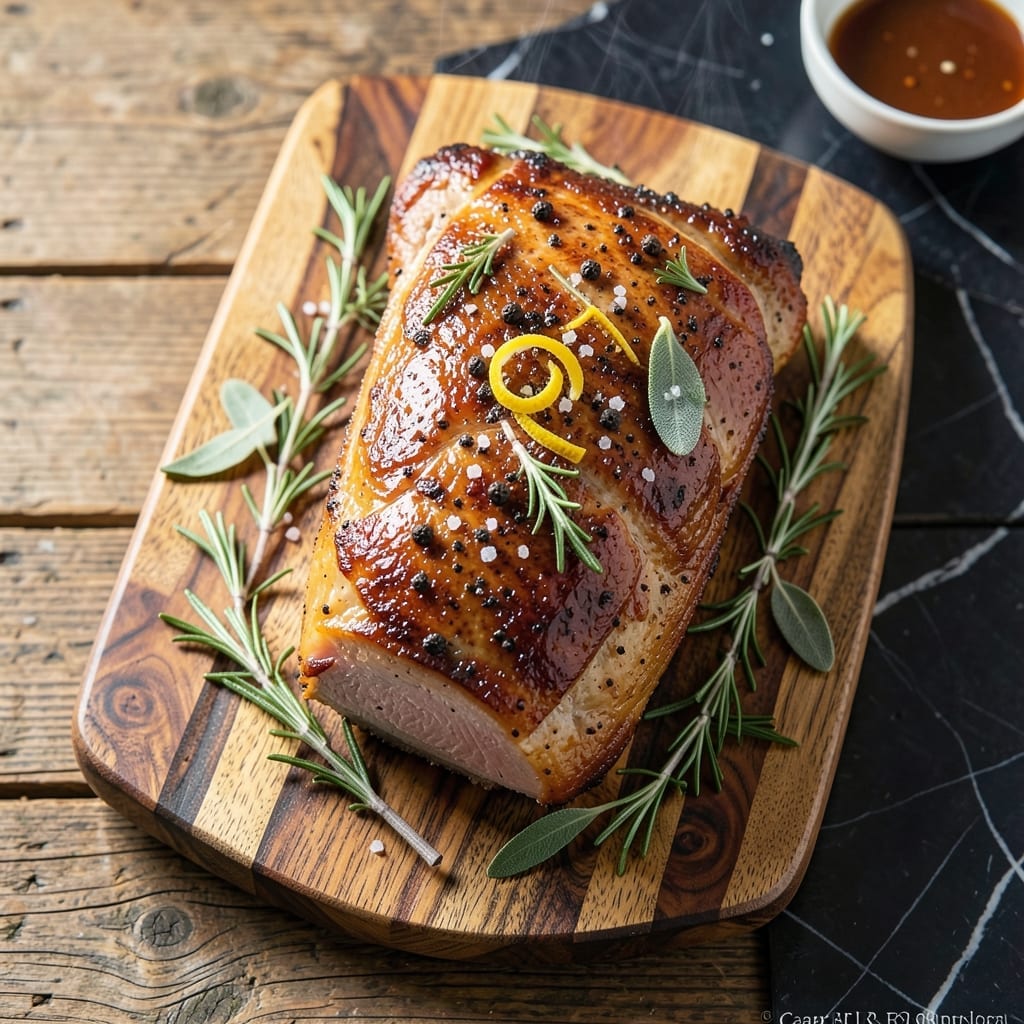
My grandmother never wrote down her pork roast method, but I’ve decoded her intuitive approach into a foolproof recipe. This oven-roasted version delivers juicy results every time with minimal effort.
The herb crust seals in moisture while creating a fragrant, golden exterior. A simple dry brine ensures the meat stays tender from edge to edge. No fancy equipment—just a roasting pan and patience.
At the table, you’ll find perfectly rosy slices with a crisp, aromatic crust. The pork practically falls apart under the fork, yet holds its shape beautifully for serving.
Pair with roasted vegetables or mashed potatoes for a meal worthy of special occasions, yet simple enough for Sunday supper.
Ingredients for Pork Loin Rib Roast Recipe Oven
Simple ingredients, extraordinary results. This is Sunday dinner elevated without the fuss.
| Ingredient | Amount | Notes |
|---|---|---|
| Pork Loin Rib Roast 🥩 | 4 lb | Bone-in, center cut preferred |
| Kosher Salt 🧂 | 2 tbsp | Diamond Crystal preferred for dry brine |
| Freshly Ground Black Pepper 🌶️ | 1 tbsp | Coarse grind recommended |
| Fresh Rosemary 🌿 | 3 tbsp | Finely chopped, stems discarded |
| Fresh Thyme 🍃 | 2 tbsp | Leaves stripped from stems |
| Fresh Sage 🌿 | 2 tbsp | Finely minced for even distribution |
| Garlic Cloves 🧄 | 6 cloves | Peeled and minced |
| Dijon Mustard 🟡 | 3 tbsp | Whole grain for texture or smooth |
| Olive Oil 🫒 | 2 tbsp | Extra-virgin for herb crust |
| Unsalted Butter 🧈 | 2 tbsp | Softened for herb paste |
| Red Wine 🍷 | ½ cup | Dry variety for deglazing |
| Low-Sodium Chicken Stock 🥣 | ½ cup | For pan juices if needed |
The pork loin rib roast is the star—look for bone-in, center-cut pieces at Whole Foods or your local butcher for the best marbling. I always ask for the chine bone removed (makes carving easier). The herbs need to be fresh—dried just won’t cut it for that aromatic crust. If you’re growing your own, even better (just rinse and pat dry before chopping).
No fresh herbs? Dried at one-third the amount works in a pinch, but fresh is non-negotiable for that grandma-level flavor. Short on time? Pre-minced garlic from a jar saves a few minutes. For the wine, any dry red works—Cabernet or Merlot are safe bets. If you’re avoiding alcohol, substitute with extra stock and a splash of balsamic.
Dry brine the roast overnight for maximum juiciness (just salt, pepper, and time). Leftovers? They make amazing sandwiches—slice thin, pile on crusty bread with a little mustard. Store cooked pork in the fridge for up to 4 days or freeze for 3 months.
Why You’ll Love This Recipe
- Set and Forget: Honestly, just season, pop it in the oven, and let the rosemary and thyme work their magic while you do something else.
- Herb-Crusted Perfection: That crisp exterior with the juicy pork inside, infused with fresh rosemary and thyme? Ridiculously good.
- Sunday or Tuesday: I serve this for holiday dinners and weeknight meals—equally impressive both times.
- Leftovers for Days: One roast feeds us for two meals, and the cold slices make the best sandwiches the next day.
Step-by-Step Instructions for Pork Loin Rib Roast
This method guarantees perfectly juicy slices with a fragrant herb crust every time.
Step 1: Season and Dry Brine the Roast
Pat the 4 lb pork loin rib roast completely dry with paper towels. I can’t stress this enough—moisture prevents proper browning. Season generously with all the 2 tbsp kosher salt and 1 tbsp freshly ground black pepper, pressing it into the meat so it adheres.
Place the roast on a wire rack set over a plate and refrigerate uncovered for 12-24 hours. This dry brine draws moisture to the surface, where it reabsorbs with the salt, ensuring deep seasoning and juicy meat. The surface will develop a tacky texture, which helps the herb crust cling later.
Step 2: Prepare the Herb Paste
In a small bowl, combine the 3 tbsp fresh rosemary, 2 tbsp fresh thyme, 2 tbsp fresh sage, and minced 6 cloves garlic cloves. Add the 3 tbsp Dijon mustard, 2 tbsp olive oil, and 2 tbsp unsalted butter (softened). Mix until it forms a thick, fragrant paste.
I like to use the back of a spoon to press the herbs into the oil and butter, releasing their essential oils. This paste will create a flavorful crust that locks in moisture. Let it sit while the roast comes to room temperature.
Step 3: Sear and Coat the Roast
Preheat your oven to 425°F. Heat a large oven-safe skillet or roasting pan over medium-high heat. Add the roast and sear for 2-3 minutes per side until deeply browned. This step builds a flavorful fond that will enhance the pan juices later.
Remove the roast from the pan and brush the herb paste all over the surface, including the ends. Coat it thickly—this isn’t the time to be shy. The paste should form a visible layer that will crisp up beautifully during roasting.
Step 4: Roast to Juicy Perfection
Place the roast fat-side up in the pan and transfer it to the preheated oven. Roast for 20 minutes, then reduce the heat to 325°F and continue roasting for 45-60 minutes, or until the internal temperature reaches 145°F in the thickest part.
Baste the roast with the pan juices every 20 minutes to keep the herb crust moist and flavorful. The roast is done when the juices run clear and the meat feels slightly springy to the touch. Avoid overcooking—pork loin rib roast can dry out quickly if left too long.
Step 5: Rest and Deglaze for Pan Juices
Transfer the roast to a cutting board and tent loosely with foil. Let it rest for 15-20 minutes before slicing. This step is non-negotiable—it allows the juices to redistribute, ensuring every slice is moist and tender.
While the roast rests, place the pan over medium heat and add the 0.5 cup red wine. Scrape up all the browned bits with a wooden spoon and let the wine reduce by half. Pour in the 0.5 cup low-sodium chicken stock and simmer for 3-4 minutes until slightly thickened. Strain the pan juices and serve them alongside the sliced roast for extra flavor.
Pro Tips For Making Pork Loin Rib Roast Recipe Oven
- Dry the Roast: Pat the pork loin rib roast completely dry with paper towels before seasoning—this is the only way to get that crispy, golden crust. I learned this the hard way after my first few attempts came out steamed rather than seared.
- Salt Overnight: Season the roast with kosher salt at least 12 hours before cooking, or up to 24. Sounds weird, but it works: the salt penetrates deep, ensuring every bite is flavorful, not just the surface.
- Use a Thermometer: Skip the guesswork and pull the roast at 145°F internal temperature—it’ll rise to 150°F while resting. After overcooking three roasts, I finally figured out that timing alone isn’t reliable.
- Herb Paste Works: Crush the fresh rosemary and thyme with a little olive oil to make a paste, then rub it all over the roast. This isn’t the prettiest method, but it’s the tastiest—the herbs stick better and infuse more flavor.
Storing and Reheating This Dish
Fridge Storage
Let the roast cool to room temperature, then slice it into portions. Store in airtight containers with some pan juices to keep the meat moist. It’ll keep in the fridge for 3-4 days without losing quality. I learned the hard way that leaving it whole leads to uneven reheating. ❄️
Freezer Storage
For longer storage, wrap individual slices tightly in plastic wrap, then place in a freezer bag. Squeeze out all air to prevent freezer burn. The pork stays delicious for up to 3 months. My grandmother always said, “If you’re going to freeze, do it right.”
Oven Reheating
Preheat your oven to 325°F. Place slices in a baking dish with a splash of chicken stock and cover with foil. Heat for 15-20 minutes until the internal temperature reaches 145°F. This method preserves the herb crust beautifully. 🔥
Stovetop Reheating
For quick meals, warm slices in a skillet over medium-low heat with a little butter. Cover the pan to trap steam. It takes about 5-7 minutes per side. Add a spoonful of pan juices for extra flavor.
Microwave Method
Place slices on a microwave-safe plate with a damp paper towel. Heat on 50% power for 1-2 minutes, checking frequently. This prevents the meat from drying out or becoming rubbery.
Serving Leftovers
Reheated slices make incredible sandwiches on crusty bread with a little mustard. Or chop and add to soups or salads. Honestly, I sometimes think the leftovers taste even better the next day.
Nutrition Facts
Frequently Asked Questions
What’s the best internal temperature for juicy pork?
Remove from oven at 145°F internal temperature. The meat will rise to 150°F while resting. This ensures tender, moist slices without overcooking.
Can I skip the dry brine step?
Not recommended. The 12-24 hour dry brine is key for juiciness and flavor. Without it, the seasoning won’t penetrate as deeply and the crust won’t adhere as well.
How do I prevent the herb crust from burning?
Start at 425°F for 20 minutes, then reduce to 325°F. Baste with pan juices every 20 minutes to keep the crust moist and flavorful.
What if my roast doesn’t have bones?
Boneless works fine! Reduce cooking time by about 10-15 minutes since it cooks faster. Use a meat thermometer to check for 145°F in the thickest part.

- Potato Chip Cookie Recipe With Pecans: Buttery Crunch Meets Nutty Richness - October 30, 2026
- Potato Patty Recipe No Egg: Crispy Edges Without the Binder - October 30, 2026
- Paula Deen’s Potato Chip Cookies Recipe: Salty-Sweet Crunch in Every Bite - October 30, 2026