
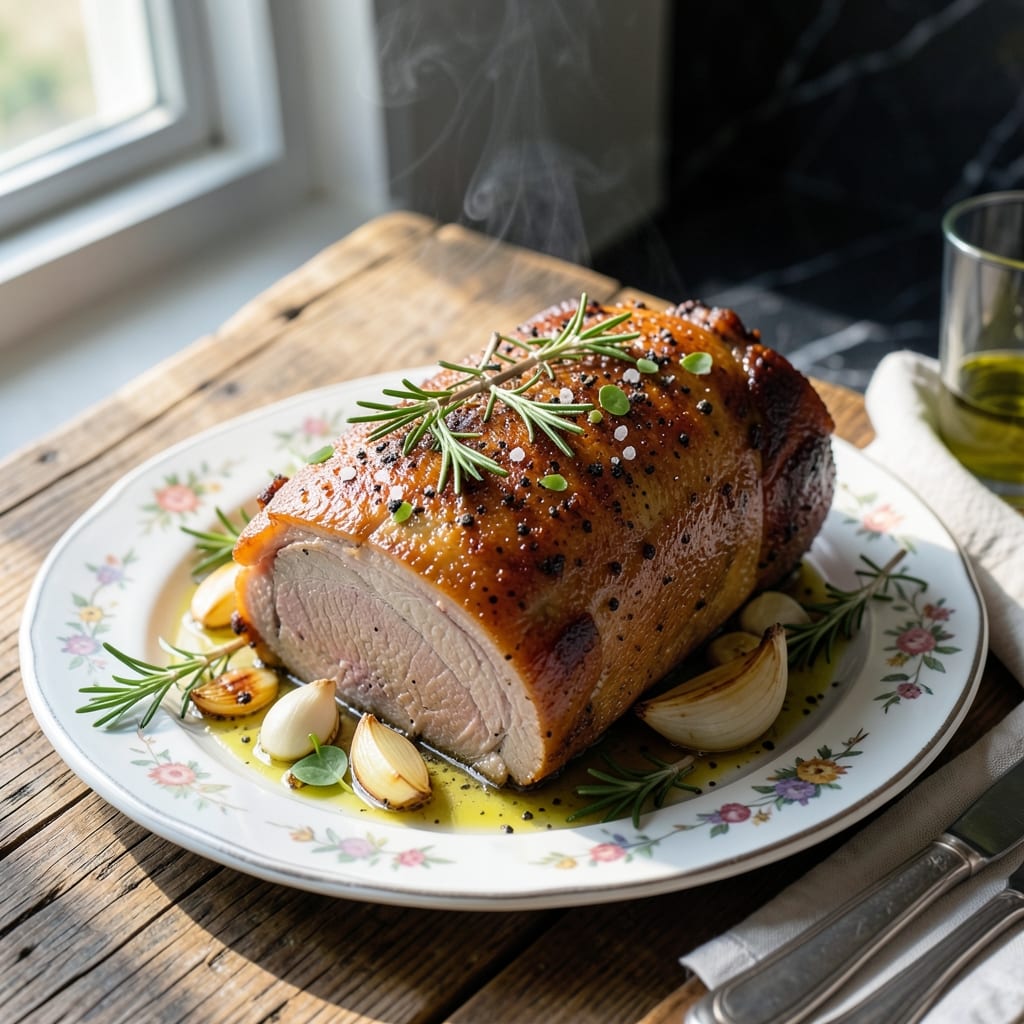
Sunday dinner deserves a centerpiece that’s as impressive as it is juicy, and this herb-crusted pork loin delivers both. The secret lies in a simple dry brine that locks in moisture before roasting.
I’ve tested countless methods, but the combination of fresh rosemary, thyme, and garlic creates a crust that’s fragrant and golden. The oven does most of the work—just set it and let the heat transform the pork into tender perfection.
What you’ll get is a roast with a crispy herb exterior and meat so tender it nearly falls apart. The aroma alone will gather everyone around the table before the timer even goes off.
Pair it with roasted potatoes and seasonal vegetables for a meal that feels like a celebration. This is how Sunday dinner should taste.
Ingredients for Pork Loin Roast Recipe Oven
Gather these fresh herbs and simple staples for a centerpiece-worthy roast.
| Ingredient | Amount | Notes |
|---|---|---|
| Pork Loin 🥩 | 2 lb | Boneless, trimmed of fat |
| Kosher Salt 🧂 | 1 ½ tbsp | For dry brine |
| Fresh Rosemary 🌿 | 2 tbsp | Finely chopped |
| Fresh Thyme Leaves 🍃 | 1 tbsp | Stems removed |
| Garlic Cloves 🧄 | 4 cloves | Minced finely |
| Olive Oil 🫒 | 2 tbsp | Extra-virgin preferred |
| Black Pepper 🌶️ | 1 tsp | Freshly ground |
| Dijon Mustard 🟡 | 1 tbsp | For crust adhesion |
| Brown Sugar 🍚 | 1 tbsp | Light or dark |
| Dry White Wine 🍷 | ½ cup | For deglazing pan |
| Chicken Stock 🥣 | ½ cup | Low-sodium preferred |
| Unsalted Butter 🧈 | 1 tbsp | Optional for basting |
The pork loin is the star—look for bright pink color with a thin fat cap at Whole Foods or your butcher. I prefer center-cut pieces (they cook more evenly). The fresh herbs matter here: organic rosemary and thyme have more fragrance. If buying pre-packaged, check the stems aren’t woody. Garlic should be firm, not sprouting (the good stuff, not the pre-minced kind).
No fresh herbs? Dried at one-third the amount works, but the crust won’t be as vibrant. Out of Dijon? Whole-grain mustard adds nice texture. Skip the wine? Apple cider vinegar plus water for deglazing. For a deeper crust, some bakers add panko breadcrumbs—worth the extra minute if you’ve got them. The brown sugar can be swapped for maple syrup (same amount).
Dry brining the pork overnight (up to 12 hours) gives best results. Store fresh herbs wrapped in damp paper towels for 5 days, or freeze in olive oil. Cooked pork keeps 3-4 days refrigerated, freezes beautifully for 3 months.
Why You’ll Love This Recipe
- One Pan Magic: I just season, sear, and let the oven do the work—no complicated steps, no fuss.
- Herb Infused Perfection: That rosemary, thyme, and garlic crust? It makes every bite taste like a restaurant meal at home.
- Feeds the Crowd: I made this for Sunday dinner and had enough for sandwiches all week. My family actually fought over the leftovers.
- Budget Friendly Star: A pork loin is affordable, and with just a few herbs and garlic, it turns into something special without breaking the bank.
Step-by-Step Instructions for Pork Loin Roast Oven
This method guarantees a juicy roast with a fragrant herb crust every time.
Step 1: Dry Brine and Season the Pork Loin
Pat the 2 lb Pork Loin dry with paper towels, then rub it all over with the 1.5 tbsp Kosher Salt. I always do this step the night before and let it sit uncovered in the fridge—this dry brine draws out moisture first, then reabsorbs it with the salt, resulting in perfectly seasoned, juicy meat.
An hour before cooking, take the pork out of the fridge to come to room temperature. This ensures even cooking throughout. While it warms, finely chop the 2 tbsp Fresh Rosemary and 1 tbsp Fresh Thyme Leaves, and mince the 4 cloves Garlic Cloves.
Step 2: Create the Herb Crust
In a small bowl, combine the 2 tbsp Olive Oil, 1 tbsp Dijon Mustard, 1 tbsp Brown Sugar, minced garlic, chopped rosemary, thyme leaves, and 1 tsp Black Pepper. The Dijon helps the crust adhere, while the brown sugar caramelizes beautifully in the oven.
Rub this mixture all over the pork loin, pressing it in so it forms an even layer. Don’t be shy—you want every bite to have that herby, garlicky flavor. Let it sit for 10 minutes while you preheat the oven to 375°F.
Step 3: Roast to Perfection
Place the pork loin on a rack in a roasting pan, fat side up. This elevates it so the heat circulates evenly, giving you a perfect crust all around. Roast for 20 minutes at 375°F, then reduce the heat to 325°F and continue roasting.
After 45 minutes total, start checking the internal temperature with a meat thermometer. You’re aiming for 145°F in the thickest part. I check every 10 minutes to avoid overcooking—this is the secret to keeping it juicy.
Step 4: Rest and Make the Pan Sauce
Once the pork reaches 145°F, transfer it to a cutting board and tent loosely with foil. Let it rest for 15 minutes—this allows the juices to redistribute so every slice stays moist.
While it rests, place the roasting pan on the stovetop over medium heat. Add the 0.5 cup Dry White Wine and scrape up all the browned bits with a wooden spoon. Let it reduce by half, then add the 0.5 cup Chicken Stock and 1 tbsp Unsalted Butter. Simmer for 3-4 minutes until slightly thickened. Slice the pork and serve with the pan sauce drizzled over the top.
Pro Tips For Making Pork Loin Roast Recipe Oven
- Preheat the Pan: I learned this the hard way—sear the pork loin in a screaming hot pan for 2-3 minutes per side before transferring to the oven. It locks in juices and gives that golden crust everyone notices.
- Score the Fat: Use a sharp knife to cut 1/4-inch slits in the fat cap before seasoning. The salt, rosemary, and thyme penetrate deeper, and the fat renders beautifully.
- Skip the Cold Meat: Let the pork loin sit at room temperature for 30-45 minutes before roasting. I used to rush this and ended up with dry edges and undercooked centers.
- Use a Meat Thermometer: Pull it at 140°F—not a degree higher. After burning three roasts by guessing, I finally accepted that the only way to guarantee perfect doneness is with a thermometer.
Dietary Considerations for This pork loin roast recipe oven
Gluten-Free Friendly
This recipe is naturally gluten-free as written, making it perfect for those avoiding wheat. Just double-check your Dijon mustard and chicken stock labels—some brands add thickeners. I always grab Annie’s or Grey Poupon for mustard.
Low-Carb Option
The only carbs come from the 1 tbsp brown sugar in the crust. You can reduce to 1 tsp or swap for 1 tsp erythritol without affecting texture. The herbs and garlic still give plenty of flavor.
Dairy-Free Adaptation
Skip the 1 tbsp butter in the pan sauce or use olive oil instead. The sauce will be just as rich from the pork drippings and dry white wine. No other modifications needed. 💪
Sodium Considerations
To reduce sodium, cut the 1.5 tbsp kosher salt in half and use low-sodium chicken stock. The dry brine still works with less salt—it just needs more time (up to 24 hours).
Paleo-Friendly
This fits paleo guidelines as-is. The 2 lb pork loin, herbs, and olive oil are all compliant. For the pan sauce, use coconut aminos instead of wine if avoiding alcohol.
Allergen Note
The main allergen to watch is mustard in the Dijon. For mustard allergies, use 1 tbsp olive oil plus 1 tsp apple cider vinegar instead. Always verify your spice blends are free from cross-contamination.
Nutrition Facts
Frequently Asked Questions
What’s the best internal temperature for a juicy roast?
Remove from oven at 145°F for perfect tenderness. This ensures moist meat while meeting safety standards. Always use a meat thermometer in the thickest part.
Can I use dried herbs instead of fresh?
Yes, but reduce the amount to 1/3 of fresh. The crust won’t be as vibrant, but the flavor will still shine. Rehydrate dried herbs in 1 tbsp olive oil for better distribution.
How long should I let the pork rest before slicing?
Rest for 15 minutes under foil. This allows juices to redistribute throughout the meat. Slicing too soon causes all the moisture to escape onto the cutting board.
What if my roast doesn’t have a fat cap?
No problem—just place it directly on the rack. The herb crust will still crisp beautifully. You can brush with 1 tbsp olive oil before roasting for extra browning.

- Potato Chip Cookie Recipe With Pecans: Buttery Crunch Meets Nutty Richness - October 30, 2026
- Potato Patty Recipe No Egg: Crispy Edges Without the Binder - October 30, 2026
- Paula Deen’s Potato Chip Cookies Recipe: Salty-Sweet Crunch in Every Bite - October 30, 2026