
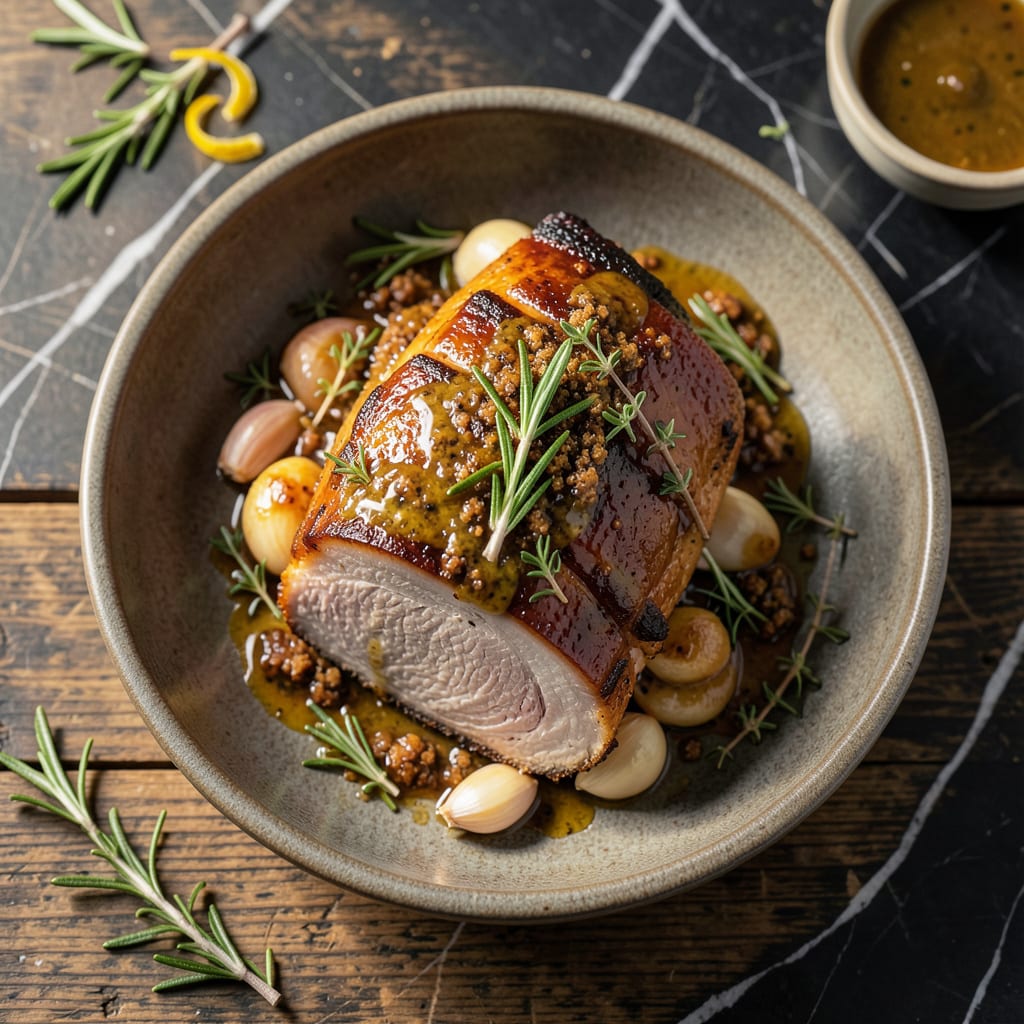
This herb-crusted pork loin roast delivers succulent results with a golden, aromatic crust that locks in moisture. The method is straightforward yet precise, ensuring every slice stays tender and flavorful.
With a simple herb rub and careful roasting, this dish transforms a humble cut into a centerpiece worthy of any dinner table. The technique guarantees perfectly cooked meat with minimal effort.
Ingredients for Pork Loin Roast
Center-cut pork loin plus aromatic herbs create this golden-crusted showstopper dinner.
| Ingredient | Amount | Notes |
|---|---|---|
| Boneless Pork Loin Roast 🥩 | 3 lb | Center-cut, trimmed of excess fat |
| Fresh Rosemary 🌿 | 2 tbsp | Finely chopped, stems discarded |
| Fresh Thyme Leaves 🍃 | 2 tbsp | Stripped from stems |
| Garlic Cloves 🧄 | 6 cloves | Minced to fine paste |
| Dijon Mustard 🟡 | 3 tbsp | Smooth, not whole grain |
| Extra-Virgin Olive Oil 🫒 | 2 tbsp | Divided for rub and searing |
| Kosher Salt 🧂 | 1 ½ tsp | Diamond Crystal preferred |
| Freshly Ground Black Pepper 🌶️ | 1 tsp | Coarse grind recommended |
| Dried Sage 🌿 | 1 tsp | Rubbed between fingers |
| Brown Sugar 🟤 | 1 tbsp | Light or dark variety |
| Red Wine Vinegar 💧 | 1 tbsp | For acidity balance |
| Chicken Stock 🥣 | ½ cup | Low-sodium preferred |
The pork loin is non-negotiable here. Opt for center-cut roasts with a thin fat cap—this ensures even cooking and that signature moist texture. I source mine from Whole Foods or a trusted butcher; their selection consistently offers better marbling. Avoid pre-marinated versions, as they compromise the crust formation. The roast should feel firm with a slight give when pressed.
No fresh rosemary? Dried at one-third the amount works, though fresh delivers superior aroma. Thyme can be swapped with marjoram in a pinch. For the mustard, whole-grain Dijon adds texture but may burn more easily. The brown sugar can be replaced with maple syrup (use 1.5 tbsp), though it will create a slightly darker crust. Always taste your stock before using—reduced-sodium lets you control seasoning precisely.
The herb rub can be prepped 1 day ahead and refrigerated. Store the raw pork loin on a rack in the coldest part of your fridge for up to 4 days. Leftovers keep beautifully wrapped tightly for 4-5 days, or freeze sliced portions for up to 3 months with minimal quality loss.
Why You’ll Love This Recipe
- Set It & Forget: I rub the roast with Dijon, herbs, and garlic, then let the oven do all the work.
- Herb-Kissed Perfection: The rosemary and thyme crust with that mustard tang? Ridiculously good every single time.
- Sunday Dinner, Wednesday Leftovers: It’s fancy enough for guests but gives me killer sandwiches for days after.
- One Roast, Many Meals: I stretch it into tacos, salads, or pasta—this single cut covers half my weeknight dinners.
Step-by-Step Instructions for Herb-Crusted Pork Loin Roast
This method ensures a perfectly seasoned crust and juicy interior every time.
Step 1: Prepare the Herb-Crusted Rub
In a small bowl, combine the 2 tbsp fresh rosemary, 2 tbsp fresh thyme leaves, 1.5 tsp kosher salt, 1 tsp freshly ground black pepper, 1 tsp dried sage, 1 tbsp brown sugar, and 1 tbsp red wine vinegar. Stir until the mixture resembles a thick paste with the herbs evenly distributed.
Add the 6 cloves minced garlic and 3 tbsp Dijon mustard, mixing thoroughly to create a cohesive rub. The mustard acts as a binder, ensuring the herb mixture adheres to the pork loin during roasting. Set this aside while you prepare the meat.
Step 2: Season and Sear the Pork Loin
Pat the 3 lb boneless pork loin roast dry with paper towels to ensure the rub adheres properly. Rub the pork loin all over with 1 tbsp of the extra-virgin olive oil, then apply the herb mixture evenly, pressing it into the surface of the meat to create a thick, even crust.
Heat the remaining 1 tbsp extra-virgin olive oil in a large oven-safe skillet over medium-high heat. Once the oil is shimmering, sear the pork loin on all sides until the crust is deep golden brown, about 2-3 minutes per side. This step develops flavor and ensures a beautiful, caramelized exterior.
Step 3: Roast to Perfection
Preheat your oven to 375°F. After searing, transfer the skillet with the pork loin directly into the oven. Roast uncovered for 45-50 minutes, or until the internal temperature reaches 145°F on an instant-read thermometer inserted into the thickest part of the meat.
The pork loin is done when the juices run clear and the meat feels firm but still slightly springy to the touch. If the crust begins to darken too quickly, tent the skillet loosely with aluminum foil to prevent over-browning.
Step 4: Rest and Serve with Pan Sauce
Remove the pork loin from the oven and transfer it to a cutting board. Tent it loosely with foil and let it rest for 10-15 minutes. This allows the juices to redistribute, ensuring every slice is moist and flavorful.
Meanwhile, place the skillet on the stovetop over medium heat. Pour in the 0.5 cup chicken stock and scrape up any browned bits from the bottom of the pan with a wooden spoon. Simmer for 3-4 minutes until the liquid reduces slightly into a light sauce. Slice the pork loin and serve with the pan sauce drizzled on top.
Pro Tips For Making Pork Loin Roast
- Use a Meat Thermometer: I learned this the hard way—pork loin dries out fast if overcooked. Pull it at 145°F internal temp, then let it rest 10 minutes under foil.
- Score the Fat Cap: Sounds weird, but it works: make shallow cuts in the fat cap before seasoning so the rosemary, thyme, and garlic penetrate deeper.
- Don’t Skip the Mustard: After burning one too many roasts, I finally figured out that brushing Dijon mustard on the pork before herbs helps create that golden crust.
- Rest Before Slicing: My grandmother swore by this, and she was right: give it a solid 10-minute rest before slicing or all those juices will end up on the cutting board.
Troubleshooting Perfect Results
Dry Rub Issues
If your herb rub isn’t sticking, the pork likely wasn’t patted dry enough. Use paper towels thoroughly before applying the rub. I also add an extra 1 tsp Dijon mustard as a binder when needed. The rub should form a thick, even layer that adheres during searing.
Uneven Cooking
For pork that’s overcooked on the outside but raw inside, your oven temperature may be too high. Verify with an oven thermometer—I use Taylor Precision. Also, ensure the roast isn’t crowded in the pan. Give it at least 2 inches of space on all sides for even air circulation. 🌡️
Tough Meat
Tough pork usually means it was overcooked. Pull it from the oven at exactly 145°F internal temperature. Remember, the temperature will rise 5-10°F during resting. Use a quality instant-read thermometer like ThermoWorks for accuracy.
Weak Crust
For a pale or weak crust, your searing step may have been rushed. Sear each side for the full 2-3 minutes on medium-high heat until deep golden brown. Don’t move the pork during searing—let that beautiful Maillard reaction develop fully.
Dry Results
Dry pork often means insufficient resting time. Always tent with foil and rest for the full 15 minutes before slicing. This lets juices redistribute. I also recommend adding ¼ cup extra chicken stock to the pan sauce for additional moisture. 💡
Burnt Herb Rub
If your herbs taste bitter or burnt, they likely scorched during searing. Lower your heat to medium and reduce searing time to 1-2 minutes per side. The brown sugar in the rub can burn easily, so watch closely and adjust heat as needed.
Nutrition Facts
Frequently Asked Questions
What’s the ideal internal temperature for doneness?
Pull it from the oven at exactly 145°F internal temperature. The temperature will rise 5-10°F during resting, so use a quality instant-read thermometer for accuracy.
Can I use a different cut of pork?
Stick with center-cut boneless loin for best results. Pork tenderloin cooks faster and may dry out, while shoulder has too much fat for this method.
How long should I rest the roast before slicing?
Always tent with foil and rest for the full 10-15 minutes before slicing. This lets juices redistribute throughout the meat.
What if my herb crust burns during roasting?
Lower your oven temperature to 350°F and tent loosely with foil. The brown sugar in the rub can scorch easily, so monitor closely.

- BBQ Sausage Recipe Oven: Smoky Depth Without the Grill - September 28, 2026
- BBQ Chicken Bowl Recipe Rice: Smoky Sweetness Over Fluffy Grains - September 28, 2026
- Beef Cutlet Recipe Ideas: Crispy Breaded Patties With Bold Seasonings - September 28, 2026