
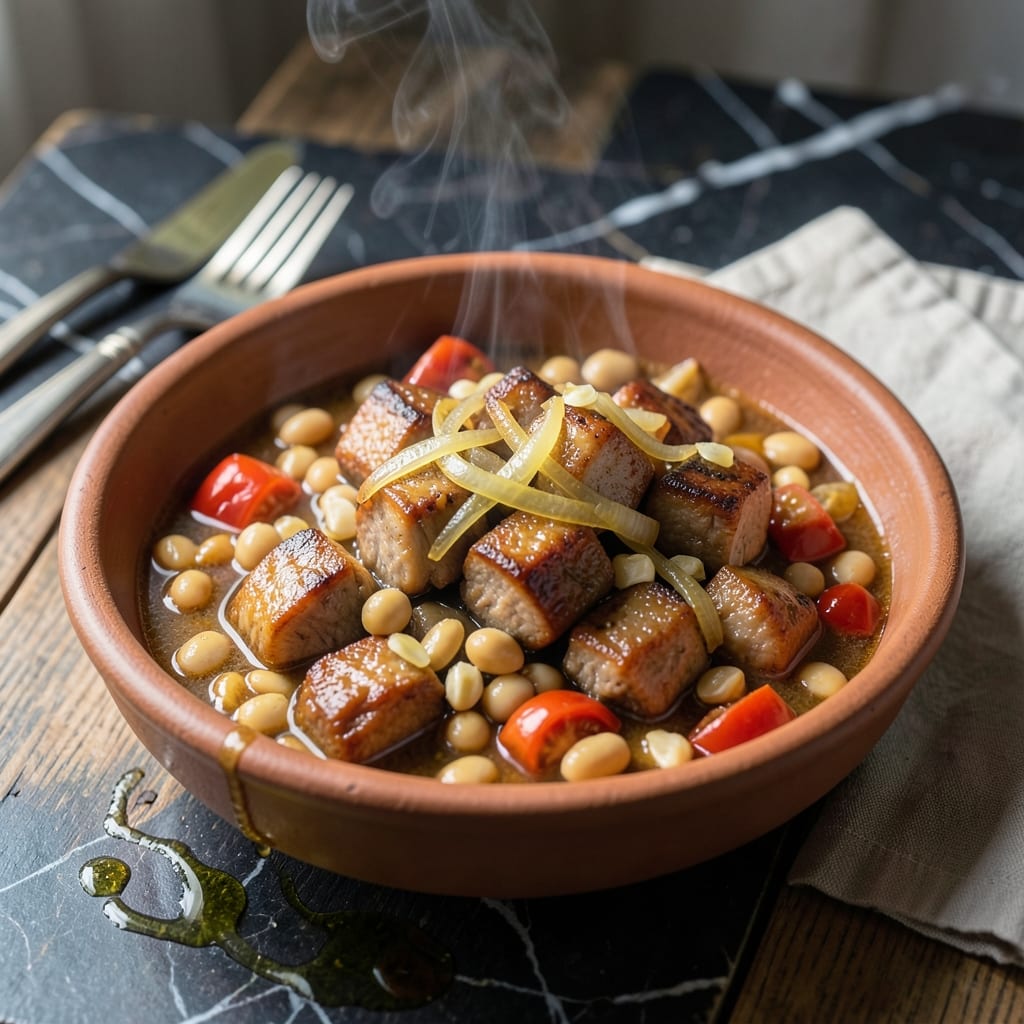
This Filipino comfort dish brings my grandmother’s kitchen to life, where simple ingredients transformed into hearty meals. The mung beans cook down to a creamy consistency while pork adds rich, savory depth.
I learned the importance of sautéing garlic and onions until fragrant—this builds the foundation of flavor. A splash of fish sauce enhances the stew without overpowering it, staying true to traditional Panlasang Pinoy techniques.
The result is a thick, satisfying stew that’s both nourishing and full of warmth. Every spoonful carries the same care my grandmother put into her cooking.
Perfect for weeknight dinners or when you crave a taste of home. This is real, unpretentious comfort food.
Ingredients for Pork Monggo Recipe Panlasang Pinoy
Simple ingredients for a hearty stew that tastes like home. Nothing fancy, just good food.
| Ingredient | Amount | Notes |
|---|---|---|
| Dried Mung Beans 🌱 | 1 cup | Rinsed and picked over |
| Pork Belly 🥩 | ½ lb | Cut into small cubes |
| Yellow Onion 🧅 | 1 whole | Medium, finely chopped |
| Garlic Cloves 🧄 | 4 cloves | Minced until fragrant |
| Tomato 🍅 | 1 whole | Medium, diced |
| Fish Sauce 🐟 | 2 tbsp | Filipino patis preferred |
| Spinach 🥬 | 2 cups | Fresh leaves, chopped |
| Water 💧 | 4 cups | For cooking mung beans |
| Vegetable Oil 🫒 | 2 tbsp | For sautéing aromatics |
| Ground Black Pepper 🌶️ | ½ tsp | Freshly ground preferred |
| Bay Leaf 🍃 | 1 whole | Optional for depth |
| Salt 🧂 | 1 tsp | Adjust to taste |
The pork belly is key here—look for well-marbled cuts at Filipino markets or Asian grocery stores. If you can’t find pork belly, pork shoulder works too, just trim the excess fat. Mung beans should be bright green and dry (availabe in the rice section). Seafood City or Filipino sari-sari stores often carry the best quality. The fish sauce should be Filipino patis for authentic flavor.
No pork? Chicken thighs or shrimp are great swaps. Out of fish sauce? Soy sauce with a pinch of MSG gets you close. Fresh spinach can be swapped for kangkong (water spinach) or bok choy if available. The tomato adds acidity—tomato paste in a pinch. If the stew is too thin, mash some beans to thicken it naturally.
This stew tastes even better the next day. Keeps for 3-4 days in the fridge, freezes for 3 months. Reheat gently to keep the mung beans creamy. Always check mung beans for tiny stones before cooking (trust me on this).
Why You’ll Love This Recipe
- Set It & Forget It: I just dump the mung beans, pork belly, and aromatics in the pot and let them simmer—no constant stirring required.
- Umami Bomb: The pork belly fat melts into the mung beans, while the garlic and tomatoes add this deep, savory richness I crave all week.
- Feeds a Crowd: One pot makes enough for my family of five with leftovers, and honestly, it tastes even better the next day.
- Pantry Hero: Dried mung beans and pork belly are cheap staples I always have on hand, so this dish saves me when the fridge is bare.
Step-by-Step Instructions for Pork Monggo
Here’s the method I rely on for a rich, satisfying stew with tender mung beans and savory pork.
Step 1: Sauté Aromatics for Maximum Flavor
Heat the 2 tbsp vegetable oil in a large pot over medium heat. Add the finely chopped yellow onion and cook for 3-4 minutes until it softens and turns translucent. This builds the base layer of flavor for the stew.
Stir in the minced garlic cloves and cook for 30-45 seconds until fragrant—don’t let it brown, or it’ll turn bitter. Then add the diced tomato and cook for another 2 minutes until it breaks down slightly and releases its juices.
Step 2: Brown the Pork Belly
Increase the heat to medium-high and add the 0.5 lb pork belly cubes. Sear them for 4-5 minutes, stirring occasionally, until the edges turn golden brown and the fat renders slightly. This step adds depth and richness to the broth.
Season with the 1 tsp salt and 0.5 tsp ground black pepper as the pork browns. The pork should be tender but not fully cooked yet—it’ll finish in the next step. Add the 1 whole bay leaf to infuse the dish with subtle earthiness.
Step 3: Cook the Mung Beans Until Tender
Pour in the 4 cups water and stir to deglaze the pot, scraping up any browned bits from the bottom. Add the 1 cup dried mung beans and bring the mixture to a boil. Once boiling, reduce the heat to low, cover, and simmer for 30-35 minutes.
The mung beans are done when they’re soft but still hold their shape. Stir in the 2 tbsp fish sauce halfway through cooking to infuse the beans with its umami depth. If the stew thickens too much, add a splash of water to maintain your desired consistency.
Step 4: Finish with Fresh Spinach
Once the mung beans are tender, stir in the 2 cups spinach and cook for 2-3 minutes until the leaves wilt completely. The spinach should be bright green and fully incorporated into the stew.
Taste and adjust the seasoning if needed—the fish sauce and salt should balance the earthy mung beans and rich pork. Remove the bay leaf before serving. Ladle the stew into bowls while hot, with a generous portion of beans, pork, and broth in each serving.
Pro Tips For Making Pork Monggo Recipe Panlasang Pinoy
- Soak the Beans: I learned this the hard way—soak dried mung beans for at least 2 hours before cooking, or they’ll take forever to soften and leave you with uneven texture. —
- Render the Fat: Start with cold pork belly in the pot and let it render slowly over medium heat—this builds flavor and prevents chewy meat later. —
- Skip Overcooking Onions: Sauté the yellow onions just until translucent, not brown, or they’ll turn bitter and overpower the dish. —
- Add Tomatoes Last: Stir in the tomatoes only after the garlic and onions are done—this keeps their freshness and stops them from turning mushy.
Flavor Customization for This pork monggo recipe panlasang pinoy
Spice It Up
For a bolder flavor, add 1 chopped green chili or ½ tsp chili flakes when sautéing the garlic. This gives the stew a gentle kick that cuts through the richness of the pork. I often add 1 tsp calamansi juice at the end for a bright, citrusy note. 🌶️
Extra Veggies
Boost the nutrition by stirring in 1 cup diced eggplant or 1 cup chopped long beans with the spinach. These traditional additions soak up the savory broth beautifully. My grandmother always added bitter melon slices for a unique twist.
Protein Swaps
Replace pork belly with ½ lb shrimp or ½ lb chicken thighs for a lighter version. Shrimp cooks quickly—add it with the spinach at the end. For a vegetarian take, use 1 cup firm tofu and 2 tbsp soy sauce instead of fish sauce.
Herb Infusions
Fresh herbs can elevate the dish. Stir in ¼ cup chopped cilantro or 5-6 Thai basil leaves just before serving. These herbs add a fresh, aromatic layer that complements the earthy mung beans perfectly. 💛
Creamy Twist
For a richer texture, stir in ½ cup coconut milk during the last 10 minutes of cooking. This variation, inspired by Southern Filipino styles, adds a subtle sweetness. I love how it balances the savory pork and umami fish sauce.
Garnish Ideas
Top each bowl with crispy fried shallots or toasted garlic bits for crunch. A drizzle of chili oil or a sprinkle of sesame seeds adds visual appeal and extra flavor. These small touches make the dish feel special, just like my grandmother’s.
Nutrition Facts
Frequently Asked Questions
Can I use canned mung beans instead of dried?
Yes, but reduce cooking time significantly. Add canned beans with the spinach and warm through for just 2-3 minutes. Dried beans are preferred for authentic texture.
What if my stew turns out too thin?
Simmer uncovered for 5-10 minutes to reduce, or mash some beans to thicken naturally. Avoid adding flour as it changes the dish’s character.
How do I store leftovers?
Cool completely before transferring to airtight containers. Keeps in the fridge for 3-4 days or freezes for 3 months. Reheat gently on the stove.
Can I omit the fish sauce?
Yes, but flavor will be less authentic. Substitute with soy sauce plus a pinch of MSG for similar umami depth. Adjust salt to taste.

- Potato Patty Recipe No Egg: Crispy Edges Without the Binder - October 30, 2026
- Paula Deen’s Potato Chip Cookies Recipe: Salty-Sweet Crunch in Every Bite - October 30, 2026
- Potato Gnocchi Recipe Ideas: Pillowy Soft Dumplings With Rustic Charm - October 30, 2026