
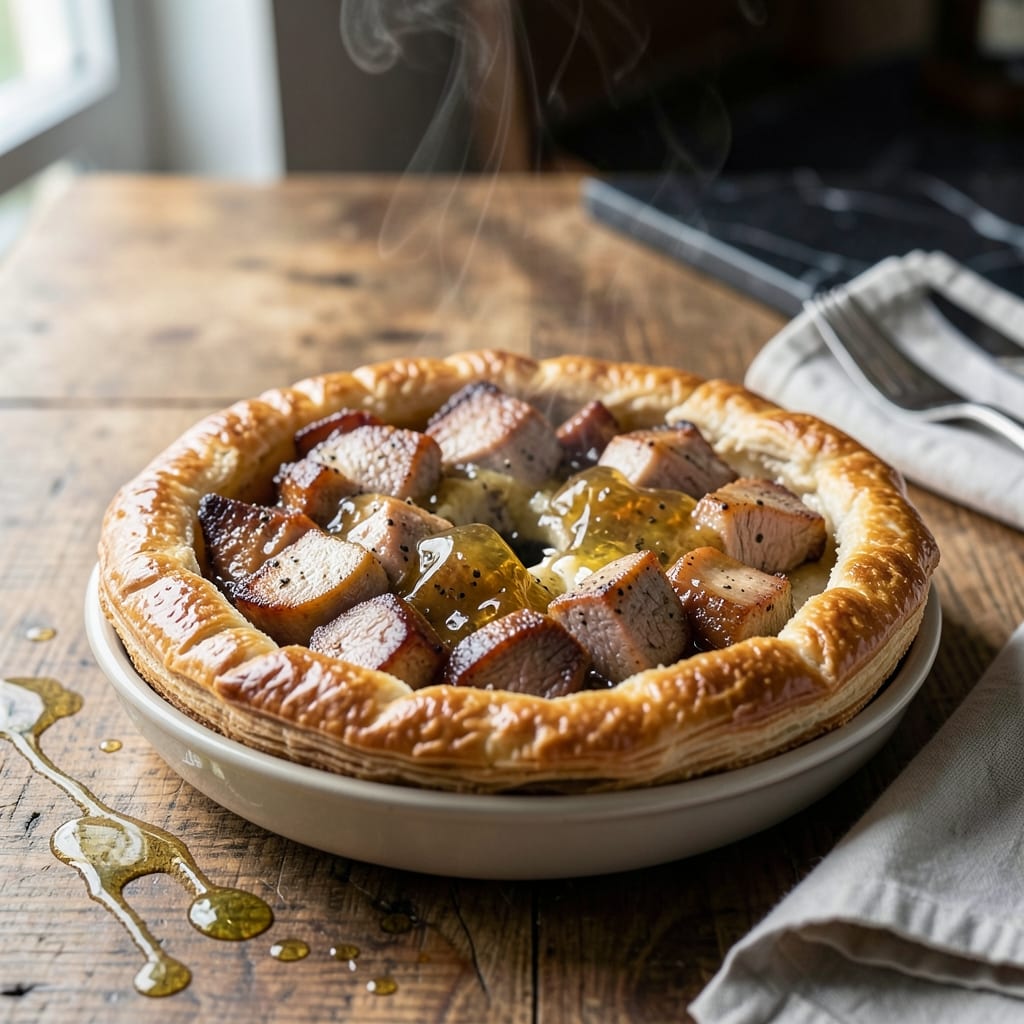
There’s something deeply satisfying about a well-made pork pie, with its buttery, flaky crust and rich, savory filling. This recipe delivers that classic British experience with a touch of modern precision.
The key is in the pastry—hot water crust creates a sturdy yet tender shell that holds the juicy pork filling perfectly. I’ve refined the technique to ensure a crisp exterior and melt-in-your-mouth texture every time.
Inside, seasoned pork and jelly combine for a filling that’s hearty without being heavy. The balance of herbs and spices enhances the meat’s natural flavor, making each bite unforgettable.
Perfect for picnics, lunches, or a comforting dinner, this pie is worth the effort. Here’s how to make it right.
Ingredients for Pork Pie Recipe Paul Hollywood
Buttery crust and savory pork filling require these classic British ingredients for perfect results.
| Ingredient | Amount | Notes |
|---|---|---|
| Pork Shoulder 🥩 | 1 ½ lb | Diced, fatty cuts preferred |
| All-Purpose Flour 🌾 | 3 cups | Plus extra for dusting |
| Lard 🧈 | ¾ cup | Or shortening for crust |
| Water 💧 | ¾ cup | Boiling for hot water crust |
| Salt 🧂 | 1 ½ tsp | Divided between crust and filling |
| Ground Black Pepper 🌶️ | 1 tsp | Freshly cracked preferred |
| Dried Sage 🌿 | 1 tsp | Rubbed between fingers |
| Dried Thyme 🍃 | 1 tsp | Mediterranean or English |
| Ground Nutmeg 🌰 | ¼ tsp | Freshly grated for best flavor |
| Pork Stock 🥩 | ½ cup | For jelly filling |
| Gelatin Sheets 🍮 | 2 sheets | Or powdered gelatin equivalent |
| Milk 🥛 | 2 tbsp | For egg wash alternative |
The pork shoulder is non-negotiable here. Fatty cuts like Boston butt give you that melt-in-your-mouth texture Paul Hollywood insists on. Whole Foods or a good butcher will have what you need. For the lard, Leaf Lard from Fatworks is the gold standard—clean flavor, perfect consistency. Most supermarkets carry it near the baking aisle, but don’t substitute butter; it won’t hold the crust structure.
No lard? Vegetable shortening works in a pinch, but the flavor won’t be as rich. Swap pork stock for chicken stock if needed (though pork is traditional). Out of fresh gelatin? Agar-agar at 1:1 ratio creates a vegetarian alternative. The sage and thyme are classic—fresh herbs at double the amount if you’re lucky enough to have them growing.
Hot water crust dough rests 30 minutes before rolling. Completed pie keeps 3-4 days refrigerated, though it’s best the day it’s made. The jelly sets fully once cooled—don’t skip the chilling time (worth the extra hour). Freezes beautifully for up to 3 months.
Why You’ll Love This Recipe
- One Bowl Wonder: Honestly, the dough comes together in a single bowl with just flour, lard, and water—no fancy equipment needed.
- Feeds a Crowd: I made a batch for Sunday lunch and had enough left for picnics all week—pork shoulder stretches far.
- Penny Pincher: Between us, pork shoulder is cheap, and the lard crust costs next to nothing. My wallet thanks me every time.
Step-by-Step Instructions for Pork Pie
Here’s the method I use to achieve a perfectly crisp crust and rich, flavorful filling every time.
Step 1: Prepare the Hot Water Crust
In a saucepan, combine the 0.75 cup Lard and 0.75 cup Water and bring to a simmer over medium heat. You want the lard fully melted and the mixture just under a boil—this creates the right texture for a sturdy crust.
Meanwhile, in a large bowl, whisk together the 3 cups All-Purpose Flour and 1 tsp Salt. Make a well in the center and pour in the hot lard and water mixture. Stir quickly with a wooden spoon until a shaggy dough forms. The dough will be slightly sticky but should hold together when pressed.
Step 2: Shape and Fill the Pie Crust
Turn the dough onto a lightly floured surface and knead briefly until smooth, about 1-2 minutes. Divide the dough into two portions, one slightly larger than the other. Roll out the larger portion to about ¼-inch thickness and use it to line a 9-inch pie tin, pressing it gently into the edges.
For the filling, season the 1.5 lb Pork Shoulder with ½ tsp Salt, 1 tsp Ground Black Pepper, 1 tsp Dried Sage, 1 tsp Dried Thyme, and 0.25 tsp Ground Nutmeg. Spoon the seasoned pork into the crust, pressing down lightly to fill the tin evenly. Leave a slight mound in the center for the jelly topping later.
Step 3: Add the Top Crust and Bake
Roll out the remaining dough to cover the top of the pie. Dampen the edges of the bottom crust with a little water, then place the top crust over the filling. Press the edges together to seal, then trim any excess dough. Use a knife to cut a small steam vent in the center of the top crust.
Preheat your oven to 375°F. Brush the top crust with the 2 tbsp Milk for a golden finish. Bake for 45-50 minutes until the crust is deep golden brown and the filling is cooked through. The pie should feel firm when gently pressed in the center.
Step 4: Prepare and Add the Jelly Filling
While the pie bakes, soak the 2 sheets Gelatin Sheets in cold water for 5 minutes until soft. Heat the 0.5 cup Pork Stock in a small saucepan until warm, then remove from heat. Squeeze the excess water from the gelatin sheets and stir them into the warm pork stock until fully dissolved.
Once the pie is out of the oven, let it cool for 10 minutes, then use a small funnel or spoon to carefully pour the gelatin mixture into the steam vent. Allow the jelly to set for 1-2 hours at room temperature before serving. The jelly should be firm but slightly wobbly when fully set.
Pro Tips For Making Pork Pie Recipe Paul Hollywood
- Chill the Lard: I learned this the hard way—warm lard makes flaky pastry impossible. Cube and refrigerate your lard for at least 30 minutes before rubbing it into the flour.
- Dry the Pork: Sounds weird, but it works: pat the pork shoulder completely dry before seasoning. Excess moisture turns your filling watery and ruins the texture.
- Rest the Pastry: After mixing, let the hot water crust rest for 10 minutes before rolling. I skipped this once and my pie cracked in the oven—never again.
- Use Gelatin Stock: My grandmother swore by this, and she was right: replace water in the filling with cooled pork stock thickened with gelatin for a richer, firmer set.
Storing and Reheating This pork pie recipe paul hollywood
Room Temperature Storage
Once fully cooled and the jelly has set, your pie can sit at room temperature for up to 6 hours. I always place mine on a wire rack to prevent the crust from getting soggy from trapped steam. The hot water crust holds up surprisingly well at room temp. 💪
Refrigerator Storage
For longer storage, wrap the cooled pie tightly in plastic wrap or aluminum foil and refrigerate for up to 4 days. The flavors deepen overnight, making leftovers taste even better. Just be sure to let it come to room temperature before serving.
Freezing for Later
This pie freezes beautifully for up to 3 months. Wrap it first in plastic wrap, then in heavy-duty foil to prevent freezer burn. I like to slice it before freezing for easy single-serving portions. ❄️
Reheating in Oven
Preheat your oven to 350°F and place the pie on a baking sheet. Cover loosely with foil and heat for 15-20 minutes for refrigerated pies, or 30-40 minutes for frozen ones. This method keeps the crust crisp.
Microwave Reheating
For a quick meal, microwave individual slices on 50% power for 1-2 minutes. Place a damp paper towel over the slice to prevent drying. The jelly might soften slightly, but it will reset as it cools.
Nutrition Facts
Frequently Asked Questions
Why use hot water crust for this pie?
Hot water crust creates a sturdy shell that holds the juicy filling without sagging. The lard and boiling water combination gives it a crisp texture that’s perfect for savory pies. It’s a traditional method that works beautifully for meat fillings.
Can I substitute the lard in the crust?
Vegetable shortening works in a pinch, but the flavor won’t be as rich. Butter isn’t recommended as it doesn’t provide the same structural integrity. For best results, stick with lard or a high-quality shortening.
How do I know when the jelly is properly set?
The jelly should be firm but slightly wobbly when fully set. Allow 1-2 hours at room temperature after adding it to the pie. If it’s still liquid after this time, refrigerate for 30 minutes to help it along.
What’s the best way to prevent a soggy bottom crust?
Bake the pie on the lower oven rack and place a baking sheet underneath to catch drips. Also, let the pie cool completely on a wire rack before adding the jelly to maintain crispness.

- Potato Chip Cookie Recipe With Pecans: Buttery Crunch Meets Nutty Richness - October 30, 2026
- Potato Patty Recipe No Egg: Crispy Edges Without the Binder - October 30, 2026
- Paula Deen’s Potato Chip Cookies Recipe: Salty-Sweet Crunch in Every Bite - October 30, 2026