
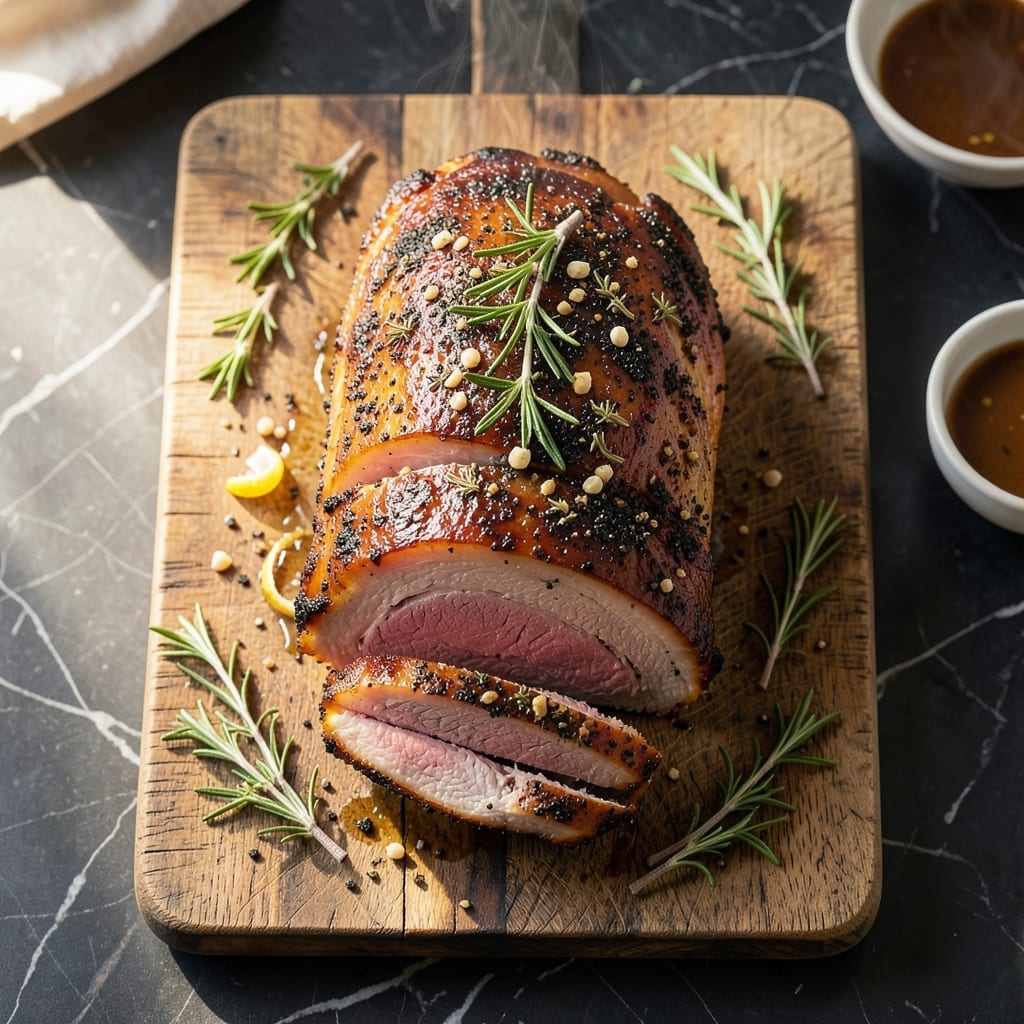
There’s something special about a herb-crusted pork prime rib roast as the centerpiece of a Sunday dinner. This recipe turns a simple cut into an elegant meal that impresses without the fuss.
I’ve perfected this method to ensure tender, juicy meat with a flavorful crust every time. The secret is a high-heat sear followed by slow roasting, which locks in moisture while building deep, savory flavors.
The herb rub creates a fragrant crust that complements the rich pork beautifully. With just a few simple ingredients and careful timing, you’ll achieve restaurant-worthy results in your own kitchen.
Let this be your go-to for gatherings where you want to serve something truly memorable. The process is straightforward, but the payoff feels anything but ordinary.
Ingredients for Pork Prime Rib Roast Recipe Oven
Pantry staples meet prime cut. This elegant centerpiece needs just a handful of herbs and spices.
| Ingredient | Amount | Notes |
|---|---|---|
| Pork Prime Rib Roast 🥩 | 4 lb | Bone-in, well-marbled preferred |
| Kosher Salt 🧂 | 2 tbsp | Diamond Crystal preferred |
| Freshly Ground Black Pepper 🌶️ | 1 ½ tbsp | Coarse grind for crust |
| Fresh Rosemary 🌿 | 3 tbsp | Finely chopped, stems removed |
| Fresh Thyme 🍃 | 2 tbsp | Leaves stripped from stems |
| Garlic Cloves 🧄 | 6 cloves | Minced for herb rub |
| Dijon Mustard 🟡 | ¼ cup | For binding herb crust |
| Olive Oil 🫒 | ¼ cup | Extra-virgin for richness |
| Red Wine 🍷 | 1 cup | Dry variety for deglazing |
| Chicken Stock 🥫 | 1 cup | Low-sodium preferred |
| Unsalted Butter 🧈 | 4 tbsp | For basting roast |
| Shallot 🧅 | 1 whole | Finely diced for pan sauce |
The pork prime rib roast is the star—bone-in for flavor, well-marbled for juiciness. I grab mine from Whole Foods or a trusted butcher shop (ask for the rib end, it’s more tender). Look for bright pink color with creamy white fat. If your butcher can’t source it, Costco has solid pre-packaged options. Don’t trim the fat cap—that’s where most of the flavor lives.
No fresh rosemary? Dried at one-third the amount works, but fresh is better here. Out of Dijon? Whole-grain mustard adds great texture. For the wine, any dry red (Cabernet or Merlot) does the trick. If you’re avoiding alcohol, beef broth with a splash of balsamic gets you close. The butter can be omitted, but it adds a ridiculous amount of flavor to the crust.
The roast can rest at room temp for 1 hour before cooking (takes the chill off for even cooking). Leftovers keep for 4-5 days in the fridge—perfect for sandwiches. The pan sauce freezes beautifully for 3 months.
Why You’ll Love This Recipe
- Set It and Forget It: I rub the pork with salt, pepper, rosemary, and thyme, pop it in the oven, and let the magic happen—no babysitting required.
- Herb-Crusted Heaven: The rosemary and thyme form this insane crust that makes every bite taste like a high-end meal, but it’s all coming from my own kitchen.
- Sunday Dinner Star: Honestly, it’s my go-to for family gatherings or even a fancy weeknight when I want to impress without the stress.
- Leftovers for Days: One roast feeds us for two meals, and the cold slices make the best sandwiches the next day.
Step-by-Step Instructions for Pork Prime Rib Roast
This method guarantees a showstopping centerpiece with a fragrant herb crust and juicy interior.
Step 1: Prepare the Herb Crust
In a small bowl, combine the 2 tbsp Kosher Salt, 1.5 tbsp Freshly Ground Black Pepper, 3 tbsp Fresh Rosemary, 2 tbsp Fresh Thyme, and 6 cloves Garlic Cloves. Stir in the 0.25 cup Dijon Mustard and 0.25 cup Olive Oil until it forms a thick paste.
This paste should be cohesive enough to cling to the roast—if it feels too thick, add a splash more Olive Oil. The mustard acts as a binder while the herbs and garlic infuse every bite with aromatic depth.
Pat the 4 lb Pork Prime Rib Roast completely dry with paper towels. The drier the surface, the better the crust will adhere and brown. Rub the herb mixture all over the roast, pressing firmly to create an even layer that locks in moisture.
Step 2: Sear and Start the Roast
Preheat your oven to 450°F—this high heat kickstarts the browning process. Place the roast bone-side down in a roasting pan. This position allows the fat cap to baste the meat as it renders during cooking.
Roast for 20 minutes to develop a deep, caramelized crust on the exterior. You’ll see the herb paste transform into a golden-brown crust and hear the fat sizzling—that’s your signal the sear is working.
After the initial sear, reduce the oven temperature to 325°F. This drop prevents the exterior from burning while ensuring the interior cooks evenly to tender perfection.
Step 3: Baste and Roast to Perfection
Once the temperature is reduced, baste the roast with 4 tbsp Unsalted Butter melted and mixed with 1 cup Chicken Stock. Use a spoon to drizzle the liquid over the roast every 20 minutes—this keeps the crust moist and adds layers of flavor.
Continue roasting until the internal temperature reaches 145°F in the thickest part of the meat, away from the bone. This typically takes 1.5 to 2 hours total, depending on your oven. A meat thermometer is essential here for precision.
The roast is done when the juices run clear and the crust is a deep, aromatic mahogany color. If the top starts to darken too quickly, tent loosely with foil to prevent over-browning.
Step 4: Rest and Prepare the Pan Sauce
Transfer the roast to a cutting board and tent it with foil. Let it rest for 15-20 minutes—this allows the juices to redistribute, ensuring every slice is moist and flavorful. The temperature will rise 5-10°F during this time, so pull it out slightly early.
Place the roasting pan on the stovetop over medium heat. Add the 1 whole Shallot, finely diced, and cook for 2-3 minutes until softened. Deglaze the pan with 1 cup Red Wine, scraping up all the browned bits with a wooden spoon.
Simmer the sauce for 5-7 minutes until it reduces by half and thickens enough to coat the back of a spoon. Strain if desired for a smoother texture, then serve the sauce alongside the sliced roast.
Pro Tips For Making Pork Prime Rib Roast Recipe Oven
- Dry the Roast: Pat the pork prime rib completely dry with paper towels before seasoning—this guarantees a better crust and helps the salt and herbs stick where they belong.
- Start Hot, Finish Low: Sear the roast at 450°F for 20 minutes to develop a deep brown crust, then drop the oven to 325°F to let it cook through without drying out.
- Use Fresh Herbs: Crush the rosemary and thyme between your palms before rubbing them on the meat—it releases the oils and makes the flavor actually penetrate the roast.
- Rest Before Carving: Let the pork rest for at least 15 minutes under loose foil after roasting, or all the juices will end up on the cutting board instead of in the meat.
Health Benefits of This Dish
Rich in Protein
This dish delivers a hefty 40 grams of protein per 4-ounce serving, supporting muscle growth and repair. The high-quality protein in pork helps maintain lean muscle mass, especially important as we age. I love that it keeps me full for hours after eating. 💪
Vitamin B Boost
Pork is packed with B vitamins, particularly B1, B6, and B12. A serving provides about 30% of your daily B12 needs, which supports nerve function and red blood cell production. These vitamins also help convert food into energy.
Iron and Zinc
You’ll get a significant dose of heme iron—the easily absorbed form—from this roast. A 4-ounce serving provides about 15% of your daily iron needs. The zinc content supports immune function and wound healing.
Selenium Source
Pork is one of the best sources of selenium, a powerful antioxidant. A single serving delivers about 50% of your daily requirement, which helps protect cells from damage and supports thyroid function.
Low in Saturated Fat
Compared to other red meats, pork prime rib is relatively lean. A 4-ounce serving contains only about 3 grams of saturated fat. The marbling you see actually contains healthy monounsaturated fats, similar to those in olive oil.
Energy Production
The combination of protein and B vitamins in this dish makes it excellent for sustained energy. I notice my energy levels stay steady for hours after enjoying a slice, without the crash that comes from carb-heavy meals. ✨
Nutrition Facts
Frequently Asked Questions
What internal temperature should I aim for?
Remove the roast when it reaches 145°F internally. The temperature will rise 5-10°F during resting, reaching the perfect medium-rare doneness. Always use a meat thermometer for accuracy.
Can I use dried herbs instead of fresh?
Yes, but reduce the amount by two-thirds. For example, use 1 tbsp dried rosemary instead of 3 tbsp fresh. Dried herbs are more concentrated, so adjust to avoid overpowering the dish.
How long should I let it rest before slicing?
Rest the roast for 15-20 minutes after removing it from the oven. This allows the juices to redistribute, ensuring moist, flavorful slices. Skipping this step can result in dry meat.
What if my roast is browning too quickly?
If the crust darkens too fast, tent the roast loosely with foil. This protects it while allowing the interior to cook through. Check every 20 minutes to monitor progress.

- Potato Chip Cookie Recipe With Pecans: Buttery Crunch Meets Nutty Richness - October 30, 2026
- Potato Patty Recipe No Egg: Crispy Edges Without the Binder - October 30, 2026
- Paula Deen’s Potato Chip Cookies Recipe: Salty-Sweet Crunch in Every Bite - October 30, 2026