
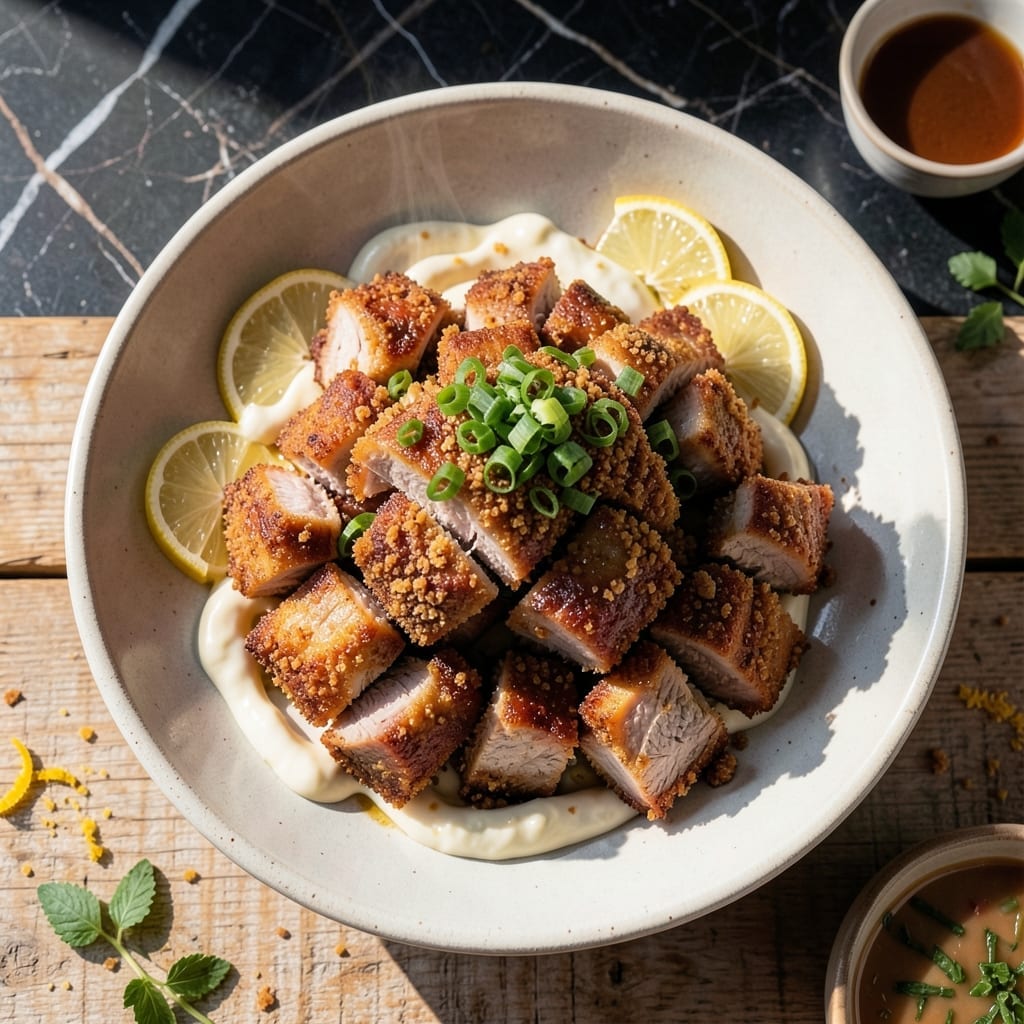
This Filipino-style breaded pork delivers a crispy golden exterior with tender, juicy meat inside. I perfected this after years of adjusting my grandmother’s vague “a handful of this” instructions into precise measurements anyone can follow.
The double-breading technique ensures maximum crunch, while a quick fry locks in moisture. The accompanying tangy dip cuts through the richness perfectly, balancing every bite with bright, vinegary notes.
What sets this apart is the Filipino touch—subtle seasoning in the breading and a dip that’s more complex than standard ketchup. The result is a dish that’s impossible to resist, with a texture that stays crispy even after cooling.
Serve hot for the best experience, but leftovers reheat surprisingly well. Here’s how to make it right.
Ingredients for Pork Rebosado Recipe Panlasang Pinoy
Pantry staples meet a few specialty items for that perfect crispy bite and tangy dip.
| Ingredient | Amount | Notes |
|---|---|---|
| Pork Shoulder 🥩 | 1 ½ lb | Cut into 1-inch cubes, boneless |
| All-Purpose Flour 🌾 | 1 ½ cups | Divided for double breading |
| Large Eggs 🥚 | 2 whole | Beaten for egg wash |
| Japanese Breadcrumbs 🍞 | 2 cups | Panko for extra crispiness |
| Garlic Powder 🧄 | 1 tsp | For seasoning breading |
| Onion Powder 🧅 | 1 tsp | For seasoning breading |
| Salt 🧂 | 1 tsp | Divided for pork and breading |
| Black Pepper 🌶️ | ½ tsp | Freshly ground |
| Vegetable Oil 🫒 | 3 cups | For deep frying |
| White Vinegar 💧 | ¼ cup | For tangy dip |
| Soy Sauce 🥢 | 2 tbsp | For tangy dip |
| Granulated Sugar 🍚 | 2 tbsp | For tangy dip |
| Minced Garlic 🧄 | 2 tbsp | For tangy dip |
| Crushed Black Pepper 🌶️ | ¼ tsp | For tangy dip |
| Water 💧 | ¼ cup | For tangy dip consistency |
The pork shoulder is key here—look for well-marbled cuts at your local butcher or Asian market. Panko breadcrumbs (the Japanese kind) give that signature crunch, and most Asian grocery stores carry them in bulk. I always grab an extra bag since they keep forever in a sealed container. For the flour, any all-purpose works, but I prefer unbleached for a slightly nuttier flavor.
No pork shoulder? Pork loin works too (just trim the fat). Short on Panko? Crushed cornflakes or saltines get you close. The vinegar in the dip should be white, but apple cider vinegar at the same amount works in a pinch. If you don’t have soy sauce, fish sauce or Worcestershire (with a pinch of salt) can substitute—though skip the Worcestershire if you want it strictly Filipino.
The breaded pork stays crispy for about 2 days in the fridge—reheat in a toaster oven or air fryer, not the microwave. The dip keeps for 1 week refrigerated. Leftovers? Freeze the pork uncooked (after breading) for up to 1 month.
Why You’ll Love This Recipe
- One-Bowl Wonder: I just dump flour, eggs, and breadcrumbs in one bowl—no fancy prep, just a quick assembly line for coating the pork.
- Crispy Garlic Bite: That first crunch of the panko crust with the garlic powder kicked in? Ridiculously good, and the pork stays juicy inside.
- Feeds a Hungry Table: I make a big batch for family dinners, and it’s always the first thing to disappear—even the picky eaters go back for more.
- Leftovers? Still Great: Honestly, it reheats surprisingly well in the toaster oven, so I stash extras for lazy lunches the next day.
Step-by-Step Instructions for Pork Rebosado
Here’s how to achieve that perfect crispy texture with a tangy dip that ties it all together.
Step 1: Prep and Season the Pork Shoulder
Start by cutting the 1.5 lb Pork Shoulder into 1-inch cubes. I find this size gives you the perfect bite with maximum crispy surface area. Pat the cubes dry with paper towels—this is crucial for the breading to adhere properly.
Season the pork with ½ tsp Salt and 0.5 tsp Black Pepper. I always use freshly ground black pepper for better flavor. Let it sit for 10 minutes to absorb the seasoning. This step ensures the meat is flavorful all the way through, not just on the surface.
Step 2: Set Up the Double Breading Station
In one shallow bowl, combine 1 cup All-Purpose Flour, 1 tsp Garlic Powder, 1 tsp Onion Powder, and the remaining ½ tsp Salt. In another bowl, beat the 2 whole Large Eggs until well combined. In a third bowl, place the 2 cups Japanese Breadcrumbs.
This three-step breading process is what creates that ultra-crispy texture. I like to use Japanese breadcrumbs (panko) because they create a lighter, crunchier coating. Make sure each piece is fully coated at every stage—don’t rush this part.
Step 3: Fry to Golden Perfection
Heat the 3 cups Vegetable Oil in a deep skillet or pot to 350°F. Use a thermometer for accuracy—oil that’s too cool will make the pork greasy, while oil that’s too hot will burn the breading before the meat cooks through.
Fry the breaded pork in batches to avoid overcrowding the pan. Cook for 4-5 minutes per side until the coating is golden brown and the internal temperature reaches 145°F. Drain on a wire rack or paper towels to maintain crispiness.
Step 4: Prepare the Tangy Dipping Sauce
While the pork fries, combine the 0.25 cup White Vinegar, 2 tbsp Soy Sauce, 2 tbsp Granulated Sugar, 2 tbsp Minced Garlic, 0.25 tsp Crushed Black Pepper, and 0.25 cup Water in a small saucepan. Simmer over medium heat for 3-4 minutes until the sugar dissolves.
Let the sauce cool slightly before serving. The balance of tangy vinegar, salty soy sauce, and sweet sugar complements the crispy pork perfectly. I always make extra—this sauce is so good you’ll want to drizzle it over everything.
Pro Tips For Making Pork Rebosado Recipe Panlasang Pinoy
- Double-Dredge the Pork: Dip the pork in flour, then egg, then breadcrumbs—but then repeat the egg and breadcrumbs for a thicker, crunchier crust that actually holds up to frying.
- Rest the Breaded Cuts: After coating, let the pork sit for 10 minutes before frying. I learned this the hard way—it keeps the crumbs from falling off in the oil.
- Use Medium Heat: Cranking the heat too high burns the breadcrumbs before the pork cooks through. Medium heat, about 350°F, gives that golden finish without the raw center.
- Press the Crumbs: When coating, press the Japanese breadcrumbs into the pork firmly—this makes them stick better and creates those crispy, uneven bits everyone loves.
Common Mistakes When Making This Dish
Overcrowding the Pan
Frying too many pieces at once drops the oil temperature, leading to soggy breading. I learned this the hard way—my first batch turned out greasy. Stick to 6-8 pieces at a time in a 12-inch skillet to maintain 350°F oil temperature. 🔥
Skipping the Drying Step
Wet pork causes breading to slide right off. After cubing, always pat each piece thoroughly with paper towels. I keep a stack handy and press firmly—you should see the paper absorb moisture. This ensures the flour sticks properly.
Uneven Breading
Press the panko firmly into each piece during the final breading step. I use one hand for wet ingredients and one for dry to avoid clumping. Check for bare spots—missed areas won’t crisp up properly. The coating should look even and thick.
Incorrect Oil Temperature
Too cool and you get greasy pork; too hot and the outside burns before the inside cooks. Use a thermometer and adjust heat as needed. I test with a wooden chopstick—bubbles should form around it at 350°F.
Rushing the Resting
Let the breaded pork rest for 5 minutes before frying. This helps the coating set. I place mine on a wire rack during this time—it prevents the bottom from getting soggy while waiting.
Overcooking the Pork
Pork shoulder cooks fast at this size. Pull pieces when they hit 145°F internally. They’ll continue cooking slightly while draining. I use a meat thermometer for accuracy—guessing leads to dry meat.
Nutrition Facts
Frequently Asked Questions
What cut of pork works best for this dish?
Pork shoulder is ideal for its marbling and tenderness. If unavailable, pork loin works too—just trim excess fat first. The 1-inch cubes ensure even cooking and maximum crispy surface area.
Can I use regular breadcrumbs instead of panko?
Yes, but panko gives that signature light, extra-crispy texture. Regular breadcrumbs will work in a pinch, though the coating may be denser. For best results, pulse panko in a food processor for finer crumbs.
How do I keep the breading crispy after frying?
Drain on a wire rack, not paper towels, to prevent steam from softening the crust. Reheat in a toaster oven or air fryer at 375°F for 5 minutes. Avoid microwaving, as it makes the coating soggy.
Can I make this ahead of time?
Bread the pork up to 1 day ahead and refrigerate uncovered. Fry just before serving. The dip can be made 3 days in advance and stored in the fridge.

- Potato Chip Cookie Recipe With Pecans: Buttery Crunch Meets Nutty Richness - October 30, 2026
- Potato Patty Recipe No Egg: Crispy Edges Without the Binder - October 30, 2026
- Paula Deen’s Potato Chip Cookies Recipe: Salty-Sweet Crunch in Every Bite - October 30, 2026