
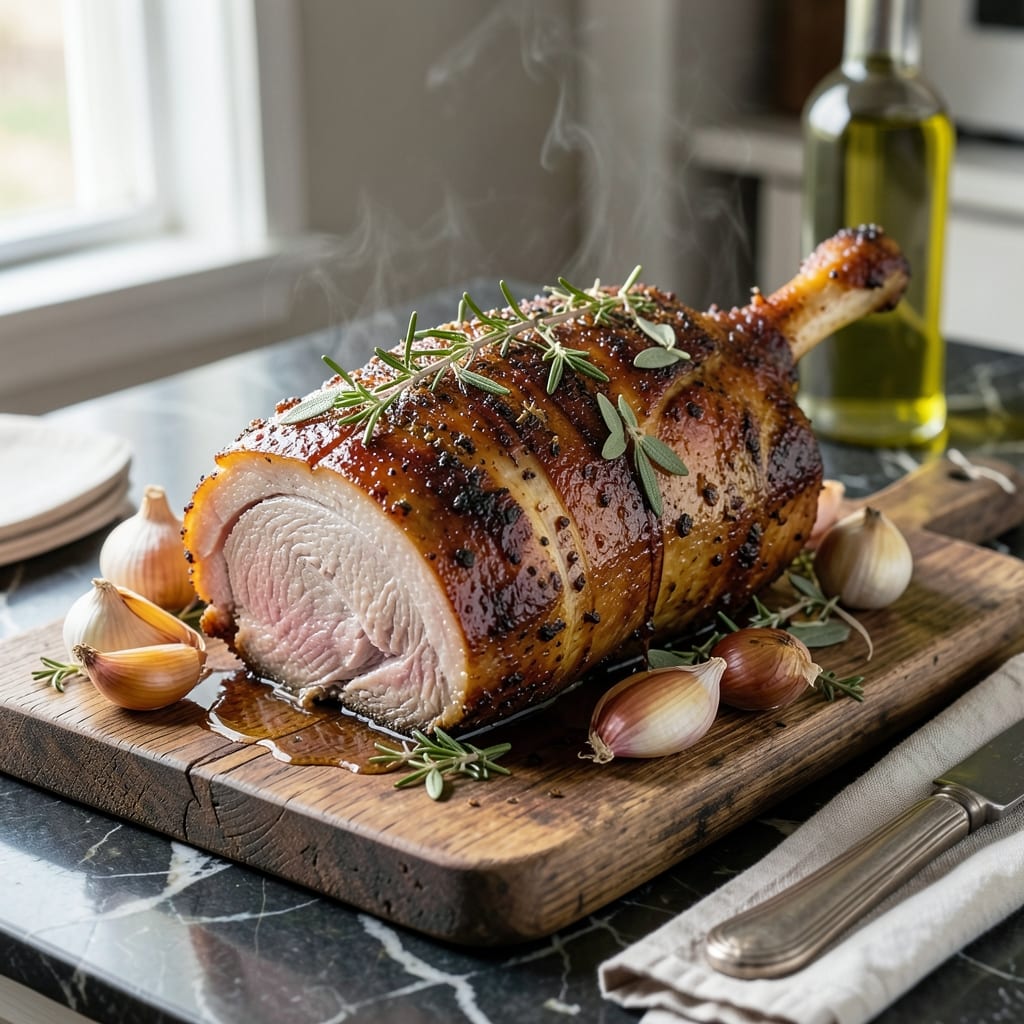
This herb-crusted pork rib roast transforms Sunday dinner into a special occasion with minimal effort. The key lies in a simple dry brine and aromatic herb crust that locks in juices while creating a golden exterior.
I’ve perfected this method over years of holiday cooking, ensuring the meat stays succulent from edge to edge. A slow roast at 325°F followed by a high-heat finish delivers that ideal balance of tenderness and caramelization.
What emerges from the oven is a centerpiece worthy of applause—moist, flavorful pork with a fragrant crust. The resting period is non-negotiable; it guarantees slices that hold their shape and juices.
Serve with roasted vegetables or mashed potatoes for a complete meal that feels like a restaurant-quality feast at home.
Ingredients for Pork Rib Roast Recipe Oven
Transform Sunday dinner with this elegant pork rib roast and aromatic herb crust ingredients.
| Ingredient | Amount | Notes |
|---|---|---|
| Pork Rib Roast 🥩 | 4 lb | Bone-in, center-cut preferred |
| Kosher Salt 🧂 | 2 tbsp | Diamond Crystal preferred for dry brine |
| Freshly Ground Black Pepper 🌶️ | 1 tbsp | Coarse grind for texture |
| Fresh Rosemary 🌿 | 2 tbsp | Finely chopped, stems discarded |
| Fresh Thyme Leaves 🍃 | 2 tbsp | Stripped from stems |
| Fresh Sage Leaves 🌿 | 1 tbsp | Finely minced |
| Garlic Cloves 🧄 | 6 cloves | Minced into paste consistency |
| Dijon Mustard 🟡 | 3 tbsp | Whole grain preferred for crust adhesion |
| Olive Oil 🫒 | 2 tbsp | Extra-virgin for herb crust binding |
| Unsalted Butter 🧈 | 4 tbsp | Softened for herb mixture |
| Dry White Wine 🍷 | ½ cup | For deglazing roasting pan |
| Low-Sodium Chicken Stock 🥣 | 1 cup | For pan sauce preparation |
The pork rib roast is non-negotiable—bone-in, center-cut from a reputable butcher ensures even cooking and maximum flavor. Costco carries excellent pre-trimmed roasts, but your local Whole Foods butcher can provide custom cuts. For the dry brine, Diamond Crystal kosher salt is the professional standard (its coarse texture adheres better than table salt). The herb quality directly impacts the crust—source from a farmers market if possible.
No fresh herbs? Dried at one-third the quantity, but fresh is exponentially better. Swap rosemary for marjoram if desired. The Dijon can be whole grain or smooth—both work. For the wine, any dry white (Sauvignon Blanc, Pinot Grigio) suffices. Vegetarian? Use vegetable stock instead of chicken. The butter is essential for the crust’s richness—do not substitute oil here.
The roast can be dry-brined 12-24 hours ahead—this actually improves flavor and texture. Store fresh herbs wrapped in damp paper towels for up to 5 days. Leftover roast keeps 4 days refrigerated or freezes beautifully for 3 months.
Why You’ll Love This Recipe
- Set It and Forget: I rub the roast with salt, pepper, rosemary, and thyme, pop it in the oven, and let the heat do all the work—no babysitting required.
- Herb-Crusted Heaven: The rosemary and thyme form this crazy aromatic crust that makes every bite taste like a Sunday dinner, even on a Wednesday.
- Feeds a Hungry Table: One roast and I’ve got enough for a family dinner, with leftovers that make killer sandwiches the next day. Honestly, it’s my secret weapon for gatherings.
- Leftovers Level Up: The pork slices even better the next day, and I love turning the extras into tacos or fried rice—zero waste, all flavor.
Step-by-Step Instructions for Pork Rib Roast Oven
Master the technique for a perfectly cooked roast with a fragrant herb crust and juicy interior.
Step 1: Prepare and Season the Pork Rib Roast
Remove the 4 lb Pork Rib Roast from the refrigerator and let it sit at room temperature for 1 hour. Pat it thoroughly dry with paper towels to ensure the herb crust adheres properly and the skin browns evenly.
Combine the 2 tbsp Kosher Salt and 1 tbsp Freshly Ground Black Pepper in a small bowl. Rub this mixture all over the roast, pressing it into the meat. This dry brine step is essential for both seasoning and moisture retention.
Let the seasoned roast sit uncovered while you prepare the herb mixture. This allows the salt to begin penetrating the meat, ensuring flavor throughout.
Step 2: Create the Herb Crust
In a food processor or mortar and pestle, combine the 2 tbsp Fresh Rosemary, 2 tbsp Fresh Thyme Leaves, 1 tbsp Fresh Sage Leaves, and 6 cloves Garlic Cloves. Pulse or grind until finely minced into a paste-like consistency.
Add the 4 tbsp Unsalted Butter, 2 tbsp Olive Oil, and 3 tbsp Dijon Mustard to the herb mixture. stir until fully combined. The mustard acts as a binding agent for the crust, while the butter and oil ensure it browns beautifully.
Spread this herb mixture evenly over the entire surface of the roast, pressing it into the meat. The crust should be thick and uniform, covering all sides for maximum flavor impact.
Step 3: Roast to Perfection
Preheat your oven to 450°F. Place the roast bone-side down in a roasting pan fitted with a rack. This high initial temperature ensures a deeply browned, flavorful crust forms quickly.
Roast at 450°F for 20 minutes, then reduce the heat to 325°F and continue roasting. For a 4 lb roast, expect about 1.5 to 2 hours total cooking time. The internal temperature should reach 145°F for medium-rare.
Begin checking the temperature with a meat thermometer after 1 hour. The roast is done when the thermometer inserted into the thickest part reads 145°F. The crust should be a deep golden brown and the juices should run slightly pink.
Step 4: Rest and Prepare the Pan Sauce
Transfer the roast to a cutting board and tent loosely with foil. Let it rest for at least 15 minutes before carving. This resting period allows the juices to redistribute, ensuring a moist and tender result.
Place the roasting pan on the stovetop over medium heat. Add the 0.5 cup Dry White Wine and scrape up all the browned bits from the bottom of the pan with a wooden spoon. Let the wine reduce by half, about 3-4 minutes.
Add the 1 cup Low-Sodium Chicken Stock and simmer for 5-7 minutes until the sauce has thickened slightly. Strain the sauce through a fine-mesh sieve into a gravy boat or small pitcher. Serve the sauce alongside the carved roast.
Pro Tips For Making Pork Rib Roast Recipe Oven
- Start High, Finish Low: Sear the roast at 450°F for 20 minutes to lock in juices, then drop to 325°F to cook through without drying it out—I learned this the hard way after pulling out a tough, overcooked roast.
- Score the Fat Cap: Cut 1/4-inch slits in the fat in a crosshatch pattern so the salt, rosemary, and thyme actually penetrate the meat, not just sit on top.
- Rest Before Carving: Let it rest 15-20 minutes under foil after roasting—skip this and you’ll watch all those delicious juices spill onto the cutting board instead of staying in the meat.
- Use Fresh Herbs: Dried rosemary and thyme work in a pinch, but fresh bruised sprigs tucked under the fat cap add a brightness that dried just can’t match.
Health Benefits of This pork rib roast recipe oven
High-Quality Protein Source
This dish delivers an impressive 40 grams of protein per 4-ounce serving, supporting muscle growth and repair. The pork rib roast is particularly rich in essential amino acids, making it a complete protein source for any diet. 💪
Rich in B Vitamins
You’ll get a significant boost of vitamin B12, niacin, and riboflavin from each serving. These nutrients play crucial roles in energy metabolism and red blood cell production. A 4-ounce portion provides about 30% of your daily B12 needs.
Iron and Zinc Content
Pork is an excellent source of heme iron, which your body absorbs more easily than plant-based iron. A serving also provides 20% of your daily zinc needs, supporting immune function and wound healing.
Moderate Fat Profile
While containing some fat, much of it renders out during cooking. The remaining fat provides healthy monounsaturated and polyunsaturated fats when trimmed properly. I always recommend removing visible fat before serving to reduce saturated fat intake.
Selenium Boost
This roast is packed with selenium, a powerful antioxidant that protects cells from damage. A 4-ounce serving provides nearly 50% of your daily selenium requirements, supporting thyroid function and immune health. ✨
Low Sodium Option
By controlling the seasoning yourself, you can keep sodium in check. Using low-sodium chicken stock and kosher salt allows you to manage intake while still enjoying robust flavor. I find the dry brine method enhances natural flavors without excessive salt.
Nutrition Facts
Frequently Asked Questions
What’s the ideal internal temperature for doneness?
Remove from oven when it reaches 145°F for medium-rare. The temperature will rise 5-10°F during resting. Use a meat thermometer for accuracy.
Can I cook this from frozen?
No, always thaw in the refrigerator for 24-48 hours first. Cooking from frozen results in uneven doneness and dry meat. Never thaw at room temperature.
How do I prevent the herb crust from burning?
Start at 450°F for 20 minutes, then reduce to 325°F. Tent with foil if browning too quickly. The mustard in the crust helps protect it.
Can I make this with boneless pork?
Yes, but bone-in adds flavor and keeps meat juicier. For boneless, reduce cooking time by 15-20% and check temperature early.

- Potato Chip Cookie Recipe With Pecans: Buttery Crunch Meets Nutty Richness - October 30, 2026
- Potato Patty Recipe No Egg: Crispy Edges Without the Binder - October 30, 2026
- Paula Deen’s Potato Chip Cookies Recipe: Salty-Sweet Crunch in Every Bite - October 30, 2026