
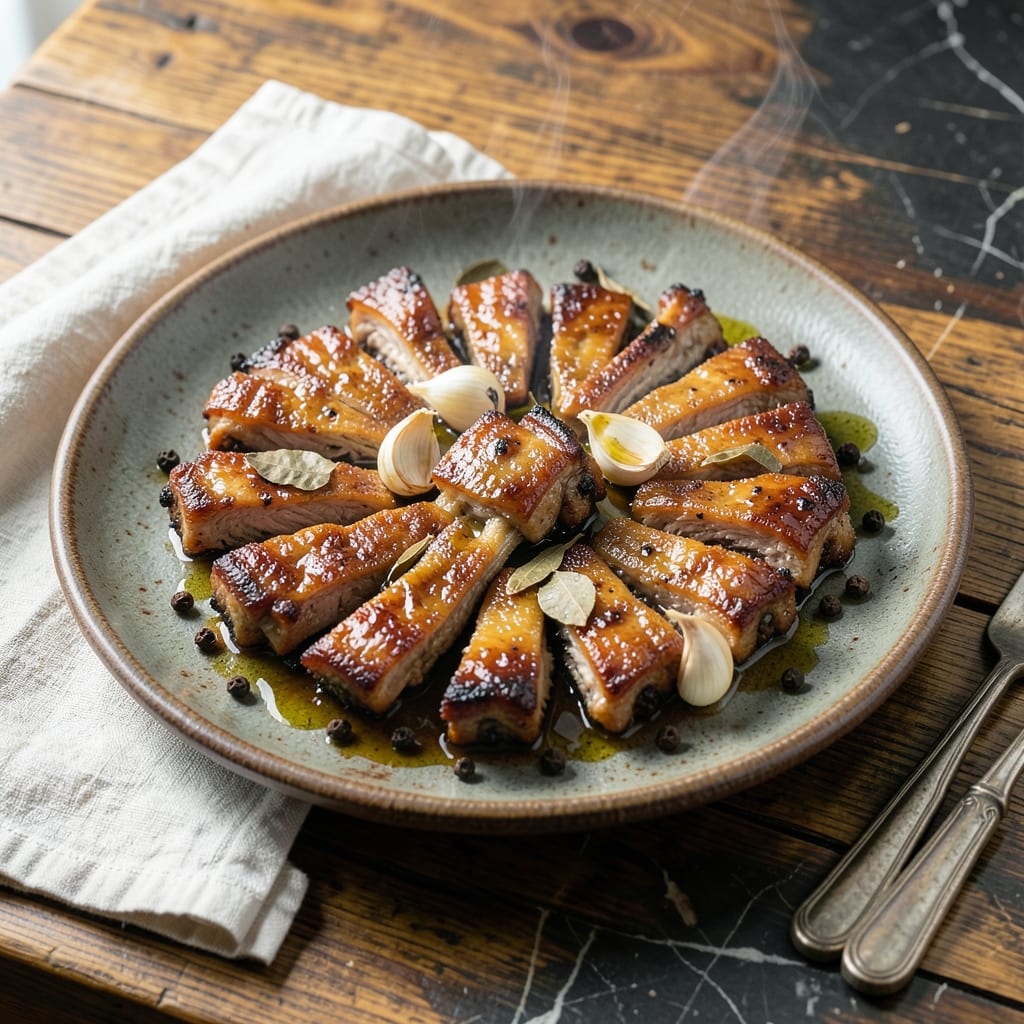
This Filipino-style pork ribs recipe transforms tough cuts into fall-off-the-bone perfection through slow cooking in a tangy adobo glaze. My grandmother taught me that patience is the secret ingredient—no shortcuts here.
The magic happens as the ribs braise in a mixture of vinegar, soy sauce, garlic, and black peppercorns until the meat becomes tender and the sauce reduces to a glossy coating. It’s a technique that never fails to deliver authentic flavor.
What you’ll get is ribs so soft they nearly collapse at the touch, with a rich, savory glaze clinging to every piece. The aroma alone will have everyone gathering around the table before the dish is even served.
Serve with steamed rice to soak up every last drop of the sauce. Here’s how to make it right.
Ingredients for Pork Ribs Filipino Recipe Panlasang Pinoy
Pantry staples plus a trip to the butcher. Everything you need for that adobo glaze magic.
| Ingredient | Amount | Notes |
|---|---|---|
| Pork Baby Back Ribs 🥩 | 2 ½ lb | Cut into individual ribs |
| White Vinegar 💧 | 1 cup | For adobo tang |
| Soy Sauce 🫒 | ¾ cup | Low-sodium preferred |
| Garlic Cloves 🧄 | 8 cloves | Minced for depth |
| Black Peppercorns 🌶️ | 1 tbsp | Whole or cracked |
| Bay Leaves 🍃 | 3 whole | Dried or fresh |
| Brown Sugar 🍚 | ¼ cup | For glaze balance |
| Onion 🧅 | 1 whole | Yellow, sliced |
| Water 💧 | 1 ½ cups | For braising liquid |
| Salt 🧂 | 1 tsp | To taste |
| Vegetable Oil 🫒 | 2 tbsp | For browning ribs |
| Green Onions 🧅 | ½ cup | Chopped, for garnish |
The ribs are the star here. Baby back ribs give you that perfect meat-to-bone ratio, but spare ribs work too (just trim any excess fat). Most butchers will cut them into individual ribs for you—Costco has great pre-cut options if you’re short on time. Look for ribs with good marbling; that fat renders down into pure flavor during the long braise.
No white vinegar? Apple cider vinegar adds a nice depth, but keep the amount the same. Low-sodium soy sauce is ideal since the sauce reduces, but regular works in a pinch (just go light on the added salt). Black peppercorns can be swapped with ground black pepper at half the amount. If you’re out of bay leaves, a pinch of dried thyme gets you close.
This dish actually gets better overnight. Refrigerates for 4-5 days and freezes beautifully for 3 months. The sauce thickens as it cools, so reheat with a splash of water if needed. Always serve with extra steamed rice—it’s non-negotiable for soaking up that glaze.
Why You’ll Love This Recipe
- Minimal Effort: I just toss the ribs with vinegar, soy sauce, garlic, and peppercorns, then let the oven do the work.
- Tangy & Savory: The vinegar cuts through the richness while the soy sauce and garlic pack a serious flavor punch.
- Crowd Pleaser: Honestly, it’s the dish I bring to potlucks—everyone always asks for the recipe.
- Budget Stretch: One slab of ribs feeds four, and leftovers taste even better the next day.
Step-by-Step Instructions for Adobo-Glazed Fall-Off-The-Bone Ribs
Here’s my tried-and-true method for ribs that are sticky, tangy, and impossibly tender.
Step 1: Sear the Ribs for Deep Flavor
Heat the 2 tbsp vegetable oil in a large pot over medium-high heat. Pat the 2.5 lb pork baby back ribs dry with paper towels, then season lightly with the 1 tsp salt. Working in batches if needed, sear the ribs until deeply browned on all sides—about 3-4 minutes per side.
This step builds a flavor foundation that’ll make your adobo sauce taste even richer. Don’t rush it; you want a good crust. Transfer the ribs to a plate and set aside.
Step 2: Build the Adobo Braising Liquid
In the same pot, add the sliced 1 whole onion and cook for 2 minutes until softened. Stir in the minced 8 cloves garlic cloves, 1 tbsp black peppercorns, and 3 whole bay leaves, cooking for another 30 seconds until fragrant.
Pour in the 1 cup white vinegar, 0.75 cup soy sauce, 0.25 cup brown sugar, and 1.5 cups water. Bring to a simmer, stirring until the sugar dissolves. This is where the magic happens—the tangy, salty, slightly sweet base of classic Filipino adobo.
Step 3: Braise Until Fork-Tender
Return the ribs to the pot, ensuring they’re mostly submerged in the liquid. Reduce the heat to low, cover, and let them braise for 1.5 to 2 hours. Check occasionally and add a splash of water if the liquid reduces too much.
You’ll know they’re done when the meat pulls away from the bone with minimal resistance. I like to flip the ribs halfway through for even cooking. The adobo sauce will thicken slightly and coat the ribs beautifully.
Step 4: Reduce the Sauce and Glaze
Once the ribs are tender, carefully remove them from the pot and set aside. Increase the heat to medium-high and let the braising liquid boil for 5-7 minutes until it reduces to a glossy, syrupy consistency.
Return the ribs to the pot and turn them to coat evenly in the thickened adobo glaze. This step ensures every bite is packed with that signature sticky, savory-sweet flavor.
Step 5: Garnish and Serve
Transfer the ribs to a serving platter and drizzle any remaining sauce on top. Sprinkle with the 0.5 cup green onions for a fresh, vibrant finish. Let them rest for 5 minutes before serving—this helps the sauce set slightly for a cleaner presentation.
Serve with steamed rice to soak up every last bit of that incredible adobo sauce. The ribs should be so tender they practically fall off the bone with just a nudge.
Pro Tips For Making Pork Ribs Filipino Recipe Panlasang Pinoy
- Parboil the Ribs: Simmer the ribs in water with a splash of vinegar for 20 minutes first—this removes impurities and keeps the meat tender during the long braise.
- Crush the Peppercorns: Lightly crush the black peppercorns before adding them; it releases more flavor than whole ones, and you’ll taste the difference in the sauce.
- Don’t Skip the Vinegar: I learned this the hard way—white vinegar cuts through the richness and balances the soy sauce, so use the full amount even if it smells strong at first.
- Braise Low and Slow: After browning, drop the heat to low and let it simmer covered for at least an hour—rushing this step leaves the ribs tough and the sauce thin.
Storing and Reheating Leftovers
Refrigerator Storage
Let your ribs cool completely before storing. Transfer them with their adobo sauce into airtight containers and refrigerate for up to 4-5 days. The flavors deepen as they rest, making leftovers even more delicious. ❄️
Freezer Storage
These ribs freeze beautifully for up to 3 months. I recommend using quart-sized freezer bags—lay them flat to save space. Leave 1 inch of headspace for expansion and squeeze out excess air to prevent freezer burn.
Stovetop Reheating
This is my preferred method. Place ribs and sauce in a pot over medium-low heat for 10-15 minutes, stirring occasionally. Add a splash of water if the sauce is too thick. The ribs will taste freshly made. 🔥
Microwave Reheating
For quick meals, cover ribs with a damp paper towel and microwave on 70% power for 2-3 minutes. Stir and continue in 1-minute intervals until heated through to 165°F.
Oven Reheating
Preheat oven to 300°F. Place ribs in a baking dish with a splash of water, cover with foil, and heat for 15-20 minutes. This method keeps the meat incredibly tender.
Serving Leftovers
Always reheat gently to preserve the fall-off-the-bone texture. Serve with fresh steamed rice to soak up the reheated adobo sauce. Leftovers taste just as rich as the original meal.
Nutrition Facts
Frequently Asked Questions
Can I use spare ribs instead of baby back?
Yes, spare ribs work fine but may need an extra 30 minutes of braising. Baby back ribs are more tender and cook faster, but spare ribs have more marbling for flavor.
What if my sauce is too thin?
Simmer uncovered over medium-high heat for 5-7 minutes to reduce. For a quicker fix, mix 1 tsp cornstarch with cold water and stir into the sauce.
Can I make this in a slow cooker?
Brown ribs first, then cook on low for 6-7 hours or high for 3-4 hours. Transfer to a pot to reduce the sauce afterward.
Why did my ribs turn out tough?
Undercooked or boiled too vigorously. Braise at a gentle simmer for 1.5-2 hours until meat pulls away from the bone. Patience is key!

- Potato Chip Cookie Recipe With Pecans: Buttery Crunch Meets Nutty Richness - October 30, 2026
- Potato Patty Recipe No Egg: Crispy Edges Without the Binder - October 30, 2026
- Paula Deen’s Potato Chip Cookies Recipe: Salty-Sweet Crunch in Every Bite - October 30, 2026