
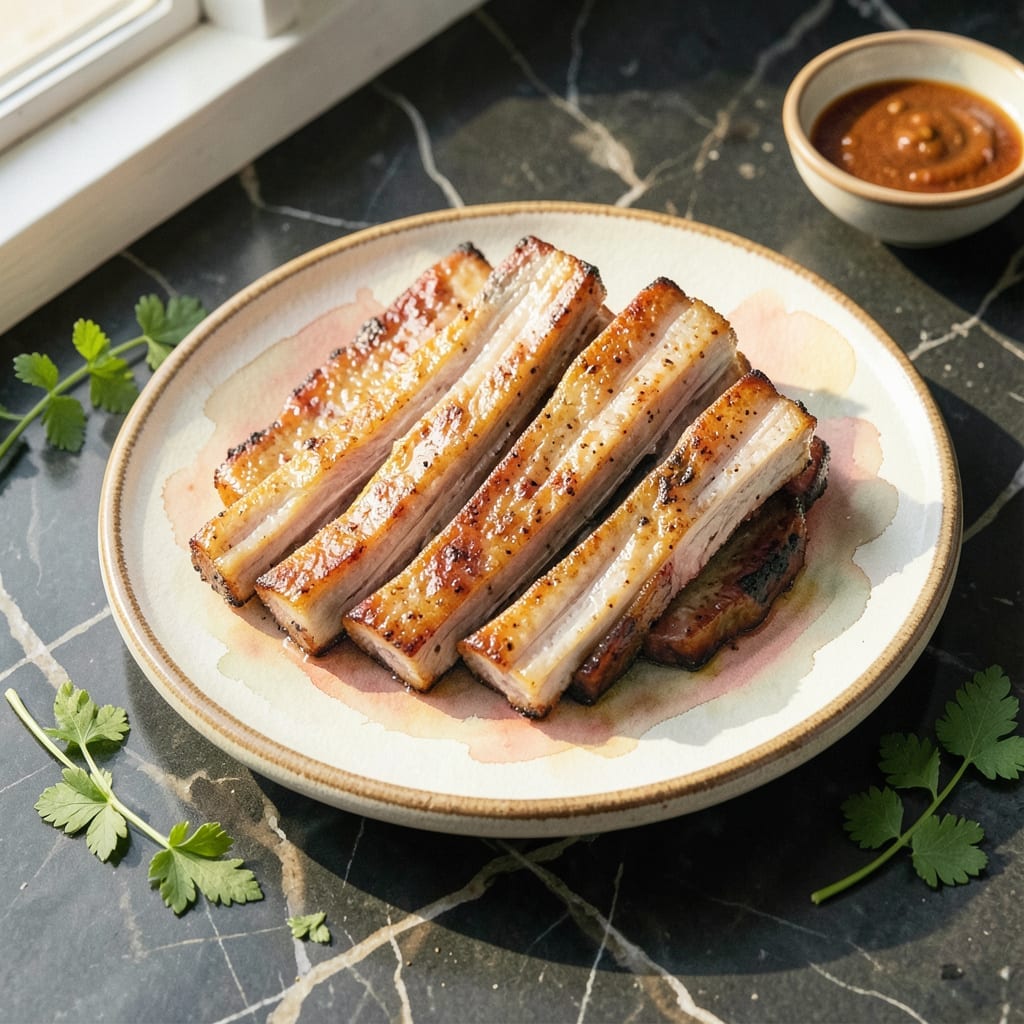
This dry-rubbed pork ribs recipe delivers tender, smoky perfection without a drop of BBQ sauce. A carefully balanced spice blend creates a flavorful crust that locks in juices.
The slow cooking process transforms tough ribs into fall-off-the-bone tender meat with a robust, aromatic bark. This method highlights the pork’s natural flavor while adding depth through spices.
Ingredients for Pork Ribs Recipe Without Bbq Sauce
Pantry spices and ribs transform into smoky, fall-off-the-bone perfection with this dry rub.
| Ingredient | Amount | Notes |
|---|---|---|
| Pork Baby Back Ribs 🥩 | 2 ½ lb | Rack trimmed of membrane |
| Brown Sugar 🍚 | ¼ cup | Light or dark variety |
| Paprika 🌶️ | 2 tbsp | Sweet or smoked variety |
| Garlic Powder 🧄 | 1 tbsp | Not garlic salt |
| Onion Powder 🧅 | 1 tbsp | Freshly ground preferred |
| Ground Black Pepper 🌶️ | 1 tbsp | Coarsely ground for texture |
| Kosher Salt 🧂 | 1 tbsp | Diamond Crystal preferred |
| Chili Powder 🌶️ | 1 tbsp | Mild or hot variety |
| Ground Cumin 🌿 | 1 tsp | Toasted for deeper flavor |
| Dried Oregano 🍃 | 1 tsp | Mexican oregano if available |
| Cayenne Pepper 🔥 | ½ tsp | Adjust for heat preference |
| Yellow Mustard 🟡 | 2 tbsp | For binder in rub |
| Apple Cider Vinegar 🍏 | 1 tbsp | Balances sweetness in rub |
The pork ribs are the foundation—opt for baby back ribs for their tenderness and even cooking. Costco or Sam’s Club offer quality pre-trimmed racks at a good value. Look for ribs with consistent marbling and avoid those with excessive fat. The membrane on the bone side must be removed (a butter knife and paper towel make this easy) for the rub to penetrate properly.
No brown sugar? Coconut sugar at equal parts works, though the flavor profile shifts slightly. Missing a spice? Cajun seasoning at half the quantity can substitute for multiple blend components. The yellow mustard in the rub isn’t for flavor—it’s a binder (Dijon works too). For less heat, omit the cayenne entirely or replace with smoked paprika.
The dry rub keeps in an airtight container for 6 months. Ribs should be cooked immediately after applying the rub for best bark formation. Leftovers? They reheat beautifully wrapped in foil at 300°F for 20 minutes.
Why You’ll Love This Recipe
- I’ll be real: this is my go-to for busy Tuesdays when I need something solid without the fuss.
- Minimal Effort: I just mix the brown sugar and spices, rub, and let the oven do the work. No fancy techniques here.
- Sweet Heat: The brown sugar caramelizes while paprika adds a subtle kick that’s ridiculously good.
- Weeknight Hero: I’ll be real: this is my go-to for busy Tuesdays when I need something solid without the fuss.
Step-by-Step Instructions for Dry-Rubbed Pork Ribs
Here is the method to achieve fall-off-the-bone tenderness with a bold dry rub.
Step 1: Prepare and Season the Ribs
Begin by removing the thin membrane from the bone side of the 2.5 lb Pork Baby Back Ribs. Slide your finger under the membrane at one end, then grip it with a paper towel for better traction and pull it off in one piece. This step ensures the rub penetrates the meat directly.
In a bowl, combine 0.25 cup Brown Sugar, 2 tbsp Paprika, 1 tbsp Garlic Powder, 1 tbsp Onion Powder, 1 tbsp Ground Black Pepper, 1 tbsp Kosher Salt, 1 tbsp Chili Powder, 1 tsp Ground Cumin, 1 tsp Dried Oregano, and 0.5 tsp Cayenne Pepper. Stir until the spices are evenly distributed.
Brush the rack lightly with 2 tbsp Yellow Mustard and 1 tbsp Apple Cider Vinegar—this acts as a binder for the rub. Coat the ribs generously on all sides with the spice mixture, pressing it in firmly. Let the ribs sit at room temperature for 30 minutes to allow the seasoning to adhere.
Step 2: Set Up the Smoker or Grill
Preheat your smoker or grill to 225-250°F using indirect heat. If using a charcoal grill, bank the coals to one side and place a water pan on the opposite side to maintain moisture. For wood, I recommend hickory or apple for a complementary flavor that won’t overpower the rub.
Once the temperature stabilizes, add a few chunks of smoking wood to produce thin, blue smoke. Avoid thick white smoke, as it can impart a bitter taste. The goal is a consistent, low temperature that will cook the ribs slowly and evenly.
Step 3: Smoke the Ribs Low and Slow
Place the ribs bone-side down on the grill grates, away from direct heat. Close the lid and maintain the temperature between 225-250°F for the duration of the cook. Resist the urge to peek frequently—every time you open the lid, you lose heat and smoke, extending the cooking time.
Smoke the ribs undisturbed for 3 hours. After this time, check the color—they should have a deep reddish-brown hue from the rub, known as the “bark.” If the ribs are darkening too quickly, wrap them loosely in aluminum foil to prevent burning.
Step 4: Wrap and Finish
After 3 hours, transfer the ribs to a large sheet of heavy-duty aluminum foil. Wrap them tightly, adding 2 tbsp Apple Cider Vinegar or a splash of water before sealing to braise the meat. This step, called the “Texas crutch,” helps tenderize the ribs and speeds up the cooking process.
Return the wrapped ribs to the smoker or grill and continue cooking for another 1.5-2 hours. The ribs are done when the internal temperature reaches 195-203°F and the meat pulls back from the bones by about ¼ inch.
Step 5: Rest and Serve
Carefully unwrap the ribs and transfer them to a cutting board. Let them rest for 10-15 minutes to allow the juices to redistribute. This step ensures the meat stays moist and tender when sliced.
Cut the ribs between the bones into individual portions. The meat should be so tender that it nearly falls off the bone with minimal pressure. Serve immediately, garnished with any accumulated juices from the foil for extra flavor.
Pro Tips For Making Pork Ribs Recipe Without Bbq Sauce
- Remove the Membrane: Peeling off that tough silver skin on the bone side is non-negotiable—your rub won’t penetrate it, and the ribs will be chewy instead of tender.
- Dry Rub First: Coat the ribs with your brown sugar and spice mix at least 30 minutes before cooking—this gives the flavors time to stick and start working their magic.
- Wrap in Foil: After the first hour of cooking, tightly wrap the ribs in foil with a splash of liquid (water or apple juice works) to steam them and lock in moisture.
- Rest Before Serving: Let the ribs sit wrapped in foil for 10-15 minutes after cooking—this keeps the juices inside where they belong instead of all over your cutting board.
Pro Cooking Tips for This Recipe
Temperature Control
Maintaining 225-250°F is non-negotiable for tender ribs. I swear by my ThermoWorks Smoke thermometer—it’s saved me from countless temperature swings. Place probes at grate level for accuracy. 🌡️
Smoke Management
Use 2-3 small wood chunks (hickory or apple) for consistent thin blue smoke. White smoke means too much wood or poor airflow. Soak chunks for 30 minutes if your smoker runs hot.
The Texas Crutch
Wrap ribs tightly in foil with 2 tbsp apple cider vinegar after 3 hours. This steams the meat, shaving 1-2 hours off cook time. I use Reynolds heavy-duty foil—regular tears too easily.
Doneness Test
Ribs are ready at 195-203°F internal, when meat pulls back ¼ inch from bones. The toothpick test works too—it should slide in like butter with no resistance.
Resting Time
Let ribs rest 10-15 minutes wrapped in towels in a cooler. This keeps them hot while juices redistribute. Skipping this step means dry ribs, no matter how perfect the cook was. 💡
Nutrition Facts
Frequently Asked Questions
Can I use a different type of ribs?
Yes, spare ribs or St. Louis-style ribs work too. They need 1-2 hours more cooking time due to their size. Baby back ribs are more tender but less meaty.
Why rest the ribs before serving?
Resting for 10-15 minutes lets juices redistribute through the meat. Slicing too soon causes them to dry out. The foil wrap helps retain heat during this time.
How do I know when they’re done?
The meat should pull back from the bones by ¼ inch and reach 195-203°F internally. A toothpick should slide in easily with no resistance.

- BBQ Sausage Recipe Oven: Smoky Depth Without the Grill - September 28, 2026
- BBQ Chicken Bowl Recipe Rice: Smoky Sweetness Over Fluffy Grains - September 28, 2026
- Beef Cutlet Recipe Ideas: Crispy Breaded Patties With Bold Seasonings - September 28, 2026