
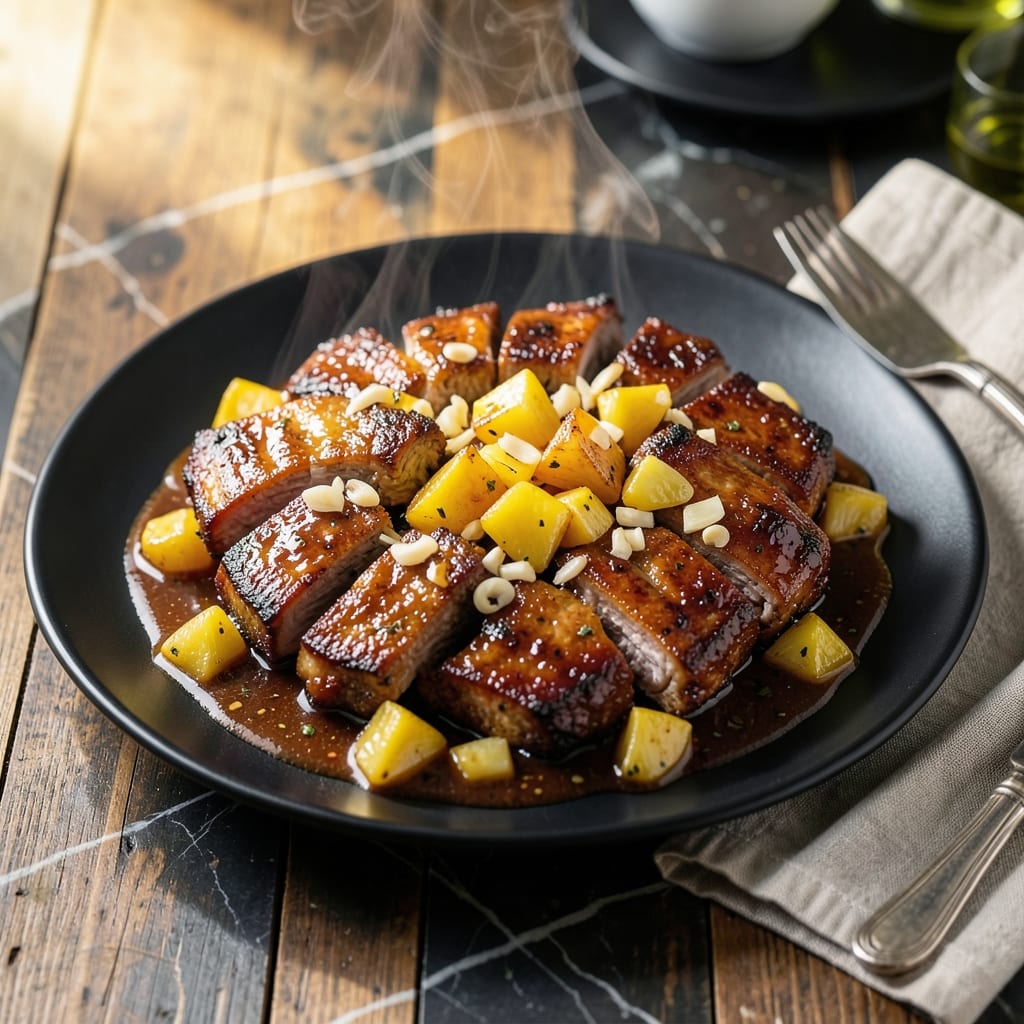
This Filipino-style pork rib dish balances sweet and tangy flavors through a slow braise that transforms tough cuts into tender perfection.
I developed this recipe after tasting a similar version at a Portland food festival, adapting it for home kitchens with simple ingredients. The pineapple adds natural sweetness while tenderizing the meat.
The ribs absorb the sauce as they cook, creating a glossy finish that clings to every bite. One pot, 2 hours of mostly hands-off cooking, and you’ll have a dish that tastes like it came from a Filipino grandmother’s kitchen.
Serve with steamed rice to soak up every drop of the rich, pineapple-infused sauce.
Ingredients for Pork Ribs with Pineapple Recipe Panlasang Pinoy
Simple ingredients transform pork ribs into a Filipino-style braised masterpiece with pineapple sweetness.
| Ingredient | Amount | Notes |
|---|---|---|
| Pork Ribs 🍖 | 2 ½ lb | Baby back or spare ribs, cut into individual pieces |
| Pineapple Chunks 🍍 | 2 cups | Fresh or canned, juice reserved |
| Soy Sauce 🥫 | ½ cup | Low-sodium preferred for balance |
| White Vinegar 🍶 | ¼ cup | Or substitute apple cider vinegar |
| Brown Sugar 🍚 | ¼ cup | Packed, light or dark |
| Garlic Cloves 🧄 | 6 cloves | Minced for maximum flavor infusion |
| Yellow Onion 🧅 | 1 whole | Medium-sized, thinly sliced |
| Bay Leaves 🍃 | 2 pieces | Dried, for aromatic depth |
| Black Peppercorns 🌶️ | 1 tsp | Whole or freshly ground |
| Ground Black Pepper 🌶️ | ½ tsp | For finishing the braised ribs |
| Vegetable Oil 🫒 | 2 tbsp | For searing ribs initially |
| Water 💧 | 1 cup | To adjust sauce consistency |
| Green Onions 🧅 | 4 whole | Thinly sliced for garnish |
The pork ribs are the foundation—baby back ribs offer tender meat, while spare ribs provide richer flavor. Source from Costco for bulk savings or your local butcher for custom cuts. Look for ribs with good marbling (the fat streaks), as this melts during the long braise, creating that signature tenderness. The pineapple should be ripe but firm (canned works in a pinch, but fresh has better texture).
No fresh pineapple? Canned pineapple chunks in juice work perfectly—just reserve the juice for the braising liquid. If you’re out of brown sugar, coconut sugar or white sugar can substitute, though the molasses notes in brown sugar add depth. For vinegar, apple cider vinegar at the same amount maintains the tang. The soy sauce can be tamari for gluten-free needs, but the flavor profile will be slightly different.
This braise improves overnight as flavors meld. Store leftovers in an airtight container for 4-5 days in the fridge or freeze for 3 months. Reheat gently to preserve the sauce’s glossy texture. The ribs taste even better the next day (worth the wait).
Why You’ll Love This Recipe
- One Pan Wonder: I just toss the ribs, pineapple, soy sauce, and vinegar in a pan—no fancy prep, no mess.
- Sweet-Tangy Magic: That brown sugar caramelizes with the vinegar while the pineapple soaks up the sauce. Ridiculously good.
- Feeds a Crowd: I made this for my in-laws last Sunday and everyone went back for seconds. (Yes, even the picky nephew)
- Budget Stretch: Pork ribs and canned pineapple are cheap, and this makes enough for leftovers I actually look forward to.
Step-by-Step Instructions for Pork Ribs With Pineapple
This method delivers tender ribs with a balanced sweet-tangy sauce every time.
Step 1: Sear the Pork Ribs
Heat the 2 tbsp vegetable oil in a large pot over medium-high heat. When it shimmers, add the 2.5 lb pork ribs and sear for 3-4 minutes per side until deeply browned. Work in batches if needed to avoid crowding the pot.
This initial sear develops a rich fond that will deepen the flavor of your sauce later. The ribs should release easily from the pot when properly browned—don’t force them.
Step 2: Build the Aromatic Base
In the same pot, add the 1 whole yellow onion and sauté for 2-3 minutes until softened. Add the 6 cloves garlic cloves and cook for 30 seconds until fragrant, stirring constantly to prevent burning.
Incorporate the 0.5 cup soy sauce, 0.25 cup white vinegar, 0.25 cup brown sugar, 2 pieces bay leaves, and 1 tsp black peppercorns. Stir well to dissolve the sugar and combine all the flavors.
Step 3: Braise the Ribs Until Tender
Return all the ribs to the pot along with the 2 cups pineapple chunks and 1 cup water. Bring to a boil, then reduce heat to low, cover, and simmer for 1 to 1.5 hours until the ribs are fork-tender.
Check occasionally and add a splash of water if the liquid reduces too quickly. The pineapple will soften and infuse the sauce with natural sweetness, balancing the tangy vinegar and savory soy.
Step 4: Reduce the Sauce and Finish
Once the ribs are tender, remove the lid and increase heat to medium. Simmer for an additional 10-15 minutes until the sauce thickens slightly and coats the back of a spoon.
Discard the bay leaves and adjust the seasoning if needed. The sauce should have a glossy, syrupy consistency that clings beautifully to the ribs. Sprinkle with the 0.5 tsp ground black pepper for a final layer of flavor.
Step 5: Garnish and Serve
Transfer the ribs and sauce to a serving platter. Garnish with the 4 whole green onions, thinly sliced, for a fresh, vibrant finish. Serve immediately with steamed rice to soak up every bit of the rich, flavorful sauce.
Pro Tips For Making Pork Ribs With Pineapple Recipe Panlasang Pinoy
- Sear Ribs First: Brown the pork ribs in a hot pan before simmering—this builds a rich crust and deepens the flavor, especially when paired with the sweet pineapple later.
- Use Fresh Pineapple: Canned pineapple works in a pinch, but fresh chunks add a brighter, sharper tang that balances the soy sauce and brown sugar better.
- Simmer, Don’t Boil: Keep the sauce at a gentle simmer to avoid toughening the ribs; I learned this the hard way after overcooking a batch into chewy disappointment.
- Reduce the Sauce: After cooking, let the sauce reduce for 5-10 minutes—it thickens into a glossy glaze that clings to the ribs instead of pooling at the bottom.
Regional Styles of This Recipe
Cebuano Style
In Cebu, they often add 1 tbsp calamansi juice for extra tang. The citrus brightens the pineapple’s sweetness. I love how this version cuts through the richness of the pork ribs. 🌟
Pampanga Variation
Pampanga’s version includes 2 tbsp banana ketchup for a unique sweet-tangy depth. The sauce takes on a beautiful reddish hue. It’s a nod to the region’s love for bold, complex flavors.
Visayan Approach
Visayan cooks often use coconut vinegar instead of white vinegar. The slightly nutty undertone pairs wonderfully with the pork. I first tried this at a Portland Filipino pop-up.
Tagalog Classic
The Tagalog version is closest to what we’re making today. They often add 1 tbsp patis (fish sauce) for umami depth. The fish sauce enhances all the other flavors without being noticeable.
I’ve found Red Boat fish sauce works particularly well in this dish.
Mindanao Spiced
In Mindanao, they might add 1 tsp ground turmeric for color and earthiness. The golden hue is stunning against the dark soy sauce. This variation reflects the region’s spice trade history.
Nutrition Facts
Frequently Asked Questions
Can I use canned pineapple instead of fresh?
Use 2 cups canned pineapple chunks and reserve the juice for extra flavor. It works just as well and saves prep time.
How do I know when the ribs are done?
They’re ready when the meat falls off the bone with a fork. After 1-1.5 hours of braising, test one piece. If it resists, cook for 15-20 minutes more.
Can I make this in a slow cooker?
Yes! Sear the ribs first, then transfer everything to a slow cooker. Cook on low for 6-7 hours or high for 3-4 hours until tender.
What if my sauce is too thin?
Uncover and simmer on medium heat for 10-15 minutes to reduce. Stir occasionally to prevent sticking. The sauce should coat the back of a spoon.

- Potato Patty Recipe No Egg: Crispy Edges Without the Binder - October 30, 2026
- Paula Deen’s Potato Chip Cookies Recipe: Salty-Sweet Crunch in Every Bite - October 30, 2026
- Potato Gnocchi Recipe Ideas: Pillowy Soft Dumplings With Rustic Charm - October 30, 2026