
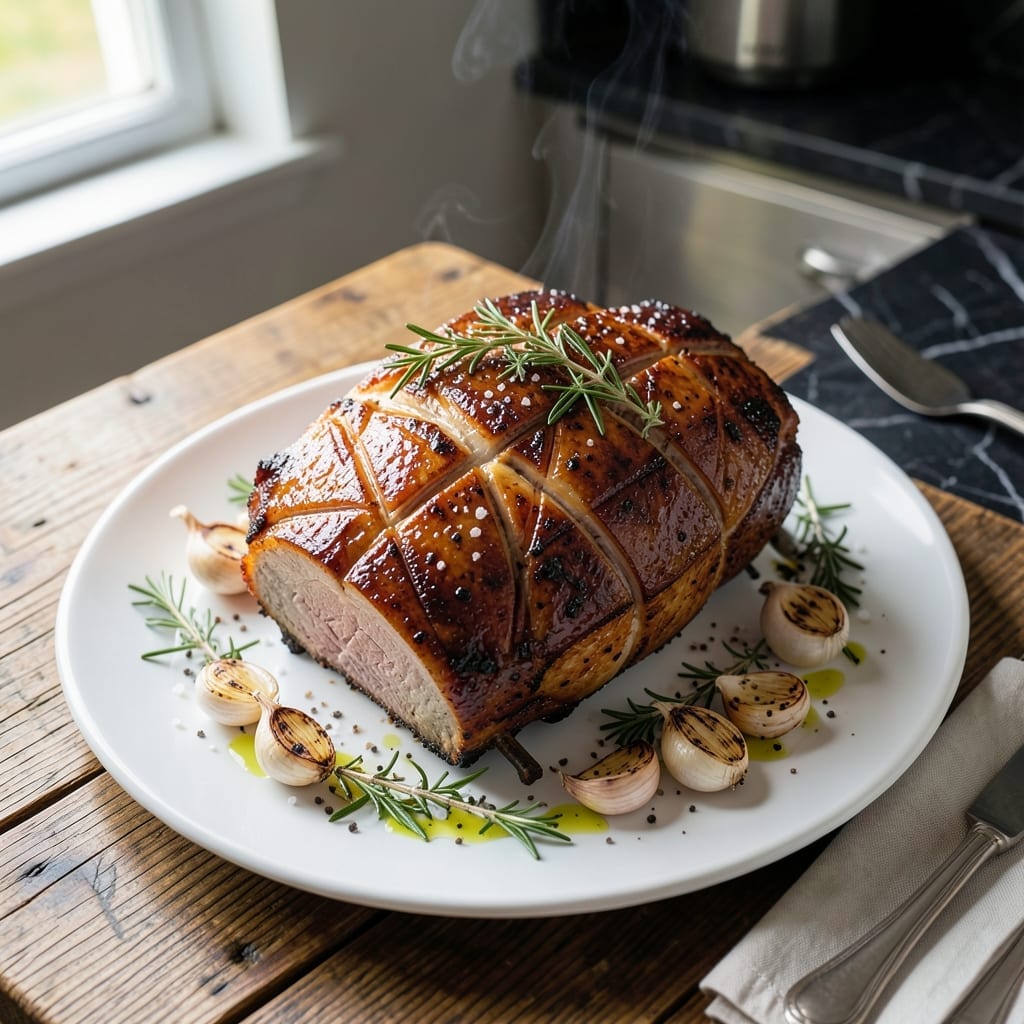
I developed this rotisserie method after years of testing in my small Boston kitchen, perfecting the balance between crispy exterior and juicy interior. The key is a herb crust that forms a flavorful bark as the pork spins slowly over indirect heat.
This approach uses simple ingredients but demands precise technique—securing the roast properly on the spit and maintaining consistent temperature are non-negotiable. The rotation ensures even cooking and self-basting for maximum moisture retention.
What emerges is a centerpiece worthy of any gathering: herb-crusted pork with a golden exterior and tender meat throughout. The rotisserie method locks in natural juices while allowing fat to render gradually.
Serve with roasted vegetables or crusty bread to soak up the flavorful drippings. The process takes patience but delivers professional results.
Ingredients for Pork Roast Recipe Rotisserie
A few fresh herbs, a bold pork shoulder, and patience produce this showstopping rotisserie centerpiece.
| Ingredient | Amount | Notes |
|---|---|---|
| Pork Shoulder Roast 🐖 | 3 lb | Bone-in, skin-on preferred |
| Fresh Rosemary 🌿 | 2 tbsp | Finely chopped, stems removed |
| Fresh Thyme Leaves 🍃 | 2 tbsp | Stems discarded, loosely packed |
| Garlic Cloves 🧄 | 6 cloves | Minced to paste consistency |
| Coarse Kosher Salt 🧂 | 2 tbsp | Diamond Crystal preferred |
| Freshly Ground Black Pepper 🌶️ | 1 tbsp | Coarse grind for texture |
| Olive Oil 🫒 | ¼ cup | Extra-virgin for herb crust |
| Dijon Mustard 🟡 | 2 tbsp | Smooth, not whole grain |
| Red Wine Vinegar 🍷 | 1 tbsp | For acidity balance |
| Dried Oregano 🌿 | 1 tsp | Mediterranean variety preferred |
| Brown Sugar 🟤 | 1 tsp | Light or dark, for caramelization |
| Lemon Zest 🍋 | 1 tsp | From 1 medium lemon |
Optimal quality requires a well-marbled pork shoulder roast—bone-in and skin-on deliver the best bark. Source from Whole Foods or a trusted local butcher for consistent fat distribution. The fresh rosemary and thyme must be vibrant green with no wilting; Costco often carries excellent pre-packaged options. Diamond Crystal kosher salt is the professional standard for even seasoning.
Substitute fresh sage for rosemary if needed, or use dried herbs at one-third the quantity. No Dijon? Whole-grain mustard works but strain seeds for a smoother crust. Red wine vinegar can be replaced with apple cider vinegar. For the pork, pork loin may be used but will be less juicy—reduce cooking time by 25%.
The herb crust can be prepped 1 day ahead and refrigerated. Store the raw pork in its original packaging for up to 3 days in the coldest part of the fridge. Leftovers keep for 4-5 days or freeze for 3 months with minimal quality loss.
Why You’ll Love This Recipe
- Set It and Forget: I just season the pork shoulder with rosemary, thyme, garlic, and salt, then let the rotisserie do all the work.
- Herb-Crusted Perfection: The garlic and fresh herbs form this insane crust that makes every bite ridicuously good.
- Feeds a Crowd: One pork shoulder serves my whole family with leftovers for sandwiches the next day.
- Budget Stretch: Pork shoulder is cheap, and this method turns it into something that tastes fancy without the price tag.
Step-by-Step Instructions for Herb-Crusted Rotisserie Pork Roast
Master the spit-roasting technique to achieve perfectly crispy skin and tender, flavorful meat.
Prep the Pork Shoulder for Even Cooking
Pat the 3 lb Pork Shoulder Roast thoroughly dry with paper towels to ensure maximum crispiness. Trim any excess fat, leaving about ¼ inch for flavor and moisture. Score the fat cap in a crosshatch pattern at ½-inch intervals—this allows the herb marinade to penetrate deeply and helps render the fat evenly.
This step is crucial for even cooking and that signature rotisserie texture. The scoring also creates more surface area for the herb crust to adhere, giving you that beautiful, flavorful exterior everyone expects from a spit-roasted dish.
Create the Herb Marinade and Apply Generously
In a bowl, combine the 0.25 cup Olive Oil, 2 tbsp Dijon Mustard, 1 tbsp Red Wine Vinegar, 1 tsp Brown Sugar, and 1 tsp Lemon Zest. Whisk until the brown sugar dissolves. This emulsion forms the base of your flavor profile.
Add the 2 tbsp Fresh Rosemary, 2 tbsp Fresh Thyme Leaves, 1 tsp Dried Oregano, 6 cloves minced Garlic Cloves, 2 tbsp Coarse Kosher Salt, and 1 tbsp Freshly Ground Black Pepper to the mixture. Rub this herb paste aggressively into every crevice of the scored pork, including the scored fat cap. The marinade should coat the roast completely.
Secure the Roast on the Rotisserie Spit
Thread the pork shoulder onto the rotisserie spit, ensuring it’s centered and balanced. Use the spit forks to secure it tightly—this prevents the roast from spinning unevenly, which can lead to uneven cooking. The pork should be snug but not compressed, allowing heat and smoke to circulate around it.
Place the spit on your rotisserie setup and cover with the grill lid. Preheat your grill to 325°F for indirect cooking. This temperature allows the pork to cook slowly, rendering the fat while keeping the meat moist and tender throughout the long cooking process.
Rotisserie Cook to Perfection
Cook the pork shoulder for approximately 3 to 3.5 hours, or until the internal temperature reaches 195-203°F in the thickest part of the meat. The pork should rotate continuously at about 1-2 RPM for even exposure to heat.
You’ll know it’s ready when the internal temperature stabilizes and the meat pulls apart easily with a fork. The exterior should be a deep mahogany color with a crispy, herb-infused crust. Avoid opening the grill frequently—each peek can add 10-15 minutes to your cooking time.
Rest and Serve
Once the pork reaches the desired temperature, carefully remove it from the spit and transfer to a cutting board. Tent loosely with foil and let it rest for 20-30 minutes. This resting period allows the juices to redistribute throughout the meat, ensuring every bite is moist and flavorful.
Use two forks to shred the pork into chunks, discarding any large fat pieces. The meat should pull apart effortlessly, with a beautiful crust on the exterior. Serve immediately while still warm, allowing your guests to experience the full depth of the herb crust and tender interior.
Pro Tips For Making Pork Roast Recipe Rotisserie
- Score the Fat: Use a sharp knife to cut 1/4-inch slits in the pork shoulder fat cap—this lets the rosemary, thyme, and garlic penetrate deep while rendering the fat crispy.
- Salt Overnight: I learned this the hard way—rub the pork with coarse kosher salt at least 12 hours before cooking, so the seasoning actually reaches the center, not just the surface.
- Tie It Tight: Secure the roast with butcher’s twine every 2 inches to keep it compact on the rotisserie; otherwise, it spins unevenly and dries out in spots.
- Rest Under Foil: After pulling it off the heat, tent the pork with foil and let it rest 20 minutes—skipping this makes the juices run all over the cutting board, not your plate.
Health Benefits of These Flavors
Protein Powerhouse
This creation delivers 50 grams of protein per serving from the 3 lb pork shoulder, supporting muscle growth and repair. The slow rotisserie method preserves all those valuable amino acids that your body needs daily. I notice I feel more satisfied after meals with this protein-rich centerpiece. 💪
Rich in B Vitamins
Pork is packed with B vitamins, especially B1 and B6, which are crucial for energy metabolism. A serving provides about 30% of your daily thiamine needs, helping convert food into usable energy. The rotisserie method locks in these water-soluble nutrients.
Iron Boost
You’ll get a solid dose of heme iron from this dish—about 15% of daily needs per serving. This is the most easily absorbed form of iron, which helps prevent fatigue and supports red blood cell production. The vitamin C from lemon zest enhances absorption.
Zinc for Immunity
Pork shoulder contains zinc, a mineral vital for immune function and wound healing. One serving provides roughly 20% of your daily requirement. I’ve found that including this in my meal rotation helps me stay healthy during Boston winters.
Healthy Fats
While pork contains saturated fat, it also provides monounsaturated fats similar to those in olive oil. The ¼ cup olive oil in the marinade adds heart-healthy fats that help lower bad cholesterol. The combination creates a balanced fat profile. 💛
Low Carb Option
With only 1 tsp brown sugar in the entire recipe, this remains a low-carb option at about 2 grams per serving. Perfect for those watching their carbohydrate intake while still wanting that delicious herb crust flavor.
Nutrition Facts
Frequently Asked Questions
What’s the best pork cut for rotisserie cooking?
Pork shoulder works best due to its marbling and fat content. Bone-in adds flavor, while skin-on creates a crispy exterior. Avoid lean cuts like tenderloin—they dry out on the spit.
How do I prevent the roast from spinning unevenly?
Center the pork on the spit and tighten the forks securely. Use a counterweight if needed to balance the load. Uneven spinning causes hot spots and uneven cooking.
Can I use a gas grill instead of charcoal?
Yes! Maintain 325°F with indirect heat. Gas grills offer more precise temperature control, which is ideal for long cooks. Just avoid direct flames under the meat.
Why rest the pork after cooking?
Resting for 20-30 minutes lets juices redistribute. Slicing too soon causes dry meat. The internal temp also rises 5-10°F during this time.

- Potato Patty Recipe No Egg: Crispy Edges Without the Binder - October 30, 2026
- Paula Deen’s Potato Chip Cookies Recipe: Salty-Sweet Crunch in Every Bite - October 30, 2026
- Potato Gnocchi Recipe Ideas: Pillowy Soft Dumplings With Rustic Charm - October 30, 2026