
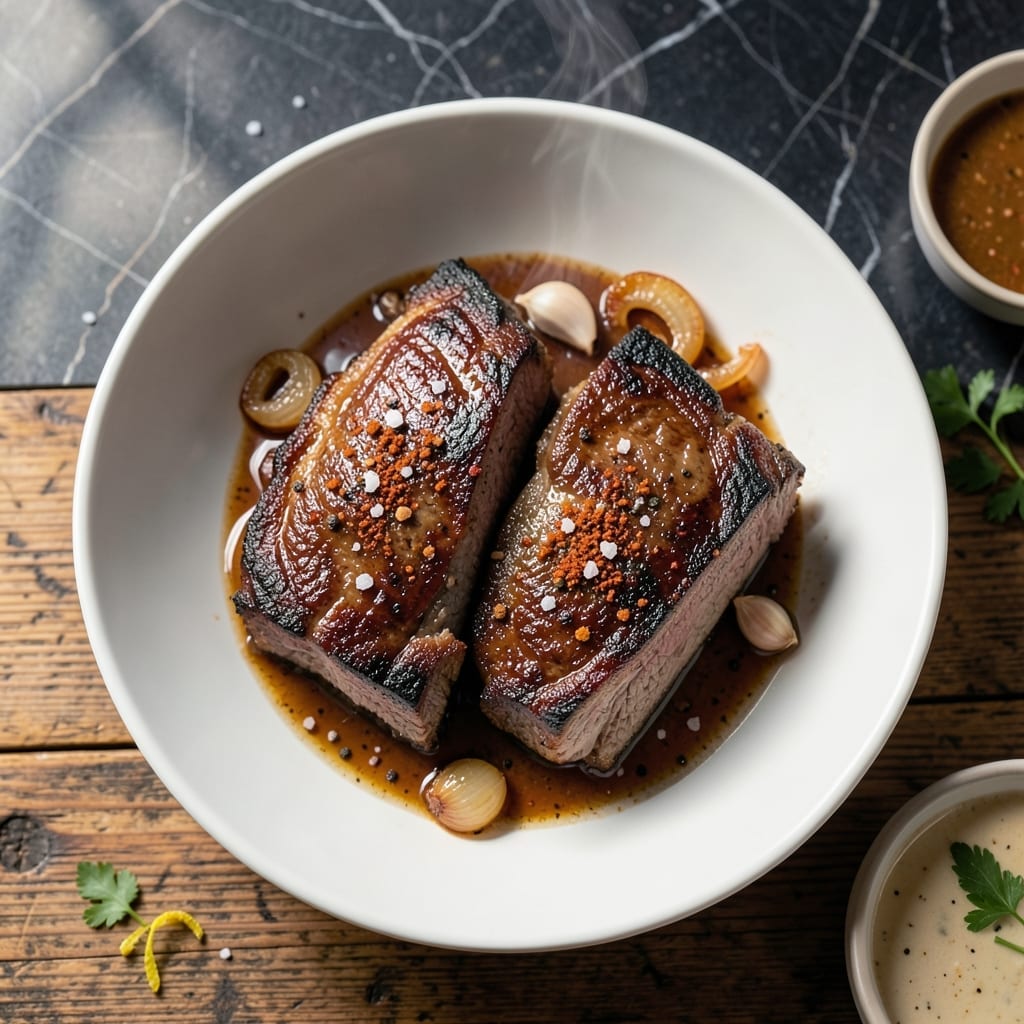
I developed this method after years of experimenting with different cuts and techniques, and it consistently delivers juicy pork with a perfect crust. The secret is in the timing and heat control.
Pork shoulder steaks are naturally tender and flavorful, making them ideal for quick pan-frying. A simple seasoning blend enhances without overpowering the meat’s natural richness.
By the time it’s done, you’ll have a steak with a caramelized exterior and moist interior that rivals any restaurant version. The crust forms a delicious seal that locks in all the natural juices.
Serve with roasted vegetables or mashed potatoes for a complete meal. This technique works for both thick and thin cuts with equal success.
Ingredients for Pork Shoulder Steak Recipe Pan Fry
Pantry staples and one star cut create restaurant-quality steaks at home.
| Ingredient | Amount | Notes |
|---|---|---|
| Pork Shoulder Steaks 🥩 | 1 ½ lb | Bone-in or boneless, 3/4-inch thick |
| Kosher Salt 🧂 | 1 ½ tsp | Diamond Crystal preferred for even seasoning |
| Black Pepper 🌶️ | 1 tsp | Freshly cracked for best flavor |
| Garlic Powder 🧄 | 1 tsp | Not garlic salt for pure flavor |
| Onion Powder 🧅 | 1 tsp | Fine grind for even distribution |
| Smoked Paprika 🌶️ | ½ tsp | Adds depth without heat |
| Olive Oil 🫒 | 2 tbsp | High smoke point for searing |
| Unsalted Butter 🧈 | 1 tbsp | For basting the steaks |
| Fresh Rosemary 🌿 | 2 sprigs | Optional for aromatic finish |
| Fresh Thyme 🍃 | 2 sprigs | Optional for aromatic finish |
| Lemon Wedges 🍋 | 4 pieces | For serving and brightness |
The pork shoulder steaks are key here—look for ones about 3/4-inch thick with good marbling. Costco or Whole Foods usually have the best selection, but any grocery store butcher can cut them to order. Bone-in adds flavor, but boneless cooks faster. Don’t skip the Diamond Crystal kosher salt—its texture adheres better to the meat for that perfect crust.
No pork shoulder? Pork chops work in a pinch but cook faster (reduce time by half). Out of smoked paprika? Regular paprika plus a pinch of cayenne gets you close. Fresh herbs not on hand? Dried rosemary and thyme at one-third the amount works fine. The olive oil can be swapped for avocado oil if you prefer its higher smoke point.
Steaks are best cooked fresh, but you can prep the seasoning blend 24 hours ahead. Leftovers? Slice thin and reheat in a skillet for sandwiches. Keeps well in the fridge for 3-4 days.
Why You’ll Love This Recipe
- One Pan Magic: I love that I only need a skillet and five ingredients to get this on the table.
- That Garlic Kick: Honestly, the garlic and onion powder give it a savory depth that’s ridiculously good.
- Feeds the Crew: Between us, it’s my go-to for busy weeknights when I need to feed everyone fast.
- Budget Friendly: Pork shoulder steaks are cheap, and this stretches to leftovers without feeling like a compromise.
Step-by-Step Instructions for Pork Shoulder Steak Pan Fry
Here’s my tested method for achieving a juicy interior with that coveted golden crust.
Step 1: Season the Steaks Thoroughly
Pat the pork shoulder steaks dry with paper towels—this is crucial for achieving a proper sear. In a small bowl, combine the 1.5 tsp kosher salt, 1 tsp black pepper, 1 tsp garlic powder, 1 tsp onion powder, and 0.5 tsp smoked paprika.
Rub this seasoning mixture evenly over both sides of each steak, pressing it into the meat so it adheres well. The pork should be uniformly coated with a visible layer of spices. Let the seasoned steaks sit at room temperature for 15-20 minutes while you prepare the pan.
Step 2: Sear the Steaks to Golden Perfection
Heat the 2 tbsp olive oil in a heavy skillet over medium-high heat until the oil shimmers and a drop of water sizzles when flicked into the pan. Carefully place the steaks in the pan, leaving space between each one so they sear rather than steam.
Cook undisturbed for 4-5 minutes per side until a deep golden brown crust forms. The edges should look caramelized, and the steaks should release easily from the pan when properly seared. Don’t be tempted to move them around—patience is key for that perfect crust.
Step 3: Baste with Butter and Herbs
Reduce the heat to medium and add the 1 tbsp unsalted butter, 2 sprigs fresh rosemary, and 2 sprigs fresh thyme to the pan. Tilt the pan slightly and use a spoon to baste the steaks with the foaming butter and herb-infused oil for 1-2 minutes.
This basting step adds incredible flavor and helps develop an even more beautiful crust. The aroma of the herbs and butter will be intoxicating—this is when you know you’re doing it right. The internal temperature should reach 145°F for medium doneness.
Step 4: Rest and Serve with Lemon
Transfer the steaks to a cutting board and let them rest for 5-10 minutes before slicing. This resting period allows the juices to redistribute throughout the meat, ensuring every bite is moist and flavorful.
Slice against the grain and serve immediately with the 4 pieces lemon wedges on the side. The bright acidity of the lemon cuts through the richness of the pork beautifully. I always recommend squeezing a little over each serving right before eating to enhance all the flavors.
Pro Tips For Making Pork Shoulder Steak Recipe Pan Fry
- Pat It Dry: I learned this the hard way—blot the steaks thoroughly with paper towels before seasoning, or the moisture will steam them instead of searing. A good sear needs a dry surface.
- Hot Pan First: Crank the heat to medium-high and let the pan get screaming hot before adding the steaks. Sounds obvious, but I used to rush this and ended up with pale, sad meat.
- Don’t Overcrowd: Resist the urge to fit all the steaks in at once—give them space, or they’ll boil in their own juices. Cook in batches if needed; it’s worth the extra few minutes.
- Rest Before Slicing: After pulling the steaks from the pan, let them rest under foil for 5-10 minutes. I skip this when I’m hungry, but the juices stay put instead of running all over the cutting board.
Common Mistakes When Making Great pork shoulder steak recipe pan fry
Skipping the Rest
I can’t stress this enough—cutting the rest time short is the most common mistake. The juices need that full 5-10 minutes to redistribute. Slice too soon, and you’ll watch all that beautiful moisture pool on your cutting board instead of staying in the meat. 💡
Overcrowding the Pan
Your steaks won’t sear properly if they’re fighting for space. Use a pan large enough to give each steak at least 2 inches of breathing room. If needed, cook in batches—it’s worth the extra few minutes for that perfect crust.
Moving the Steaks
Once you place the steaks in the pan, leave them alone. Constant flipping or poking prevents the crust from forming. That golden brown sear only develops when the meat has undisturbed contact with the hot surface for 4-5 minutes.
Wrong Heat Level
Medium-high heat is ideal for searing, but don’t blast it on high. Too hot, and you’ll burn the outside before the inside cooks. If your oil starts smoking excessively, lower the heat slightly. I learned this the hard way with my first few attempts.
Neglecting to Dry
Wet steaks won’t sear—they’ll steam. Always pat them thoroughly dry with paper towels before seasoning. Even a little moisture creates a barrier between the meat and the pan, ruining your chance at that coveted crust.
I still sing the alphabet song while drying, just like Grandma taught me with rice. 🌟
Nutrition Facts
Frequently Asked Questions
What thickness works best for pan-frying?
For even cooking and a perfect crust, aim for steaks about 3/4-inch thick. Thinner cuts may overcook before developing a good sear, while thicker ones might need finishing in the oven.
Can I use a nonstick pan instead of cast iron?
Yes, but cast iron or stainless steel create better sears. Nonstick works in a pinch—just ensure it’s hot enough and avoid metal utensils. The crust won’t be as deep but will still be tasty.
How do I know when it’s done without a thermometer?
Press the steak with tongs: firm with slight give means medium doneness. For extra insurance, make a small cut near the bone—juices should run clear, not pink.

- Potato Patty Recipe No Egg: Crispy Edges Without the Binder - October 30, 2026
- Paula Deen’s Potato Chip Cookies Recipe: Salty-Sweet Crunch in Every Bite - October 30, 2026
- Potato Gnocchi Recipe Ideas: Pillowy Soft Dumplings With Rustic Charm - October 30, 2026