
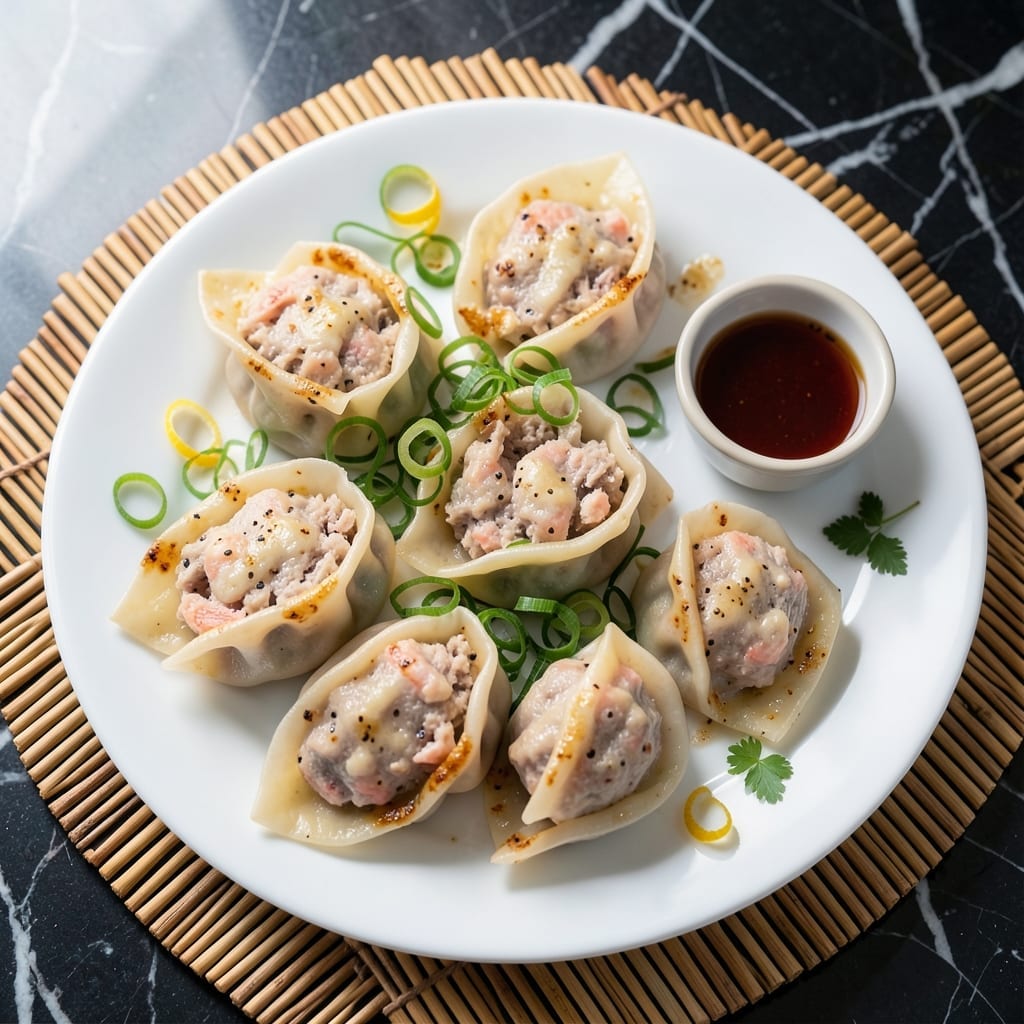
These delicate steamed dumplings bring authentic Filipino flavors to your table with a savory pork filling. I developed this recipe after years of perfecting the balance of textures and seasonings.
The key is using a combination of ground pork and shrimp for depth, with traditional seasonings like soy sauce and sesame oil. The wrappers become translucent and tender during steaming, encasing the juicy filling perfectly.
Each bite delivers a burst of umami-rich pork mixture with just the right amount of garlic and ginger. The dumplings hold their shape beautifully while achieving that signature open-top presentation.
Serve with soy-vinegar dipping sauce for the complete Panlasang Pinoy experience.
Ingredients for Pork Shumai Recipe Panlasang Pinoy
A handful of fresh ingredients and a few pantry staples make these dumplings unforgettable.
| Ingredient | Amount | Notes |
|---|---|---|
| Ground Pork 🥩 | 1 lb | 80/20 fat ratio preferred |
| Shrimp 🦐 | ½ lb | Peeled, deveined, finely chopped |
| Shumai Wrappers 🥟 | 24 pieces | Round wonton wrappers work |
| Soy Sauce 🫒 | 3 tbsp | Low-sodium preferred |
| Sesame Oil 🫒 | 1 tbsp | Toasted for richer flavor |
| Garlic Cloves 🧄 | 6 cloves | Minced finely |
| Fresh Ginger 🌿 | 1 tbsp | Grated or minced |
| Green Onions 🧅 | 4 whole | Finely chopped, white parts only |
| Sugar 🍚 | 1 tsp | White granulated |
| Salt 🧂 | ½ tsp | Kosher or sea salt |
| White Pepper 🌶️ | ½ tsp | Ground for subtle heat |
| Cornstarch 🌾 | 2 tbsp | For binding filling |
| Water 💧 | 2 tbsp | For steaming and mixture |
The pork makes this dish. Ground pork with 80/20 fat gives you that juicy texture—leaner cuts dry out. Whole Foods or Costco have great options if you’re not grinding your own. For the shrimp, wild-caught is ideal but farm-raised works too. Freshness is key, so buy it the day you’re making these. The wrappers? Asian markets or the refrigerated section at Trader Joe’s usually stock them.
No shrimp? Ground chicken or turkey keeps the texture close. Out of shumai wrappers? Round wonton wrappers are a solid backup. No sesame oil? Toasted vegetable oil plus a drop of sesame extract in a pinch. The soy sauce can be tamari for gluten-free. The cornstarch helps bind everything—don’t skip it unless you’ve got another thickener like arrowroot.
Filling keeps in the fridge for 1 day before wrapping (any longer and the shrimp gets mushy). Wrapped dumplings can sit covered in the fridge for 2 hours before steaming. Freeze uncooked dumplings on a tray first, then transfer to bags—they’ll keep for 1 month.
Why You’ll Love This Recipe
- 20-Minute Assembly: I can prep a whole batch while the rice cooks—just mix ground pork, shrimp, and a splash of soy sauce.
- Umami Bomb: That first bite with sesame oil and juicy shrimp? Ridiculously good.
- Budget Stretcher: Ground pork and shrimp go a long way—feeds my family of four with leftovers.
Step-by-Step Instructions for Pork Shumai
Here’s the method I use for perfectly pleated dumplings with juicy, flavorful filling every time.
Step 1: Prepare the Savory Filling
In a large bowl, combine the 1 lb Ground Pork and 0.5 lb Shrimp with the 3 tbsp Soy Sauce, 1 tbsp Sesame Oil, 1 tsp Sugar, 0.5 tsp Salt, and 0.5 tsp White Pepper. I use my hands for this—it’s the best way to evenly distribute the seasoning throughout the meat.
Add the 6 cloves Garlic Cloves (finely minced), 1 tbsp Fresh Ginger (grated), and 4 whole Green Onions (finely chopped, white parts only). The ginger and garlic should be minced so finely that they almost melt into the mixture. Then stir in the 2 tbsp Cornstarch—this binds the filling and prevents it from becoming too loose when steamed.
Mix until everything is just combined. Don’t overwork it, or the filling will become dense and tough. Let it rest for 10 minutes while you prepare the wrappers.
Step 2: Assemble the Shumai
Place a Shumai Wrapper in the palm of your hand. Add 1 tablespoon of the filling to the center. I like to gently press down on the filling to create a slight well in the center—this helps the shumai keep its shape during steaming.
With your other hand, gently pleat the edges of the wrapper upward, pressing each pleat against the filling as you go around. Leave the top open to expose the filling. The wrapper should form a cup around the meat, with about 6-8 pleats total. Place each finished shumai on a parchment-lined tray.
Real talk: the first few might look messy, but you’ll get the hang of it. The key is keeping the wrapper taut but not stretching it too thin. Repeat until all 24 pieces Shumai Wrappers are filled.
Step 3: Steam to Perfection
Line a bamboo steamer with parchment paper (poke a few holes in it for steam circulation). Arrange the shumai in a single layer, leaving a little space between each one. Pour the 2 tbsp Water into the bottom of your steamer or pot and bring to a boil over high heat.
Carefully place the steamer over the boiling water, cover with a lid, and steam for 12-15 minutes. You’ll know they’re done when the wrappers become translucent and the filling is cooked through—it should spring back slightly when pressed. Don’t skip the parchment, or they’ll stick to the steamer.
Step 4: Serve and Enjoy
Remove the shumai from the steamer and let them cool for 2 minutes before serving. The filling will be extremely hot straight out of the steamer. I like to serve them on a platter with a small dipping sauce of soy sauce and a touch of sesame oil.
The wrappers should be tender but still hold their shape, and the filling should be juicy with a slight bounce. If any filling seems undercooked, return them to the steamer for another 2-3 minutes. These are best enjoyed fresh, while the wrappers are still slightly sticky and the filling is at its juiciest.
Pro Tips For Making Pork Shumai Recipe Panlasang Pinoy
- Chill the Filling: Pop your pork and shrimp mixture in the fridge for 15-20 minutes before wrapping—makes the filling easier to handle and keeps the shumai from falling apart while steaming.
- Dampen the Wrappers: Lightly wet the shumai wrappers with water or a damp towel before wrapping to prevent them from drying out and cracking during steaming.
- Don’t Overfill: I learned this the hard way—stick to about 1 tablespoon of filling per wrapper to avoid bursting and ensure even cooking.
- Steam with Space: Leave at least an inch between each shumai in the steamer so they don’t stick together and cook evenly.
Essential Equipment for This Recipe
Bamboo Steamer
A 10-inch bamboo steamer is essential for even heat distribution. I use a two-tier model from EcoNest—it fits perfectly over my 12-quart stockpot. Line with parchment paper to prevent sticking. 🥢
Mixing Bowls
For the filling, a large stainless steel mixing bowl gives you room to work. I prefer Winco’s 5-quart with a non-slip base. The sloped sides make it easier to combine the pork and shrimp evenly.
Fine Grater
A Microplane is my go-to for ginger and garlic. It creates a paste that blends seamlessly into the filling. For green onions, a sharp Wüsthof 8-inch chef’s knife ensures clean, precise cuts.
Pleating Tool
While not mandatory, a dumpling press helps beginners create consistent pleats. I still prefer hand-pleating—it gives each shumai its own character. A small pastry brush helps moisturize wrapper edges for better adhesion.
Steaming Setup
Use a pot with a tight-fitting lid to trap steam. My All-Clad 12-quart works perfectly. Add 2 inches of water to the pot—enough to create steam without touching the dumplings. A steamer liner prevents water from dripping onto the shumai.
Serving Essentials
A bamboo serving tray keeps the tradition alive. Pair with small ramekins for dipping sauces. I always have Kikkoman soy sauce and toasted sesame oil ready for the classic pairing. ✨
Nutrition Facts
Frequently Asked Questions
Can I use ground chicken instead of pork?
Yes, but the texture will be leaner. Use 80/20 ground chicken for best results and add 1 extra tablespoon of sesame oil to compensate for the lower fat content.
How do I store leftover shumai?
Keep cooked shumai in an airtight container in the fridge for up to 3 days. Reheat by steaming for 3-4 minutes until hot. Freezing raw shumai works for 1 month if properly wrapped.
Why did my wrappers tear while pleating?
This usually happens if wrappers dry out. Cover unused wrappers with a damp towel and work quickly. Also, avoid overfilling—1 tablespoon of filling per wrapper is ideal.
What’s the best dipping sauce?
Classic Filipino style combines 3 tbsp soy sauce, 1 tbsp vinegar, 1 tsp sesame oil, and a pinch of sugar. Adjust to taste.

- Potato Patty Recipe No Egg: Crispy Edges Without the Binder - October 30, 2026
- Paula Deen’s Potato Chip Cookies Recipe: Salty-Sweet Crunch in Every Bite - October 30, 2026
- Potato Gnocchi Recipe Ideas: Pillowy Soft Dumplings With Rustic Charm - October 30, 2026