
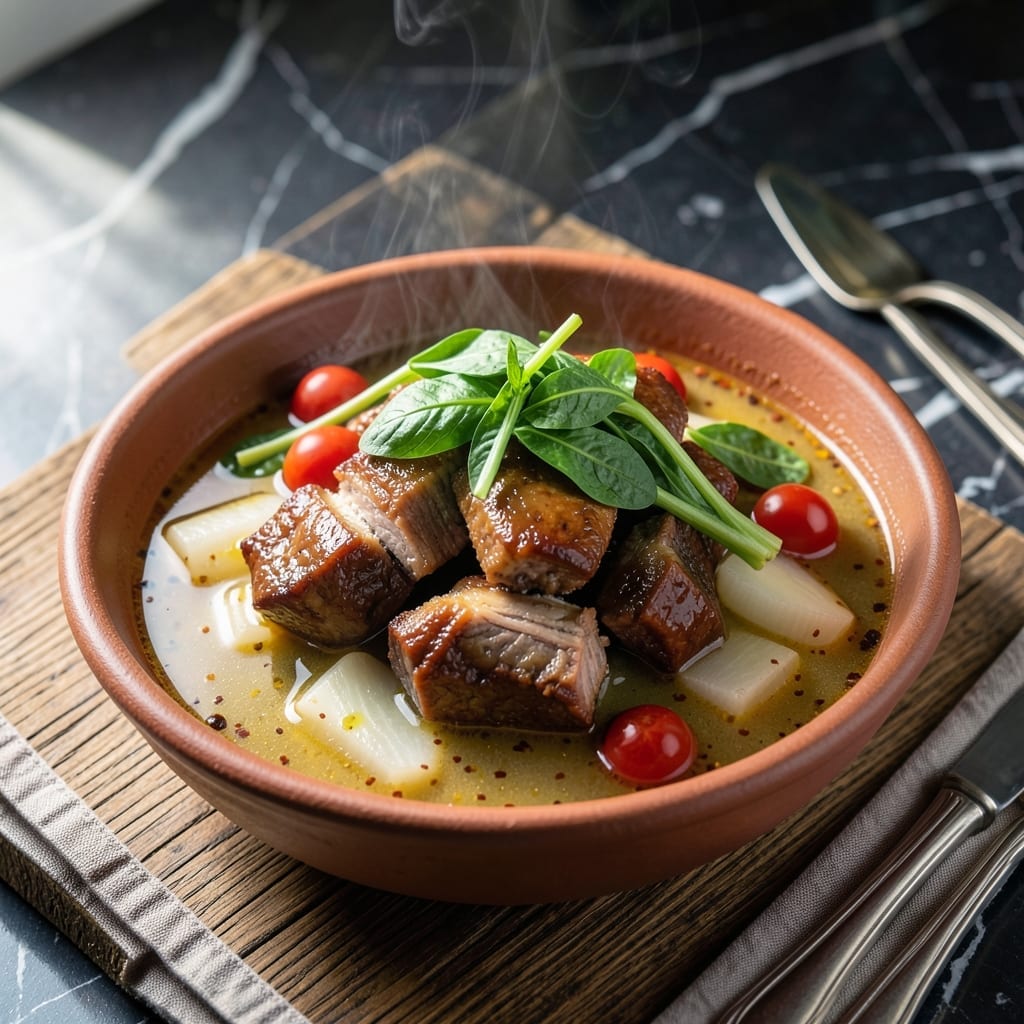
There’s a reason tender pork sinigang remains a Filipino comfort food classic. This version uses sinigang mix to achieve that signature sour broth without complicated souring agents.
I learned this method from my grandmother’s vague handwritten notes, which simply said “cook until pork is soft.” Through trial and error, I’ve perfected the timing for fall-apart tender pork cuts that soak up the tangy broth.
The sinigang mix creates a balanced sour flavor that pairs perfectly with the natural sweetness of the pork. Traditional vegetables like kangkong and radish add texture and depth to the dish.
Serve this hearty soup over steamed rice for a complete meal that brings a taste of the Philippines to your home kitchen. Here’s how to make it right.
Ingredients for Pork Sinigang Recipe with Sinigang Mix
Simple ingredients for that signature tangy, tender comfort in every bowl.
| Ingredient | Amount | Notes |
|---|---|---|
| Pork Shoulder 🍖 | 1 ½ lb | Cut into 2-inch chunks |
| Sinigang Mix 🍜 | 1 package | 40g tamarind soup base |
| Water 💧 | 8 cups | For broth base |
| Daikon Radish 🥕 | 1 whole | Peeled and sliced |
| Kangkong 🥬 | 1 bunch | Water spinach, stems trimmed |
| Tomatoes 🍅 | 2 whole | Quartered |
| Long Green Chili 🌶️ | 2 pieces | Optional for heat |
| Onion 🧅 | 1 whole | Medium, quartered |
| Eggplant 🍆 | 1 whole | Asian variety preferred |
| Okra 🌿 | 4 pieces | Trimmed |
| Fish Sauce 🐟 | 2 tbsp | Or soy sauce for vegetarian |
| Salt 🧂 | 1 tsp | Adjust to taste |
The pork is everything here. Pork shoulder or pork belly give that fall-apart texture—avoid lean cuts like tenderloin. Any Asian market carries sinigang mix (Mama Sita’s is widely available), but check the Filipino aisle at H-Mart or Seafood City. Freshness matters most with the veggies—look for firm daikon and bright green kangkong (water spinach).
No kangkong? Baby spinach or bok choy work in a pinch. Out of daikon? Try regular radishes or even potatoes for that starchy element. For extra depth, add a splash of calamansi juice at the end. If you’re making this vegetarian, swap the fish sauce for soy sauce and use tofu instead of pork.
Leftovers keep 3-4 days in the fridge and freeze well for 3 months. The flavors actually deepen overnight. I like to make a big batch—it reheats perfectly for quick lunches.
Why You’ll Love This Recipe
- One-Pot Wonder: I just toss the pork, sinigang mix, and veggies in a pot and let it simmer—no complicated steps.
- Tangy Perfection: The sinigang mix gives that sour kick I crave, balanced by the sweetness of daikon and the earthiness of kangkong.
- Weeknight Hero: Honestly, it’s my go-to for busy evenings when I need something hearty and fast.
- Budget Stretcher: Pork shoulder and kangkong are affordable, and this makes enough for leftovers that taste even better the next day.
Step-by-Step Instructions for Pork Sinigang With Sinigang Mix
Here’s the method I use for fall-off-the-bone pork and that signature tangy broth.
Step 1: Sear and Simmer the Pork Shoulder
In a large pot, add the 1.5 lb Pork Shoulder chunks and enough of the 8 cups Water to cover the bottom. Bring to a boil over medium-high heat, then reduce to a simmer. Let it cook uncovered for 10 minutes to remove any scum that rises to the surface.
This step ensures a clean, clear broth. You’ll see the pork start to turn opaque at the edges—that’s your sign it’s ready for the next ingredients. Don’t skip this; it makes a noticeable difference in the final soup’s clarity and flavor.
Step 2: Build the Broth Base with Sinigang Mix
After the initial simmer, add the remaining 8 cups Water, the 1 package Sinigang Mix, the quartered 1 whole Onion, and the quartered 2 whole Tomatoes. Stir well to dissolve the mix completely—you should see the water turn a light amber color and smell that sharp, tangy aroma.
Bring the pot back to a boil, then reduce heat to maintain a gentle simmer. Add the 1 tsp Salt now. This is when the broth starts developing its signature sour flavor. Simmer for 30 minutes to let the pork become tender and the flavors meld.
Step 3: Add Hearty Vegetables for Depth
Add the sliced 1 whole Daikon Radish, the whole 1 whole Eggplant (cut into 2-inch pieces), and the 4 pieces Okra. These vegetables soak up the broth’s tangy goodness while adding their own textures. The daikon should be just tender when pierced with a fork after 10 minutes of simmering.
I always add the eggplant at this stage because it holds its shape better than if added too late. The okra will release a bit of its natural sliminess, but that’s part of what makes sinigang so satisfying. Stir gently to avoid breaking up the vegetables.
Step 4: Finish with Delicate Greens and Chili
Add the trimmed 1 bunch Kangkong and the 2 pieces Long Green Chili. The kangkong wilts quickly, so this step should be last. Simmer for just 2-3 minutes until the leaves turn bright green and the stems are tender-crisp.
The chili adds a subtle heat that balances the sourness beautifully. If you prefer more spice, you can slit the chilies lengthwise before adding. Stir in the 2 tbsp Fish Sauce now and taste—this is your final seasoning adjustment. The broth should be tangy with a pleasant saltiness.
Remove from heat and let it sit for 5 minutes before serving. The flavors will continue to develop as it rests.
Pro Tips For Making Pork Sinigang Recipe With Sinigang Mix
- Boil Pork First: Parboil the pork shoulder for 5-7 minutes to remove scum before adding the sinigang mix—this keeps the broth clean and prevents bitterness.
- Add Mix Last: Stir in the sinigang mix only after the vegetables are tender (about 10 minutes before serving), otherwise the sour flavor overpowers and the mix loses its punch.
- Slice Radish Thin: Cut the daikon radish into ½-inch thick rounds so they soften in the same time as the pork, no mushy bits or hard centers.
- Use More Water: Start with 8 cups of water for 1 lb of pork—it seems like a lot, but the kangkong and radish soak up liquid fast, and you want enough broth to serve.
Essential Equipment for This Dish
Large Stock Pot
A 5-6 quart stock pot is essential for this soup—it needs room for the pork, vegetables, and 8 cups water to simmer comfortably. I use my enamel-coated cast iron pot from the local farmers market; it distributes heat evenly and cleans up beautifully. Avoid nonstick for this recipe. 🔥
Wooden Spoon
Stirring with a wooden spoon prevents scratching your pot while helping dissolve the sinigang mix completely. I keep one dedicated to soups—it’s absorbed all the flavors from years of cooking, like my grandmother’s well-loved utensils.
Sharp Chef’s Knife
For slicing the daikon radish, eggplant, and onion, a 8-inch chef’s knife is my go-to. A sharp blade makes quick work of the prep and ensures clean cuts. I sharpen mine every 2-3 months at the neighborhood grocery store.
Cutting Board
A large, stable cutting board gives you space to prep all the vegetables at once. I prefer bamboo—it’s gentle on knives and easy to clean. Place a damp towel underneath to prevent slipping while you work through the kangkong and other veggies.
Ladle and Bowls
Use a stainless steel ladle to serve the broth and vegetables together. I love deep, wide bowls that can hold plenty of soup plus a generous serving of rice. Look for stoneware bowls at small specialty shops—they retain heat beautifully. 🍜
Nutrition Facts
Frequently Asked Questions
Can I use a different cut of pork?
Yes! While pork shoulder is ideal, pork belly or ribs work well too. Avoid lean cuts like tenderloin as they can dry out. Fattier cuts add richness to the broth.
How do I adjust the sourness level?
Start with 1 package of mix, then taste before adding more. For extra tang, add a splash of calamansi juice or tamarind paste at the end.
What if I can’t find kangkong?
Substitute with baby spinach or bok choy. Add these delicate greens last, just like kangkong, to prevent overcooking.
Can I make this in a slow cooker?
Combine all ingredients except kangkong and cook on low for 6-8 hours. Add kangkong in the last 10 minutes.

- Potato Patty Recipe No Egg: Crispy Edges Without the Binder - October 30, 2026
- Paula Deen’s Potato Chip Cookies Recipe: Salty-Sweet Crunch in Every Bite - October 30, 2026
- Potato Gnocchi Recipe Ideas: Pillowy Soft Dumplings With Rustic Charm - October 30, 2026