
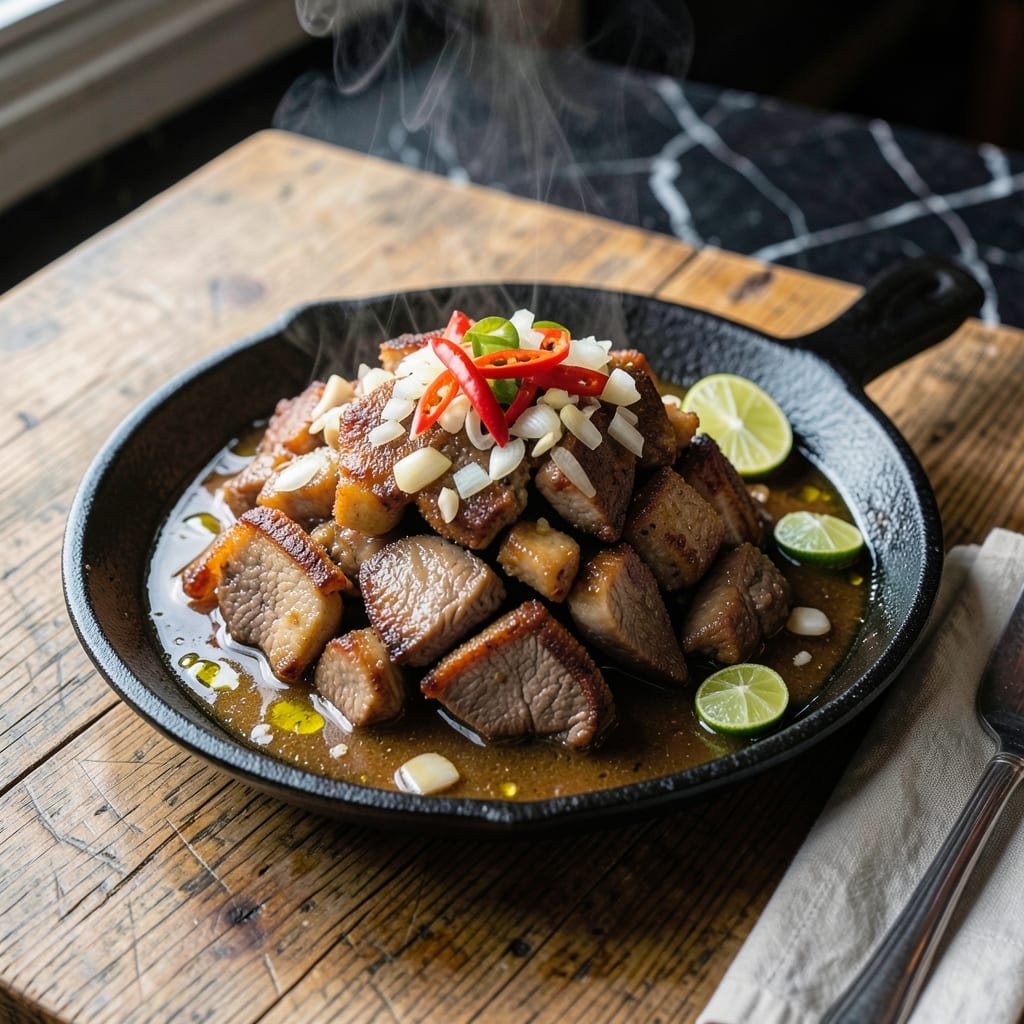
This sizzling Filipino classic transforms humble pork into a dish with bold, tangy flavors that define street food at its best.
Traditional techniques like charring the meat and finishing with calamansi juice create layers of smoky, citrusy complexity. The crispy bits mixed with tender pork and a creamy egg topping deliver authentic texture in every bite.
Serve it straight from the cast iron plate for the true sisig experience, where the sizzle is as important as the taste. The aroma alone will transport you to a Manila food stall.
Perfect as a main course or shared appetizer, this version stays true to its roots while being simple enough for home cooks.
Ingredients for Pork Sisig Recipe Filipino Style
Pork shoulder, liver, and bold Filipino flavors come together for that authentic street food experience.
| Ingredient | Amount | Notes |
|---|---|---|
| Pork Shoulder 🥩 | 1 ½ lb | Diced into small pieces |
| Pork Liver 🫒 | ½ lb | Optional but traditional |
| Onion 🧅 | 1 whole | Finely chopped |
| Garlic Cloves 🧄 | 6 cloves | Minced for bold flavor |
| Calamansi Juice 🍋 | ¼ cup | Freshly squeezed if possible |
| Soy Sauce 🫙 | 3 tbsp | Filipino brand preferred |
| White Vinegar 🫙 | 2 tbsp | Or cane vinegar |
| Chili Peppers 🌶️ | 2 whole | Sliced, adjust for heat |
| Butter 🧈 | 4 tbsp | For sizzling finish |
| Eggs 🥚 | 4 whole | For topping, optional |
| Mayonnaise 🥬 | 3 tbsp | For creamy texture |
| Salt 🧂 | 1 tsp | Adjust to taste |
| Black Pepper 🌶️ | ½ tsp | Freshly ground preferred |
| Green Onions 🧅 | ½ cup | Chopped for garnish |
The pork shoulder is key here—look for good marbling at your local butcher or Asian market. Pork liver is traditional but can be skipped if you’re not a fan (just add more shoulder). I grab mine from Filipino grocers when I can—they usually have pre-cut pieces perfect for sisig. Fresh calamansi is worth hunting down, but lime juice works in a pinch (use half the amount).
No calamansi? Lime juice at half the quantity gets you close. Swap soy sauce for tamari if gluten-free. Out of chili peppers? Sriracha or chili flakes work well—add to taste. The eggs are traditional but optional (skip for a different texture). Mayonnaise adds creaminess, but Greek yogurt works if you prefer something lighter.
Leftover sisig keeps 3-4 days in the fridge—reheat in a skillet for that sizzle. Serve it straight from the cast iron for the full effect. The flavors deepen overnight, so it’s even better the next day (if it lasts that long).
Why You’ll Love This Recipe
- One Pan Wonder: I just toss everything—pork shoulder, liver, onions, garlic—into one sizzling plate and let it do its thing.
- Flavor Explosion: That tangy calamansi juice hits the rich pork and liver in the best way, with garlic tying it all together.
- Pulutan Champion: Honestly, it’s my go-to for game nights, casual gatherings, or even a solo treat with cold beer.
- Budget Stretcher: A little pork shoulder and liver go a long way, and leftovers taste even better the next day.
Step-by-Step Instructions for Pork Sisig Filipino Style
Here’s the method I’ve perfected for that authentic sizzling plate experience.
Step 1: Parboil the Pork Shoulder and Liver
Place the 1.5 lb Pork Shoulder and 0.5 lb Pork Liver in a pot of cold water. Bring to a boil, then reduce to a simmer for 20-25 minutes until the pork shoulder is tender and the liver is cooked through.
This step removes impurities from the liver and ensures both meats are perfectly cooked before we crisp them up. Drain well and let cool slightly before dicing. I like to pat them dry with paper towels to remove excess moisture—this helps them brown better later.
Step 2: Sauté Aromatics and Crisp the Meat
Heat a large skillet over medium-high heat. Add the 4 tbsp Butter and let it melt. Add the finely chopped Onion and cook for 3-4 minutes until translucent.
Add the minced Garlic Cloves and cook for 30 seconds until fragrant. Toss in the diced pork shoulder and liver, then cook for 8-10 minutes, stirring occasionally, until the edges are golden brown and crispy. This builds the signature texture of sizzling pork sisig.
Step 3: Season and Create the Signature Sauce
Pour in the 0.25 cup Calamansi Juice, 3 tbsp Soy Sauce, and 2 tbsp White Vinegar. Add the sliced Chili Peppers, 1 tsp Salt, and 0.5 tsp Black Pepper.
Stir everything together and let it simmer for 3-4 minutes until the liquid reduces slightly and coats the meat. The calamansi juice gives that tangy zing, while the soy sauce adds the deep umami flavor that defines this dish.
Step 4: Finish with Creamy Toppings and Garnish
Stir in the 3 tbsp Mayonnaise and mix well to create a creamy coating on the meat. Transfer the mixture to a sizzling plate or cast-iron skillet if you have one—this is how it’s traditionally served.
Make small wells in the mixture and crack the 4 whole Eggs directly into them. Let them cook for 2-3 minutes until the whites are set but yolks remain runny. Garnish with the 0.5 cup Green Onions just before serving.
Pro Tips For Making Pork Sisig Recipe Filipino Style
- Boil the Liver First: I learned this the hard way—parboiling the pork liver for 3-5 minutes removes the bitterness and makes it tender before you chop and sizzle it with the shoulder.
- Chill Before Chopping: After boiling, let the liver and shoulder cool completely in the fridge for 20 minutes—it firms up the meat so you can dice it cleanly without a mushy mess.
- Sear on High Heat: Crank the heat to medium-high when crisping the pork bits, and resist the urge to stir too often. You want those edges golden and slightly charred for that real sisig texture.
- Add Calamansi Last: Sounds weird, but it works: wait until the very end to drizzle the calamansi juice over the sizzling platter—this keeps the acid from making the meat tough during cooking.
Regional Styles of These Flavors
Manila Street Style
In the capital, this dish starts with pork shoulder and pork liver parboiled then deeply charred over high heat. The signature tang comes from calamansi juice and cane vinegar, creating that iconic sweet-sour balance. I love how the sizzling plate presentation adds drama. 🌟
Pampanga Variations
The culinary capital of the Philippines adds a touch of sophistication. Here, they often include chicken liver alongside pork and finish with a splash of soy sauce and black pepper. The texture leans more toward tender than crispy.
Bicol Region Twist
This volcanic region incorporates coconut milk into the sauce, creating a creamy version called sisig sa gata. They also add more chili peppers for heat, reflecting Bicol’s love for spicy food. The result is richer and slightly sweeter.
Visayan Islands
In Cebu and nearby islands, they often use pork maskara (pork face) instead of shoulder. The preparation is simpler, with less emphasis on the sizzling plate and more on the bold flavors. White vinegar is the primary souring agent here.
Modern Portland Style
At Filipino food trucks here in Portland Oregon, they often add bacon to the mix for extra smokiness. Some versions include kimchi for a Korean-Filipino fusion twist. I’ve seen it served with a fried egg on top at local markets. 💫
Nutrition Facts
Frequently Asked Questions
What can I use if I can’t find calamansi?
Lime juice works best as a substitute. Use half the amount of calamansi called for in the recipe. Lemon juice is another option, though it’s slightly less authentic.
Can I skip the pork liver?
Just use 2 lb pork shoulder instead. The liver adds depth but the dish will still taste great without it. Many home cooks omit it for simplicity.
How do I get that crispy texture?
Pat the meat very dry after parboiling. Cook it in medium-high heat with enough butter until edges turn golden brown. Don’t stir too often—let it develop a crust.
What’s the best way to serve it?
Traditionally on a sizzling cast-iron plate. At home, a hot skillet works. Serve with steamed rice and extra calamansi wedges for that true street food experience.

- Potato Patty Recipe No Egg: Crispy Edges Without the Binder - October 30, 2026
- Paula Deen’s Potato Chip Cookies Recipe: Salty-Sweet Crunch in Every Bite - October 30, 2026
- Potato Gnocchi Recipe Ideas: Pillowy Soft Dumplings With Rustic Charm - October 30, 2026