
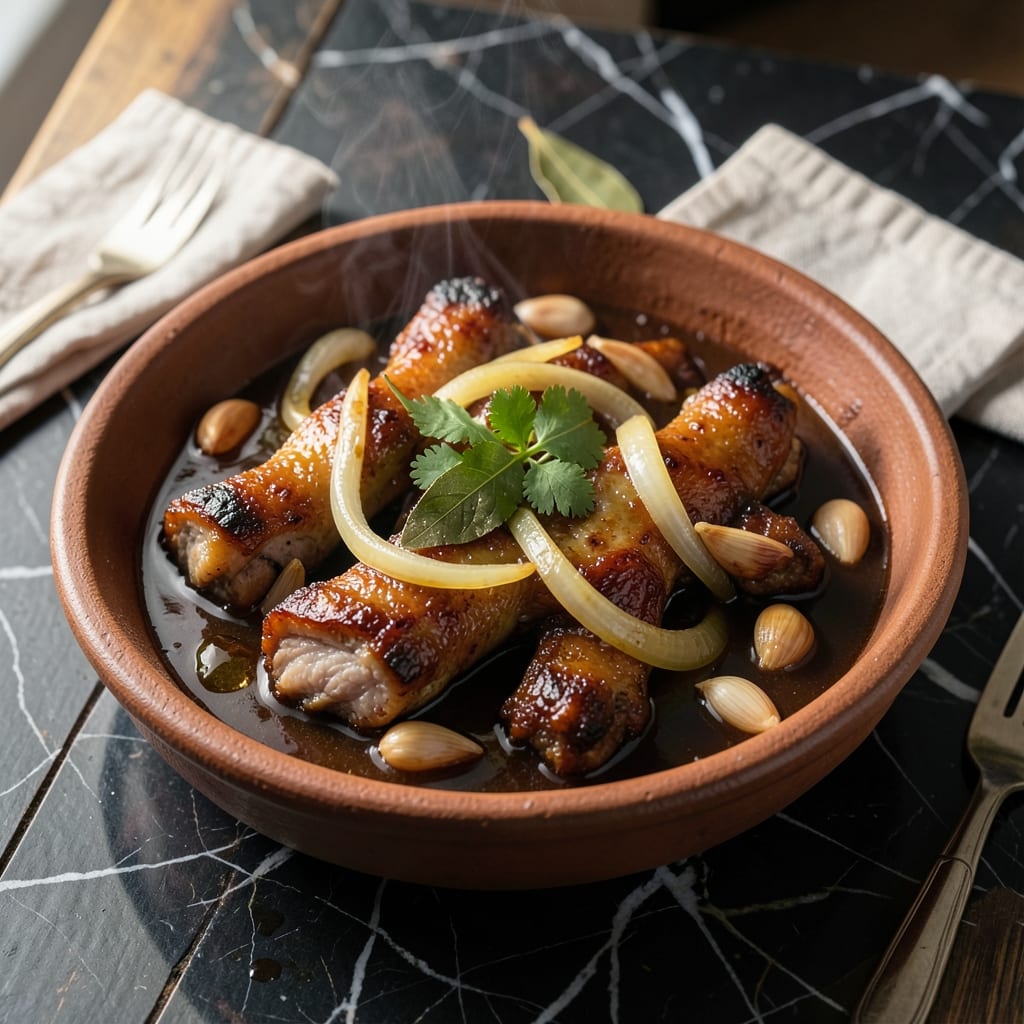
This Filipino-style pork soft bone dish brings adobo’s signature tangy-savory depth to tender, fall-off-the-bone cuts. I learned the technique from my grandmother’s handwritten notes—simple yet precise.
The secret lies in a slow braise with vinegar, soy sauce, and aromatics, which softens the bones while infusing rich flavor. Each bite delivers melt-in-your-mouth richness without complicated steps.
Traditional methods ensure the meat stays juicy and the sauce reduces to a glossy, umami-packed glaze. The result is a dish that feels special but fits effortlessly into a home kitchen.
Serve with steamed rice to soak up every drop of that bold, aromatic sauce.
Ingredients for Pork Soft Bone Recipe Filipino Style
A handful of bold, aromatic ingredients transform pork into melt-in-your-mouth richness. Nothing complicated here.
| Ingredient | Amount | Notes |
|---|---|---|
| Pork Soft Bones 🍖 | 2 lb | Cut into 2-inch pieces |
| White Vinegar 🍶 | 1 cup | Cane vinegar preferred |
| Soy Sauce 🥄 | ¾ cup | Filipino brand recommended |
| Garlic Cloves 🧄 | 8 cloves | Crushed for maximum flavor |
| Yellow Onion 🧅 | 1 whole | Sliced into rings |
| Bay Leaves 🌿 | 3 pieces | Dried, whole leaves |
| Black Peppercorns 🌶️ | 1 tbsp | Whole, for braising |
| Brown Sugar 🍚 | 2 tbsp | Balances the acidity |
| Water 💧 | 1 ½ cups | For braising liquid |
| Vegetable Oil 🫒 | 2 tbsp | For searing pork |
| Salt 🧂 | 1 tsp | Adjust to taste |
| Green Onions 🧅 | 4 whole | Chopped, for garnish |
The pork bones need good marbling—ask your butcher for soft bones or pork hocks. Filipino markets often carry pre-cut pieces. I grab mine from Seafood City when I’m stocking up. The vinegar is non-negotiable (it’s what tenderizes those bones), and Datu Puti is the brand most Filipino cooks swear by. Soy sauce should be dark and salty, not the low-sodium kind.
No cane vinegar? Apple cider vinegar works in a pinch. Out of pork soft bones? Pork belly or shoulder still delivers great flavor, just adjust cooking time. The bay leaves can be Turkish or California—both work. If you can’t find whole peppercorns, freshly ground black pepper at half the amount gets you close. Brown sugar can be swapped with coconut sugar for a deeper caramel note.
This tastes even better the next day once the flavors meld. Keeps for 4-5 days in the fridge, freezes beautifully for 3 months. Reheat gently to keep the meat tender (don’t boil or the sauce will break).
Why You’ll Love This Recipe
- One Pot Wonder: I toss everything in a single pan—pork bones, vinegar, soy sauce—and let it simmer. Honestly, cleanup is just as quick as the cooking.
- Tangy Garlic Punch: The vinegar and garlic hit you first, then the soy sauce rounds it out with that deep umami. It’s the kind of flavor that makes you go back for seconds.
- Feeds the Crowd: Between us, this is my go-to for family gatherings. The bones are hearty, and the sauce stretches perfectly over rice.
- Budget Stretcher: Pork soft bones are cheap, and a little goes a long way. I’ll be real: it’s one of the few dishes that fills everyone up without emptying my wallet.
Step-by-Step Instructions for Pork Soft Bone Filipino Style
Here’s how I nail this dish every time with tender meat and bold adobo flavor.
Step 1: Sear the Pork Soft Bones for Depth
Heat 2 tbsp vegetable oil in a large pot over medium-high heat. Add the 2 lb Pork Soft Bones and sear until golden brown on all sides, about 3-4 minutes per side. This step builds a flavorful crust and locks in juices.
I work in batches if needed to avoid crowding—the pork should sizzle, not steam. Transfer the seared bones to a plate and set aside. The fond left in the pot will deepen the sauce’s complexity later.
Step 2: Sauté Aromatics and Toast Spices
In the same pot, add the sliced yellow onion and cook for 2-3 minutes until softened and translucent. Stir in the 8 cloves crushed garlic and cook for 30 seconds until fragrant—don’t let it burn.
Add the 1 tbsp black peppercorns, 3 pieces bay leaves, and 2 tbsp brown sugar. Toast the spices for 1 minute to release their oils. The sugar will caramelize slightly, adding a subtle sweetness to balance the tang.
Step 3: Deglaze and Simmer for Tenderness
Pour in the 1 cup white vinegar and 0.75 cup soy sauce, scraping the bottom to dissolve the browned bits. Let it simmer for 2-3 minutes until the liquid reduces slightly.
Return the pork to the pot, add the 1.5 cups water, and bring to a boil. Reduce heat to low, cover, and simmer for 1.5-2 hours until the meat is fall-off-the-bone tender. Skim any excess fat during cooking for a cleaner sauce.
Step 4: Season and Garnish for Serving
Once the pork is tender, stir in the 1 tsp salt and adjust to taste. The sauce should be rich and tangy with a glossy sheen. If it’s too thin, simmer uncovered for 5-10 minutes to thicken.
Discard the bay leaves and peppercorns, then garnish with 4 whole chopped green onions. Serve hot over steamed rice, ensuring each serving has plenty of the flavorful sauce ladled on top.
Pro Tips For Making Pork Soft Bone Recipe Filipino Style
- Simmer Low and Slow: I learned this the hard way—boiling pork soft bones too hard makes them tough. Keep it at a gentle simmer for 1.5-2 hours until the meat falls off the bone.
- Pre-Brown the Bones: After burning three batches, I finally figured out that browning the pork bones in oil first adds a deep, savory base to the dish.
- Balance the Vinegar: My grandmother swore by this, and she was right: use 1 part vinegar to 2 parts water to avoid an overpowering sour taste that can dominate the broth.
- Skim the Scum: Sounds weird, but it works: skim off the foam that rises in the first 10 minutes of simmering to keep the broth clear and clean-tasting.
Troubleshooting Great pork soft bone recipe filipino style
Sauce Too Thin
If your sauce hasn’t reduced properly, simmer uncovered on medium heat for 10-15 minutes. Stir occasionally to prevent sticking—this concentrates flavors beautifully. I often add 1 tsp cornstarch mixed with water if I’m in a hurry. 💡
Pork Not Tender
Undercooked pork means more simmering time. Add ½ cup water if needed and cook covered for another 30-45 minutes. The vinegar and slow heat will eventually break down those tough fibers.
Sauce Too Salty
Balance with 1 tbsp brown sugar or a splash of water. The sugar neutralizes saltiness while adding depth. I learned this trick from my grandmother’s notes—works every time.
Bitter Vinegar Flavor
This happens if the vinegar didn’t cook long enough. Simmer the sauce for an additional 5-10 minutes—the acid mellows beautifully. Adding 1 tsp sugar helps round out harsh edges.
Sauce Breaking
If your sauce separates, whisk in 1 tbsp cold water to re-emulsify. Avoid boiling vigorously after adding this. Gentle heat brings it back together smoothly.
Overly Greasy
Skim fat with a spoon during cooking, or chill the dish and remove solidified fat. For prevention, start with well-trimmed Pork Soft Bones from your butcher. ❄️
Nutrition Facts
Frequently Asked Questions
What cut should I use if soft bones aren’t available?
Pork belly or shoulder work well as substitutes. Adjust cooking to 2-2.5 hours for belly or 2.5-3 hours for shoulder until fork-tender. The flavor will be just as rich.
Can I make this in a slow cooker?
Yes! Sear the pork first, then transfer to your slow cooker with all ingredients. Cook on low for 6-7 hours or high for 3-4 hours. The result is equally tender.
Why is my sauce too sharp from vinegar?
Simmer uncovered for 5-10 minutes to cook off excess acid. Adding 1-2 tsp brown sugar balances the tang perfectly. The flavor mellows as it reduces.
How do I store leftovers?
Keep in an airtight container for up to 5 days in the fridge. For longer storage, freeze for 3 months. Reheat gently to preserve tenderness.

- Potato Patty Recipe No Egg: Crispy Edges Without the Binder - October 30, 2026
- Paula Deen’s Potato Chip Cookies Recipe: Salty-Sweet Crunch in Every Bite - October 30, 2026
- Potato Gnocchi Recipe Ideas: Pillowy Soft Dumplings With Rustic Charm - October 30, 2026