
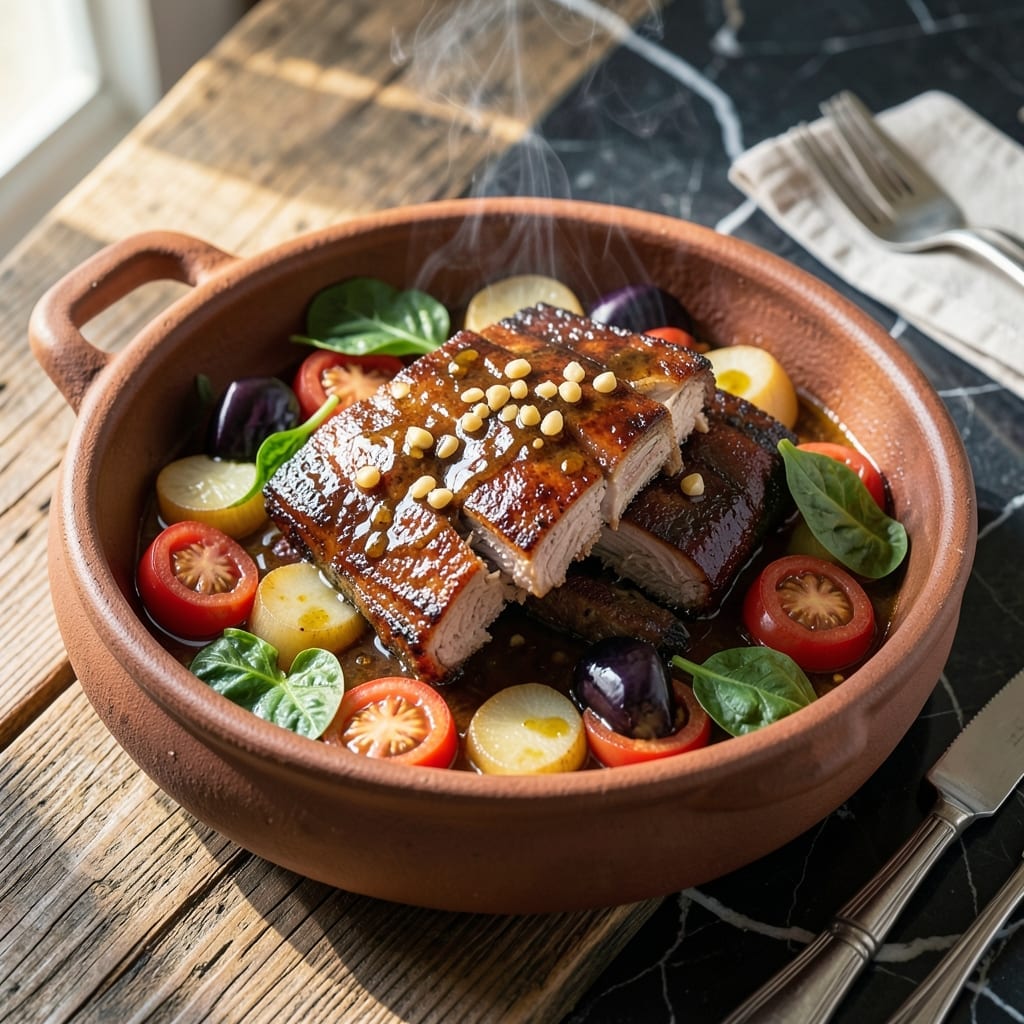
This sinigang-style braise brings the bold, tangy flavors of Filipino home cooking to your table. I developed this method after testing multiple versions to capture that perfect balance of sour and savory.
The dish transforms humble pork spareribs into fall-off-the-bone tenderness through a slow simmer in tamarind broth with fresh vegetables. Traditional ingredients like kangkong and radish add authenticity without complicating the process.
What emerges is a comforting one-pot meal with layers of flavor—tangy broth, tender meat, and crisp vegetables. The aroma alone will transport you to a Manila kitchen.
Serve with steamed rice to soak up every drop of the rich, sour broth. Here’s how to make this Filipino classic.
Ingredients for Pork Spareribs Recipe Panlasang Pinoy
These Filipino staples create a tangy, soul-warming sinigang braise at home.
| Ingredient | Amount | Notes |
|---|---|---|
| Pork Spareribs 🥩 | 2 lb | Cut into serving pieces, bone-in |
| Tamarind Soup Base 🍈 | 1 package | Sinigang mix, 1.41 oz size |
| Daikon Radish 🥕 | 1 whole | Peeled, sliced into rounds |
| Kangkong (Water Spinach) 🌿 | 1 lb | Stems trimmed, cut into 3-inch pieces |
| Eggplant 🍆 | 1 whole | Medium size, sliced into rounds |
| Tomatoes 🍅 | 2 whole | Medium, quartered |
| Onion 🧅 | 1 whole | Medium, quartered |
| Long Green Chili 🌶️ | 2 pieces | Optional, for heat |
| Water 💧 | 8 cups | For simmering broth |
| Fish Sauce 🐟 | 2 tbsp | Patis, for umami depth |
| Salt 🧂 | 1 tsp | Adjust to taste |
| Black Pepper 🌶️ | ½ tsp | Freshly ground preferred |
The spareribs are everything here. Look for well-marbled pieces at your local Asian market or Costco—they break down beautifully during the long simmer. For the tamarind base, Mama Sita’s or Knorr brands are easiest to find in most grocery stores (check the international aisle). Fresh kangkong can be tricky—Vietnamese or Filipino markets usually stock it, but baby spinach works in a pinch.
No tamarind soup base? Fresh tamarind pulp soaked in water (about 1/2 cup pulp to 2 cups water) gives authentic sourness. Green papaya or zucchini can stand in for daikon if you can’t find it. Not a fan of heat? Skip the green chili entirely—it won’t affect the flavor. For extra depth, add a splash of calamansi juice at the end (Filipino citrus, available at specialty stores).
This tastes even better the next day once the flavors meld. Keeps 3-4 days in the fridge, but the kangkong is best fresh. Freeze without the greens for up to 3 months—just add fresh vegetables when reheating.
Why You’ll Love This Recipe
- One Pot Wonder: I toss everything in, let the tamarind and pork work their magic, and walk away until dinner’s ready.
- Sour-Savory Heaven: That tangy tamarind base cuts through the richness of the spareribs—balanced, deep, and ridiculously good.
- Feeds the Gang: From busy weeknights to lazy Sundays, this dish satisfies everyone, even my picky nephew who swaps the kangkong for extra eggplant.
- Stretches the Budget: Pork spareribs are affordable, and adding daikon and water spinach bulks it up without breaking the bank.
Step-by-Step Instructions for Sinigang-Style Tangy Braise
Here’s the method. Straightforward, tested, works every time.
Step 1: Sear the Pork Spareribs for Depth of Flavor
Heat a large pot over medium-high heat without any oil. Add the 2 lb pork spareribs and sear for 3-4 minutes per side until golden brown. This caramelizes the meat’s natural sugars, building a rich foundation for the broth.
Don’t crowd the pot—work in batches if needed. You want a deep sear, not steam. The spareribs should release easily from the pot when properly browned. Remove them and set aside temporarily.
Step 2: Build the Tangy Broth Base
In the same pot, add the 1 whole onion, 2 whole tomatoes, and 1 whole daikon radish. Sauté for 2 minutes until the onions soften. Then pour in the 8 cups water and bring to a boil.
Stir in the 1 package tamarind soup base until fully dissolved. The broth should turn a light amber color with that signature sinigang sourness. Add the seared spareribs back to the pot and return to a boil.
Step 3: Simmer the Ribs Until Tender
Reduce heat to medium-low and let the ribs simmer uncovered for 40-45 minutes. Skim off any foam or impurities that rise to the surface during the first 10 minutes.
You’ll know the ribs are done when the meat starts to pull away from the bone and a fork inserts easily. At this point, season the broth with 1 tsp salt, 0.5 tsp black pepper, and 2 tbsp fish sauce. Taste and adjust if needed.
Step 4: Add the Vegetables for the Final Cook
Add the 1 whole eggplant and 1 lb kangkong (water spinach) to the pot. If using heat, add the 2 pieces long green chili now. Simmer for an additional 5-7 minutes until the eggplant is tender and the water spinach turns bright green.
Don’t overcook the kangkong—it should remain slightly crisp. The eggplant will soak up the tangy broth like a sponge, becoming the star of the dish alongside the ribs.
Serve hot with the broth ladled generously over each portion. The perfect balance of sour, savory, and slightly spicy will make this a new favorite.
Pro Tips For Making Pork Spareribs Recipe Panlasang Pinoy
- Parboil the Ribs: Boil the spareribs for 5-7 minutes first to remove impurities and excess fat—this keeps your sinigang broth clean and flavorful. I learned this the hard way after skimming scum for ages.
- Soak the Tamarind: If using tamarind pulp instead of powder, soak it in warm water for 10 minutes and strain—this extracts maximum sourness without bitter chunks. Sounds tedious, but it actually saves time later.
- Add Daikon Last: Daikon radish turns mushy if cooked too long, so add it in the last 10-15 minutes of simmering. My first few batches dissolved into the broth before I figured this out.
- Wilt Greens Separately: Toss kangkong and eggplant in just before serving to keep them vibrant and crisp. I used to dump everything in at once—big mistake, soggy veggies every time.
Perfect Pairings for pork spareribs recipe panlasang pinoy
Rice Companions
Steamed jasmine rice is the classic pairing—its subtle floral notes complement the tangy broth beautifully. I use 1 cup rice to 1.5 cups water ratio for perfect fluffiness. For extra authenticity, try sinangag (Filipino garlic fried rice) with day-old leftovers. 💛
Fresh Sides
A simple cucumber and tomato salad with calamansi dressing cuts through the richness. Toss 1 sliced cucumber and 1 diced tomato with 1 tbsp calamansi juice, 1 tsp fish sauce, and a pinch of sugar. The crisp texture is refreshing.
Beverage Pairings
Cold San Miguel beer is my go-to—its crispness balances the sour broth. For non-alcoholic options, calamansi juice with soda water and a touch of honey makes a perfect match. The citrus echoes the tamarind beautifully.
Condiment Boost
Set out patis (fish sauce) and siling labuyo (bird’s eye chili) for customization. I also love adding bagoong (fermented shrimp paste) on the side for an umami punch. Just ½ tsp mixed into your bowl transforms the flavors.
Nutrition Facts
Frequently Asked Questions
Can I use baby spinach instead of kangkong?
Yes! Baby spinach works as a substitute in a pinch. Add it during the last 3-4 minutes of cooking to prevent over-wilting. The flavor will be slightly different but still delicious.
How do I know when the spareribs are fully cooked?
The meat should pull away from the bone easily and reach an internal temperature of 145°F. After 40-45 minutes of simmering, test with a fork—it should slide in without resistance.
Can I make this in a slow cooker?
After searing, transfer everything to a slow cooker and cook on low for 6-7 hours or high for 3-4 hours. Add vegetables in the last 30 minutes.
What if my broth isn’t sour enough?
Add more tamarind soup base or a splash of calamansi juice or lemon juice. Start with 1 tbsp at a time and adjust to taste. The sourness should balance the savory flavors.

- Potato Patty Recipe No Egg: Crispy Edges Without the Binder - October 30, 2026
- Paula Deen’s Potato Chip Cookies Recipe: Salty-Sweet Crunch in Every Bite - October 30, 2026
- Potato Gnocchi Recipe Ideas: Pillowy Soft Dumplings With Rustic Charm - October 30, 2026