
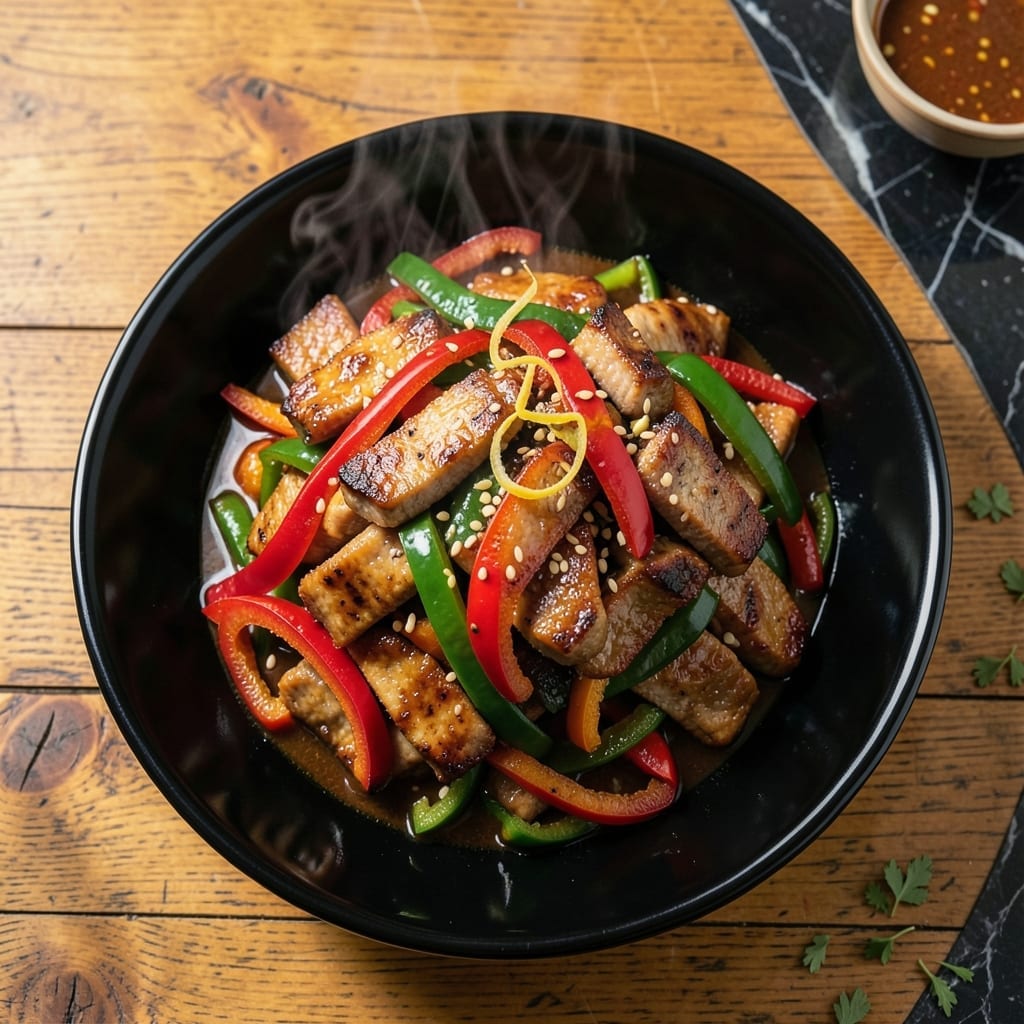
This Filipino-style pork stir fry brings authentic Panlasang Pinoy flavors to your kitchen with minimal effort. The dish combines tender pork slices with crisp garden vegetables, all coated in a savory sauce that’s both comforting and deeply satisfying.
The secret lies in quick cooking over high heat, which locks in the pork’s juices while keeping the vegetables vibrant and crunchy. Traditional soy sauce and calamansi juice create that signature Filipino balance of salty and tangy notes.
You’ll achieve perfectly cooked pork with a light sauce that clings to every bite, complemented by the freshness of bell peppers, carrots, and cabbage. It’s a complete meal that comes together faster than takeout.
Serve with steamed rice to soak up every drop of flavor. This method delivers consistent results every time.
Ingredients for Pork Stir Fry Recipe Panlasang Pinoy
Thin pork, crisp veggies, and a tangy sauce. Pantry raid plus a quick produce stop.
| Ingredient | Amount | Notes |
|---|---|---|
| Pork Shoulder 🥩 | 1 ½ lb | Thinly sliced for stir frying |
| Soy Sauce 🫒 | ⅓ cup | Filipino brand preferred |
| Calamansi Juice 🍋 | 2 tbsp | Freshly squeezed ideal |
| Garlic Cloves 🧄 | 5 cloves | Minced for maximum flavor |
| Red Bell Pepper 🌶️ | 1 whole | Sliced into thin strips |
| Green Bell Pepper 🌶️ | 1 whole | Sliced into thin strips |
| Carrots 🥕 | 2 whole | Julienned or thinly sliced |
| Cabbage 🥬 | 3 cups | Thinly shredded |
| Onion 🧅 | 1 whole | Thinly sliced |
| Ginger 🌿 | 1 tbsp | Freshly grated |
| Brown Sugar 🍚 | 1 tbsp | Balances the tanginess |
| Cornstarch 🌾 | 1 tbsp | For thickening the sauce |
| Water 💧 | ¼ cup | For sauce consistency |
| Vegetable Oil 🫒 | 3 tbsp | For high-heat stir frying |
| Black Pepper 🌶️ | ½ tsp | Freshly ground preferred |
The pork is everything here. Pork shoulder stays tender when stir-fried—avoid lean cuts like tenderloin, which dry out fast. Asian markets usually have it pre-sliced thin, but any grocery store works (just freeze for 30 minutes first for easier slicing). Look for pieces with a bit of fat marbling—that’s where the flavor lives. I pick up mine from H-Mart when I’m doing a big batch, but the regular supermarket stuff is fine too.
No calamansi? Lime juice with a pinch of orange zest gets you 90% there. Out of Filipino soy sauce? Any soy sauce works, but Silver Swan or Datu Puti are the real deal. Short on time? Pre-shredded cabbage (the bagged coleslaw mix) saves a step. The bell peppers can be swapped for snap peas or green beans if that’s what’s in the crisper. Just keep the total veggie volume similar.
Pork keeps in the fridge for 3-4 days raw or 4-5 days cooked. The sauce components (soy sauce, calamansi) last months. I always make extra sauce—it’s great drizzled over rice the next day. Freezes beautifully for 3 months.
Why You’ll Love This Recipe
- I’ll be real: one batch feeds us for two meals, and the leftovers taste even better the next day.
- One Pan Wonder: I toss everything in a single pan—pork, garlic, bell peppers—and it’s ready before the rice finishes cooking.
- Tangy Umami Bomb: The calamansi juice and soy sauce mix hits that perfect sweet-sour-salty balance I crave every time.
- Weeknight Lifesaver: Between us, this is my go-to when I need dinner on the table fast but still want it to taste like I tried.
Step-by-Step Instructions for Filipino Wok-Fried Pork With Garden Fresh Veggies
Here’s the method I use for perfect stir fry every single time.
Step 1: Marinate and Prep the Pork and Veggies
Slice the 1.5 lb Pork Shoulder into thin strips. In a bowl, combine the pork with 0.33 cup Soy Sauce, 2 tbsp Calamansi Juice, 1 tbsp Brown Sugar, minced 5 cloves Garlic Cloves, and 1 tbsp Ginger. Mix well and let it marinate for 15-20 minutes at room temperature.
While the pork marinates, prep all your veggies: thinly slice the 1 whole Onion, cut the 1 whole Red Bell Pepper and 1 whole Green Bell Pepper into strips, julienne the 2 whole Carrots, and shred the 3 cups Cabbage. This ensures everything cooks quickly and evenly once it hits the wok.
Step 2: Stir-Fry the Pork Until Browned
Heat 2 tbsp Vegetable Oil in a large wok or skillet over high heat until it shimmers. Remove the pork from the marinade (reserve the marinade) and add it to the wok in a single layer. Don’t overcrowd the pan—work in batches if needed. Cook for 3-4 minutes until the pork is browned on all sides and cooked through.
Transfer the cooked pork to a clean plate and set aside. The pork should have a nice caramelized crust from the marinade sugars, but still remain tender inside. If it starts to burn, reduce the heat slightly.
Step 3: Cook the Aromatics and Vegetables
Add the remaining 1 tbsp Vegetable Oil to the wok if needed. Toss in the sliced onion and stir-fry for 1 minute until it becomes translucent. Add the garlic, then the bell peppers and carrots. Stir-fry for 2-3 minutes until the veggies are tender-crisp—they should still have a slight bite.
Add the shredded cabbage and cook for another 1-2 minutes just until it wilts slightly. The cabbage should retain some texture and not turn mushy. Keep everything moving in the wok to prevent burning.
Step 4: Combine and Thicken the Sauce
Pour the reserved marinade into the wok with the vegetables. In a small bowl, mix the 1 tbsp Cornstarch with 0.25 cup Water until smooth, then stir it into the wok. Add the cooked pork back in and sprinkle with 0.5 tsp Black Pepper.
Stir everything together and cook for 2-3 minutes until the sauce thickens and coats all the ingredients evenly. The sauce should be glossy and just thick enough to cling to the pork and veggies. Taste and adjust seasoning if needed.
Step 5: Serve Immediately While Hot
Remove from heat and transfer to a serving dish. The pork should be tender with a slight caramelized edge, and the vegetables should be vibrant and just tender. The sauce will thicken slightly more as it cools.
This dish is best served immediately over steamed rice, with the sauce soaking into every bite. The balance of tangy calamansi, savory soy, and sweet vegetables makes it irresistibly flavorful.
Pro Tips For Making Pork Stir Fry Recipe Panlasang Pinoy
- Velvet the Pork: Toss the pork shoulder slices with 1 tsp baking soda and a splash of water for 15 minutes before cooking—I learned this the hard way after my pork turned out tough instead of that melt-in-your-mouth texture we all want.
- Blister the Peppers: Cook the red bell peppers separately in a screaming hot pan for 2-3 minutes until slightly charred, then set aside. Sounds weird, but it works: they’ll stay crisp and add a smoky depth to the stir fry.
- Skip the Overcrowding: Cook the pork in batches so the pan doesn’t cool down—after burning three batches, I finally figured out that steaming pork in a crowded pan just boils it instead of searing.
- Balance the Calamansi: Use 2 parts soy sauce to 1 part calamansi juice—my grandmother swore by this, and she was right: too much calamansi overpowers the dish, while the right ratio brightens without souring.
Wine and Beer Pairings for This Dish
Filipino Beer Options
For an authentic pairing, reach for San Miguel Pale Pilsen—its crisp, clean profile cuts through the dish’s richness. The beer’s light bitterness complements the savory soy and tangy calamansi beautifully. Serve it ice-cold for the full Filipino experience.
Light Lager Choices
American lagers like Corona or Heineken work wonderfully with this stir fry. Their mild flavor won’t overpower the delicate balance of the dish. I particularly enjoy the citrus notes of Corona with the calamansi in the sauce. 🍺
Wheat Beers
A German hefeweizen with its banana and clove notes adds an interesting contrast to the savory pork. The beer’s natural sweetness harmonizes with the brown sugar in the sauce. Try Weihenstephaner for a classic example.
White Wine Pairing
For wine lovers, a chilled Riesling offers a refreshing counterpoint to the dish’s bold flavors. The wine’s acidity mirrors the calamansi, while its slight sweetness balances the savory soy. Look for a German or Alsace style.
Rosé Option
A dry Provence rosé with its crisp acidity and red fruit notes pairs surprisingly well. The wine’s light body won’t compete with the dish’s flavors. I find it particularly refreshing with the stir-fried vegetables.
Serve all beverages well-chilled to complement the hot, fresh-from-the-wok meal. 💫
Nutrition Facts
Frequently Asked Questions
Can I use a different cut of pork?
Pork shoulder is ideal, but you can substitute with pork tenderloin or loin. Just slice thinly and cook for 2-3 minutes to prevent drying out. Shoulder stays juicier due to its fat content.
What if I don’t have calamansi?
Use lime or lemon juice with a pinch of orange zest as a substitute. The citrusy tang is key to balancing the soy sauce. Adjust to taste after cooking.
How do I prevent the veggies from getting mushy?
Cook them in batches and keep the heat on high. Add delicate veggies like cabbage last, stir-frying for only 1-2 minutes. Overcrowding steams instead of frying.
Can I make this ahead of time?
Best served fresh, but leftovers keep for 3-4 days in the fridge. Reheat gently in a pan with a splash of water to restore the sauce. Avoid microwaving to maintain texture.

- Potato Patty Recipe No Egg: Crispy Edges Without the Binder - October 30, 2026
- Paula Deen’s Potato Chip Cookies Recipe: Salty-Sweet Crunch in Every Bite - October 30, 2026
- Potato Gnocchi Recipe Ideas: Pillowy Soft Dumplings With Rustic Charm - October 30, 2026