
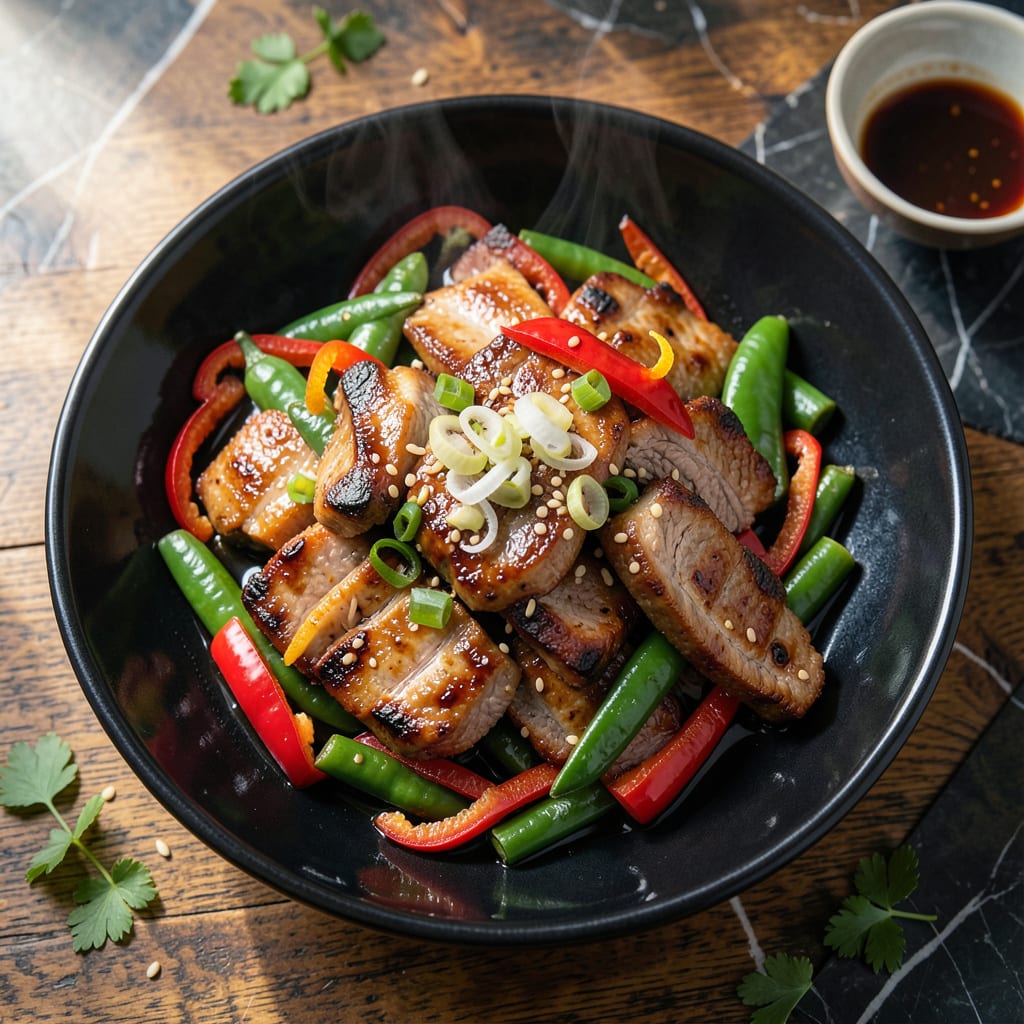
This professional stir fry technique delivers restaurant-quality results with minimal effort. The key is high heat and quick cooking to preserve the pork’s tenderness and the vegetables’ crisp texture.
With a savory sauce and the right wok tossing method, you’ll achieve perfectly balanced flavors in every bite. The process is streamlined for home cooks while maintaining authentic results.
Ingredients for Pork Stir Fry
Quality ingredients create restaurant-level stir fry with vibrant vegetables and tender pork.
| Ingredient | Amount | Notes |
|---|---|---|
| Pork Tenderloin 🥩 | 1 ¼ lb | Thinly sliced against grain |
| Soy Sauce 🫒 | ⅓ cup | Low-sodium preferred for balance |
| Oyster Sauce 🫒 | 2 tbsp | Essential for umami depth |
| Sesame Oil 🫒 | 1 tbsp | Toasted variety for aroma |
| Rice Vinegar 🫒 | 2 tbsp | Mild acidity preferred |
| Brown Sugar 🍚 | 1 tbsp | Light or dark variety |
| Garlic Cloves 🧄 | 4 cloves | Minced finely for even distribution |
| Fresh Ginger 🌿 | 1 tbsp | Peeled and grated |
| Red Bell Pepper 🌶️ | 1 whole | Thinly sliced into strips |
| Broccoli Florets 🥦 | 3 cups | Cut into bite-sized pieces |
| Carrot 🥕 | 1 whole | Julienned for texture |
| Green Onions 🧅 | 4 whole | Sliced on diagonal |
| Cornstarch 🌾 | 1 tbsp | For sauce thickening |
| Neutral Oil 🫒 | 3 tbsp | High smoke point for stir-frying |
| Sesame Seeds 🌾 | 1 tsp | Toasted for garnish |
[recipeingredientscaler]
The pork quality is critical for authentic results. Pork tenderloin offers the right balance of leanness and flavor for stir-frying. Source from Whole Foods or local butchers for premium cuts with visible marbling. The oyster sauce is non-negotiable for depth—Kikkoman or Lee Kum Kee brands are professional standards. Fresh ginger and garlic should be plump and firm, never shriveled or dry.
Need to substitute oyster sauce? Hoisin plus a dash of fish sauce works in a pinch. For the pork, chicken breast sliced thin or extra-firm tofu pressed are suitable alternatives. The vegetables are flexible—swap in snap peas, mushrooms, or bok choy. If avoiding gluten, use tamari instead of soy sauce. Cornstarch can be replaced with arrowroot at equal amounts.
Prep all ingredients before heating the wok—stir-frying moves fast. The sliced pork keeps 2 days refrigerated, while fresh ginger and garlic last 1 week when stored properly. Cooked stir fry reheats well for 3 days but loses its signature crispness. Always store sauces separately if prepping ahead.
Why You’ll Love This Recipe
- 20-Minute Meal: I toss the pork tenderloin in a hot pan with soy and oyster sauce, and dinner’s ready before the rice finishes.
- Umami Bomb: The combo of oyster sauce and sesame oil hits that deep, savory note that makes every bite irresistible.
- Weeknight Hero: I meal prep this on Sunday and it tastes just as good reheated for lunch all week.
- Pantry Friendly: Between us, I always have these sauces on hand, so it’s my go-to when I need to eat well without a grocery run.
Step-by-Step Instructions for Pork Stir Fry
Master the wok technique with these proven steps for perfectly tender pork and crisp vegetables every time.
Step 1: Prepare the Pork and Marinade
Slice the 1.25 lb Pork Tenderloin thinly against the grain into ¼-inch thick strips. This ensures tenderness by shortening the muscle fibers. Place the pork in a bowl and add 2 tbsp Oyster Sauce, 1 tbsp Sesame Oil, and 1 tbsp Cornstarch.
Mix thoroughly until every piece is evenly coated. The cornstarch creates a velvety texture and helps the pork retain moisture during high-heat cooking. Let it marinate for 15 minutes at room temperature while you prepare the remaining ingredients.
Step 2: Create the Stir Fry Sauce
In a separate bowl, whisk together 0.33 cup Soy Sauce, 2 tbsp Rice Vinegar, and 1 tbsp Brown Sugar until the sugar completely dissolves. This balance of salty, tangy, and sweet forms the foundation of your stir fry sauce.
The rice vinegar adds the perfect mild acidity that brightens the dish without overpowering. Set this aside—you’ll add it to the wok at the perfect moment to create a glossy, flavorful coating for all the ingredients.
Step 3: Stir Fry the Pork and Aromatics
Heat 2 tbsp Neutral Oil in a wok or large skillet over high heat until it begins to shimmer. Add the marinated pork in a single layer, working in batches if necessary to avoid overcrowding. Cook for 3-4 minutes until the pork is lightly browned and just cooked through.
Remove the pork to a plate and add the remaining 1 tbsp Neutral Oil to the wok. Add 4 cloves minced Garlic Cloves and 1 tbsp grated Fresh Ginger, stirring constantly for 30 seconds until fragrant but not browned. Be careful not to burn the aromatics—they should perfume the oil without turning bitter.
Step 4: Cook the Vegetables to Perfection
Add 1 whole thinly sliced Red Bell Pepper, 3 cups Broccoli Florets, and 1 whole julienned Carrot to the wok. Stir fry for 4-5 minutes until the vegetables are crisp-tender and the broccoli turns a vibrant green. The key is maintaining high heat and constant motion.
The vegetables should retain some bite—overcooking will make them mushy and ruin the texture contrast. Return the cooked pork to the wok along with any accumulated juices.
Step 5: Finish with Sauce and Garnish
Pour the prepared sauce over everything in the wok. Stir well to coat all ingredients and cook for an additional 1-2 minutes until the sauce thickens slightly and becomes glossy. The cornstarch in the marinade will help create this perfect consistency.
Remove from heat and stir in 4 whole sliced Green Onions. Transfer to a serving platter and sprinkle with 1 tsp Sesame Seeds for added aroma and visual appeal. Serve immediately over steamed rice while hot.
Pro Tips For Making Pork Stir Fry
- Slice Against Grain: Cut the pork tenderloin into thin strips against the grain—this makes a real difference in tenderness, and I learned this the hard way after chewing through rubbery bites.
- Velvet the Pork: Mix pork strips with 1 teaspoon soy sauce and 1 teaspoon cornstarch before cooking. Sounds weird, but it works: the meat stays juicy and gets that restaurant-style texture.
- Skip the Crowding: Stir-fry in batches or the pork will steam instead of sear. After burning three batches, I finally figured out that patience is non-negotiable here.
- Finish with Vinegar: Add rice vinegar at the very end, off the heat. My grandmother swore by this, and she was right: it brightens all the rich flavors without overpowering them.
Common Mistakes When Making This Recipe
Overcrowding the Wok
Trying to cook all the pork at once lowers the wok’s temperature, causing the meat to steam instead of sear. I cook the 1.25 lb pork in 2 batches to maintain high heat. This ensures each piece gets proper browning and stays tender. 🔥
Skipping the Marinade
The 15-minute marinade with oyster sauce and cornstarch is non-negotiable. It tenderizes the meat and creates that signature velvety texture. Even 5 minutes makes a noticeable difference if you’re pressed for time.
Burning the Aromatics
Garlic and ginger burn easily over high heat. I stir constantly for just 30 seconds until fragrant. Burnt aromatics turn bitter and ruin the entire dish. Keep them moving in the neutral oil to prevent this.
Overcooking Vegetables
The broccoli and bell pepper need only 4-5 minutes to reach crisp-tender perfection. I test by biting a piece—they should still have a slight crunch. Overcooking makes them mushy and dull.
Sauce Too Thin
If your sauce doesn’t thicken, the cornstarch in the marinade isn’t enough. I mix 1 tsp cornstarch with 1 tbsp water and stir it in at the end. This creates that glossy, restaurant-style coating we all love. ✨
Forgetting to Rest
Letting the pork rest after cooking allows juices to redistribute. I give it 2 minutes on the plate before returning to the wok. This small step makes the meat noticeably more tender and flavorful.
Nutrition Facts
Frequently Asked Questions
What cut of pork works best?
Pork tenderloin is ideal for its leanness and tenderness. Slice it thinly against the grain for maximum tenderness. Pork shoulder can work too but may need slightly longer cooking.
Can I make this gluten-free?
Yes, simply swap regular soy sauce for tamari. Also check that your oyster sauce is gluten-free or use a suitable substitute. The rest of the ingredients are naturally gluten-free.
How do I keep the vegetables crisp?
Cook in batches if needed and maintain high heat throughout. Stir constantly and remove from heat as soon as they reach crisp-tender stage, usually after 4-5 minutes.
What if my sauce is too salty?
Balance it by adding a bit more brown sugar or rice vinegar. You can also dilute with a small amount of water or broth. Taste as you go to avoid overcorrecting.

- BBQ Sausage Recipe Oven: Smoky Depth Without the Grill - September 28, 2026
- BBQ Chicken Bowl Recipe Rice: Smoky Sweetness Over Fluffy Grains - September 28, 2026
- Beef Cutlet Recipe Ideas: Crispy Breaded Patties With Bold Seasonings - September 28, 2026